

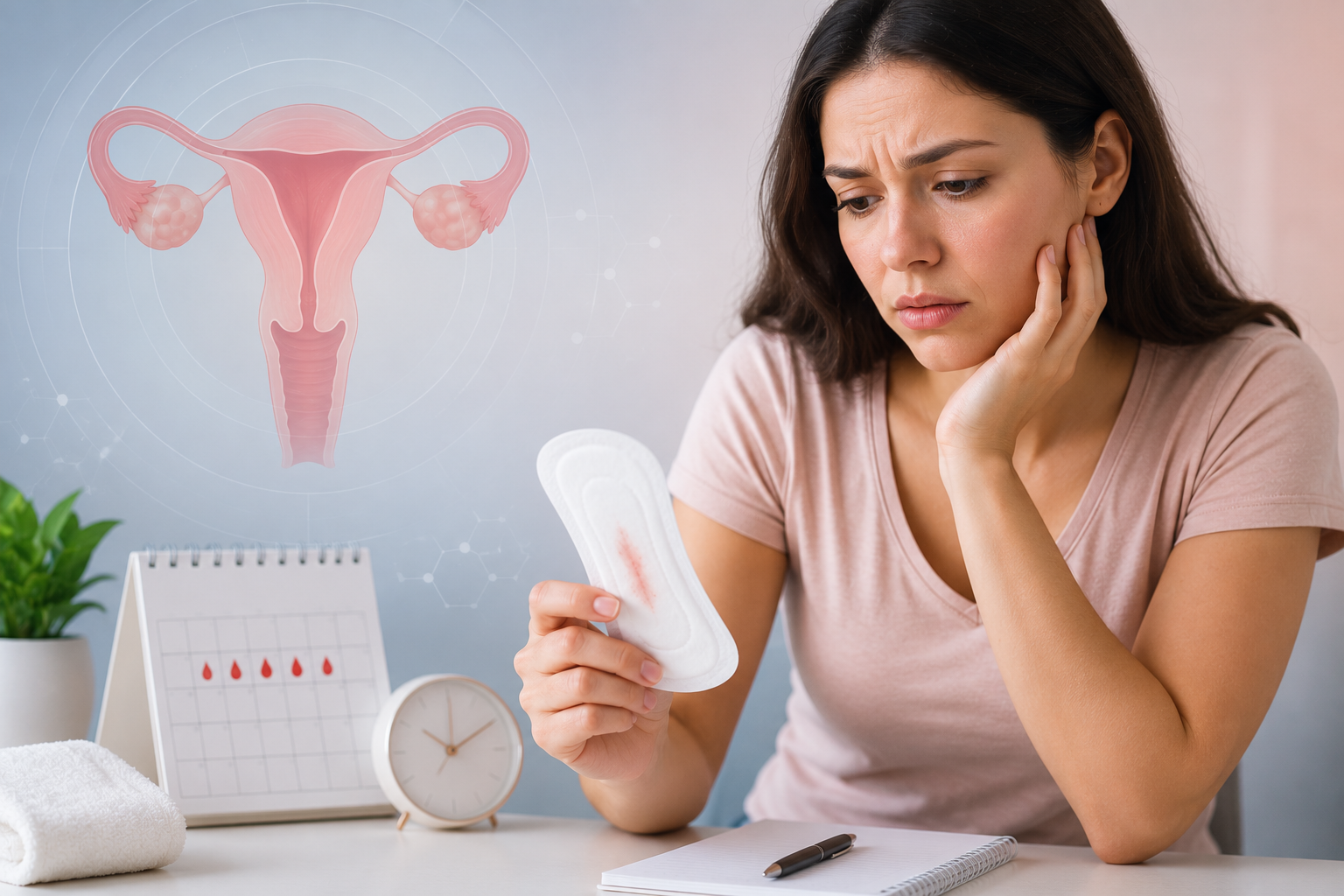
A light period happens when your monthly bleeding is noticeably less than what you normally experience, either in volume or in the number of days it lasts. It can be a one-time occurrence linked to stress, travel, or diet, or it can be an ongoing pattern tied to hormonal birth control, PCOS, thyroid issues, or the natural approach of perimenopause.
In some cases, a very light flow is actually an early sign of pregnancy rather than a true period. While an occasional lighter cycle is rarely a cause for alarm, a sudden or long-lasting change deserves attention, especially if it comes with pain, irregular timing, or other new symptoms. This guide walks through what counts as light bleeding, the most common reasons behind it, and when it’s time to talk to a doctor.
What Counts as a “Light” Period?
Every person’s baseline flow is a little different, so “light” is really measured against your own usual pattern rather than a single fixed number. Below, we break down what a typical cycle looks like and the specific signs that suggest your flow has dropped below your normal range.
Normal Menstrual Flow vs. Hypomenorrhea
A typical period lasts anywhere from two to seven days, with total blood loss generally falling between 30 and 80 milliliters across the entire cycle. When flow drops well below this range, or bleeding lasts a day or two at most, doctors sometimes use the term hypomenorrhea to describe it. This isn’t a disease on its own; it’s simply a description of reduced flow compared to what’s typical.
Signs Your Period Is Lighter Than Usual
You might notice you’re only needing a panty liner instead of a pad or tampon, or that your period wraps up well before it usually does. Some people also notice their cycle skips an expected heavy day entirely, going straight from light spotting to nothing. If this pattern shows up for a single cycle, it’s often not significant, but repeated months of this change are worth tracking.
Common Causes of a Light Period
Light periods can be triggered by everyday lifestyle shifts, medications, or underlying hormonal conditions, and the reason often depends on how sudden the change was and whether other symptoms are present. The sections below cover the most frequent explanations, starting with the most common and moving toward less frequent hormonal causes.
Hormonal Birth Control (Pill, IUD, Implant)
Hormonal contraceptives are one of the most common reasons for a lighter flow because they work by thinning the uterine lining and regulating hormone levels. With less lining built up each month, there’s simply less tissue to shed during your period. This effect is especially noticeable with hormonal IUDs and long-term pill use, and it’s generally considered a normal, expected outcome rather than a warning sign.
Stress and Cortisol
High stress levels trigger a spike in cortisol, which can interfere with the signals your brain sends to your ovaries. This disruption in the usual hormonal communication can delay ovulation or reduce the buildup of the uterine lining, leading to a lighter flow that month. Once the stressful period passes, cycles typically return to their usual pattern within a cycle or two.

Extreme Weight Loss or Over-Exercising
Significant calorie restriction or intense training puts real physical strain on the body, which can suppress ovulation altogether. Without regular ovulation, the uterine lining doesn’t build up as much as usual, resulting in a noticeably lighter period or, in more extreme cases, missed periods entirely. This is particularly common among competitive athletes and people recovering from disordered eating patterns.
Perimenopause and Age-Related Changes
As the body approaches menopause, usually starting in the 40s, hormone production becomes less predictable. Estrogen and progesterone levels can fluctuate widely from month to month, which often shows up as lighter, heavier, or simply irregular periods during this transition. This is a natural part of aging and typically doesn’t require treatment unless the bleeding pattern becomes disruptive.
Breastfeeding
Nursing raises prolactin levels, a hormone that suppresses ovulation as part of the body’s natural mechanism to space out pregnancies. Because ovulation is delayed or irregular during this time, periods that do return often start out lighter than they were before pregnancy. This usually normalizes as breastfeeding frequency decreases or stops.
PCOS and Hormonal Imbalance
Polycystic ovary syndrome involves an excess of androgens, hormones typically associated with male reproductive function, which can disrupt regular ovulation. When ovulation is irregular or absent, the uterine lining doesn’t shed on a predictable schedule, leading to unusually light, missed, or infrequent periods. Other common signs of PCOS include acne, excess hair growth, and difficulty losing weight.
Thyroid Conditions
An overactive thyroid speeds up the body’s metabolism and can throw off the hormonal balance needed for a regular cycle. This condition, called hyperthyroidism, is less common than the other causes on this list but can still result in a noticeably lighter or less frequent period. Additional symptoms often include unexplained weight loss, anxiety, and a rapid heartbeat.
Light Period as an Early Pregnancy Sign
Not every light bleed is a period at all. This section explains how to tell the difference between a true light period and early pregnancy-related bleeding, including a warning sign that needs urgent attention.
Implantation Bleeding vs. Period
When a fertilized egg attaches to the uterine lining, it can cause a small amount of light spotting, often mistaken for a very light period. This implantation bleeding usually lasts only a day or two, appears lighter in color than typical menstrual blood, and occurs around the time your period would normally be due. A home pregnancy test taken a few days after a missed or unusually light period can help clarify what’s happening.
Ectopic Pregnancy Warning Signs
An ectopic pregnancy, where a fertilized egg implants outside the uterus, can also cause light, irregular bleeding that resembles a light period. This condition can become medically urgent if left untreated, especially if it’s paired with sharp abdominal pain, dizziness, or shoulder pain. Anyone experiencing these combined symptoms alongside a light period should seek medical care right away rather than waiting it out.
Comparison Table: Common Causes, Flow Pattern & Other Symptoms
| Cause | Typical Flow Pattern | Other Common Symptoms |
| Hormonal birth control | Consistently light, predictable | None; expected side effect |
| Stress | Light for one or two cycles | Fatigue, missed or delayed period |
| Over-exercising / low body weight | Light or absent | Missed periods, low energy |
| Perimenopause | Unpredictable, light or heavy | Hot flashes, irregular timing |
| Breastfeeding | Light, irregular return | Delayed return of periods |
| PCOS | Light, infrequent, or missed | Acne, excess hair, weight changes |
| Hyperthyroidism | Light, sometimes infrequent | Weight loss, anxiety, rapid heartbeat |
| Early pregnancy | Very light, short spotting | Missed period, positive pregnancy test |
When a Light Period Signals a Medical Concern
Most causes of a lighter flow are harmless, but a few underlying conditions require medical evaluation and treatment. This section covers two situations where a light period is a signal worth investigating rather than ignoring.
Asherman’s Syndrome (Uterine Scarring)
This condition involves scar tissue forming inside the uterus, often following a prior surgery, D&C procedure, or infection. The scarring can physically reduce the amount of lining available to shed each month, leading to a persistently light or absent period. Diagnosis typically requires imaging or a minor procedure to view the inside of the uterus directly.
Sudden Changes After Age 40
While perimenopause naturally brings lighter or irregular periods, a sudden, dramatic shift at this age can sometimes point to a structural or hormonal issue beyond typical aging. Because the line between normal transition and an underlying condition isn’t always obvious, tracking the pattern and sharing it with a doctor helps rule out anything that needs treatment.
When to See a Doctor
Knowing which symptoms warrant a closer look can help you decide whether to simply monitor your cycle or book an appointment.
Symptoms That Warrant Testing
A light period on its own usually doesn’t need medical attention, but certain combinations of symptoms do. These include a light period paired with pelvic pain, a period that suddenly stops appearing for several months, or light bleeding alongside signs of pregnancy like nausea or breast tenderness.
Tests Doctors May Order
A doctor evaluating a light period may start with a pregnancy test to rule out pregnancy-related causes, followed by bloodwork to check hormone and thyroid levels. If PCOS or structural changes like scarring are suspected, an ultrasound is often the next step to get a clearer picture of the uterus and ovaries.
FAQs
Is a light period normal or something to worry about?
Occasional light periods are usually normal, especially during times of stress or after starting a new birth control method. Persistent changes over several months are worth discussing with a doctor.
Can a light period mean I’m pregnant?
Yes, unusually light bleeding around the time your period is due can sometimes be implantation bleeding rather than a true period. A pregnancy test can help confirm this.
Does stress really affect period flow?
Yes, elevated cortisol from stress can disrupt the hormonal signals that regulate ovulation and the uterine lining, often resulting in a lighter flow that month.
Should I stop birth control if my period becomes very light?
Not necessarily, since a lighter flow is a common and expected effect of most hormonal birth control methods. If you’re concerned, discuss it with your prescribing doctor rather than stopping on your own.
Conclusion
A light period is often the result of everyday factors like hormonal birth control, stress, or age-related hormonal shifts, and it’s rarely a sign of a serious problem on its own.
Paying attention to how long the change lasts and whether it comes with other symptoms, such as pain or missed periods, is the best way to know whether it’s simply a passing variation or something that needs medical input.
Related Posts
How Long Does Pre-Workout Last? Duration, Factors & Timing Guide
Chelsea Crumpler UNC Health: Career, HR Leadership, and Professional Contributions
Why does my stomach hurt when I cough? Causes, warning signs & when to see a doctor
Can an Ear Infection Cause Head Pain? Complete Detailed Guide