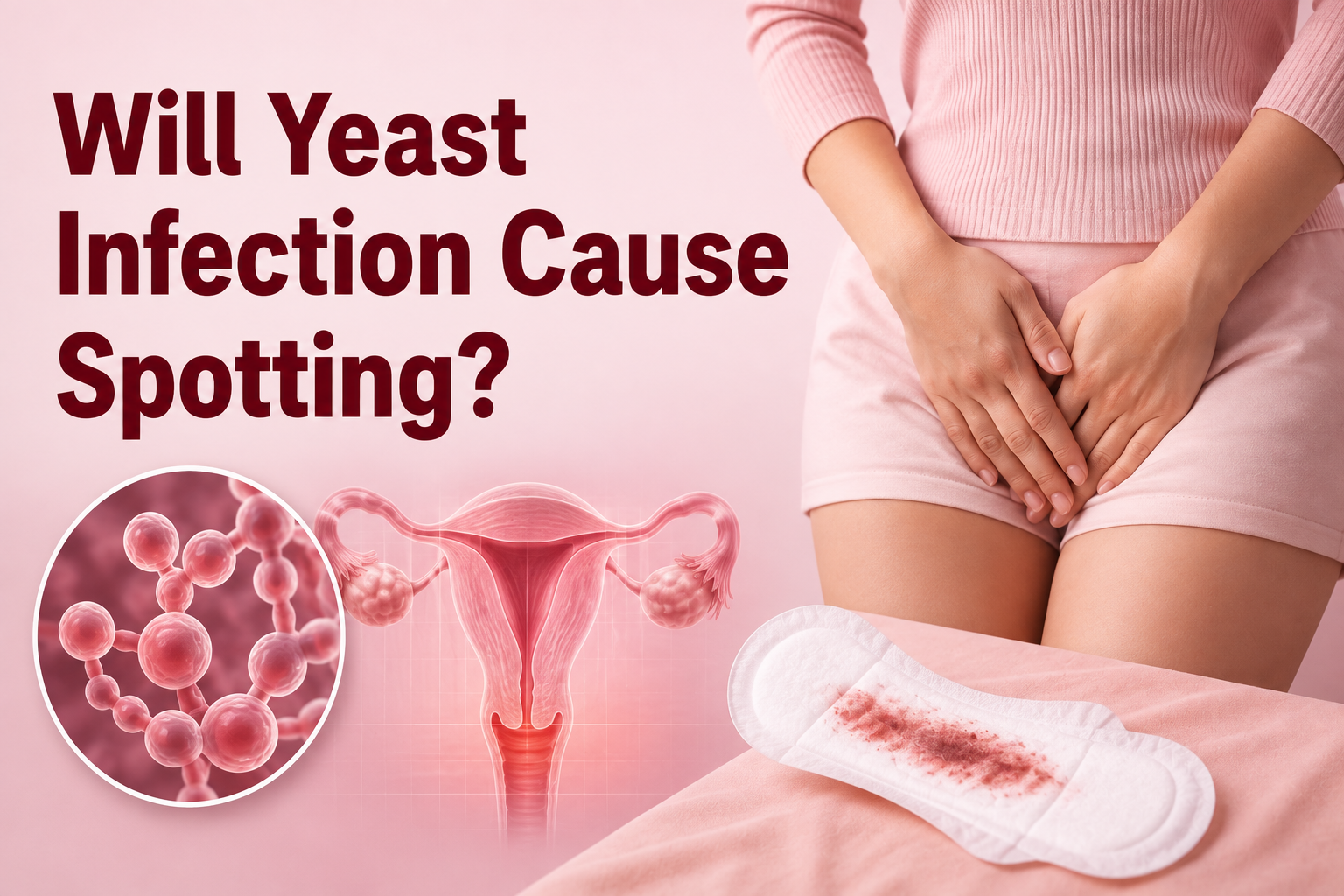
Yes, a yeast infection can cause spotting in some women, though it is not one of the most common symptoms. This usually happens because the infection irritates and inflames the delicate skin inside the vagina, making it more likely to bleed slightly, especially after sex or after scratching due to itching.
The spotting caused by a yeast infection is generally light in amount and appears as a pink, light red, or brownish discharge rather than heavy bleeding. It is not usually a sign of anything dangerous, but if it becomes heavy, smells bad, or lasts for many days, it is better to get checked by a doctor to rule out other causes.
What Is a Yeast Infection?
A yeast infection is a common condition caused by an overgrowth of a fungus called Candida, which naturally lives in the vagina in small amounts. When this fungus grows out of control, it leads to uncomfortable symptoms that affect many women at least once in their lifetime.
Common Symptoms of Yeast Infection
The most common signs include intense itching around the vaginal area, a burning feeling especially while urinating, and redness or swelling of the skin. Many women also notice a thick, white discharge that looks similar to cottage cheese. These symptoms can range from mild to quite uncomfortable depending on how severe the infection is.
How Common Are Yeast Infections?
Yeast infections are extremely common, and most women experience one at some point in their life. Certain factors like antibiotic use, pregnancy, uncontrolled diabetes, or a weak immune system can increase the chances of developing one. Because they are so common, understanding their symptoms, including unusual ones like spotting, becomes important for peace of mind.
What Is Spotting?
Spotting refers to very light vaginal bleeding that happens outside of your normal period. It is usually much lighter than a regular period flow and does not require a pad or tampon in most cases.
Normal Causes of Spotting
Spotting can happen for many harmless reasons such as ovulation, hormonal birth control changes, or early pregnancy. It is a fairly normal occurrence for many women and does not always point to a health problem.
How to Identify Spotting
Spotting usually appears as a few drops or a light smear of blood, often pink or brown in color rather than bright red. It typically lasts only a short time and stops on its own without needing any pads.



Can a Yeast Infection Cause Spotting? (Main Answer)
To directly answer the question, will yeast infection cause spotting, the answer is yes, though it happens indirectly. The infection itself does not bleed, but the irritation it causes to the vaginal walls can lead to minor bleeding, especially when the tissue is more fragile than usual.
Why It Happens Indirectly
The yeast infection creates inflammation and swelling inside the vagina, which weakens the surface of the skin. When this irritated area experiences any friction, such as during intercourse, tiny blood vessels can break and cause light spotting.
Why It’s More Common After Intercourse or Wiping
Since the vaginal walls are already inflamed and sensitive during a yeast infection, activities like sex or even wiping too hard after using the bathroom can cause small tears. These tiny tears are usually painless but can result in light spotting soon after.
Why Does a Yeast Infection Cause Spotting?
The main reason spotting occurs is that yeast infections make the vaginal tissue inflamed, dry, and easily irritated, which increases the chances of minor bleeding compared to a healthy vaginal environment.
Inflammation of Vaginal Walls
When Candida overgrows, it triggers an inflammatory response in the body as it tries to fight off the infection. This inflammation makes the vaginal walls swollen and more sensitive to touch or pressure.
Increased Tissue Sensitivity
Along with inflammation, the tissue becomes thinner and more delicate than normal. This heightened sensitivity means that even small amounts of friction can cause bleeding that would not normally occur in healthy tissue.
Microtears From Itching or Scratching
The intense itching that comes with yeast infections often leads women to scratch the area for relief. This scratching can create tiny microtears in the skin, which may bleed lightly and appear as spotting on underwear.
Disruption of Normal Vaginal Flora
A yeast infection throws off the natural balance of bacteria and yeast in the vagina. This imbalance can affect the overall health of the vaginal lining, making it more prone to irritation and occasional light bleeding.
What Does Yeast Infection Spotting Look Like?
Spotting caused by a yeast infection usually looks different from a regular period, and knowing what to expect can help ease worry when it happens.
Color of the Spotting
The spotting is generally light pink, light red, or brown in color rather than the darker red typically seen during a menstrual period. This lighter color is a sign that it is old or minor bleeding rather than a heavy flow.
Amount and Timing
The amount is usually very small, often just a light smear on toilet paper or underwear rather than requiring a pad. It tends to happen after intercourse, after wiping, or during moments of intense itching rather than continuously throughout the day.
How It Differs From Period Bleeding
Unlike a period, yeast infection spotting does not follow a monthly cycle and is not accompanied by cramps in most cases. It also tends to stop once the infection is treated, unlike a period which follows its own natural timeline.
Other Symptoms That Often Accompany Spotting
Spotting rarely occurs alone with a yeast infection and is usually accompanied by other more recognizable symptoms that help confirm the cause.
Itching, Discharge, and Discomfort
Along with spotting, most women notice persistent itching, a thick white discharge, redness around the vaginal opening, and a burning sensation during urination or sex. These combined symptoms make it easier to recognize a yeast infection as the likely cause of the spotting.
When Spotting Might NOT Be From a Yeast Infection?
While yeast infections can cause light spotting, it is important to know when the bleeding might be a sign of something else entirely.
Signs of a More Serious Issue
Heavy bleeding, a strong foul odor, severe pelvic pain, or spotting that lasts for an extended period are not typical of a simple yeast infection and may point to a different underlying issue.
Other Possible Causes
Conditions such as sexually transmitted infections, hormonal imbalances, cervical polyps, or early pregnancy can also cause spotting and should be considered, especially if yeast infection treatment does not resolve the bleeding.
When to See a Doctor
It’s important to know when self-care is enough and when professional help is needed for spotting related to a yeast infection.
Red Flags to Watch For
You should see a doctor if the spotting is heavy, if it continues even after treating the yeast infection, or if it comes with fever, severe pain, or a bad-smelling discharge, as these could indicate a more serious condition.
How Doctors Diagnose the Cause
A doctor will typically perform a pelvic exam and may take a sample of the discharge to check under a microscope. In some cases, additional tests like a pap smear or STI screening may be recommended to rule out other causes of spotting.
How to Treat a Yeast Infection and Reduce Spotting?
Treating the underlying yeast infection is the most effective way to stop the spotting it causes, and there are several reliable options available.
Over-the-Counter and Prescription Options
Antifungal creams, suppositories, or tablets available at pharmacies can clear up most mild yeast infections within a few days. For infections that don’t improve, a doctor may prescribe a stronger oral antifungal medication for faster relief.
Tips to Reduce Irritation During Treatment
Wearing loose, breathable cotton underwear and avoiding scented soaps or douches can help reduce further irritation while the infection heals, allowing the vaginal tissue to recover and the spotting to stop naturally.
How to Prevent Yeast Infections and Related Spotting?
Preventing yeast infections in the first place is the best way to avoid the discomfort and spotting that can come with them.
Hygiene and Lifestyle Tips
Simple habits such as wearing breathable fabrics, avoiding tight clothing, maintaining good hygiene without over-washing, and eating a balanced diet can significantly lower the risk of developing a yeast infection.
Yeast Infection Spotting vs. Period: How to Tell the Difference
| Feature | Yeast Infection Spotting | Menstrual Period |
| Color | Light pink or brown | Bright to dark red |
| Flow | Very light, occasional | Steady, heavier flow |
| Duration | Short, stops after treatment | Lasts several days |
| Trigger | Sex, wiping, scratching | Natural monthly cycle |
| Accompanying symptoms | Itching, white discharge, burning | Cramps, bloating |
Frequently Asked Questions
Can a yeast infection delay your period? A yeast infection itself does not typically delay your period since it does not affect hormone levels responsible for your cycle.
Is spotting a sign of a severe yeast infection? Not necessarily, as spotting is more often linked to irritation from itching or friction rather than the severity of the infection itself.
Can yeast infections cause bleeding during pregnancy? Yes, pregnant women can experience light spotting from a yeast infection due to increased sensitivity of vaginal tissue, but any bleeding during pregnancy should be reported to a doctor.
How long does spotting last with a yeast infection? Spotting usually lasts only a day or two and typically resolves once the infection is properly treated.
Should I be worried if spotting continues after treatment? If spotting persists after finishing treatment, it’s best to consult a doctor, as this could indicate an incomplete treatment or a different underlying cause.
Conclusion
So, will yeast infection cause spotting? In most cases, yes, but it is usually mild and linked to irritation rather than a serious problem.
Recognizing the light pink or brown spotting alongside common yeast infection symptoms like itching and discharge can help you understand what’s happening in your body.
Treating the infection promptly usually resolves the spotting as well, but any heavy or unusual bleeding should always be checked by a healthcare provider for peace of mind.
Related Posts
Will Listerine Kill Tooth Infection? Complete Guide
What is Skin Flooding? A Guide to This Viral Hydration Trend
How Much is Skin Removal Surgery? Complete 2026 Cost Guide