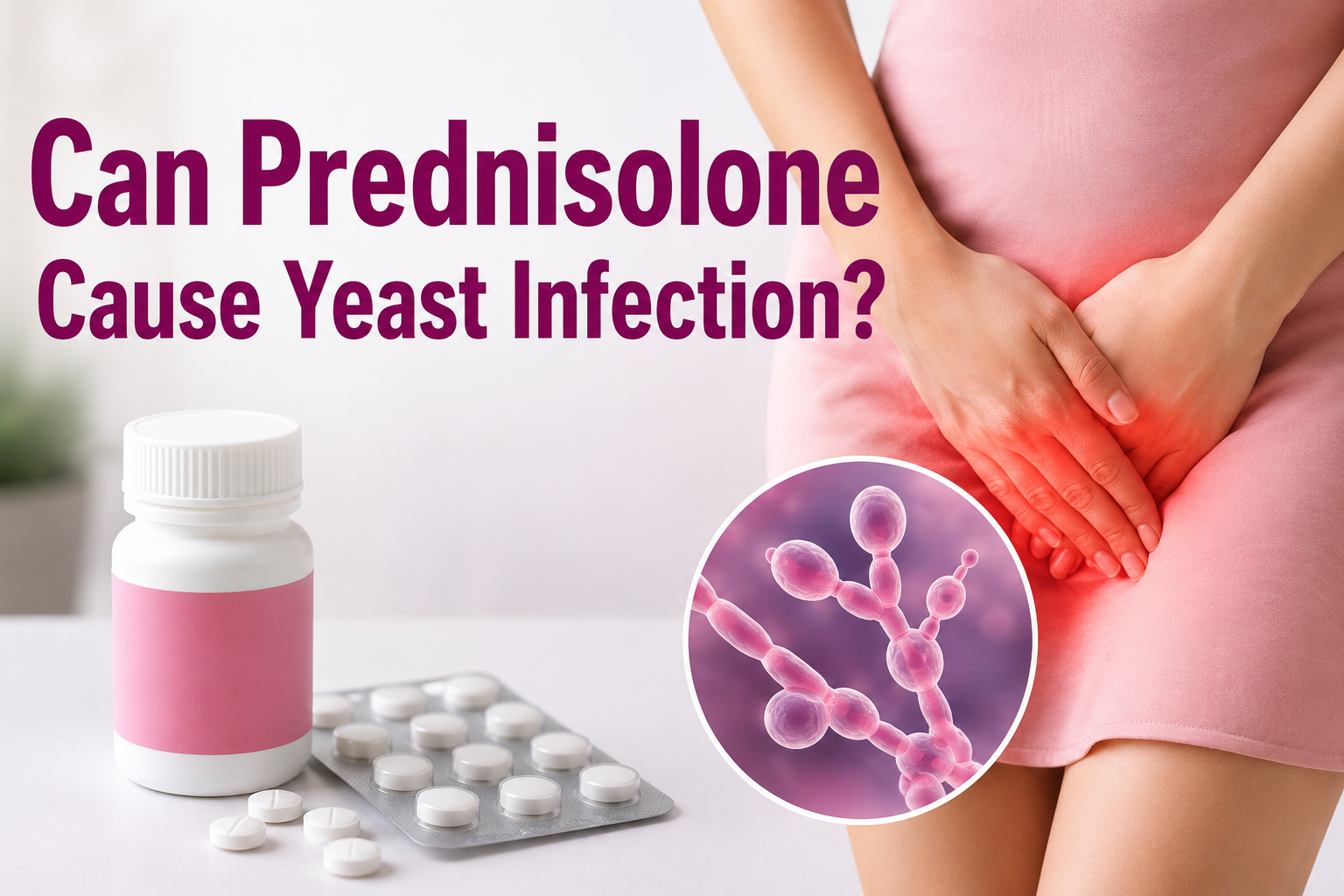
Yes, prednisolone can cause a yeast infection, and this happens because the medicine works by calming down an overactive immune system. When your immune defenses slow down, tiny organisms like Candida yeast, which normally live harmlessly on the skin, mouth, and vaginal area, get a chance to multiply beyond their usual limits.
This overgrowth is what doctors call candidiasis, and it can appear as oral thrush, vaginal itching with discharge, or red irritated patches on the skin. The risk becomes higher when prednisolone is taken in high doses, used for a long stretch of time, or combined with antibiotics that already disturb the body’s bacterial balance.
Research on corticosteroids consistently links them to a greater chance of fungal infections, both by weakening local immune defenses and by raising blood sugar levels that yeast feeds on. The reassuring part is that this side effect is well understood and manageable, and knowing why it happens is the first real step toward preventing and treating it properly.
What Is Prednisolone?
Prednisolone is a corticosteroid medicine that doctors prescribe to bring down inflammation and control conditions where the immune system is overactive. The two sections below explain how it works inside the body and where it is typically used.
How It Works in the Body
Prednisolone mimics cortisol, a hormone your adrenal glands naturally release to manage stress and inflammation. Once inside the body, it slows the immune system’s inflammatory response, reducing swelling, redness, and irritation wherever it is needed. Because it dampens immune activity, the body also becomes less efficient at keeping organisms like Candida yeast under control.
Common Uses
Doctors prescribe prednisolone for conditions such as asthma, severe allergic reactions, arthritis, and autoimmune disorders like lupus. It is also used for certain skin conditions, inflammatory bowel disease, and inflammation affecting the eyes or ears. Depending on the condition being treated, it may be given as a short burst or as a long-term daily dose, and this duration plays a major role in how much yeast infection risk builds up.
Quick Fact
| Question | Quick Answer |
| Can prednisolone cause yeast infection? | Yes. It suppresses immune activity and disrupts the body’s natural microbial balance, and the risk rises with higher doses or longer use. |
Why Prednisolone Increases Yeast Infection Risk?
Several mechanisms work together to explain why this medicine raises yeast infection risk rather than there being a single simple cause. Looking at each one separately makes it clear why the prevention steps mentioned later in this article actually work.
Immune System Suppression
Prednisolone reduces the activity of white blood cells and other immune components that normally keep Candida yeast in check. With this natural surveillance weakened, yeast that is usually present in small, harmless amounts is free to multiply. This is the single biggest reason corticosteroid users face a higher fungal infection risk.



Disruption of Normal Microbial Balance
The body relies on a balanced mix of bacteria and fungi to keep any one organism from taking over. Prednisolone, especially when combined with antibiotics, can shift this balance in favor of yeast by reducing the competing bacterial population. This disruption is particularly noticeable in the mouth, gut, and vaginal area.
Increased Blood Sugar Levels
Corticosteroids like prednisolone can raise blood sugar levels, even in people who are not diabetic, by making the body more resistant to insulin. Candida yeast thrives in a sugar-rich environment, so elevated glucose levels essentially feed its growth. This is one reason diabetic patients on prednisolone face a notably higher risk.
Dose and Duration Factor
Higher doses of prednisolone suppress the immune system more strongly than lower ones, and the effect builds up the longer treatment continues. Short courses lasting only a few days carry a much smaller risk than months of continuous use. Doctors typically weigh this factor carefully when deciding on dosage and treatment length.
Types of Yeast Infections Linked to Prednisolone
Yeast overgrowth caused by prednisolone does not always show up in the same place, and the symptoms differ depending on which area of the body is affected. The table below compares the three most common types seen in patients taking this medicine.
Oral Thrush
Oral thrush appears as creamy white patches on the tongue, inner cheeks, or the back of the throat. It is especially common in people using inhaled corticosteroids alongside prednisolone, or those who do not rinse their mouth after each dose. Left untreated, it can make eating and swallowing noticeably uncomfortable.
Vaginal Yeast Infection
Vaginal candidiasis develops when Candida overgrows in the vaginal area, causing intense itching, soreness, and a thick white discharge. Women taking prednisolone alongside antibiotics or those with elevated blood sugar are especially prone to this type. It tends to respond well to standard antifungal treatment once identified.
Skin (Cutaneous) Candidiasis
This form appears as a red, itchy rash, often with small satellite bumps around the main patch of irritation. It typically develops in warm, moist skin folds such as the underarms, groin, or beneath the breasts. Keeping these areas dry and clean is one of the simplest ways to reduce this particular risk.
| Type | Common Symptoms | Commonly Affected Areas |
| Oral Thrush | White patches, soreness, altered taste, difficulty swallowing | Tongue, inner cheeks, throat |
| Vaginal Yeast Infection | Itching, thick white discharge, burning during urination | Vaginal and vulvar area |
| Skin Candidiasis | Red, itchy rash with small surrounding bumps | Skin folds, underarms, groin |
Symptoms to Watch For
Because prednisolone-related yeast infections can appear in different parts of the body, it helps to know what to look out for in each area rather than expecting one single set of symptoms. Catching these signs early makes treatment faster and far more comfortable.
• Mouth and throat: white patches, soreness, a cottony feeling, or altered taste
• Vaginal area: persistent itching, burning, redness, or unusual discharge
• Skin folds: red rash with well-defined edges and small surrounding bumps
• General signs: mild discomfort that worsens rather than improves over a few days
Who Is Most at Risk?
Not everyone taking prednisolone develops a yeast infection, and certain groups face a meaningfully higher chance than others.
People with diabetes are at greater risk because their blood sugar already tends to run high, giving yeast an easier environment to grow in. Anyone on long-term or high-dose prednisolone, or those combining it with antibiotics or other immune-suppressing drugs, also faces increased susceptibility.
Elderly patients, infants, and people with existing immune conditions round out the group that doctors typically monitor most closely for early signs of candidiasis.
How to Prevent Yeast Infections While on Prednisolone?
A few simple habits can meaningfully lower the chance of developing a yeast infection during prednisolone treatment, without interfering with how well the medicine works. These steps are especially worth following for anyone on a longer course or a higher dose.
• Rinse your mouth with water after every dose, particularly if using an inhaled steroid alongside prednisolone
• Keep skin folds clean and dry, and wear breathable, loose-fitting clothing
• Monitor blood sugar levels regularly, especially if you already have diabetes or prediabetes
• Consider a probiotic, after checking with your doctor, to help support a healthy bacterial balance
• Avoid unnecessary antibiotic use while on prednisolone unless your doctor specifically prescribes it
Treatment Options
Most yeast infections linked to prednisolone respond well to standard antifungal treatment, whether that means an antifungal mouth rinse for thrush, a topical cream for skin candidiasis, or an antifungal suppository or tablet for vaginal infections.
Prednisolone itself is usually continued rather than stopped, since suddenly discontinuing it can be risky and should only ever be decided by the prescribing doctor. In more persistent or recurring cases, the doctor may reassess the dose, switch delivery methods for inhaled steroids, or add a longer course of antifungal medication until the infection fully clears.
When to See a Doctor
It is worth contacting a doctor if symptoms do not improve within a few days of home care, if the infection keeps coming back, or if you notice fever, spreading redness, or unusual pain alongside the yeast infection.
These signs can occasionally point to a more serious infection that needs closer monitoring, particularly in people whose immune systems are already weakened by prednisolone. Prompt medical advice keeps both the original condition and the yeast infection from becoming harder to manage.
Frequently Asked Questions
How long after starting prednisolone can a yeast infection develop?
It varies from person to person, but symptoms can appear within one to two weeks of starting a moderate to high dose, especially if other risk factors like antibiotic use are present.
Does everyone who takes prednisolone get a yeast infection?
No, most people on short, low-dose courses never develop one; the risk rises mainly with higher doses, longer treatment, or additional risk factors like diabetes.
Can I stop taking prednisolone if I get a yeast infection?
You should not stop on your own, since abruptly discontinuing prednisolone can be unsafe; instead, treat the infection with antifungal medication while your doctor reviews the dose.
Are inhaled steroids different from oral prednisolone in this risk?
Inhaled steroids mainly raise the risk of oral thrush by settling in the mouth and throat, while oral prednisolone affects the whole body, so the two can even add to each other’s risk when used together.
Can probiotics help prevent steroid-induced yeast infections?
Probiotics may support a healthier bacterial balance and are often suggested as a preventive step, though they work best alongside the other precautions rather than as a stand-alone solution.
Conclusion
Prednisolone is a genuinely useful medicine for controlling inflammation and immune-related conditions, but its effect on the immune system does open the door to yeast overgrowth in some patients.
The risk is highest with larger doses, longer treatment courses, and added factors like antibiotic use or diabetes. Recognizing early symptoms in the mouth, skin, or vaginal area allows for quick, straightforward antifungal treatment without disrupting the underlying prednisolone therapy.
Simple daily habits, from rinsing the mouth to keeping skin dry, go a long way in lowering the chances of this side effect. Anyone noticing persistent or worsening symptoms should reach out to their doctor rather than adjusting their medication alone.
Related Articles
How to Get Rid of Crackling Sound in Ear: 9 Proven Fixes
What Is Commonly Misdiagnosed as Pink Eye? Conditions to Know
How I Cured My Vestibular Migraine: What Actually Works