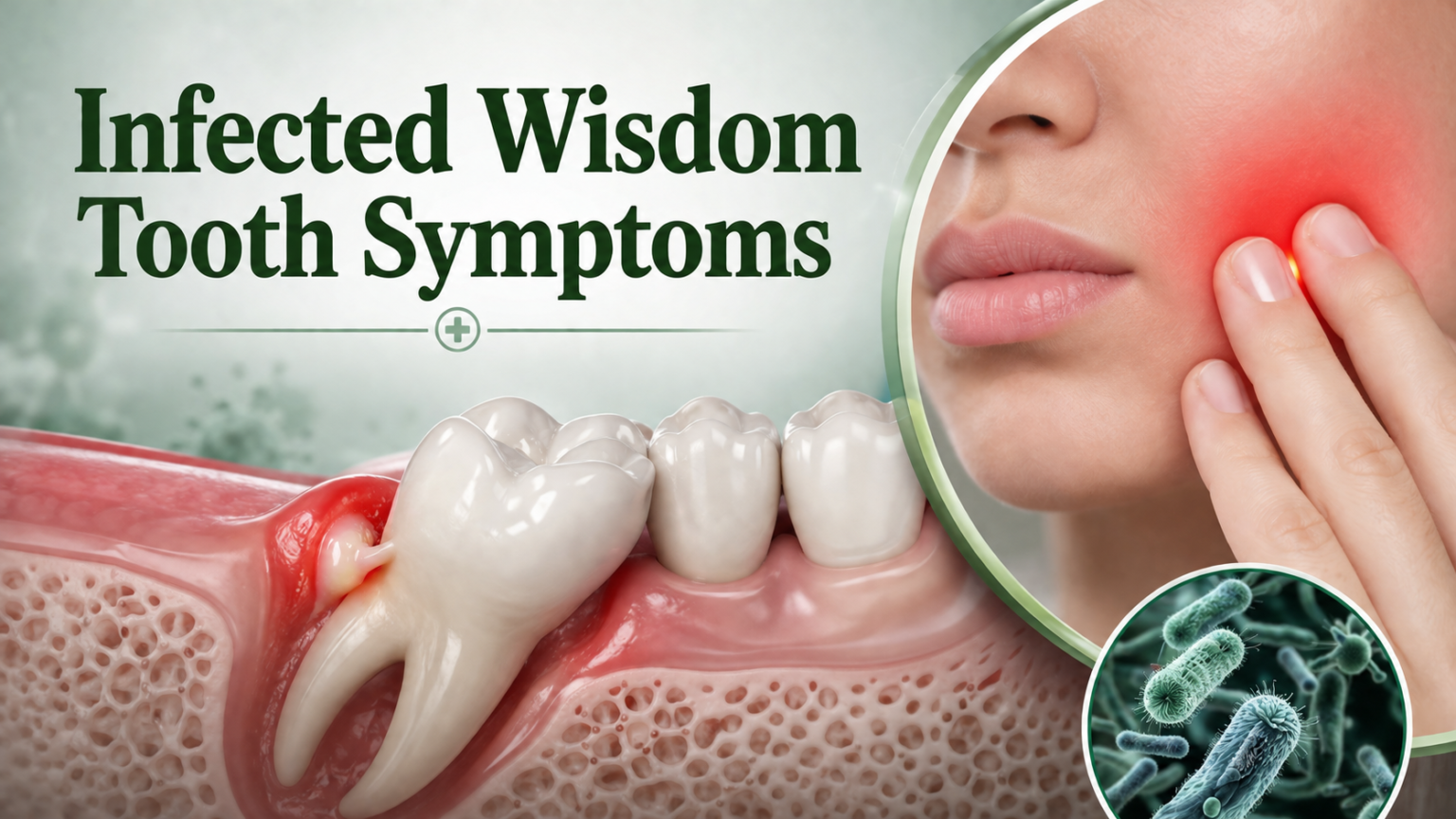
An infected wisdom tooth usually causes throbbing pain at the back of the jaw, along with swollen and tender gums around the affected area. Many people also notice a persistent bad taste or bad breath that does not go away with brushing.
As the infection progresses, the cheek or jaw may swell visibly, and opening the mouth fully becomes difficult. Fever, swollen lymph nodes in the neck, and pus discharge near the tooth are signs of a more advanced infection. Recognizing these symptoms early helps prevent complications and allows for timely treatment before the infection spreads further.
Key Takeaways
- Infected wisdom tooth symptoms range from mild gum swelling to severe jaw pain and fever.
- Partial eruption and trapped food debris are the most common causes of infection.
- Early symptoms are manageable, but advanced symptoms like facial swelling and pus require urgent care.
- Dentists diagnose the condition through physical exams and X-rays before recommending treatment.
- Left untreated, infections can spread to the jawbone or cause abscesses.
What Causes a Wisdom Tooth Infection?
Wisdom tooth infections typically develop when bacteria become trapped around a tooth that has not fully or properly emerged. The most common triggers include partial eruption, tooth decay, and inadequate cleaning at the back of the mouth, each of which creates an environment where bacteria can multiply.
Partial Eruption
When a wisdom tooth only partially breaks through the gum, a flap of tissue often forms over it. Food particles and bacteria collect underneath this flap, leading to a condition called pericoronitis. This is one of the most frequent reasons behind infected wisdom tooth symptoms in young adults.
Tooth Decay and Trapped Food Debris
Wisdom teeth sit far back in the mouth, making them harder to clean thoroughly. Food debris that stays trapped between the tooth and gum encourages bacterial growth, which can eventually lead to decay and infection if not removed regularly.
Poor Oral Hygiene Around the Back Teeth
Limited access with a toothbrush or floss around the last molars often results in plaque buildup. Over time, this plaque hardens and irritates the surrounding gum tissue, increasing the likelihood of infection developing in that specific region.
Early Warning Signs of Infection
Before an infection becomes severe, the body usually gives smaller, more manageable signals. These early signs are often mistaken for normal teething discomfort, but they should not be ignored since they can indicate the start of a bacterial infection.
Mild Gum Swelling and Tenderness
The gum tissue surrounding the emerging wisdom tooth may appear slightly puffy or feel tender when touched. This is usually one of the first indicators that bacteria are beginning to irritate the area.



Bad Breath or Bad Taste
A persistent unpleasant taste or odor, even after brushing, often points to bacterial activity near the wisdom tooth. This happens because trapped debris and bacteria release odor-causing compounds in the mouth.
Slight Discomfort When Chewing
Mild pain or sensitivity while chewing on the affected side is common in the early stages. This discomfort tends to worsen with harder foods and may come and go depending on the level of gum irritation.
Advanced Symptoms You Shouldn’t Ignore
When an infection is left unaddressed, symptoms tend to intensify and spread beyond the immediate tooth area. These advanced signs suggest the infection is progressing and generally require prompt dental or medical attention.
Severe Throbbing Pain
Pain at this stage becomes constant and intense, often radiating toward the ear, jaw, or head. Over-the-counter pain relief may only provide temporary comfort, signaling that the infection has advanced.
Swollen Face or Jaw
Visible swelling on the outside of the face or along the jawline indicates that inflammation has spread beyond the gum tissue. This is a clear sign that the infection is no longer confined to a small area.
Fever and Swollen Lymph Nodes
A body-wide response, such as fever or tender, swollen lymph nodes in the neck, shows that the immune system is actively fighting the infection. This is considered a more serious stage of infected wisdom tooth symptoms.
Pus Discharge or Difficulty Swallowing
Pus draining from around the tooth, combined with difficulty swallowing or opening the mouth, suggests a significant buildup of infection. This stage often requires urgent evaluation to prevent further spread.
| Symptom Stage | Common Signs | Urgency Level |
| Early | Mild gum swelling, bad breath, slight chewing discomfort | Low – monitor and improve oral hygiene |
| Moderate | Persistent pain, gum tenderness, mild jaw stiffness | Medium – schedule a dental visit |
| Advanced | Facial swelling, fever, pus discharge, swollen lymph nodes | High – seek prompt professional care |
Warning: If swelling spreads to the face or neck, breathing or swallowing becomes difficult, or fever persists, these may indicate a spreading infection that needs urgent medical attention without delay.
How Infected Wisdom Teeth Are Diagnosed
Dentists rely on a combination of physical observation and imaging to confirm an infection. This process helps determine the exact cause and severity before deciding on the right treatment path.
Visual and Physical Examination
The dentist examines the gum tissue, checks for swelling, and gently presses the area to assess tenderness and pus presence. This initial check often gives a clear picture of how advanced the infection might be.
Dental X-Rays
X-rays help reveal the position of the wisdom tooth, whether it is impacted, and if the infection has affected the surrounding bone. This imaging is essential for planning any necessary extraction.
Assessing Swelling and Lymph Nodes
Dentists also check the neck and jaw area for swollen lymph nodes, which can indicate how far the infection has spread beyond the tooth itself, guiding the urgency of treatment.
Treatment Options for Infected Wisdom Teeth
Treatment depends on how advanced the infection is, ranging from conservative care to surgical removal. Dentists usually start with the least invasive option before moving to extraction if needed.
Antibiotics for Infection Control
Antibiotics are often prescribed first to reduce bacterial activity and control swelling. This helps stabilize the area before any further procedure, such as cleaning or extraction, is performed.
Deep Cleaning or Irrigation
For mild to moderate cases, dentists may clean beneath the gum flap or flush out trapped debris. This reduces bacterial buildup and can resolve pericoronitis without requiring immediate extraction.
Wisdom Tooth Extraction
When infections recur or the tooth is impacted, extraction is usually recommended. Removing the tooth eliminates the source of infection and prevents future flare-ups in the same area.
Pro Tip: Rinsing gently with warm salt water and maintaining soft food intake can ease discomfort while waiting for a dental appointment, though this does not replace professional treatment.
Risks of Leaving an Infection Untreated
Ignoring infected wisdom tooth symptoms can allow the infection to spread well beyond the original site. Understanding these risks highlights why timely treatment matters.
Spread to Jawbone or Neighboring Teeth
Untreated infections can move into the jawbone or affect nearby healthy teeth, leading to more extensive and costly dental work down the line.
Abscess Formation
A pocket of pus, known as an abscess, may form near the tooth root. This condition is painful and typically requires drainage along with antibiotic treatment.
Rare but Serious Systemic Complications
In rare cases, untreated dental infections can spread to other parts of the body, leading to more serious health concerns that require emergency medical care.
Hypothetical Example: Consider someone who notices mild gum tenderness near a wisdom tooth but delays a dental visit for several weeks. Over time, the discomfort progresses to facial swelling and fever, ultimately requiring emergency antibiotic treatment and extraction that could have been simpler if addressed earlier.
When to See a Dentist or Doctor Immediately
Persistent pain, visible facial swelling, fever, or difficulty swallowing are all signs that professional care should not be delayed.
Seeking prompt attention at this stage can prevent the infection from progressing into a more serious dental or medical emergency.
Frequently Asked Questions
Can an infected wisdom tooth heal on its own?
Mild irritation may improve with better oral hygiene, but a true bacterial infection usually needs professional treatment to fully resolve.
How long does a wisdom tooth infection last?
With appropriate treatment, symptoms often improve within a few days, though full healing can take one to two weeks depending on severity.
Can the infection spread to the brain?
This is extremely rare, but severe untreated dental infections can potentially spread to other areas, which is why timely care is strongly recommended.
Is it normal to have a fever with wisdom tooth pain?
Fever indicates the body is fighting an infection and is not typical for mild irritation, suggesting the condition has become more advanced.
Do all infected wisdom teeth need to be removed?
Not always. Mild cases may be treated with cleaning and antibiotics, while recurring or impacted cases usually require extraction.
Conclusion
Infected wisdom tooth symptoms range from mild gum tenderness to severe facial swelling and fever.
Recognizing these signs early, understanding their causes, and knowing when to seek professional care can prevent complications and support quicker recovery.
If symptoms worsen or persist, consulting a dentist promptly remains the safest course of action.
Related Articless
Growing Pains Massage: Safe Techniques and Natural Ways to Relieve Leg Pain in Children
Is Cheese Gluten-Free? Your Complete Guide to Safe and Unsafe Cheeses
How Much Weight Can You Lose in a Month Safely? Science-Backed Expert Breakdown
Heart Home Health Care: Complete Guide to Services, Care Process, and Benefits
Can a Toothache Cause a Sore Throat? A Dentist Explains the Connection