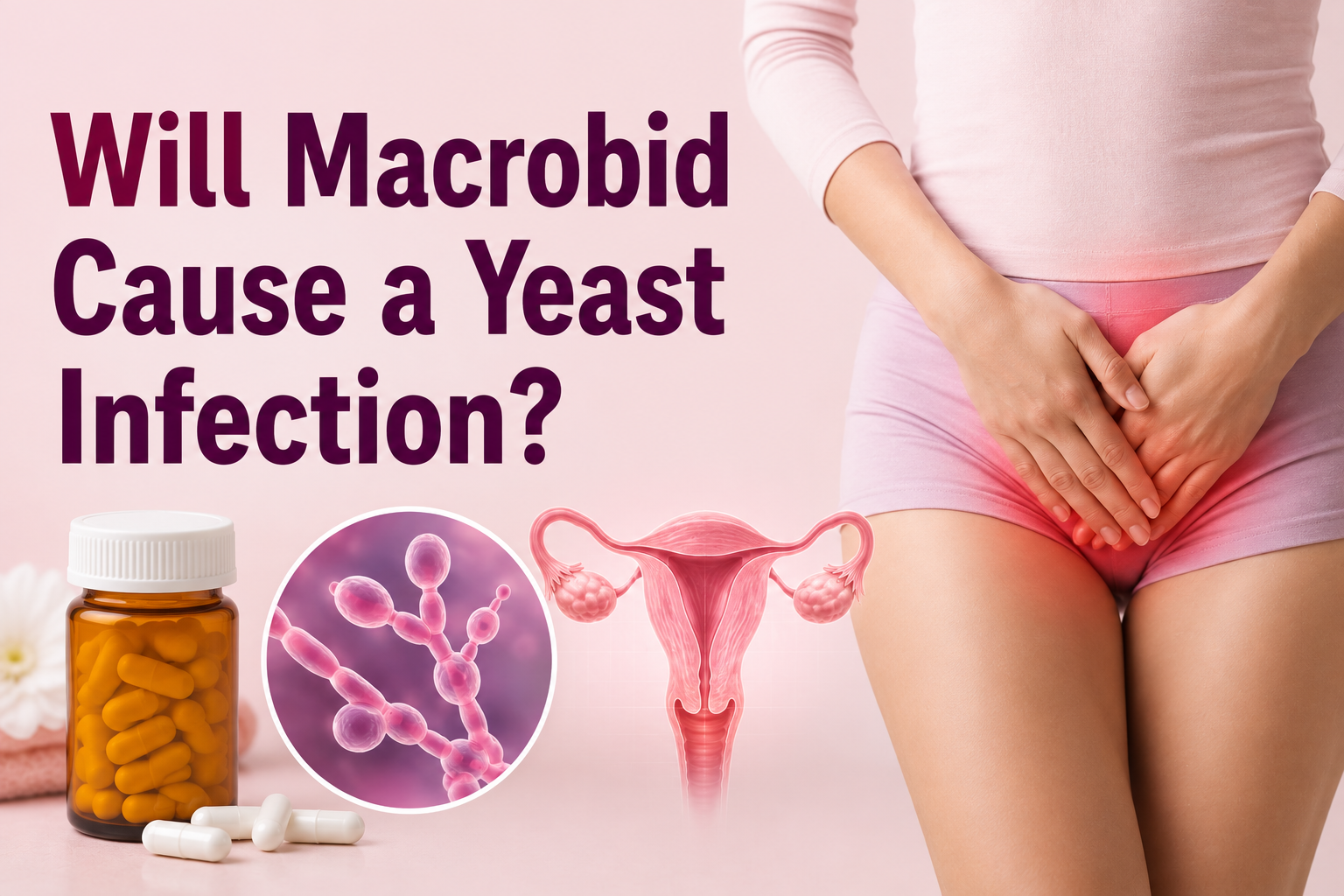
Yes, Macrobid can cause a yeast infection in some people, though it is not guaranteed to happen with every course of treatment. Macrobid, whose generic name is nitrofurantoin, is an antibiotic prescribed to treat urinary tract infections, and like most antibiotics, it works by killing bacteria in the body.
The problem is that antibiotics cannot always tell the difference between harmful bacteria and the helpful bacteria that naturally keep yeast levels balanced in the vagina. When these protective bacteria are reduced, yeast, particularly a fungus called Candida, can grow out of control and lead to an infection.
Compared to broad-spectrum antibiotics, Macrobid carries a somewhat lower risk of triggering this reaction, but it is still a recognized and fairly common side effect that many patients experience during or shortly after their treatment.
Key Takeaways
- Macrobid can cause a yeast infection because it disrupts the natural bacterial balance in the vagina, allowing Candida to overgrow.
- The risk is generally lower with Macrobid than with broad-spectrum antibiotics like amoxicillin, but it is still possible.
- Symptoms typically appear during the antibiotic course or within a few days to a week after finishing it.
- People with diabetes, a history of yeast infections, or weakened immunity are more likely to experience this side effect.
- Over-the-counter antifungal treatments usually resolve the issue, but persistent or recurring infections should be evaluated by a doctor.
What Is Macrobid and How Does It Work?
Macrobid is a brand-name antibiotic that contains nitrofurantoin as its active ingredient, and it is one of the most commonly prescribed medications for treating uncomplicated urinary tract infections. Understanding how it works in the body helps explain why it can sometimes lead to side effects like a yeast infection, which is discussed in more detail in the sections below.
What Macrobid Treats
Macrobid is primarily prescribed for bladder infections, also called cystitis, which is one of the most frequent types of urinary tract infections. Doctors often choose it because it concentrates heavily in the urine, making it effective specifically against the bacteria that commonly cause bladder infections. It is usually taken for five to seven days, and most patients notice symptom improvement within a day or two of starting the medication.
How Nitrofurantoin Works in the Body
Nitrofurantoin works by damaging the DNA and proteins of bacteria, which stops them from multiplying and eventually kills them off. Unlike some antibiotics that circulate broadly throughout the bloodstream and affect bacteria all over the body, nitrofurantoin is designed to concentrate mainly in the urinary tract. This targeted action is part of why it tends to cause fewer digestive and systemic side effects compared to broader antibiotics, though it does not eliminate the possibility of disrupting normal bacterial balance elsewhere in the body.
Can Macrobid Cause a Yeast Infection?
Macrobid can cause a yeast infection because antibiotics, even those that are relatively targeted, still reduce populations of protective bacteria called Lactobacillus that live in the vagina. These bacteria normally keep the environment slightly acidic, which prevents Candida, a naturally occurring fungus, from multiplying excessively. When Lactobacillus levels drop due to antibiotic use, the vaginal pH can shift, creating conditions where yeast is able to grow unchecked and cause an infection.
Research published through the National Institutes of Health has documented that antibiotic-associated candidiasis is a well-known phenomenon, particularly with medications that alter the body’s natural microbial balance. While Macrobid’s targeted action in the urinary tract makes it somewhat gentler than broad-spectrum antibiotics such as amoxicillin or ciprofloxacin, it still passes through the body and can have a mild effect on vaginal flora.



Symptoms of a Yeast Infection After Antibiotics
Recognizing the symptoms early can help you address the issue quickly and avoid unnecessary discomfort. The symptoms of a yeast infection are fairly distinct from those of a urinary tract infection, though the two are sometimes confused because they can occur close together in timing.
Vaginal Symptoms
The most common signs of a yeast infection include intense itching around the vaginal area, a thick white discharge that is often compared to cottage cheese in texture, and redness or swelling of the surrounding skin. Some people also experience a burning sensation during urination or intercourse, which can add to the confusion with UTI symptoms since burning during urination is common to both conditions.
When Symptoms Typically Appear
Yeast infection symptoms after starting Macrobid usually begin either while still taking the medication or within a few days to about a week after finishing the full course. This delay happens because it takes some time for the bacterial balance to shift enough for yeast to overgrow. If symptoms appear weeks after finishing the antibiotic, it is less likely to be directly related to the Macrobid course and worth mentioning to a doctor for further evaluation.
Yeast Infection vs. UTI Symptoms — How to Tell the Difference
Because Macrobid is prescribed to treat a UTI, it can sometimes be tricky to tell whether new symptoms are a sign that the yeast infection has developed or whether the original UTI simply hasn’t fully cleared. The table below breaks down the key differences to help you identify which condition you may be dealing with.
| Symptom | Urinary Tract Infection (UTI) | Yeast Infection |
| Discharge | Usually none, urine may appear cloudy | Thick, white, cottage-cheese-like discharge |
| Itching | Rare | Common and often intense |
| Burning during urination | Common | Possible, usually milder |
| Pelvic or lower abdominal pain | Common | Uncommon |
| Odor | Sometimes strong or foul urine odor | Usually mild or yeasty smell |
| Urgency to urinate frequently | Very common | Not typical |
If your symptoms clearly match the yeast infection column, especially the itching and discharge, it is a strong indication that Macrobid has disrupted your natural vaginal balance rather than the original infection persisting.
Who’s Most at Risk of Antibiotic-Related Yeast Infections?
Not everyone who takes Macrobid will develop a yeast infection, and certain factors make some people considerably more susceptible than others. Understanding these risk factors can help you anticipate the possibility and take preventive steps in advance.
Prior History of Yeast Infections
People who have experienced recurrent yeast infections in the past are significantly more likely to develop one again after taking antibiotics. This happens because their vaginal microbiome may already have a naturally lower resistance to Candida overgrowth, making it easier for an imbalance to occur even with a relatively mild antibiotic like Macrobid.
Diabetes, Pregnancy, and Immune Factors
Individuals with diabetes are at higher risk because elevated blood sugar levels create an environment where yeast thrives more easily. Pregnancy also increases susceptibility due to hormonal shifts that naturally raise estrogen levels, which Candida tends to respond well to. Similarly, anyone with a weakened immune system, whether from an underlying condition or certain medications, has a reduced ability to keep yeast populations in check.
Extended or Repeated Antibiotic Courses
Taking Macrobid for a longer duration than typically prescribed, or taking multiple rounds of antibiotics close together for recurring infections, increases the cumulative disruption to protective bacteria. This repeated exposure gives Candida more opportunity to establish an overgrowth compared to a single short course.
How to Prevent a Yeast Infection While Taking Macrobid?
Taking a few precautionary steps while on Macrobid can meaningfully lower your chances of developing a yeast infection, even if it cannot guarantee complete prevention.
- Consider taking a probiotic supplement containing Lactobacillus strains, which may help replenish healthy bacteria during and after your antibiotic course.
- Eat probiotic-rich foods such as plain yogurt with live cultures, kefir, or fermented vegetables to support your body’s natural bacterial balance.
- Wear breathable, cotton underwear and avoid staying in damp clothing for extended periods, since yeast thrives in warm, moist environments.
- Avoid scented feminine hygiene products, douches, or harsh soaps in the vaginal area, as these can further disrupt the natural pH balance.
- Stay well-hydrated and maintain good overall hygiene without over-washing, which can strip away protective natural oils and bacteria.
Treatment Options If You Develop a Yeast Infection
If preventive steps aren’t enough and a yeast infection develops anyway, effective treatments are widely available and typically resolve the issue within a matter of days.
OTC Antifungal Treatments
Over-the-counter antifungal creams, suppositories, and tablets containing ingredients like miconazole or clotrimazole are usually effective for mild to moderate yeast infections. These treatments are applied internally or externally over a course of one, three, or seven days depending on the product, and most people notice significant relief from itching and discomfort within the first day or two of use.
When to See a Doctor
If your symptoms don’t improve after a full course of an over-the-counter treatment, or if you experience frequent recurring yeast infections, it’s worth scheduling an appointment with a doctor. In these cases, a prescription antifungal medication such as oral fluconazole is often used, and it may be given as a single dose or as part of a longer treatment plan for recurrent infections. A doctor can also confirm that what you’re experiencing is actually a yeast infection and not another condition with similar symptoms.
Should You Stop Taking Macrobid If You Get a Yeast Infection?
Developing a yeast infection while on Macrobid is not typically a reason to stop taking the antibiotic on your own. Stopping a course of antibiotics early, even due to an uncomfortable side effect, can allow the original urinary tract infection to return or worsen, and it may also contribute to antibiotic resistance over time.
Instead, most doctors recommend continuing the prescribed Macrobid course as directed while simultaneously treating the yeast infection with an antifungal product. If the side effects feel severe or unmanageable, it’s best to contact your prescribing doctor rather than discontinuing the medication independently, since they can advise on whether an adjustment is appropriate for your specific situation.
FAQs
How common is a yeast infection from Macrobid? It is a recognized but not universal side effect; not everyone who takes Macrobid will develop a yeast infection, and the likelihood depends on individual risk factors like prior history and overall health.
How long after starting Macrobid does a yeast infection appear? Symptoms most often show up while still taking the medication or within about a week after finishing the course, though timing can vary from person to person.
Can men get a yeast infection from Macrobid? Yes, though it is less common than in women; men can develop penile yeast infections after antibiotic use, especially if they have diabetes or other risk factors.
Does taking probiotics prevent it? Probiotics may lower the risk by helping maintain healthy bacteria levels, but they do not guarantee complete prevention for everyone.
Is it safe to use OTC antifungal cream while still on Macrobid? Yes, using an antifungal treatment alongside your antibiotic course is generally considered safe and is a commonly recommended approach.
Conclusion
Macrobid can cause a yeast infection by disrupting the natural bacterial balance that normally keeps Candida in check, though the risk tends to be lower than with many other antibiotics.
Recognizing the symptoms early, understanding your personal risk factors, and taking simple preventive steps can go a long way toward avoiding discomfort.
If a yeast infection does develop, effective treatments are readily available, and continuing your prescribed Macrobid course while addressing the yeast infection separately is generally the safest approach.
Related Articles
Does Movicol Also Help with Anal Pain with Constipation?
Can Wisdom Teeth Cause Tooth Pain in Other Teeth? Causes
What Does Ovulation Pain Feel Like? Signs, Timing & Relief