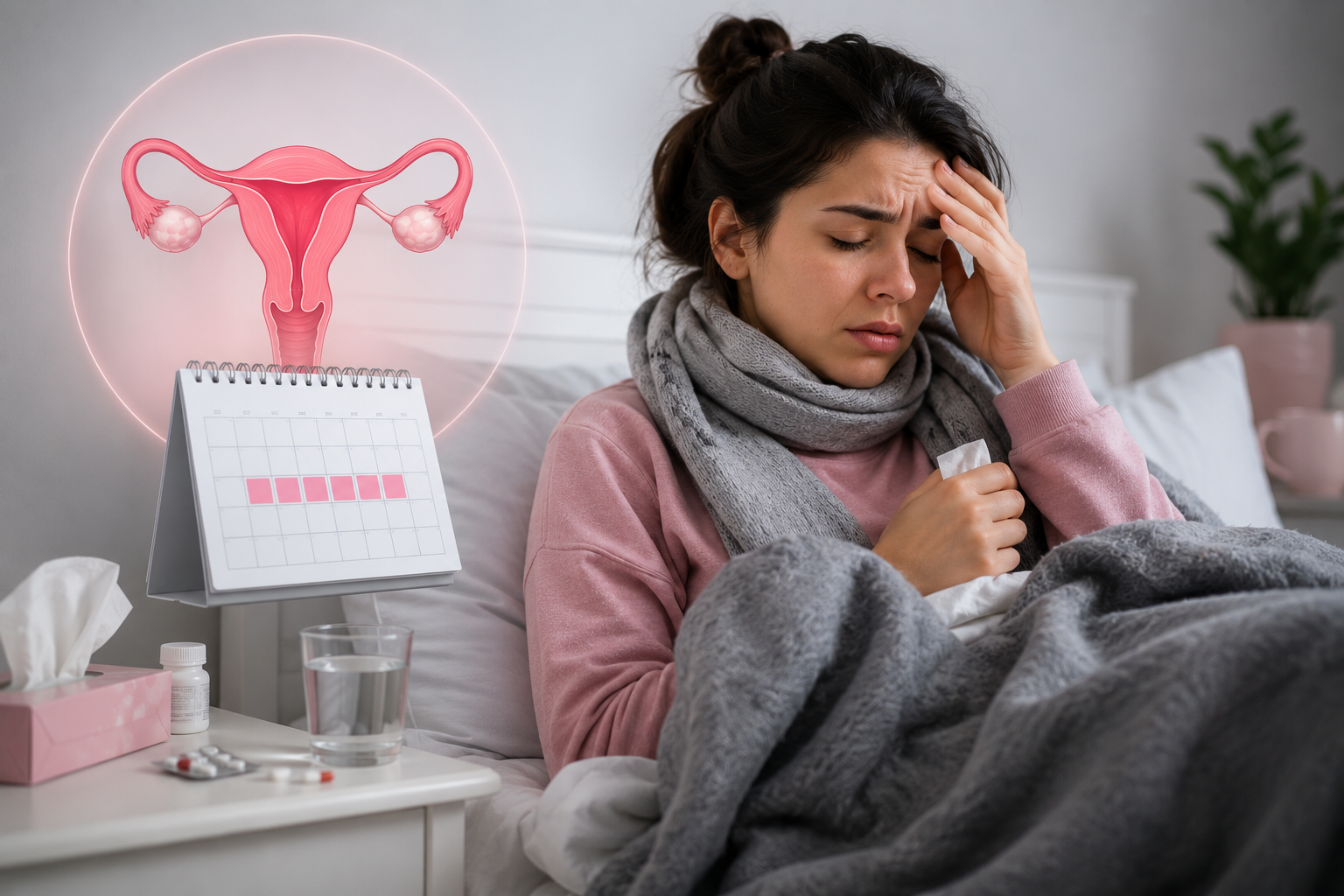
Yes, being sick can delay your period, and this is more common than most people realize. When your body fights off an infection, fever, or illness, it treats the sickness as a priority stressor and temporarily shifts resources away from reproductive functions.
This disruption often affects the hormones responsible for triggering ovulation and menstruation, pushing your cycle back by a few days or even longer in more severe cases. The delay is usually short-term and resolves once your body has fully recovered from the illness.
However, the exact number of days your period may be pushed back depends on how severe the sickness is and how your individual body responds to physical stress. This guide explains why sickness delays your period, how long the delay typically lasts, and when the timing might signal something beyond a simple case of the flu.
Can Sickness Really Delay Your Period?
In short, illness can delay your period because your body’s stress response interferes with the hormonal signals that control your menstrual cycle.
Fever, infections, and even a stubborn cold can be enough to push ovulation back, which in turn delays the start of your next period.
How Illness Disrupts Your Menstrual Cycle
Your menstrual cycle depends on a precise chain of hormonal signals between your brain and ovaries. When illness disrupts this chain at any point, your period can arrive later than expected.
The Hormonal Control Center Behind Your Cycle
Your cycle is regulated by the hypothalamic-pituitary-ovarian axis, a communication system between your brain and reproductive organs.
The hypothalamus releases a hormone that signals the pituitary gland to release LH and FSH, which trigger ovulation.
When illness places stress on your body, this signaling chain can slow down or pause, delaying ovulation and, as a result, your period.
Stress Hormones and Ovulation
Being sick raises cortisol, your body’s main stress hormone, as part of the immune response. Elevated cortisol can suppress the signals needed to trigger a healthy LH surge, which is what causes ovulation to occur.

Without a timely LH surge, ovulation is delayed, and since menstruation follows roughly two weeks after ovulation, your period shifts later as well.
Immune Response and Hormone Suppression
When you’re fighting an infection, your immune system releases inflammatory chemicals to help your body recover.
These chemicals can interfere directly with ovarian function and hormone production, separate from their effect on cortisol.
This is one reason even short illnesses with a strong immune response, such as the flu, can noticeably delay a period.
Which Illnesses Are Most Likely to Delay Your Period?
Not every illness affects your cycle the same way. The severity, duration, and type of sickness all play a role in determining whether, and by how much, your period gets delayed.
Common Cold, Flu and Fever
A mild cold rarely delays your period, since it puts limited stress on your body. The flu or any illness accompanied by a high fever often causes a more noticeable delay, because fever intensifies the immune and stress response. The higher your temperature and the longer it lasts, the greater the chance of a delayed cycle.
Infections
Bacterial and viral infections, including urinary tract infections, respiratory infections, and stomach infections, can all delay your period. This happens because your body redirects energy toward fighting the infection rather than maintaining a regular reproductive cycle. Recovery time from the infection often mirrors how quickly your cycle returns to its normal schedule.
Chronic and Autoimmune Conditions
Ongoing health conditions such as thyroid disorders, lupus, or other autoimmune diseases can cause more frequent and unpredictable period delays.
Unlike a short-term illness, these conditions create persistent hormonal disruption that may affect several cycles in a row.
If irregular periods keep appearing alongside a chronic illness, it is worth discussing this pattern with a doctor.
How Long Can Sickness Delay Your Period?
The length of the delay depends largely on how severe the illness is and how your body responds to physical stress. The table below breaks down typical delay ranges based on illness severity, though individual results can vary from person to person.
| Illness Severity | Example Conditions | Typical Delay | Recovery Pattern |
| Mild | Common cold, mild allergies | 1 to 3 days | Cycle returns to normal the next month |
| Moderate | Flu, fever, stomach infection | 3 to 7 days | Cycle normalizes within one to two cycles |
| Severe | Prolonged infection, hospitalization | 1 to 2 weeks or more | May take two or more cycles to stabilize |
| Chronic | Autoimmune disease, thyroid disorder | Varies, often recurring | May require ongoing medical management |
Sickness vs Other Causes of a Late Period
Illness is only one of several reasons your period might arrive later than expected. Understanding the other common causes can help you figure out whether sickness is really behind the delay.
Stress
Emotional and psychological stress works through a similar pathway as physical illness, raising cortisol and interfering with ovulation. If you have been under significant stress in addition to being sick, both factors may be compounding the delay together. Once stress levels return to normal, your cycle typically follows soon after.
Weight Change
Rapid weight loss during illness, especially from reduced appetite or vomiting, can also affect your cycle independently of the infection itself. Your body needs a certain level of energy reserves to maintain regular ovulation. Sudden, significant weight changes signal your body to conserve resources, which can delay or even skip a period.
Pregnancy
If you have had unprotected sex and are experiencing a late period along with symptoms like nausea or fatigue, pregnancy should be considered as a possibility. Early pregnancy symptoms can sometimes overlap with signs of being sick, making the two harder to tell apart. Taking a home pregnancy test is the most reliable way to rule this out.
Medications
Certain medications used to treat illness, including some antibiotics, steroids, and antihistamines, can influence hormone levels and cycle timing. Steroids in particular are known to affect the hormonal axis that controls your cycle and can cause a noticeable delay. If you started a new medication around the time your period was due, it may be a contributing factor.
When Should You See a Doctor?
A period delayed by a few days to a week due to illness is generally not a cause for concern and should resolve on its own. Certain signs, however, suggest it is worth getting checked by a healthcare provider rather than waiting it out.
• Your period is more than two weeks late and pregnancy has already been ruled out
• You experience severe pelvic pain along with the delay
• Your periods have been irregular for several months in a row
• You have unexplained weight loss, extreme fatigue, or other new symptoms
• You suspect an underlying condition such as thyroid dysfunction or PCOS
Supporting Your Cycle While You Recover
While you cannot force your period to arrive on schedule, a few simple habits can support your body’s recovery and help your cycle return to normal more quickly.
• Prioritize rest and adequate sleep to reduce physical stress on your body
• Stay hydrated and eat nourishing, easy-to-digest meals as your appetite returns
• Avoid adding unnecessary stress, such as intense exercise, until you are fully recovered
• Track your cycle so you have a clear record if the delay continues beyond one or two cycles
Frequently Asked Questions
Can a UTI delay your period?
Yes, a urinary tract infection can delay your period, particularly if it comes with fever or a strong immune response. The stress your body experiences while fighting the infection can temporarily disrupt ovulation timing.
Does having COVID-19 delay periods?
Some people report period delays or changes in flow after a COVID-19 infection, likely linked to the immune and stress response the virus triggers. These changes are usually temporary and resolve within a cycle or two.
Can antibiotics delay your period?
Most antibiotics do not directly affect your cycle, but the underlying infection they are treating can. If your period is delayed while on antibiotics, it is more likely related to the illness itself than to the medication.
How many days late is considered normal after being sick?
A delay of a few days to about a week is common after moderate illness and is generally nothing to worry about. Longer delays are more likely with severe or prolonged sickness.
Should I worry if my period is a week late after being sick?
A one-week delay following illness is usually normal and should resolve on its own. If it extends well beyond that or comes with other concerning symptoms, checking in with a doctor is a reasonable next step.
Conclusion
Being sick can delay your period because illness places stress on the hormonal system that controls your menstrual cycle. Mild sicknesses usually cause only a short delay, while more severe or prolonged illness can push your cycle back further.
In most cases, your period returns to its normal schedule once your body has fully recovered. If the delay continues for multiple cycles or comes with other worrying symptoms, it is best to consult a healthcare provider to rule out other causes.
Related Articless
Can Constipation Cause Fever? Symptoms & When to Worry
How Long Do Dissolvable Stitches Last in Mouth?
What Is Commonly Misdiagnosed as Pink Eye? Conditions to Know
How to Tell If You Have a Broken Bone in Your Hand?
How to Sleep With a Stuffy Nose: 10 Proven Fixes That Actually Work