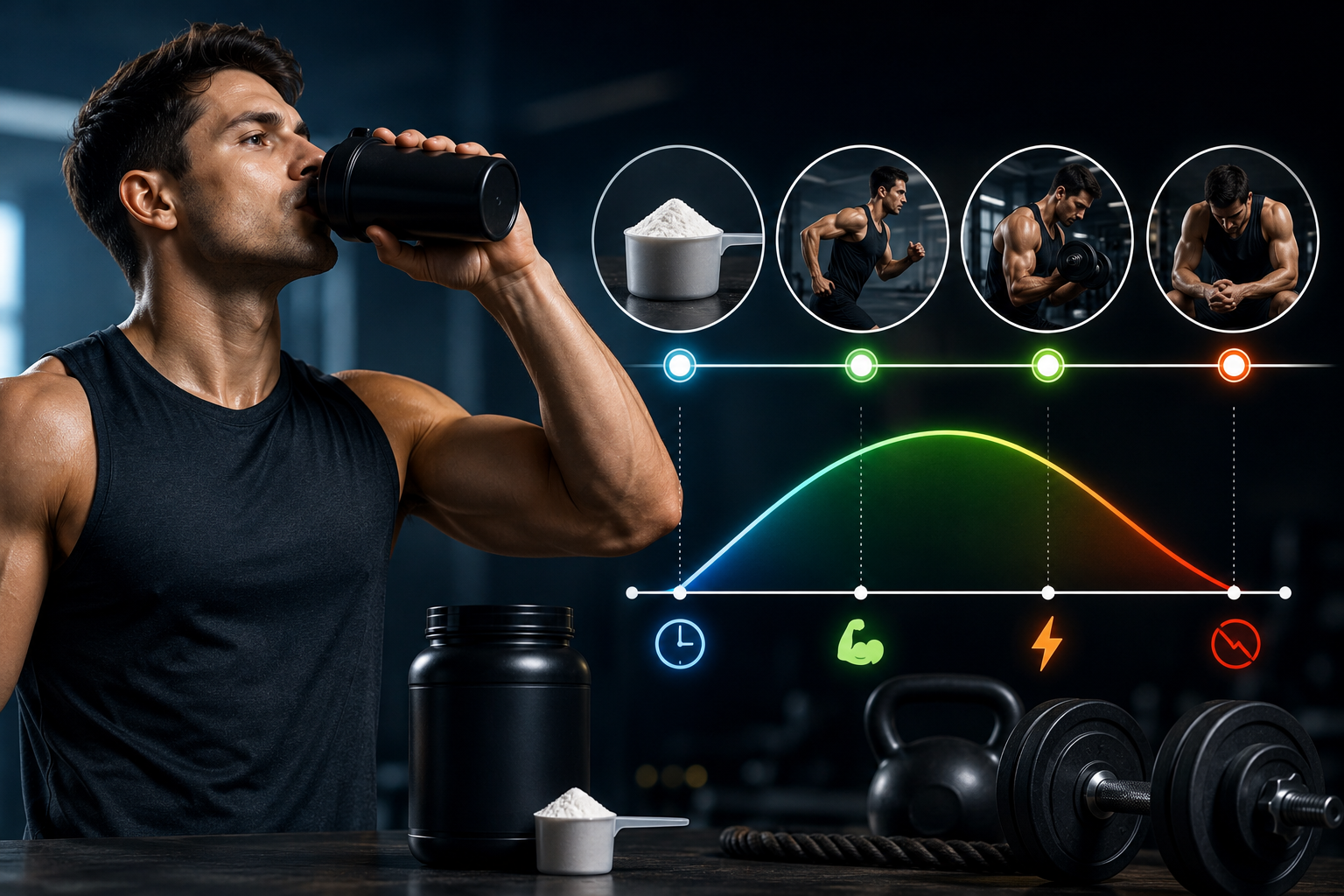
Pre-workout typically lasts between three to six hours, though the exact duration depends on your dosage, caffeine content, personal tolerance, and metabolism. Most people feel the first surge of energy within twenty to thirty minutes, followed by peak effects that stay strong for close to ninety minutes.
After that window, the stimulating sensation slowly fades, even though certain ingredients like beta-alanine and citrulline keep supporting muscle performance quietly in the background. Understanding how long does pre workout last can help you plan your training sessions better and avoid taking a dose too close to bedtime. T
his guide walks through the complete timeline, the science behind it, and simple ways to manage your dosage for better results.
Key Takeaways
- Pre-workout effects generally last 3 to 6 hours depending on ingredients and dosage
- Kick-in time is usually 20 to 30 minutes after consumption
- Caffeine has a half-life of 4 to 6 hours, which is why late-night doses disturb sleep
- Body weight, tolerance, and metabolism speed all change how long the effects stay noticeable
- Non-stimulant or lower-dose formulas wear off faster than high-caffeine blends
What Is Pre-Workout and How It Works?
Pre-workout is a supplement blend designed to increase energy, focus, and endurance before exercise. It usually combines caffeine, beta-alanine, citrulline malate, creatine, and sometimes B vitamins, each working differently on the body.
Caffeine stimulates the central nervous system for alertness, while citrulline improves blood flow so muscles get more oxygen during a workout. Beta-alanine causes the familiar tingling sensation and supports muscular endurance during longer sets.
Because these ingredients act through separate pathways, the overall feeling of a pre-workout dose is really a combination of several timelines overlapping rather than a single effect switching on and off.
How Long Does Pre-Workout Take to Kick In?
For most people, pre-workout begins working within twenty to thirty minutes of consumption, though this can shift depending on whether it was taken on an empty stomach or after a meal. Caffeine absorbs quickly into the bloodstream, which is usually the first sensation noticed, often described as heightened alertness or a light head rush.
Ingredients like beta-alanine and citrulline take slightly longer to build up, so the tingling sensation or the muscle pump feeling may appear a little after the initial energy hit. Drinking the supplement on an empty stomach generally speeds up absorption, while taking it after a heavy meal can delay onset by an extra fifteen to twenty minutes.



How Long Do Pre-Workout Effects Last
The core question of how long does pre workout last comes down to distinguishing between the initial rush, the sustained performance boost, and the slow tapering off period. Most formulas peak around the thirty to ninety minute mark, giving the strongest sense of focus, strength, and endurance during that window. After the peak, effects begin a gradual decline, though users rarely notice a sudden stop since the drop happens slowly over several hours.
| Phase | Approximate Time | What You Feel |
| Onset | 20–30 minutes | Initial energy, alertness, slight tingling |
| Peak | 30–90 minutes | Maximum focus, strength, and endurance |
| Sustained Effect | 90 minutes–3 hours | Steady energy with gradual decline |
| Fade Out | 3–6 hours | Noticeable effects mostly gone |
| Full Clearance | Up to 8–10 hours | Caffeine fully leaves the system |
Caffeine Half-Life and Why It Matters
Caffeine has a half-life of roughly four to six hours, meaning that half of the dose is still active in your bloodstream even after that much time has passed. This is the main reason a pre-workout taken in the late afternoon or evening can still interfere with falling asleep at night. People who metabolize caffeine slowly, often due to genetics or regular liver function differences, may feel restless well beyond the typical window. Because of this extended half-life, timing your dose earlier in the day is usually the safest way to avoid disrupted sleep patterns.
Factors That Affect Pre-Workout Duration
Several personal and product-related variables decide exactly how long a dose stays active in your system. The sections below break down each factor individually so you can understand which ones apply most to your own routine.
Dosage Amount
Higher doses naturally extend both the intensity and duration of pre-workout effects since more caffeine and active compounds enter the bloodstream at once. A smaller scoop may only produce a mild, shorter-lasting boost, while a full or double dose can stretch noticeable effects well past the five-hour mark. Adjusting dosage is often the simplest way to control how long the supplement stays active.
Personal Tolerance
Regular users of pre-workout often build a tolerance over time, meaning the same dose produces a shorter and less intense effect compared to a first-time user.
This happens because the body adapts to frequent caffeine exposure by adjusting receptor sensitivity in the nervous system.
Cycling off pre-workout for a week or two periodically can help restore the original response strength.
Body Weight and Metabolism
People with a faster metabolism tend to process and clear caffeine more quickly, which shortens the overall duration of felt effects. Body weight also plays a role, since a larger body mass generally dilutes the concentration of active ingredients relative to a smaller frame. This is part of why the same product can feel very different from one person to another.
Ingredient Blend
Formulas heavy in caffeine and stimulants tend to produce a sharper, shorter peak, while blends built around citrulline, creatine, and beta-alanine offer a steadier, longer-lasting sense of endurance.
Stimulant-free options are generally milder overall but can still support performance for several hours without the same energy spike. Reading the label helps set realistic expectations for how the dose will feel over time.
Food Intake
Taking pre-workout after a meal slows absorption and can extend how gradually the effects appear and fade, compared to taking it on an empty stomach. An empty stomach usually leads to a faster, more intense onset but also a quicker decline afterward. Balancing food intake around your dose is a simple way to smooth out the overall experience.
Pre-Workout Comparison Table
Different types of pre-workout formulas behave differently in terms of intensity and duration, which is worth comparing before choosing one for your routine.
| Type | Typical Caffeine | Onset Time | Duration | Best For |
| High-Stim Blend | 250–350 mg | 15–20 minutes | 4–6 hours | Intense, short workouts |
| Moderate-Stim Blend | 150–200 mg | 20–30 minutes | 3–5 hours | Regular gym sessions |
| Low-Stim Blend | 75–100 mg | 25–35 minutes | 2–4 hours | Caffeine-sensitive users |
| Stimulant-Free | 0 mg | 30–40 minutes | 3–4 hours | Evening workouts |
Signs Your Pre-Workout Is Wearing Off
The most common early sign that pre-workout is fading is a gradual drop in focus, often described as mental fog returning slowly rather than all at once. Physical energy tends to dip next, with muscles feeling more fatigued than they did during the peak window of the workout.
Some people also notice mild irritability or a slight headache a few hours later, which is typically linked to the caffeine crash rather than the other ingredients. Recognizing these signs helps you judge whether it is time to stop training or push through the final stretch of a session.
Best Time to Take Pre-Workout
Taking pre-workout about twenty to thirty minutes before exercise allows enough time for the initial ingredients to activate before the workout begins.
For anyone training in the evening, choosing a lower-caffeine or stimulant-free formula is usually safer to avoid interfering with sleep later that night.
Morning or early afternoon workouts give the most flexibility, since the caffeine has plenty of time to clear the system before bedtime arrives.
Consistency in timing also helps the body adjust to a predictable routine rather than reacting differently each session.
Risks of Taking Pre-Workout Too Late
Consuming pre-workout too close to bedtime is one of the most common reasons people struggle with poor sleep quality on training days. Because caffeine’s half-life extends for several hours, a dose taken at seven or eight in the evening can still be partially active well past midnight.
Poor sleep from this pattern can also affect recovery, mood, and performance in the following day’s workout, creating a cycle that is easy to overlook. Choosing an earlier training slot or a stimulant-free option is generally the safer path for evening exercisers.
How to Manage or Reduce Pre-Workout Duration?
A few simple adjustments can help shorten or soften how long the effects linger if they tend to run longer than desired.
- Start with a half dose instead of a full scoop to reduce overall intensity and duration
- Stay well hydrated, since water supports faster processing of caffeine and other compounds
- Avoid stacking pre-workout with other caffeine sources like coffee or energy drinks on the same day
- Cycle off periodically to prevent tolerance from requiring higher doses over time
- Choose a stimulant-free formula for late afternoon or evening sessions
FAQs
How long does pre workout last on average? Most people feel noticeable effects for three to six hours, with the strongest impact occurring in the first ninety minutes after taking it.
Does pre-workout keep you awake at night? Yes, if taken too late, since caffeine’s four to six hour half-life means a portion of the dose is still active well into the night.
Why does pre-workout wear off faster for some people? Faster metabolism, higher tolerance from regular use, and lower dosage amounts are the main reasons effects fade more quickly for certain individuals.
Is it bad to take pre-workout every day? Daily use can build tolerance and reduce effectiveness over time, so occasional breaks are generally recommended to maintain its impact.
Can food affect how long pre-workout lasts? Yes, taking it after a meal slows absorption and can extend the gradual onset and fade, while an empty stomach speeds up both.
Conclusion
Most existing guides only mention a rough one-line answer without breaking down the onset, peak, and fade stages separately, which leaves readers guessing about the finer details. This guide covered the full timeline of how long does pre workout last, along with the specific factors like dosage, tolerance, and ingredient blend that shape the experience for each person. Applying these timing tips, especially around meal intake and evening workouts, can help you get consistent results without sacrificing sleep quality.
RELATED ARTICLES
Lower Back Pain and Heart Attacks: Signs, Symptoms, Causes, and When to Seek Help
Chelsea Crumpler UNC Health: Career, HR Leadership, and Professional Contributions
Texas Health Surgery Center: Services, Benefits, Insurance, Recovery & Patient Care Guide
Can I Workout With Stitches on My Head? Complete Guide
How Long Does a Fractured Toe Take to Heal? (And What Affects Your Recovery)