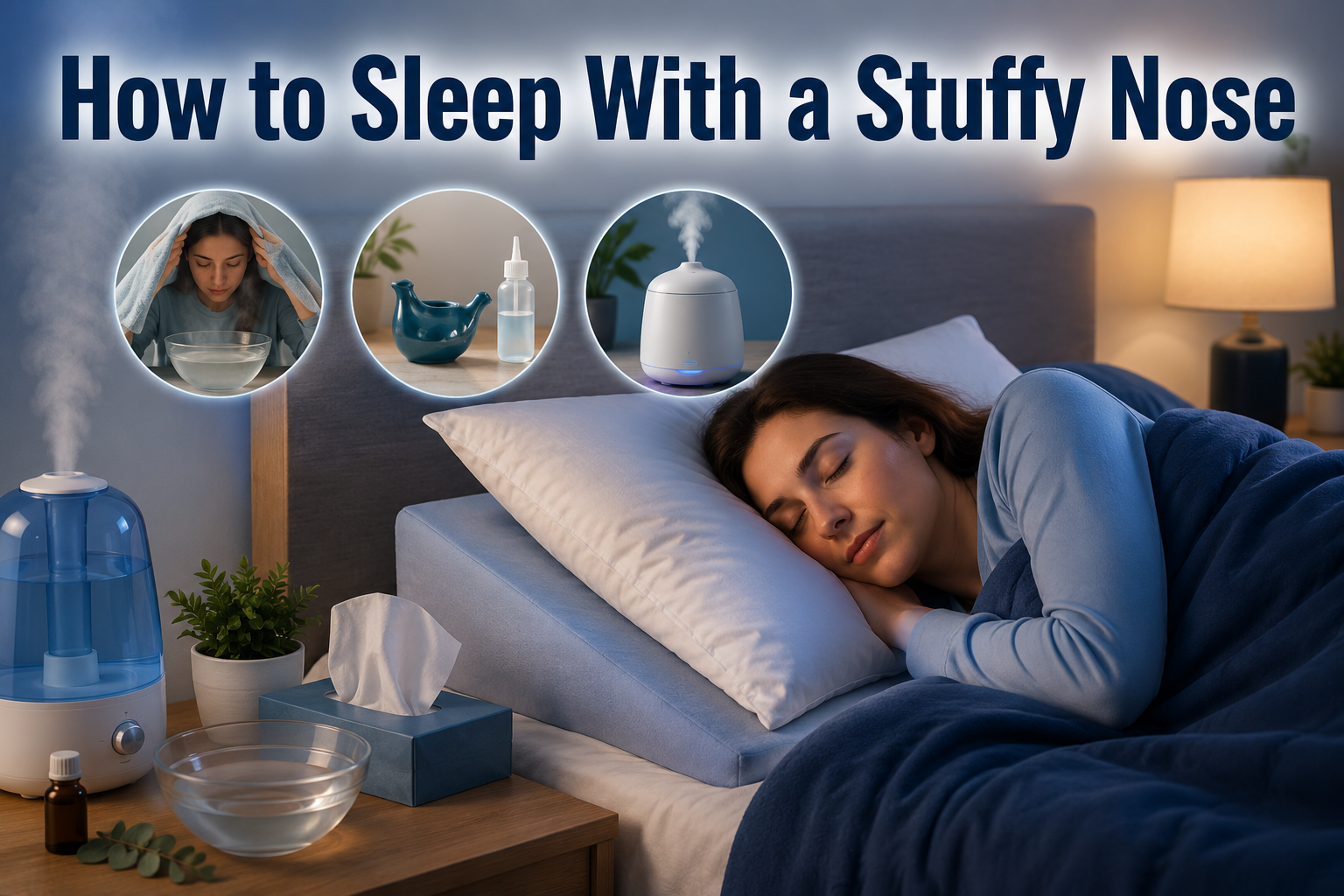
Learning how to sleep with a stuffy nose starts with understanding why lying down makes congestion worse in the first place. You toss, turn, and breathe through your mouth while your pillow feels like it’s suffocating you. This guide walks through the exact positions, remedies, and bedtime routine that clear your airways so you can finally get real rest.
Nighttime congestion isn’t random bad luck — it’s a predictable result of gravity, blood flow, and dry air working against you. The fixes below are simple, low-risk, and backed by sleep and ENT specialists.
Key Takeaways
- Lying flat increases blood flow to nasal tissue, which is why congestion feels worse at night than during the day.
- Elevating your head 15–30 degrees is one of the most effective, immediate ways to open airways.
- Keeping bedroom humidity between 40–60% prevents nasal passages from drying out and swelling further.
- Decongestant sprays like oxymetazoline should never be used more than 3 nights in a row due to rebound congestion.
- Congestion lasting longer than 10 days may signal allergies, sinusitis, or a structural issue like a deviated septum.
Why Does Nasal Congestion Get Worse at Night?
During the day, gravity helps mucus drain naturally through your nasal passages and throat. The moment you lie flat, that drainage process stalls and fluid begins to pool instead of moving through.
Lying down also increases blood flow to the tissue lining your nose, causing it to swell more than it does when you’re upright. Mayo Clinic explains this as a redistribution of blood flow and fluid that increases swelling in nasal tissues, making airflow feel tighter once you’re horizontal.
Pro Tip: If you feel fine standing up but stuffy the moment you lie down, this positional effect — not a worsening infection — is usually the cause.
Dry indoor air compounds the problem by thickening mucus, which makes it harder to drain even when you do sit up.
Best Sleeping Position for a Stuffy Nose
Your body position at night directly affects how well your sinuses drain. Small adjustments can make a noticeable difference within one night.



Sleep with your head and shoulders elevated
Raising your head above the rest of your body lets gravity help drain your sinuses, and you can achieve this by elevating the head of your bed or stacking extra pillows.
Favor your side over your back or stomach
Lying on your side can help if congestion is worse on one nostril, and positioning the stuffed-up nostril facing up helps it drain more easily. Sleeping face down is considered the worst position for sinus drainage, according to UPMC HealthBeat.
Does Side Matter If You’re a Side-Sleeper?
Cleveland Clinic physician Dr. Josue Limage recommends left-side sleeping specifically, since sleeping on your right side can allow stomach acid to travel more easily and potentially worsen congestion linked to reflux.
Fix Your Bedroom Environment First
Before reaching for medication, your bedroom setup does most of the heavy lifting. Small environmental changes reduce triggers before they ever reach your nose.
- Run a cool-mist humidifier. Moist air keeps mucus loose and prevents nasal tissue from drying out overnight.
- Wash sheets weekly. Changing sheets at least once a week clears away allergens and germs that can cause congestion.
- Keep pets out of the bedroom. Reducing pet hair and dander in your sleeping space is one of the simplest ways to lessen nighttime allergy triggers.
- Shower before bed. Washing away outdoor allergens on your skin and changing clothes before bed reduces what you’re breathing in overnight.
Home Remedies That Provide Real Relief
Not every fix requires a pharmacy trip. Several low-risk home remedies address the mucus itself rather than just masking discomfort.
- Try a saline rinse or neti pot. Irrigating each nostril with a salt-water rinse flushes away congestion-causing mucus, moisturizes nasal passages, and helps prevent buildup in the airways. Use distilled or previously boiled water — never straight tap water — to avoid rare but serious infection risk, per FDA guidance on nasal rinse safety.
- Take a hot shower or try facial steam. Breathing in warm, moist air loosens thick mucus and temporarily eases airflow before you get into bed.
- Apply a warm compress. Holding a moist, warm washcloth to your face before bedtime can help clear nasal passages while also feeling soothing enough to support falling asleep.
- Stay hydrated. Drinking water throughout the day keeps mucus thin enough to drain naturally instead of thickening and blocking your sinuses overnight.
Hypothetical Example (for illustration purposes): Picture someone with a cold who runs a humidifier, does one saline rinse, and elevates their pillow before bed. Many people in this situation report breathing more easily within the first night, though results vary by cause and severity. Note: This scenario is illustrative. Actual results vary by individual health history, congestion cause, and consistency of use.
Nasal Strips and Cooling Rubs
Physical aids can open airways without any medication at all, which makes them a good starting point for most people.
Nasal strips use adhesive across the bridge of the nose to gently pull the nostrils wider, making breathing easier without any drug involved. They’re a reasonable first option, especially for people who prefer to avoid medication or who share a bed with a snorer.
Menthol-based vapor rubs create a cooling sensation that makes breathing feel more open, even though they don’t clear the underlying blockage. Apply them to the chest or neck only — never inside the nostrils — to avoid skin irritation.
OTC Medications: What Actually Helps
Over-the-counter options work differently depending on what’s causing your congestion, so matching the remedy to the cause matters.
| Option | Best For | How Fast It Works | Key Caution |
| Oxymetazoline spray (e.g., Afrin) | Acute, short-term blockage | Minutes | Limit to 3 nights max to avoid rebound congestion |
| Fluticasone steroid spray | Chronic or recurring congestion | Days to weeks | Not for instant relief |
| Antihistamines (cetirizine, diphenhydramine) | Allergy-driven congestion | 30–60 minutes | First-gen types cause more drowsiness |
| Oral decongestants | General congestion | 30–60 minutes | Avoid with high blood pressure or heart conditions |
| Saline nasal spray | Any cause, nightly use | Minutes | No known risk with regular use |
Warning: Decongestant sprays should never be used for more than three consecutive nights, since overuse can trigger rebound congestion — where the nose becomes even more blocked once the spray wears off. The FDA recommends limiting oxymetazoline-based sprays to three days of use.
Oral decongestants aren’t the right choice for everyone, particularly people with certain heart conditions, high blood pressure, or medication interactions, so it’s worth checking with a pharmacist or clinician first.
What NOT to Do When You’re Congested
A few common habits actually make nighttime congestion worse, even though they feel like they should help.
- Don’t blow your nose aggressively. Forceful blowing can push mucus deeper into the sinuses instead of clearing it out.
- Avoid alcohol before bed. Alcohol increases urine production and worsens dehydration, which thickens mucus and makes drainage harder.
- Limit caffeine in the evening. Caffeine within several hours of bedtime disrupts sleep quality on top of existing congestion.
- Skip the extra-soft down pillow if you’re allergy-prone. Down and feather bedding can harbor allergens that worsen nighttime symptoms for sensitive sleepers.
When Nighttime Congestion Signals Something More
Occasional stuffiness from a cold is normal and temporary. Congestion that won’t quit deserves a closer look, since it can point to a different underlying cause entirely.
Most nasal congestion clears on its own once a cold or allergy resolves, but you should contact a doctor if congestion or sinus pressure comes with blurred vision or cold symptoms lasting longer than three weeks. Chronic congestion that doesn’t follow the typical 1–2 week course of a cold may point to an underlying issue such as chronic sinusitis, nasal polyps, or a deviated septum that needs professional evaluation.
If a partner has mentioned loud snoring, gasping, or pauses in breathing alongside your congestion, mention this to a doctor — persistent nighttime blockage can sometimes overlap with sleep-disordered breathing.
Your Bedtime Congestion Routine
Putting the pieces together into one consistent routine makes results more reliable than trying remedies randomly.
- Take a hot shower or steam session 30–60 minutes before bed to loosen mucus.
- Do a saline rinse with distilled or boiled water to flush remaining congestion.
- Turn on a cool-mist humidifier set to 40–60% humidity for the room.
- Elevate your head 15–30 degrees using a wedge pillow or extra pillows.
- Apply a nasal strip if you want drug-free airway support through the night.
Frequently Asked Questions
Why is my nose more stuffy at night?
Lying flat increases blood flow to nasal tissue and stalls the natural drainage gravity provides during the day. Dry indoor air can also thicken mucus overnight, making the blockage feel worse than it did while you were upright.
What position should I sleep in with a stuffy nose?
Sleep on your side or back with your head and shoulders elevated 15–30 degrees. Avoid sleeping face-down, since stomach sleeping is considered the worst position for sinus drainage.
How can I unblock my nose fast before bed?
A hot shower or facial steam session followed by a saline rinse typically brings the fastest relief. For acute blockage, an oxymetazoline spray works within minutes but shouldn’t be used more than three nights running.
Is it bad to sleep with a stuffy nose every night?
Occasional congestion isn’t dangerous, but nightly blockage lasting more than 10 days deserves medical attention. It may indicate allergies, sinusitis, or a structural issue rather than a passing cold.
Does sleeping on your side help with congestion?
Yes, especially if one nostril is more blocked than the other. Positioning the stuffier nostril facing upward allows it to drain more effectively through the night.
How many pillows should I use for a stuffy nose?
One or two firm pillows, or a wedge pillow, is usually enough to achieve a 15–30 degree incline. Stacking too many soft pillows can strain your neck without improving drainage.
When should I see a doctor about nighttime congestion?
See a doctor if congestion lasts longer than 10 days, comes with a high fever, facial pain, or green discharge, or if you suspect it’s linked to sleep apnea. These signs suggest a cause that home remedies won’t resolve on their own.
The Bottom Line
Sleeping with a stuffy nose usually comes down to fighting gravity, dryness, and inflammation at the same time. Elevating your head, running a humidifier, and using a saline rinse before bed solve most short-term congestion without medication.
If nighttime stuffiness persists beyond 10 days or disrupts your sleep regularly, it’s worth talking to a doctor rather than relying on nightly decongestant sprays.
RELATED POSTS
Are Dental Implants Painful? What to Really Expect
Is Diabetes Genetic? What Science Says About Family Risk
Can Lack of Sleep Cause Nausea? Here’s What’s Really Going On