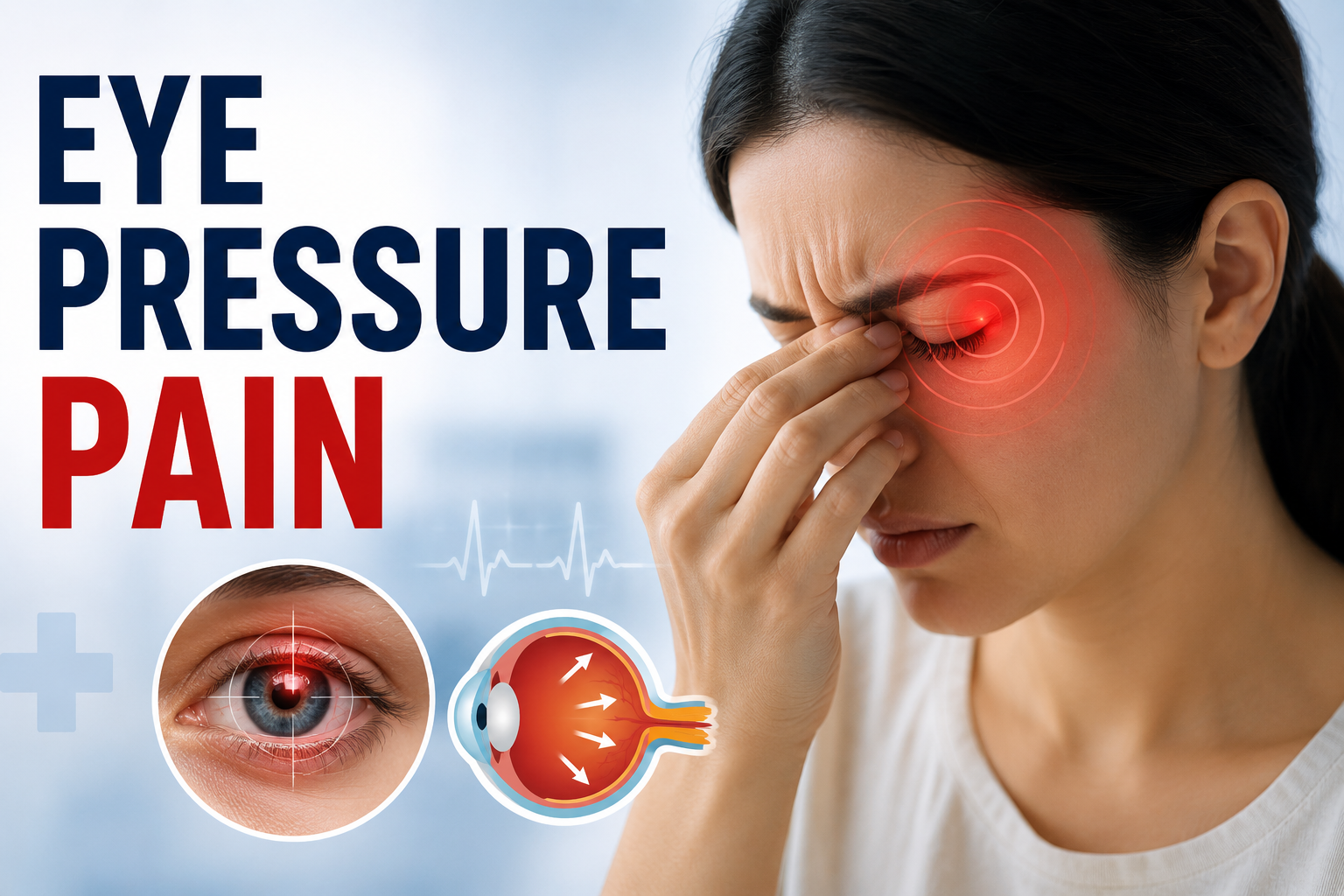
Eye pressure pain is a sensation many people experience but rarely understand fully. It usually feels like tightness, heaviness, or a dull ache around or behind the eyes, and it can show up suddenly or build slowly over a long day.
While the feeling is uncomfortable, it is not always a sign of something serious, since everyday habits like screen use, dehydration, or seasonal allergies can trigger it just as easily as an underlying medical condition.
This guide breaks down everything in simple words, from the most common causes of eye pressure pain to the warning signs that mean it is time to see a doctor. By the end, you will understand how to recognize the difference between harmless discomfort and a problem that needs medical care.
What Does Eye Pressure Pain Feel Like?
People describe eye pressure pain in different ways, but most agree it feels like something is pushing from the inside out. It is often paired with a heavy, tired sensation in the eyelids and a mild throb that can spread toward the temples or forehead.
The pain usually centers in three main areas: directly behind the eyeball, around the eye socket, or across the bridge of the nose and brow. Some people also notice that the discomfort worsens when they look up, blink rapidly, or move their eyes side to side, which can be a useful clue when trying to figure out the cause.
Main Causes of Eye Pressure Pain
Eye pressure pain rarely comes from a single source. It can be triggered by daily habits, environmental factors, or underlying health conditions, and identifying the right category often makes treatment much easier.
Lifestyle and Strain-Related Causes
Modern routines are one of the biggest contributors to eye pressure pain. Staring at screens for long hours without breaks forces the eye muscles to stay tense, leading to a buildup of pressure-like discomfort by the end of the day.
Poor sleep, dehydration, and excessive caffeine intake can make this worse, since they reduce the eyes’ natural ability to recover. Reading in dim light or using devices with poor screen brightness settings adds further strain, as the eyes work harder to focus clearly.



Sinus and Allergy-Related Causes
The sinuses sit very close to the eyes, so when they become inflamed or congested, the pressure often radiates outward and feels like it is coming from the eyes themselves.
Sinusitis, common colds, and seasonal allergies are frequent culprits, especially when accompanied by a stuffy nose or watery eyes.
Allergic reactions to dust, pollen, or pet hair can trigger inflammation around the eye area, producing a similar pressure-like ache that tends to ease once the allergy is treated.
Medical and Eye-Related Causes
Some causes of eye pressure pain are tied directly to eye health. Dry eye syndrome reduces lubrication, making the eyes feel strained and achy throughout the day.
Migraines and tension headaches frequently include eye pressure as a symptom, sometimes alongside sensitivity to light.
A more serious cause is glaucoma, a condition where fluid builds up inside the eye and raises internal pressure, which can damage the optic nerve if left untreated.
How Eye Pressure Pain Differs by Cause?
Because so many conditions share similar symptoms, it helps to compare them side by side. The table below offers a simple breakdown of common causes, how the pain typically feels, and the symptoms that usually accompany it.
| Cause | Typical Pain Pattern | Common Accompanying Symptoms |
| Eye strain | Dull ache, worsens with screen use | Tired eyes, blurry vision |
| Sinusitis | Pressure around nose and brow | Stuffy nose, facial tenderness |
| Allergies | Mild throbbing pressure | Itchy, watery, red eyes |
| Migraine | Pressure behind one or both eyes | Light sensitivity, nausea |
| Dry eyes | Gritty, aching pressure | Burning, stinging sensation |
| Glaucoma | Steady, deep pressure | Blurred vision, halos around lights |
This comparison shows that while the symptoms overlap, small differences in pattern and accompanying signs can point toward the actual cause, which is helpful information to share with a doctor.
When Eye Pressure Pain Is Serious?
Most cases of eye pressure pain are mild and temporary, but certain signs suggest the problem needs urgent medical attention rather than home care.
Warning Signs to Watch For
Sudden, severe pain that comes on quickly rather than building gradually is a red flag, especially when paired with nausea, vomiting, or intense headache. Any sudden change in vision, such as blurriness, double vision, or seeing halos around lights, should never be ignored. Redness that spreads quickly across the eye, along with swelling or discharge, can also indicate an infection that needs prompt treatment.
Glaucoma-Related Red Flags
Glaucoma deserves special attention because it can cause permanent vision loss if it goes untreated for too long.
Symptoms that point toward this condition include a constant, deep pressure that does not ease with rest, gradual loss of peripheral vision, and eyes that feel unusually hard or firm to the touch.
People with a family history of glaucoma or who are over the age of forty should consider routine eye pressure checks, since early detection makes treatment far more effective.
How Eye Pressure Pain Is Diagnosed?
Diagnosing the cause of eye pressure pain usually starts with a basic eye examination, where the doctor checks vision clarity and looks for visible signs of strain, dryness, or infection. A common next step is tonometry, a quick and painless test that measures the internal pressure of the eye to rule out or confirm glaucoma.
If sinus involvement is suspected, the doctor may examine the nasal passages or order imaging such as a CT scan to check for blockages or inflammation.
When migraines or tension headaches seem to be the source, a neurological evaluation can help confirm the diagnosis and rule out other causes. In rare cases where symptoms are unclear or severe, doctors may use MRI scans to get a more detailed look at the structures around the eyes and brain.
Home Remedies and Self-Care
For mild, everyday eye pressure pain, simple self-care steps are often enough to bring relief without needing medication. The following habits are easy to add into a daily routine:
- Follow the 20-20-20 rule: every 20 minutes, look at something 20 feet away for at least 20 seconds to relax eye muscles.
- Apply a warm or cool compress over closed eyes for ten minutes to ease tension and improve circulation.
- Drink enough water throughout the day, since dehydration can make eye strain and pressure worse.
- Reduce screen brightness and adjust lighting to avoid glare, which forces the eyes to work harder.
- Use saline nasal rinses or antihistamines if allergies or mild congestion seem to be the trigger.
- Practice slow breathing or short relaxation breaks, since stress and tension headaches often contribute to eye pressure pain.
These small adjustments can significantly reduce discomfort, especially when the pain is linked to lifestyle habits rather than an underlying medical condition.
Medical Treatments
When home remedies are not enough, medical treatment depends entirely on the underlying cause. Glaucoma is typically managed with prescription eye drops that lower internal eye pressure, and in more advanced cases, laser treatment or surgery may be recommended to protect the optic nerve. Dry eyes often respond well to lubricating drops or, in persistent cases, punctal plugs that help retain natural moisture.
Sinus-related pressure is usually treated with decongestants, antihistamines, or nasal sprays, while bacterial sinus infections may require antibiotics. Migraine-related eye pressure pain can be managed with pain relievers, prescription migraine medication, or preventive treatments if episodes happen frequently.
Prevention Tips
Preventing eye pressure pain is often easier than treating it once it appears. A combination of small daily habits can make a noticeable difference over time:
- Take regular breaks from screens and adjust your workstation to reduce strain.
- Schedule yearly eye exams, especially if you are over forty or have a family history of glaucoma.
- Manage allergies early with appropriate medication before symptoms worsen.
- Maintain consistent sleep patterns and stay hydrated throughout the day.
- Practice stress-reduction techniques such as light exercise, stretching, or meditation.
Building these habits into a routine lowers the chances of developing chronic eye pressure pain and supports long-term eye health.
Frequently Asked Questions
Can stress cause eye pressure pain?
Yes, stress is a well-known trigger for eye pressure pain because it often leads to muscle tension around the face, jaw, and eyes. This tension can mimic the sensation of internal eye pressure even when the eyes themselves are completely healthy.
Is eye pressure pain linked to high blood pressure?
In some cases, uncontrolled high blood pressure can contribute to eye discomfort or vision changes, though this connection is less common than strain or sinus-related causes. Anyone with high blood pressure experiencing persistent eye pain should mention it to their doctor.
Can eye pressure pain go away on its own?
Many mild cases caused by strain, dehydration, or temporary allergies resolve on their own once the trigger is addressed. However, pain linked to glaucoma, infections, or chronic dry eye usually needs proper treatment rather than time alone.
Does eye pressure pain affect vision permanently?
Most causes do not lead to permanent vision changes, especially when treated early. The main exception is untreated glaucoma, which can cause irreversible vision loss, making early diagnosis and consistent treatment essential.
Can lack of sleep cause eye pressure pain?
Yes, poor or insufficient sleep is a common reason behind eye pressure pain, since the eyes do not get enough time to rest and recover from daily strain. This often shows up as a heavy, tight feeling around the eyes along with fatigue and difficulty focusing, and it usually improves once regular sleep patterns are restored.
Is it normal to feel eye pressure pain on only one side?
It can happen, and it does not always indicate something serious. One-sided eye pressure pain is often linked to sinus congestion affecting a single nostril, a migraine, or muscle tension on that side of the face. However, if the pain is sudden, intense, or comes with vision changes on that side, it should be checked by a doctor to rule out more serious causes.
Can certain foods or drinks trigger eye pressure pain?
Yes, some foods and drinks can contribute to eye pressure pain, particularly those high in salt, caffeine, or alcohol, since they can affect hydration and blood flow around the eyes. Skipping meals or consuming too much sugar can also trigger tension headaches that bring on a similar pressure-like sensation, making balanced eating an important part of prevention
Conclusion
Eye pressure pain can feel alarming, but in most cases, it stems from manageable causes like screen strain, sinus congestion, or mild dehydration rather than a serious medical issue.
Understanding the patterns and accompanying symptoms makes it much easier to identify whether the discomfort needs simple self-care or a visit to the doctor.
Paying attention to warning signs such as sudden vision changes, severe pain, or symptoms that do not improve with rest is the safest approach to protecting long-term eye health.
Related Posts
How Long Does a Fractured Toe Take to Heal? (And What Affects Your Recovery)
Are Dentists Physicians? Understanding the Difference Between Dentists and Medical Doctors
Knee Hurts After Bending: Common Reasons and How to Fix It
Lower Back Pain and Heart Attacks: Signs, Symptoms, Causes, and When to Seek Help
Does Hard Water Cause Acne? Understanding the Connection Between Water Quality and Skin Breakouts