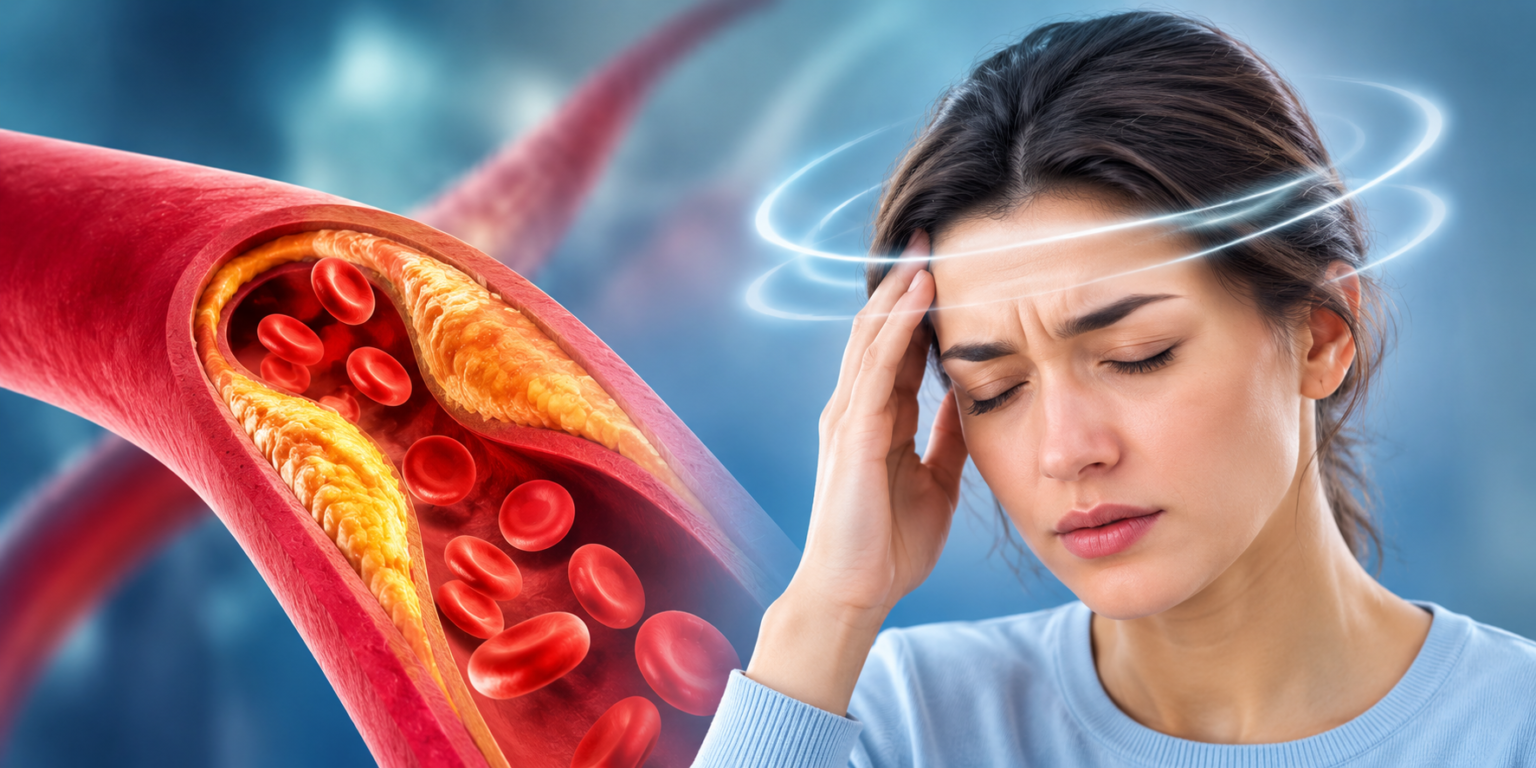
High cholesterol does not cause dizziness in most cases, since cholesterol itself is a waxy substance and does not act on the nervous system or inner ear. However, when cholesterol levels stay high for a long time, they contribute to plaque buildup inside the arteries, a condition called atherosclerosis.
This narrowing can reduce blood flow to the brain and trigger episodes of lightheadedness or dizziness, especially in people who already have narrowed carotid arteries or a history of heart disease. Dizziness is more often an indirect warning sign of cholesterol-related artery damage rather than a symptom caused by cholesterol on its own.
It can also appear as a side effect of statin medications used to treat high cholesterol. Anyone experiencing frequent or sudden dizziness should treat it as a signal to check both their cholesterol levels and their overall cardiovascular health rather than ignoring it.
Understanding the Cholesterol–Dizziness Connection
Cholesterol plays a quiet but important role in the body, and understanding what it actually does helps explain why dizziness is usually an indirect effect rather than a direct one. The next two sections break down cholesterol’s real function and clarify why it does not act on the body the way a typical dizziness trigger would.
What High Cholesterol Actually Does in the Body?
Cholesterol is a fat-like substance that the liver produces naturally and that the body also absorbs from certain foods. It is used to build cell membranes, produce hormones, and support digestion through bile production. Problems begin when low-density lipoprotein, commonly known as LDL or “bad” cholesterol, rises too high and starts depositing along artery walls. Over years, this buildup hardens into plaque, a process known as atherosclerosis, which gradually narrows the space blood has to travel through.
Why Cholesterol Itself Isn’t the Direct Trigger?
Cholesterol molecules do not interact with the brain, inner ear, or balance centers in any direct way, which is why cholesterol alone rarely causes sudden dizziness. The dizziness that people associate with high cholesterol almost always traces back to a secondary effect, such as reduced blood flow or a related cardiovascular complication, rather than the cholesterol itself acting on the nervous system.
How High Cholesterol Can Lead to Dizziness Indirectly?
Although cholesterol does not directly affect balance, several downstream effects of long-term high cholesterol can absolutely lead to dizziness. The sections below walk through the most common indirect pathways, from artery narrowing to more serious warning signs like mini-strokes.
Atherosclerosis and Reduced Blood Flow to the Brain
When plaque builds up inside arteries throughout the body, including those that supply the brain, the brain can receive less oxygen-rich blood than it needs. This reduced circulation can produce symptoms such as lightheadedness, brief confusion, or a floating sensation, particularly when standing up quickly or during physical exertion. Because the brain is highly sensitive to even small drops in blood flow, this is one of the clearest indirect links between high cholesterol and dizziness.


Carotid Artery Narrowing and Balance Issues
The carotid arteries run along either side of the neck and are a common site for cholesterol plaque to accumulate. When these arteries narrow significantly, a condition known as carotid artery stenosis, blood flow to the brain can become restricted enough to cause recurring dizziness, unsteadiness, or brief spells of vision disturbance. This narrowing is often silent in its early stages, which makes routine cholesterol screening especially important for catching it before symptoms escalate.
Blood Pressure Fluctuations Linked to Cholesterol
High cholesterol and high blood pressure frequently occur together, since both stem from similar lifestyle and cardiovascular risk factors. Stiffened, plaque-narrowed arteries make it harder for the body to regulate blood pressure smoothly, which can lead to sudden drops or spikes. These fluctuations are a well-documented cause of dizziness, especially orthostatic dizziness that occurs when moving from sitting to standing.
Risk of TIA (Mini-Stroke) as a Warning Sign
A transient ischemic attack, often called a mini-stroke, happens when blood flow to part of the brain is briefly blocked, frequently due to a cholesterol-related clot or plaque fragment. Dizziness that appears suddenly alongside confusion, slurred speech, or one-sided weakness can indicate a TIA, which is considered a medical emergency and a strong warning sign for a future full stroke if cholesterol and blood pressure are not managed.
Other Causes of Dizziness Often Mistaken for Cholesterol
Not every case of dizziness in someone with high cholesterol is actually caused by their cholesterol levels. Several other common conditions can produce very similar symptoms and are worth ruling out before assuming cholesterol is the root cause.
Statin Medication Side Effects
Statins are the most commonly prescribed medications for lowering cholesterol, and while they are generally well tolerated, some people report dizziness, particularly when starting a new dose or combining statins with other blood pressure medications. This side effect usually improves as the body adjusts, but it should still be discussed with a doctor if it persists or worsens.
Dehydration and Low Blood Sugar
Simple, everyday factors like not drinking enough water or skipping meals can cause dizziness that has nothing to do with cholesterol at all. Low blood sugar in particular can mimic the lightheaded, unsteady feeling associated with reduced blood flow, making it easy to confuse with a cardiovascular cause.
Inner Ear or Vestibular Issues
The inner ear controls the body’s sense of balance, and conditions such as benign paroxysmal positional vertigo or inner ear infections can produce spinning sensations that feel similar to cardiovascular dizziness. These issues are unrelated to cholesterol and typically require a different diagnostic approach, often involving an ear, nose, and throat specialist.
Anxiety-Related Dizziness
Anxiety and panic episodes commonly trigger dizziness through rapid breathing changes and adrenaline release, independent of any cholesterol or artery-related issue. This type of dizziness often comes with a racing heartbeat, sweating, or a sense of impending doom, which can help distinguish it from a circulation-related cause.
Symptom Comparison Table
The table below compares common dizziness triggers, helping to clarify when a symptom is likely benign and when it needs urgent medical evaluation.
| Symptom | Possible Cause | Urgency Level | When to Seek Care |
| Brief lightheadedness on standing | Blood pressure fluctuation, possibly cholesterol-related | Low to Moderate | If it happens frequently or worsens |
| Recurring dizziness with neck artery history | Carotid artery narrowing | Moderate to High | Schedule a doctor visit promptly |
| Sudden dizziness with slurred speech or numbness | Possible TIA or stroke | Emergency | Call emergency services immediately |
| Dizziness after starting a statin | Medication side effect | Low to Moderate | Discuss with prescribing doctor |
| Dizziness with racing heart and sweating | Anxiety or panic response | Low to Moderate | Consult a doctor if recurring |
| Spinning sensation triggered by head movement | Inner ear or vestibular disorder | Moderate | See an ENT specialist |
Warning Signs That Need Immediate Medical Attention
While most dizziness linked to cholesterol develops gradually, certain symptom combinations signal a medical emergency and should never be delayed or self-managed at home.
Sudden Dizziness with Slurred Speech or Numbness
If dizziness appears suddenly alongside slurred speech, facial drooping, or numbness on one side of the body, this combination strongly suggests a stroke or TIA. Emergency medical care should be sought immediately, since early treatment significantly improves outcomes in stroke-related events.
Chest Pain or Vision Changes Alongside Dizziness
Dizziness that occurs together with chest pain, pressure, or sudden vision changes may point to a cardiovascular event such as a heart attack or a significant drop in blood flow. This combination of symptoms should be treated as an emergency rather than monitored at home.
How to Manage Cholesterol to Reduce Dizziness Risk?
Managing cholesterol effectively can lower the long-term risk of the artery changes that lead to dizziness. The following approaches are commonly recommended as part of a comprehensive cholesterol management plan.
Dietary Changes
Reducing saturated fat and increasing fiber-rich foods such as oats, beans, and vegetables can help lower LDL cholesterol over time. Replacing processed snacks with whole foods and limiting added sugar also supports healthier artery function and more stable blood flow.
Physical Activity Guidelines
Regular moderate exercise, such as brisk walking for at least 150 minutes per week, has been shown to raise HDL, the beneficial form of cholesterol, while helping lower LDL levels. Consistent activity also supports healthier blood pressure regulation, which reduces one of the indirect pathways linking cholesterol to dizziness.
Medication Adherence and Monitoring
For individuals prescribed statins or other cholesterol-lowering medications, taking them consistently and attending follow-up appointments allows a doctor to track both cholesterol levels and any side effects like dizziness. Adjustments to dosage or medication type are sometimes needed and should always be made under medical supervision.
When to See a Doctor
Anyone experiencing new, recurring, or worsening dizziness alongside known high cholesterol should schedule a medical evaluation rather than assuming it will resolve on its own.
A doctor can check cholesterol levels, blood pressure, and carotid artery health to determine whether the dizziness has a cardiovascular root cause or stems from an unrelated issue.
FAQs
Can high cholesterol cause dizziness directly? Not directly. Dizziness usually results from artery narrowing or blood flow changes caused by long-term high cholesterol, not from cholesterol itself.
Is dizziness an early warning sign of high cholesterol? It can be, particularly if it occurs alongside other symptoms like neck artery narrowing or blood pressure changes, though many people with high cholesterol have no symptoms at all.
Can statins cause dizziness? Yes, some people experience dizziness when starting statin therapy, and this should be reported to a doctor if it does not improve.
When is dizziness from cholesterol a medical emergency? When it appears suddenly with slurred speech, numbness, chest pain, or vision changes, since these can indicate a stroke, TIA, or heart-related event.
Conclusion
High cholesterol rarely causes dizziness on its own, but its long-term effects on artery health can absolutely lead to it. Understanding the difference between benign, occasional lightheadedness and emergency warning signs helps ensure the right response at the right time, whether that means a lifestyle adjustment or an urgent trip to the emergency room.