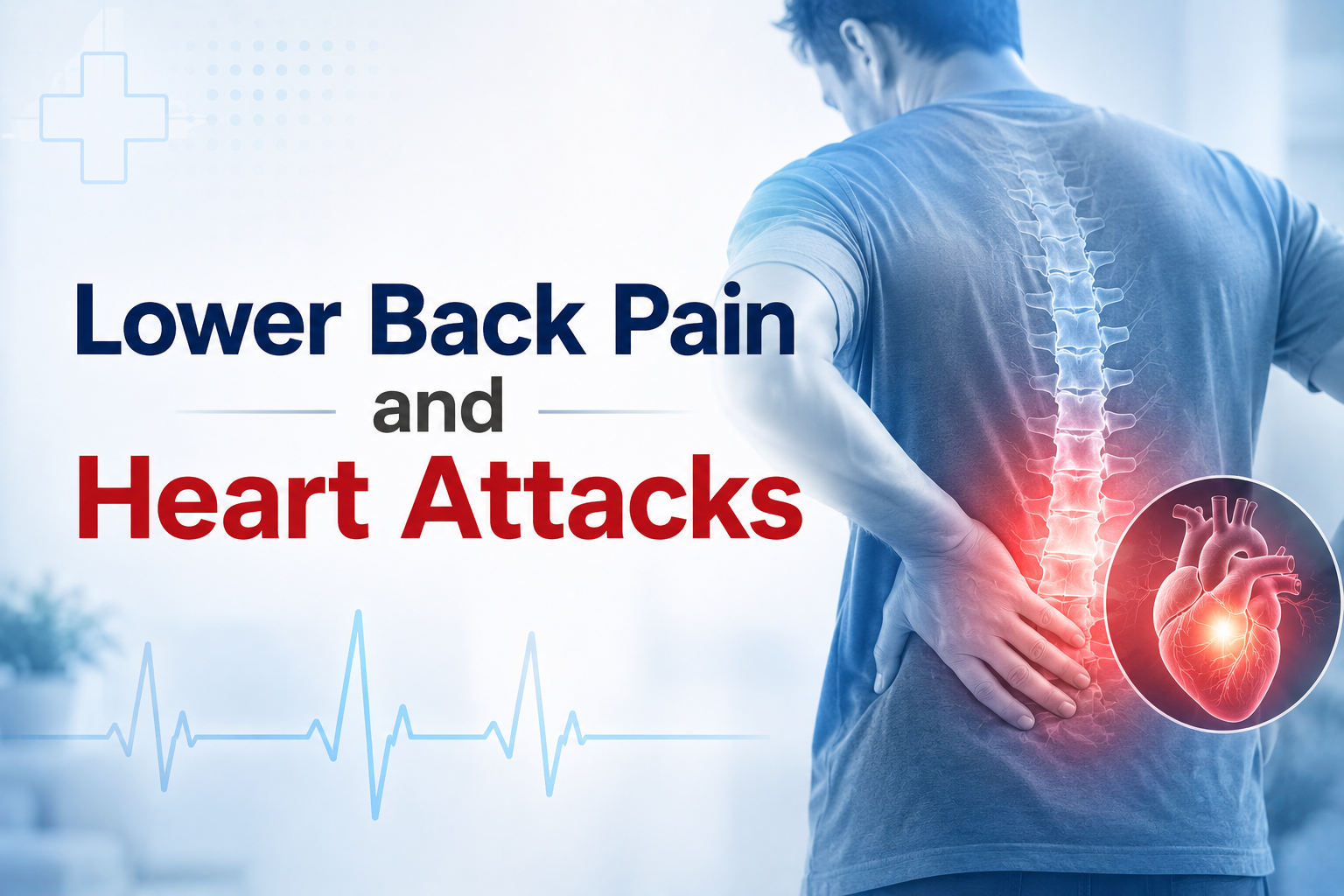
The connection between lower back pain and heart attacks is not something most people think about, but in some cases, back pain can be an unexpected warning sign of a serious heart problem. While lower back pain is usually caused by muscle strain, poor posture, or spinal conditions, it may occasionally occur alongside other heart attack symptoms.
Understanding this link can help people recognize potential dangers and seek timely medical care. In this article, we will discuss the relationship between lower back pain and heart attacks, explore heart attack symptoms in women vs. men, and explain the diagnosis and treatment of heart attacks to help you stay informed and protect your heart health.
What Is a Heart Attack?
A heart attack, also known as a myocardial infarction, occurs when blood flow to a part of the heart muscle becomes blocked. This blockage usually happens because of plaque buildup inside the coronary arteries. Without enough oxygen-rich blood, heart muscle cells begin to die.
Heart attacks are medical emergencies that require immediate treatment. Quick action can reduce damage to the heart and improve survival rates. Understanding both common and uncommon symptoms can help people seek care before complications become life-threatening.
Can Lower Back Pain Be a Sign of a Heart Attack?
Yes, in some cases, lower back pain can be associated with a heart attack. However, it is important to understand that lower back pain alone is rarely caused by a heart attack. Most lower back pain results from muscle strain, poor posture, arthritis, or spinal conditions.
The concern arises when back pain occurs together with other symptoms such as chest pressure, shortness of breath, nausea, dizziness, or sweating. In these situations, the connection between lower back pain and heart attacks becomes more significant and should not be ignored.
Women are more likely than men to experience unusual heart attack symptoms, including pain in the back, neck, shoulders, or jaw. Because these symptoms may not seem heart-related, many people delay seeking medical care.
How Heart Attacks Cause Referred Pain?
Heart attack-related pain does not always stay in the chest. The body sometimes experiences a phenomenon called referred pain, where discomfort is felt in a location different from the actual source of the problem.

What Is Referred Pain?
Referred pain occurs when nerves from different parts of the body share pathways within the spinal cord. As a result, the brain may misinterpret where the pain is coming from.
For example, the heart and certain areas of the back share nerve connections. During a heart attack, pain signals from the heart may be felt in the back instead of the chest.
Why the Back May Hurt During a Heart Attack
The nervous system does not always identify the exact source of internal pain. When the heart experiences distress, pain signals may travel to nearby nerve pathways. This can cause discomfort in:
- The upper back
- Between the shoulder blades
- The neck
- The shoulders
- The jaw
- Occasionally the lower back
This explains why some people report back pain even when the actual problem originates in the heart.
Common Heart Attack Symptoms to Watch For
Heart attack symptoms can vary from person to person. Some individuals experience sudden severe symptoms, while others develop mild signs that gradually worsen over several hours.
Common symptoms include:
| Symptom | Description |
| Chest Pain | Pressure, squeezing, fullness, or discomfort in the chest |
| Shortness of Breath | Difficulty breathing even during rest |
| Nausea | Feeling sick or vomiting |
| Sweating | Unusual cold sweats without physical activity |
| Dizziness | Feeling faint or lightheaded |
| Arm Pain | Pain spreading to one or both arms |
| Back Pain | Discomfort in the upper or lower back |
| Jaw or Neck Pain | Pain that radiates away from the chest |
Symptoms may appear suddenly or gradually. Any combination of these warning signs should be taken seriously.
Heart Attack Symptoms in Women vs. Men
Men and women can experience different heart attack symptoms. Understanding these differences can help prevent delays in diagnosis and treatment.
Symptoms Common in Men
Men often experience the classic heart attack symptoms that most people recognize. These include intense chest pain, pressure, and pain spreading to the left arm.
Men may also experience:
- Chest tightness
- Sweating
- Shortness of breath
- Nausea
- Dizziness
Symptoms Common in Women
Women are more likely to experience atypical symptoms. These symptoms may not immediately suggest a heart problem, making diagnosis more challenging.
Women may experience:
- Back pain
- Neck pain
- Jaw pain
- Extreme fatigue
- Nausea
- Shortness of breath
- Lightheadedness
Because of these differences, women should pay close attention to unusual symptoms, especially if they occur together.
Differences Between Heart-Related Back Pain and Regular Back Pain
Not all back pain is a sign of a heart attack. Knowing the differences can help determine when medical attention is necessary.
Heart-Related Back Pain
Heart-related back pain often:
- Appears suddenly
- Occurs without injury
- Feels deep, aching, or pressure-like
- May accompany chest discomfort
- Can occur with sweating or breathing difficulties
- Does not improve significantly with movement or rest
Regular Back Pain
Back pain caused by muscles or the spine often:
- Develops after physical activity
- Changes with movement
- Improves with rest
- Feels localized to one area
- May involve stiffness or muscle tenderness
Quick Comparison Table
| Feature | Heart-Related Back Pain | Regular Back Pain |
| Trigger | Heart problem | Injury or strain |
| Onset | Sudden | Gradual or activity-related |
| Chest Symptoms | Often present | Usually absent |
| Breathing Issues | Common | Rare |
| Response to Movement | Little change | Often changes |
| Emergency Concern | High | Usually low |
Other Causes of Lower Back Pain
Most cases of lower back pain have nothing to do with the heart. Understanding common causes can help provide perspective.
- Muscle Strain: Heavy lifting, sudden movements, and exercise can strain muscles and ligaments in the lower back.
- Herniated Disc: A slipped or bulging disc may place pressure on nerves, causing pain that sometimes radiates into the legs.
- Arthritis: Age-related wear and tear can affect the spine and cause chronic lower back discomfort.
- Sciatica: Compression of the sciatic nerve can create pain that travels from the lower back down the leg.
- Kidney Problems: Kidney infections or stones can sometimes cause pain that is mistaken for back pain.
- Poor Posture: Long periods of sitting and improper body mechanics can contribute to ongoing lower back discomfort.
Risk Factors That Increase Heart Attack Risk
Certain factors increase the likelihood of developing heart disease and experiencing a heart attack.
The most common risk factors include:
- High blood pressure
- High cholesterol levels
- Smoking
- Diabetes
- Obesity
- Physical inactivity
- Family history of heart disease
- Chronic stress
- Excessive alcohol consumption
- Older age
People with multiple risk factors should pay close attention to unusual symptoms, including possible connections between lower back pain and heart attacks.
When Lower Back Pain Requires Emergency Medical Attention
Most back pain does not require emergency care. However, there are situations where immediate medical evaluation is necessary.
Seek emergency help if lower back pain occurs with:
- Chest pain or pressure
- Difficulty breathing
- Sudden dizziness
- Fainting
- Severe sweating
- Nausea or vomiting
- Pain spreading to the arms, neck, or jaw
- Sudden unexplained weakness
Even if symptoms seem mild, it is better to be evaluated by healthcare professionals than to risk delaying treatment for a heart attack.
Diagnosis and Treatment of Heart Attacks
Prompt diagnosis allows doctors to begin treatment quickly and reduce damage to the heart muscle.
Diagnosis
Doctors may use several tests to confirm a heart attack, including:
- Electrocardiogram (ECG)
- Blood tests for cardiac enzymes
- Chest imaging
- Echocardiogram
- Coronary angiography
These tests help determine whether the heart is receiving enough blood flow.
Treatment
Treatment depends on the severity of the blockage and the patient’s overall condition.
Common treatments include:
- Blood-thinning medications
- Aspirin
- Oxygen therapy
- Angioplasty
- Stent placement
- Coronary artery bypass surgery
Early treatment greatly improves outcomes and reduces complications.
Prevention Tips for Better Heart Health
Preventing heart disease is one of the most effective ways to reduce the risk of heart attacks.
Healthy habits include:
- Follow a balanced diet rich in fruits and vegetables.
- Exercise regularly for at least 150 minutes each week.
- Maintain a healthy weight.
- Avoid smoking and tobacco products.
- Manage blood pressure and cholesterol levels.
- Control diabetes effectively.
- Reduce stress through relaxation techniques.
- Get regular medical checkups.
- Limit alcohol intake.
- Prioritize quality sleep.
These lifestyle choices support long-term heart health and overall well-being.
Frequently Asked Questions
Can lower back pain alone indicate a heart attack?
Lower back pain by itself is rarely a sign of a heart attack. Concern increases when it occurs alongside symptoms such as chest discomfort, shortness of breath, sweating, or dizziness.
Is back pain more common than chest pain during a heart attack?
No. Chest pain remains the most common heart attack symptom. Back pain is considered a less common or atypical symptom.
Why do women experience back pain during heart attacks more often?
Women often experience atypical symptoms because of differences in how heart disease affects the body and nervous system, making back pain more noticeable.
How can I tell if my back pain is heart-related?
Heart-related pain often occurs suddenly and may be accompanied by chest pressure, nausea, shortness of breath, or unusual sweating.
Can a heart attack happen without chest pain?
Yes. Some people, especially women, older adults, and individuals with diabetes, may experience a heart attack without obvious chest pain.
Should I go to the emergency room for unexplained back pain?
If the pain is severe or accompanied by symptoms suggesting a heart attack, immediate medical evaluation is recommended.
Can stress increase the risk of a heart attack?
Yes. Chronic stress can contribute to high blood pressure, unhealthy habits, and increased cardiovascular risk over time.
Conclusion
The relationship between lower back pain and heart attacks is not always straightforward. While most lower back pain results from musculoskeletal issues, heart attacks can occasionally cause pain that spreads to the back through referred pain pathways. This is especially important for women, who may experience atypical symptoms that differ from classic chest pain.
Recognizing the warning signs of a heart attack can save lives. If lower back pain occurs together with chest discomfort, breathing difficulties, dizziness, nausea, or excessive sweating, immediate medical attention is essential. Understanding these symptoms, managing risk factors, and maintaining a heart-healthy lifestyle can significantly reduce the risk of serious cardiovascular events.
Related Articles
Does the Sauna Help With Acne? Benefits, Risks, and What You Need to Know
Jawline Acne: Causes, Symptoms, Treatments, and Prevention Tips
How Long Does a Fractured Toe Take to Heal? (And What Affects Your Recovery)
Does Hard Water Cause Acne? Understanding the Connection Between Water Quality and Skin Breakouts
15 Health Benefits of Soursop Leaves: Nutrition, Uses, Tea Recipe, and Safety Guide