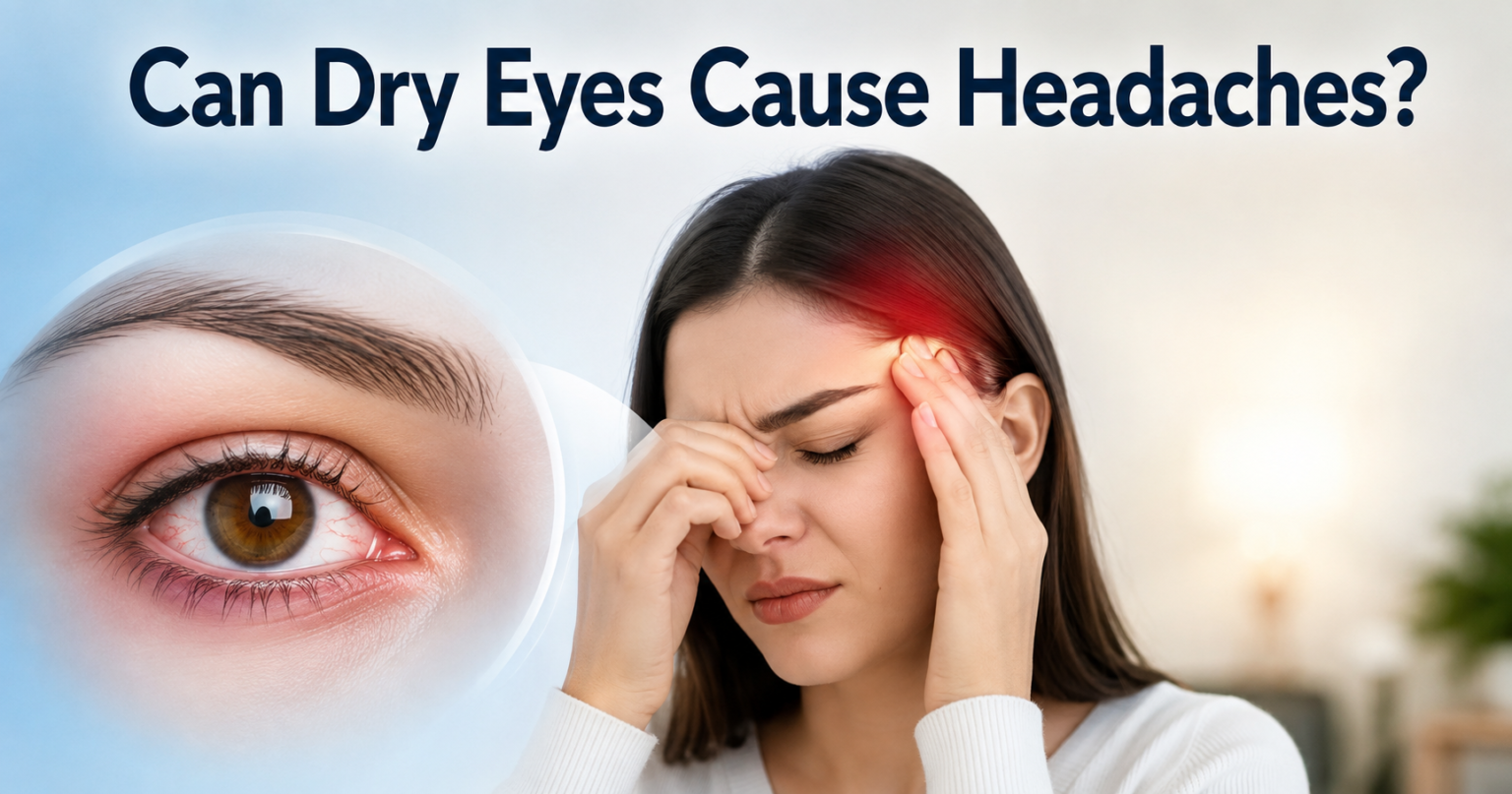
Yes, dry eyes can cause headaches, and this connection is far more common than most people realize. When the eyes do not produce enough tears or the tears evaporate too quickly, the surrounding muscles and nerves are forced to work harder than normal.
This extra strain often radiates outward into the forehead, temples, and the area around the eyes, producing a dull, persistent headache.
The discomfort tends to build gradually through the day, especially during long periods of screen use, reading, or exposure to dry air, and it usually eases once the eyes are properly lubricated and rested.
How Dry Eyes Lead to Headaches?
Dry eyes trigger headaches through a chain reaction that starts with irritation and ends with muscular and nerve-related pain. Below is a closer look at each mechanism involved in this process.
Eye Strain and Overworked Muscles
When tears fail to coat the eye surface evenly, the eye muscles responsible for focusing have to work harder to maintain clear vision. This constant overexertion tires out the muscles around the eyes and forehead. Over time, that fatigue translates into a tight, pressing sensation that many people describe as a band-like headache across the front of the head.
Inflammation and Nerve Irritation
Chronic dryness triggers low-grade inflammation on the surface of the eye, which activates sensitive nerve endings. Since many of these nerves connect to pathways shared with the trigeminal nerve, the same nerve heavily involved in headache and migraine pain, irritation in the eyes can be interpreted by the brain as pain in the forehead or temples. This shared nerve pathway is one of the clearest scientific explanations for why eye dryness so often shows up as head pain.
Compensatory Blinking and Squinting
People with dry eyes tend to blink more frequently or squint in an effort to spread moisture across the eye surface. This repetitive muscular effort, especially around the eyelids and brow, can create tension that spreads into the surrounding scalp and forehead muscles. Over a full day, this seemingly small habit adds up to noticeable strain and discomfort.
Dry Eyes and Migraine Aggravation
For individuals who already experience migraines, dry eyes can act as a triggering or worsening factor. The irritation and light sensitivity that often accompany dry eye disease can lower the threshold at which a migraine begins, making attacks more frequent or more intense. Managing dry eyes in these cases sometimes leads to a noticeable reduction in migraine frequency.


Symptoms That Indicate Dry-Eye-Related Headaches
Recognizing the specific pattern of a dry-eye headache makes it easier to address the root cause instead of just treating the pain. The sections below outline what to watch for.
Location of Pain
Dry-eye headaches typically concentrate around the forehead, temples, and the area directly behind or above the eyes. The pain is often described as pressing or aching rather than sharp or throbbing, and it tends to be felt on both sides of the head rather than isolated to one spot.
Accompanying Eye Symptoms
Alongside the headache, most people notice burning, grittiness, or a sensation of sand in the eyes. Redness, excessive tearing as a reflex response, and sensitivity to light commonly appear together, which helps distinguish this type of headache from other causes such as dehydration or poor posture.
Timing Patterns
These headaches usually worsen as the day progresses, particularly after extended screen time, reading, or exposure to air conditioning or heating. Symptoms often peak in the late afternoon or evening and may improve somewhat after rest, blinking exercises, or use of lubricating eye drops.
Common Causes of Dry Eyes
Identifying what is drying out the eyes in the first place is essential for long-term relief. The following factors are the most frequent contributors.
Environmental Factors
Air conditioning, heating systems, wind, and low-humidity climates all speed up tear evaporation. People who work in air-conditioned offices or live in dry regions are especially prone to developing chronic dryness that eventually leads to headaches.
Digital Screen Use
Staring at screens for long stretches significantly reduces the natural blink rate, sometimes by more than half. Fewer blinks mean less tear distribution across the eye surface, which is why screen-heavy jobs are strongly linked to both dry eyes and associated headaches.
Aging and Hormonal Changes
Tear production naturally declines with age, and hormonal shifts, particularly during menopause, can further reduce tear film stability. This makes older adults and postmenopausal women more susceptible to both dry eye disease and the headaches that come with it.
Underlying Medical Conditions
Certain autoimmune conditions, thyroid disorders, and long-term use of medications such as antihistamines or antidepressants can suppress tear production. When dry eyes stem from an underlying condition, headaches may persist until that root issue is properly diagnosed and managed.
Comparing Dry Eye Treatment Options
Choosing the right approach depends on the severity of dryness and how much it is affecting daily life. The table below compares common options to help guide that decision, though a licensed eye doctor should confirm the best fit for individual cases.
| Treatment Option | Best For | Effectiveness Notes | Medical Guidance Needed |
| Artificial tears (over-the-counter) | Mild, occasional dryness | Provides short-term relief; needs reapplication throughout the day | Generally safe, but consult a doctor if used more than four times daily |
| Prescription eye drops | Moderate to chronic dryness | Targets inflammation directly; works over weeks, not instantly | Requires a doctor’s prescription and follow-up |
| Punctal plugs | Persistent dryness unresponsive to drops | Keeps natural tears on the eye surface longer | Must be inserted by an ophthalmologist |
| Lifestyle and environmental changes | All severity levels, as a supporting measure | Reduces triggers but may not resolve dryness alone | No prescription needed, but useful alongside other treatment |
When to See a Doctor
Not every dry-eye headache requires medical attention, but certain warning signs mean it is time to book an appointment rather than continue self-treating.
Red Flag Symptoms
Sudden vision changes, severe eye pain, headaches that do not respond to rest or lubrication, or headaches accompanied by nausea and visual disturbances should be evaluated promptly. These symptoms can sometimes point to conditions beyond simple dry eye disease.
Diagnostic Tests Used by Eye Doctors
Eye doctors commonly use tear film break-up time tests, Schirmer’s test to measure tear production, and surface staining exams to assess the severity of dryness. These tests help confirm whether dry eye disease is the actual source of recurring headaches and guide the choice of treatment.
Prevention and Home Management
Small, consistent habits often make the biggest difference in reducing both dryness and the headaches that follow it.
Blinking Exercises and the 20-20-20 Rule
Taking a break every twenty minutes to look at something twenty feet away for twenty seconds helps reset the blink rate during screen use. Deliberately practicing full, complete blinks throughout the day also helps redistribute moisture more evenly across the eye surface.
Humidifiers and Environmental Adjustments
Adding a humidifier in dry indoor spaces, positioning air vents away from direct eye exposure, and wearing wraparound sunglasses outdoors in windy conditions all reduce the environmental triggers that accelerate tear evaporation.
Hydration and Diet
Drinking adequate water throughout the day supports overall tear production, while diets rich in omega-3 fatty acids, found in fish and flaxseed, have been associated with improved tear film quality in several studies.
Frequently Asked Questions
Can dry eyes cause migraines specifically?
Yes, dry eyes can act as a trigger for migraines in people who are already prone to them, largely due to shared nerve pathways and light sensitivity.
How long do dry-eye headaches last?
They typically ease within a few hours of using lubricating drops or resting the eyes, though chronic cases may persist daily until the underlying dryness is treated.
Are dry-eye headaches felt on one side or both sides of the head?
Most dry-eye headaches are felt on both sides, usually across the forehead and temples, unlike migraines which are often one-sided.
Conclusion
Dry eyes and headaches are closely connected through shared muscles, nerves, and compensatory habits like squinting and reduced blinking.
Recognizing the pattern early and addressing the root dryness, whether through drops, environmental changes, or medical treatment, offers the most reliable path to lasting relief. Persistent or severe symptoms still warrant a proper eye examination to rule out other causes.
Related Post’s
Can Eye Dryness Cause Blurred Vision? Causes & Relief
What Part of the Breast Hurts in Early Pregnancy? Guide
How Long Does a Fractured Toe Take to Heal? (And What Affects Your Recovery)
Why Do My Veins Hurt in My Arm? Causes, Symptoms & Relief
Does the Sauna Help With Acne? Benefits, Risks, and What You Need to Know