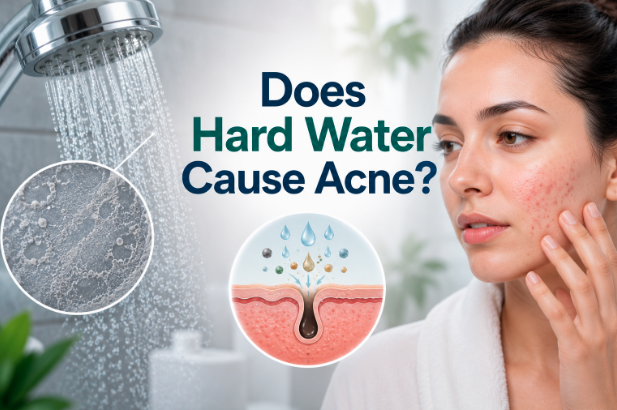
Acne is one of the most common skin concerns affecting people of all ages. While hormones, genetics, diet, and skincare products are often discussed as possible causes of breakouts, many people overlook another factor that may influence skin health: water quality. If you have recently noticed more pimples, dryness, or irritation after washing your face, you may have wondered, does hard water cause acne?
The answer is not entirely straightforward. Hard water does not directly create acne in the same way that excess oil or acne-causing bacteria do.
However, it can contribute to conditions that make acne worse for some individuals. Understanding how hard water affects the skin can help you make better skincare choices and reduce unnecessary irritation.
What Is Hard Water?
Hard water is water that contains high levels of dissolved minerals, primarily calcium and magnesium. These minerals are naturally picked up as water passes through rocks and soil before reaching homes and businesses.
The hardness of water can vary significantly depending on geographic location. Some areas have naturally soft water with low mineral content, while others have hard water with much higher concentrations of minerals.
Common characteristics of hard water include:
- Soap that does not lather easily
- White mineral deposits on faucets and showerheads
- Spots on dishes and glassware
- Dry feeling skin after bathing
- Hair that feels rough or difficult to manage
Although hard water is generally safe to drink, its effects on skin and hair can sometimes be noticeable.
Hard Water vs. Soft Water
The main difference between hard and soft water is mineral content. Soft water contains fewer dissolved minerals, making it easier for soap and cleansers to rinse away completely.



The table below highlights some key differences:
| Feature | Hard Water | Soft Water |
|---|---|---|
| Mineral Content | High | Low |
| Soap Lather | Less effective | More effective |
| Residue on Skin | More common | Less common |
| Skin Dryness | More likely | Less likely |
| Mineral Buildup | Common | Rare |
Understanding this difference is important when exploring the question: does hard water cause acne?
Understanding Acne
Acne is a skin condition that develops when pores become clogged with oil, dead skin cells, and bacteria. The condition can appear in different forms and may affect the face, chest, back, shoulders, and other areas of the body.
Types of Acne
Several forms of acne exist, including:
- Whiteheads
- Blackheads
- Papules
- Pustules
- Nodules
- Cystic acne
Each type develops differently, but they all involve blocked pores and inflammation to some degree.
Main Causes of Acne
Acne is influenced by multiple factors rather than a single cause. Common contributors include hormonal fluctuations, excess sebum production, bacterial growth, inflammation, stress, genetics, and certain cosmetic products.
Because acne is a complex condition, environmental factors such as water quality may also play a supporting role in some cases.
Does Hard Water Cause Acne?
Many people searching online ask the same question: does hard water cause acne? The short answer is that hard water does not directly cause acne, but it may create conditions that encourage breakouts or worsen existing acne.
Acne itself develops primarily because of clogged pores, excess oil production, inflammation, and bacteria. Hard water does not create these factors directly. However, the minerals present in hard water can interfere with the skin’s natural balance and contribute to irritation.
For individuals with sensitive or acne-prone skin, this irritation may make existing acne appear worse or increase the likelihood of breakouts.
Therefore, a more accurate statement would be that hard water can indirectly contribute to acne problems in certain people.
How Hard Water Affects the Skin
To understand why some people experience more breakouts in hard water areas, it is important to examine how hard water interacts with the skin.
Mineral Residue on the Skin
When hard water comes into contact with soap or facial cleansers, minerals can react with cleansing ingredients and create a residue. This residue may remain on the skin after washing.
Over time, the buildup can make the skin feel rough, tight, or less clean than expected. Residue may also trap dirt, oil, and dead skin cells on the surface of the skin.
Reduced Cleansing Effectiveness
One of the most significant issues with hard water is that it can make cleansers less effective. Instead of rinsing away completely, cleansing products may leave a film behind.
As a result, impurities may remain on the skin, increasing the chance of clogged pores. While this does not guarantee acne formation, it may contribute to an environment where breakouts are more likely.
Skin Barrier Damage
The skin barrier acts as a protective shield that helps retain moisture and defend against environmental irritants. Hard water can weaken this barrier over time, particularly in individuals with sensitive skin.
When the skin barrier becomes compromised, the skin may become:
- Dry
- Tight
- Red
- Itchy
- More prone to inflammation
Inflammation is a major factor involved in acne development and worsening.
Hard Water and Acne-Prone Skin
People with acne-prone skin often have a more reactive skin barrier. Even minor irritation can trigger increased redness, swelling, and breakouts.
When mineral deposits accumulate on the skin, they may interfere with normal skin function. Some individuals respond by producing more oil to compensate for dryness caused by hard water exposure.
This creates a cycle where:
- Hard water contributes to dryness.
- The skin produces more oil.
- Excess oil combines with dead skin cells.
- Pores become clogged.
- Acne develops or worsens.
This cycle helps explain why some people notice improvements in their skin after switching to filtered or softened water.
Signs That Hard Water May Be Affecting Your Skin
Although hard water is not always the culprit, several signs may suggest that it is contributing to your skin concerns.
Persistent Breakouts
If you follow a consistent skincare routine but continue experiencing unexplained breakouts, hard water may be one factor worth investigating.
Tightness After Washing
Healthy skin should feel clean and comfortable after cleansing. If your face feels unusually tight or dry immediately after washing, hard water could be contributing to moisture loss.
Increased Irritation
People often notice more redness, sensitivity, or itchiness when exposed to hard water regularly.
Dull Complexion
Mineral residue can leave skin looking less vibrant and healthy, resulting in a dull appearance.
Sudden Skin Changes After Moving
Many people experience changes in their skin after relocating to a new city or region. Differences in water hardness may partly explain these changes.
Hard Water vs. Soft Water for Skin Health
When comparing hard water and soft water, soft water is generally considered more skin-friendly.
Soft water allows cleansers to work efficiently and rinse away completely. This reduces the likelihood of residue accumulation and minimizes irritation.
The benefits of soft water may include:
- Better cleansing
- Improved hydration
- Reduced skin tightness
- Less irritation
- Improved comfort for sensitive skin
However, it is important to remember that switching to soft water alone will not cure acne. Acne usually requires a comprehensive approach that includes proper skincare and, in some cases, medical treatment.
Other Skin Problems Linked to Hard Water
The discussion around does hard water cause acne often extends to other skin conditions because hard water may affect overall skin health.
Dry Skin
Mineral deposits can interfere with moisture retention, leading to persistent dryness and roughness.
Eczema
Individuals with eczema often have a weakened skin barrier. Hard water may increase irritation and worsen symptoms in some cases.
Dermatitis
Certain people experience inflammation and irritation after prolonged exposure to hard water.
Sensitive Skin Reactions
Those with naturally sensitive skin may notice increased discomfort, redness, and stinging when washing with hard water.
How to Test If You Have Hard Water
If you suspect hard water may be affecting your skin, several testing options are available.
Home Testing Kits
Water hardness test kits are inexpensive and easy to use. They provide a quick estimate of mineral levels in your household water supply.
Local Water Reports
Many municipalities publish annual water quality reports that include information about water hardness.
Professional Testing
For the most accurate results, professional water testing services can provide detailed mineral analysis.
Knowing your water quality can help determine whether hard water may be contributing to your skin concerns.
Ways to Protect Your Skin from Hard Water
Fortunately, there are several practical strategies that may reduce the effects of hard water on the skin.
Use a Gentle Cleanser
Choose a mild, fragrance-free cleanser that supports the skin barrier. Harsh cleansers can worsen dryness and irritation.
Avoid Overwashing
Washing your face too frequently may strip away natural oils and increase sensitivity. Most people only need to cleanse twice daily.
Apply Moisturizer Immediately
Applying moisturizer after cleansing helps lock in hydration and strengthen the skin barrier.
Use Barrier-Supporting Ingredients
Look for skincare ingredients such as:
- Ceramides
- Hyaluronic acid
- Glycerin
- Niacinamide
These ingredients help support skin hydration and recovery.
Consider Micellar Water
Some individuals find that using micellar water as a final cleansing step helps remove mineral residue left behind by hard water.
Water Filtration Solutions
If hard water is significantly affecting your skin, you may want to explore filtration options.
Shower Filters
Shower filters can reduce certain impurities and improve the overall bathing experience.
Faucet Filters
Facial cleansing with filtered water may help minimize mineral exposure.
Whole-House Water Softeners
Water softeners are designed to reduce calcium and magnesium levels throughout the home. While they require a larger investment, they provide the most comprehensive solution.
Comparing Solutions
| Solution | Cost | Effectiveness | Maintenance |
| Shower Filter | Low | Moderate | Low |
| Faucet Filter | Low to Moderate | Moderate | Low |
| Water Softener | High | High | Moderate |
Choosing the right solution depends on your budget, water hardness level, and skincare concerns.
Best Skincare Routine for Hard Water Areas
Living in a hard water area does not mean you are destined to struggle with acne. A thoughtful skincare routine can help minimize problems.
Morning Routine
Begin with a gentle cleanser followed by a hydrating serum and moisturizer. Finish with sunscreen to protect the skin from environmental damage.
Evening Routine
Remove makeup and sunscreen thoroughly before cleansing. Follow with treatment products if needed and finish with a nourishing moisturizer.
Weekly Care
Incorporating gentle exfoliation once or twice weekly can help remove dead skin cells and reduce buildup. Avoid excessive exfoliation, as this may damage the skin barrier.
Consistency is more important than complexity. A simple routine performed regularly often produces better results than an elaborate routine used inconsistently.
Common Myths About Hard Water and Acne
Several misconceptions exist regarding the relationship between hard water and acne.
Myth 1: Hard Water Always Causes Acne
Not everyone who uses hard water develops acne. Individual skin type and genetics play major roles.
Myth 2: Soft Water Eliminates Acne Completely
Soft water may improve skin comfort, but it does not eliminate the underlying causes of acne.
Myth 3: Water Quality Is the Only Cause of Breakouts
Acne is influenced by many factors including hormones, genetics, stress, and skincare habits.
Myth 4: Expensive Filters Guarantee Perfect Skin
Filtration systems may help reduce irritation, but they are not a cure for acne.
When to See a Dermatologist
If acne persists despite making changes to your skincare routine and water exposure, consulting a dermatologist is a good idea.
Professional help may be necessary when:
- Acne is severe
- Scarring develops
- Over-the-counter treatments fail
- Skin irritation becomes persistent
- Breakouts affect confidence and quality of life
A dermatologist can identify the root causes of acne and recommend treatments tailored to your skin type.
Frequently Asked Questions
Does hard water cause acne directly?
No. Hard water does not directly cause acne, but it may contribute to conditions that make breakouts more likely.
Can hard water clog pores?
Mineral residue and incomplete cleansing may indirectly contribute to clogged pores in some individuals.
Will a shower filter help acne?
A shower filter may reduce irritation and improve skin comfort, although results vary from person to person.
Is hard water bad for sensitive skin?
Sensitive skin is often more vulnerable to the drying and irritating effects of hard water.
Can changing water quality improve acne?
Some people notice improvements after switching to softer or filtered water, especially if hard water was contributing to skin irritation.
Conclusion
So, does hard water cause acne? The evidence suggests that hard water does not directly create acne, but it can contribute to skin conditions that make breakouts worse. Mineral residue, reduced cleanser effectiveness, skin barrier disruption, and increased irritation can all create an environment that is less favorable for healthy skin.
For people with acne-prone or sensitive skin, hard water may be an overlooked factor worth considering. While changing water quality alone is unlikely to eliminate acne completely, combining proper skincare, hydration, barrier repair, and appropriate acne treatments can help improve overall skin health.
Understanding how hard water affects your skin allows you to make informed decisions and take practical steps toward achieving a clearer, healthier complexion.
Related Articles
Signs of a Sinus Infection: Early Symptoms, Severe Signs & When to See a Doctor
Is Diabetes Genetic? What Science Says About Family Risk
Abbeville Community Health Center: Services, Programs, Benefits, and Patient Care Guide
Jawline Acne: Causes, Symptoms, Treatments, and Prevention Tips
Can root canals cause cancer? What the science actually says