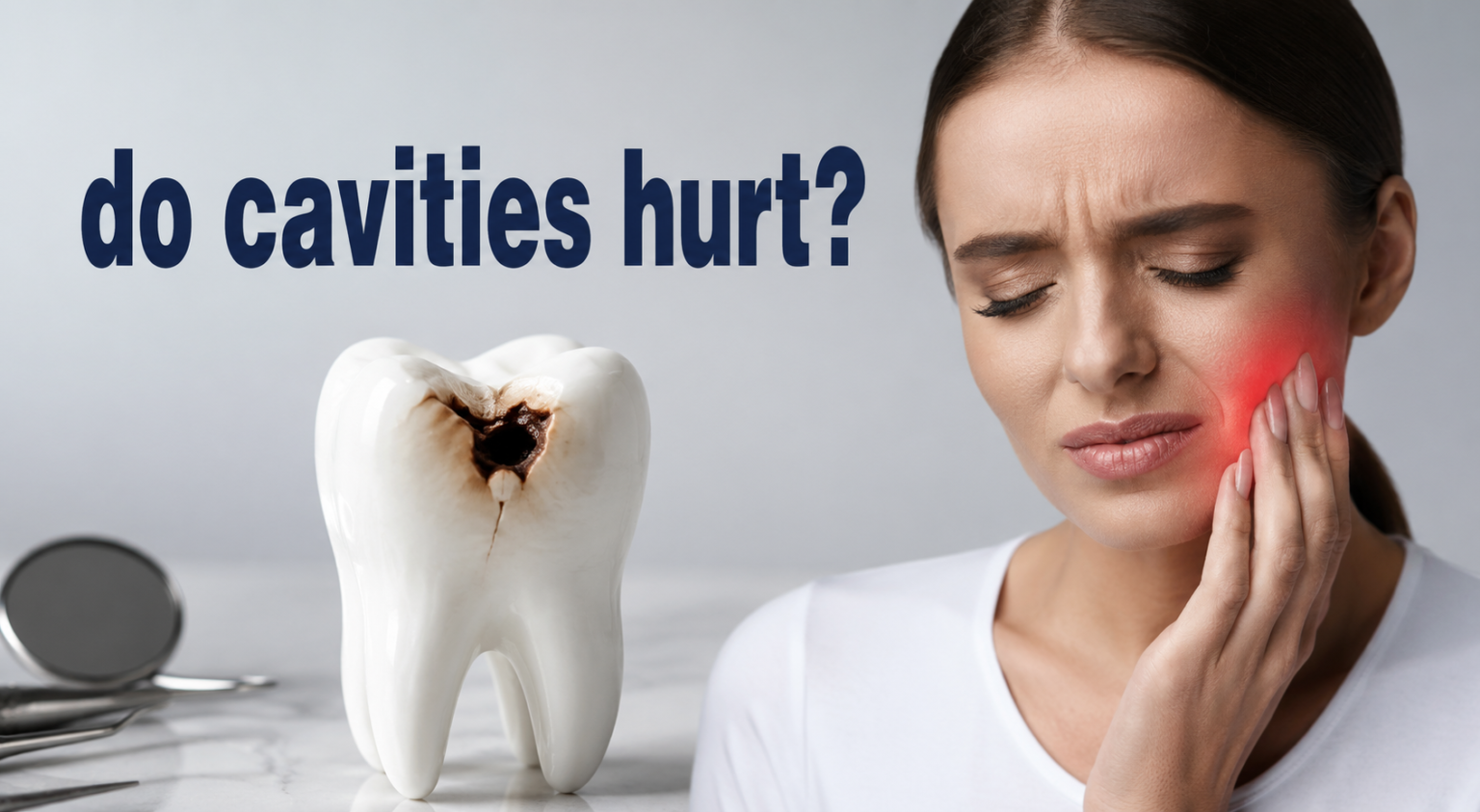
Cavities do not always hurt, and that is exactly what makes them dangerous. In the early stage, when decay only sits in the outer enamel, most people feel nothing unusual at all. Pain tends to show up later, once decay moves into the softer dentin underneath, and becomes far more noticeable once it reaches the nerve inside the tooth.
So the honest answer to “do cavities hurt” is: it depends entirely on how deep the decay has traveled. A cavity can exist quietly for months, then suddenly announce itself with sharp sensitivity or a constant ache. Understanding this timeline is the best reason to keep up with regular checkups instead of waiting for pain to signal a problem.
This guide covers every stage of cavity pain, from the painless start to the emergency-level toothache, and what’s happening inside the tooth along the way.
Key Takeaways
- Early cavities in the enamel are usually painless and often go unnoticed.
- Sensitivity to hot, cold, or sweet foods usually signals decay has reached the dentin.
- Sharp or throbbing pain typically means decay is near or has reached the nerve.
- Pain can disappear even as a cavity worsens — a warning sign, not good news.
- Untreated, a painful cavity can lead to infection, abscess, and swelling.
- Daily hygiene, less sugar, and routine checkups catch decay before it hurts.
Do Cavities Hurt in the Early Stages?
In the earliest stage, most people feel nothing at all, because the damage is confined to the enamel, which has no nerve endings of its own. This is why early cavities are so easy to miss without a professional exam.
Enamel-Stage Cavities Are Usually Painless
Enamel is a hard, mineralized layer with no blood supply or nerve tissue, so decay sitting only in this outer shell sends no pain signal to the brain. Per the American Dental Association, this early demineralization stage can sometimes be reversed with fluoride and better hygiene before it becomes a true cavity — the ideal point for a dentist to intervene.
Why Early Decay Often Goes Unnoticed
Because there is no discomfort, people usually keep eating and brushing normally with no clue decay has started. It’s typically caught only through a routine exam or X-ray, since a visual check alone can miss decay forming between teeth.
Signs to Watch For Before Pain Starts
Even without pain, a few visual clues are worth watching for:
- A small white or chalky spot signaling early mineral loss.
- A faint brown or dark discoloration that wasn’t there before.
- A slightly rough patch on the smooth enamel surface.
- Mild, brief sensitivity that’s easy to dismiss.
None guarantee pain is coming soon, but they’re worth mentioning at your next visit.



When Does Cavity Pain Actually Begin?
Pain generally starts once decay moves past the enamel into the dentin, the softer layer containing microscopic nerve channels. This is the stage where “do cavities hurt” usually gets a clear yes.
Dentin-Stage Sensitivity
Dentin contains tiny tubules connecting to the nerve at the tooth’s center, so once decay reaches this layer, temperature and pressure changes travel through and register as discomfort. Per the Cleveland Clinic, this sensitivity is often the first clear symptom that decay has progressed beyond enamel. Treatment at this stage is usually still simple — typically a standard filling.
Triggers — Hot, Cold, Sweet, and Pressure
Certain everyday triggers commonly bring short bursts of discomfort at this stage:
- Cold drinks or ice cream causing a sharp twinge.
- Hot coffee or soup triggering a dull ache.
- Sugary foods causing a brief sting near a visible spot.
- Biting pressure on that tooth producing mild discomfort.
How This Pain Differs From Enamel-Stage Symptoms
Unlike the earlier stage, dentin-stage pain is short but noticeable, usually lasting only seconds after the trigger is removed. It isn’t yet constant or throbbing — a distinction that matters, since that next level usually signals decay going deeper toward the nerve.
What Does Advanced Cavity Pain Feel Like?
Once decay reaches the pulp — the soft tissue at the tooth’s center holding nerves and blood vessels — pain typically becomes far more intense and harder to ignore, often prompting an emergency appointment.
Pulp and Nerve Involvement
When bacteria and decay reach the pulp, the nerve becomes irritated or inflamed, a condition dentists call pulpitis. Depending on progression, this ranges from a strong temperature reaction to constant, unprovoked pain needing no trigger at all.
Sharp vs. Dull vs. Throbbing Pain
Pain at this stage tends to follow recognizable patterns:
| Pain Type | Common Description | Likely Meaning |
| Sharp, brief pain | Sudden jolt when biting or with cold | Nerve irritated but may still recover |
| Dull, lingering ache | Soreness continuing after trigger is gone | Inflammation is deeper, more established |
| Throbbing, constant pain | Pulsing pain with no trigger needed | Nerve may be dying or already infected |
Nighttime or Spontaneous Toothache
Pain that worsens while lying down or wakes someone at night is telling, since lying flat increases blood flow and pressure in the inflamed pulp. Pain with no clear trigger usually points to a nerve under significant, ongoing stress.
Can a Cavity Hurt Without Warning?
Not every cavity follows the expected pattern of mild sensitivity building into sharper pain — part of why checkups matter more than pain alone.
Silent Decay Between Teeth
Cavities forming between two teeth are often invisible in a casual mirror check and may cause no pain until they’ve grown considerably larger. Floss catching or fraying repeatedly in one spot can be an early hint, even before discomfort appears.
Cavities Under Old Fillings
Decay can also develop underneath an existing filling or crown, hidden from view and sometimes from pain, until it has spread significantly. Because the restoration still looks intact, this type is frequently caught only through routine X-rays.
Why Pain Isn’t a Reliable Early Indicator
Pain depends on how close decay is to the nerve, not necessarily on how large the cavity has become. A wide but shallow cavity might hurt very little, while a smaller one positioned closer to the nerve can cause disproportionate discomfort — which is exactly why pain alone isn’t a dependable way to judge severity.
What Happens If a Painful Cavity Is Left Untreated?
Ignoring a painful cavity doesn’t make the problem disappear — it usually keeps moving in a more serious direction rather than resolving on its own.
Infection and Abscess Risk
Once bacteria reach the pulp and the nerve dies, an infection can develop at the root tip, sometimes forming a pocket of pus known as an abscess. Per the National Institutes of Health, dental abscesses are potentially serious infections that can spread if untreated.
Swelling and Spreading Pain
An infected tooth can cause swelling in the face, jaw, or neck, with pain radiating toward the ear or jaw — a pattern signaling the problem is no longer contained to one small area.
When Tooth Pain Becomes an Emergency
Certain signs mean a dental visit should happen immediately:
- Facial or jaw swelling, especially if increasing.
- Fever alongside tooth pain.
- Difficulty swallowing or breathing.
- Severe, constant pain unrelieved by medication.
How to Relieve Cavity Pain at Home?
While waiting for a dental appointment, a few simple measures can make discomfort more manageable, though none address the actual decay.
Short-Term Relief Methods
Rinsing gently with warm salt water, taking an over-the-counter pain reliever as directed, and avoiding very hot, cold, or sugary foods can reduce discomfort temporarily. Keeping the head elevated at night may also ease throbbing.
What NOT to Do
Placing aspirin directly against the gum, using extreme hot or cold rinses, or ignoring worsening swelling can make things worse. None of these approaches stop the decay or infection underneath.
Why Home Care Isn’t a Substitute for Treatment
Temporary relief makes pain more bearable, but decay keeps progressing underneath regardless of how manageable it feels. Relying only on home remedies usually means the eventual dental work becomes more extensive.
Cavity Stages, Pain Level, and Treatment Needed
| Stage | Typical Pain Level | Common Treatment |
| Enamel decay | None | Fluoride treatment, improved hygiene |
| Dentin decay | Mild, trigger-based sensitivity | Standard filling |
| Pulp involvement | Sharp, throbbing, or constant | Root canal treatment |
| Infection/abscess | Severe, spreading pain, swelling | Root canal or extraction, possible antibiotics |
How Dentists Diagnose and Treat a Painful Cavity?
A dentist combines a visual exam, X-rays, and the patient’s symptoms to determine how deep a cavity has progressed before choosing treatment.
Diagnostic Methods
X-rays reveal decay between teeth or beneath old fillings that a visual exam alone would miss, while a cold or heat test helps confirm whether the nerve is still healthy.
Treatment Options by Stage
Treatment generally scales with severity: fluoride and monitoring for early demineralization, a standard filling once decay reaches the dentin, and a root canal once the nerve is involved. Where infection has caused significant damage, extraction may be the only remaining option.
What to Expect During Treatment
Most modern treatments, including fillings and root canals, use local anesthesia, so the procedure itself is typically far less painful than the toothache that brought the person in. Recovery is usually just mild soreness for a day or two.
How to Prevent Cavities From Reaching the Painful Stage?
Prevention remains far more comfortable, and far less expensive, than treating a cavity that has already reached the nerve.
Daily Oral Hygiene Habits
Brushing twice daily with fluoride toothpaste, flossing daily, and replacing a toothbrush every few months all reduce the plaque buildup that leads to decay. Consistency matters more than intensity here.
Diet and Cavity Risk
Frequent snacking on sugary or starchy foods gives bacteria repeated chances to produce enamel-eroding acid throughout the day. Limiting how often sugar is consumed, not just the total amount, tends to matter more for prevention.
Importance of Regular Dental Checkups
Routine visits let a dentist catch decay at the painless enamel stage, long before any symptom would prompt a visit on its own — often the difference between a fluoride treatment and an eventual root canal.
FAQs
Can a cavity hurt and then stop hurting?
Yes, pain can fade if the nerve dies, but this doesn’t mean the problem is resolved — it usually means infection is developing silently.
Is tooth pain always a cavity?
Not always. Gum disease, a cracked tooth, or sinus pressure can cause similar pain, so a dental exam is the only reliable way to confirm the cause.
How fast do cavities go from painless to painful?
This varies by person and tooth location, ranging from several months to a few years, depending on diet and hygiene.
Can children’s cavities hurt differently than adults?
Children’s teeth have thinner enamel and dentin, so decay can reach the nerve faster, sometimes causing pain sooner than in an adult.
Does a cavity hurt more at night?
Yes, lying down increases blood flow to the head, intensifying throbbing pain from an inflamed nerve compared to sitting upright.
Conclusion
Cavities don’t always announce themselves early, which is why pain should never be the only signal used to judge dental health.
Whether “do cavities hurt” gets a yes or no depends entirely on how deep decay has traveled, and by the time pain shows up, treatment is often more involved.
Regular checkups and prompt attention to new sensitivity remain the best way to stay ahead of a cavity before it becomes a genuine toothache.
Related Articles
Is Diabetes Genetic? What Science Says About Family Risk
Urgent Care for Kidney Stones: When It’s the Right Call
Can IBS Cause Back Pain? Causes, Symptoms, Treatment, and Relief Tips
How to Know If You Have a Cavity: Warning Signs and Symptoms
How to Relieve Tooth Pain From Sinus Pressure: A Complete Guide