Cavities are one of the most common dental problems people deal with, yet many go unnoticed until decay has already reached a deeper layer of the tooth. Learning how to know if you have a cavity early can save you from painful toothaches, expensive dental work, and even tooth loss later on.
The tricky part is that cavities often develop quietly, with little to no discomfort in their earliest stages. By the time pain or visible damage shows up, decay has usually moved past the point where simple prevention is enough.
This guide walks through the signs, sensations, and diagnostic clues that help you recognize a cavity early, along with guidance on when a dental visit becomes necessary.
What Is a Cavity?
A cavity is a small area of permanent damage in the hard outer surface of a tooth, caused by ongoing decay. Understanding how it forms makes it easier to recognize the warning signs covered later in this article.
How Tooth Decay Forms
Tooth decay begins when bacteria living in the mouth feed on sugars and starches left behind from food and drinks.
As these bacteria break down leftover particles, they produce acid as a byproduct, and this acid slowly wears down the protective enamel covering each tooth.
Over time, repeated acid exposure weakens the enamel enough that a small opening begins to form, which eventually becomes a cavity.
The Stages of Cavity Development
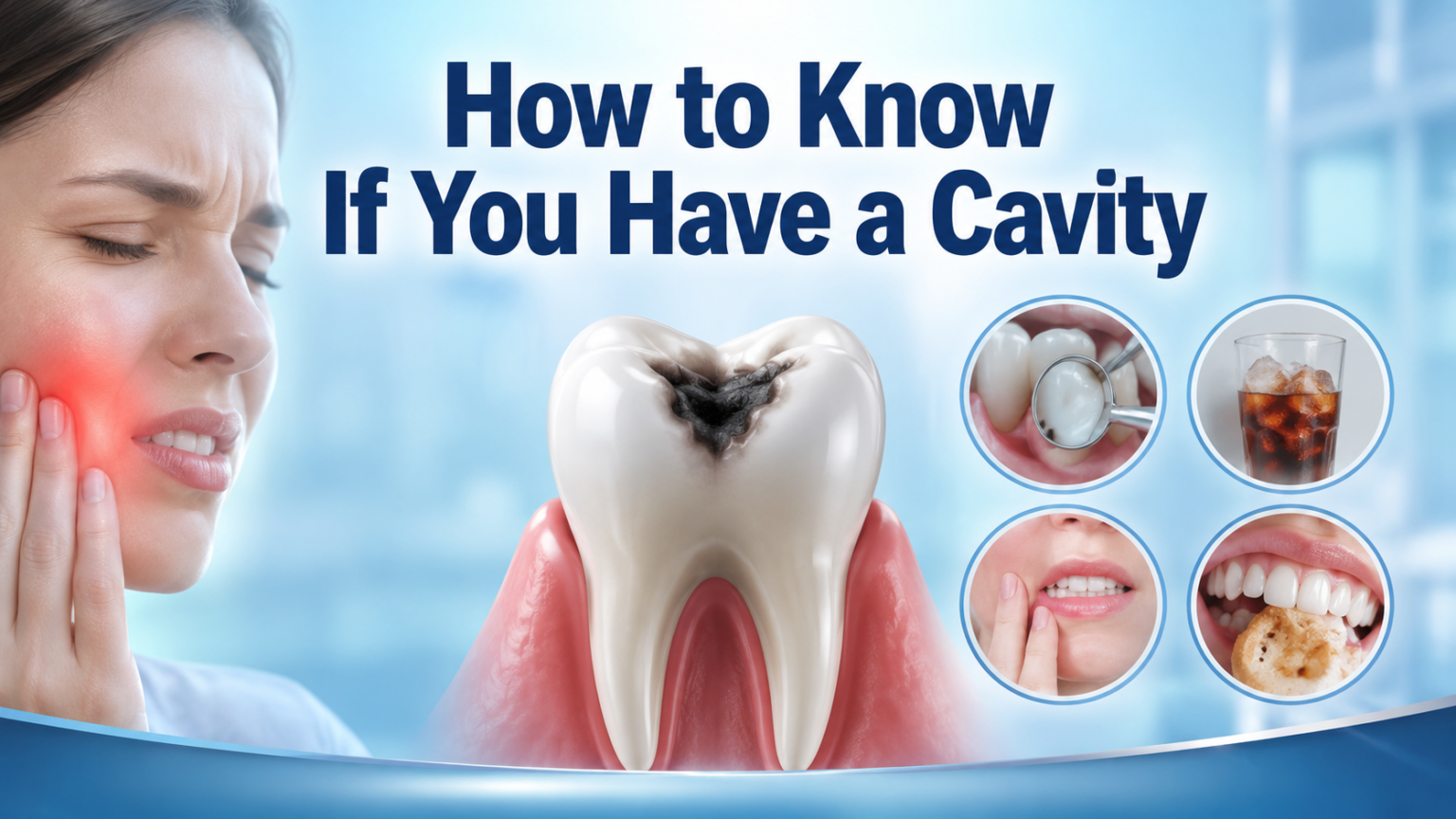
Cavities generally move through a few recognizable stages, starting with early demineralization that appears as a faint white or chalky patch on the enamel.



If nothing is done, decay pushes into the dentin layer underneath, which is softer and breaks down faster than enamel.
In the most advanced stage, decay reaches the inner pulp, causing real pain and usually requiring a root canal or more involved treatment.
Early Warning Signs of a Cavity
Catching a cavity early usually comes down to noticing small changes rather than waiting for outright pain to show up. These subtle indicators are often the very first clue that decay has already started beneath the surface.
Tooth Sensitivity to Hot, Cold, or Sweet Foods
A sudden, sharp twinge when drinking something cold or eating something sweet is one of the earliest and most common signs of a developing cavity. This happens because thinning enamel lets temperature and sugar reach the nerve endings underneath. If this reaction keeps happening with the same tooth, it is worth paying closer attention to.
Mild, Occasional Tooth Pain
Some people notice a dull ache that comes and goes rather than constant discomfort. This kind of intermittent pain often appears while chewing or right after eating, then fades on its own. Because it is easy to dismiss, this symptom is frequently ignored until decay progresses further.
Visible White or Chalky Spots on Enamel
A dull white patch on the tooth surface is usually the very first visible sign that enamel is losing minerals. These spots are easy to miss without close inspection, especially on back teeth that are harder to see in a mirror. At this stage, the damage is often still reversible with the right care.
Advanced Signs You Shouldn’t Ignore
Once a cavity moves past its earliest stage, the signs become more obvious and considerably harder to overlook. Recognizing these advanced symptoms quickly can prevent the need for more invasive treatment later.
Visible Holes or Pits in the Tooth
An actual hole or pit you can see or feel with your tongue is a clear sign that decay has broken through the enamel. These pits trap food particles, which often makes the area feel irritated after eating. At this point, professional treatment is almost always necessary.
Brown, Black, or Dark Staining
Discoloration ranging from light brown to nearly black usually points to decay that has been present for some time. Unlike surface stains from food or drinks, this staining tends to sit inside a pit or groove rather than across the whole tooth, often alongside sensitivity or visible damage.
Persistent or Sharp Toothache
Pain that lingers rather than fading quickly, or that strikes without any obvious trigger, usually signals decay has reached deeper layers of the tooth. This ache can also spread toward the jaw or ear, making it harder to pinpoint which tooth is affected. It rarely improves without treatment.
Pain When Biting or Chewing
Discomfort specifically triggered by pressure, such as biting down on food, often means decay has weakened the tooth structure itself. This type of pain can also point to a cracked filling or a cavity forming underneath an existing one. Either way, it is a strong signal that a check-up should not be delayed.
Cavity Symptoms by Location
Where a cavity forms on the tooth can change how noticeable the symptoms are and how quickly they show up. This makes location an important part of understanding how to know if you have a cavity in the first place.
Front Teeth vs. Back Teeth (Molars)
Cavities on front teeth are usually spotted early simply because they are visible every time you smile or look in a mirror. Molars sit further back and have deep grooves that make decay much harder to see, which is part of why they account for a large share of unnoticed cavities.
Between-Teeth (Interproximal) Cavities
Cavities that form in the tight space between two teeth are almost impossible to see without dental tools or an X-ray. They often develop because food particles and plaque get trapped there and are missed during regular brushing. Flossing regularly is one of the few ways to catch this type of decay early.
Comparing Cavity Stages and Symptoms
| Stage | What’s Happening | Symptoms | Treatment Needed |
| Early demineralization | Enamel loses minerals; a white or chalky patch forms | Usually none, sometimes mild sensitivity | Fluoride treatment can often reverse this stage |
| Enamel decay | A small hole forms in the outer enamel layer | Sensitivity to sweets, cold, or hot food | Dental filling |
| Dentin decay | Decay spreads into the softer layer beneath enamel | Noticeable pain, visible dark spot | Filling or, in some cases, a crown |
| Pulp involvement | Decay reaches the nerve and blood vessels of the tooth | Sharp or throbbing pain, swelling, bad taste | Root canal treatment or extraction |
How Dentists Diagnose Cavities?
While self-awareness helps, an accurate diagnosis still depends on professional tools. Dentists combine several methods to confirm decay, especially in spots that are difficult to check on your own.
Visual and Physical Exam
A dentist typically starts by visually inspecting each tooth and gently probing suspicious spots with a small instrument. This can reveal softened enamel or a sticky texture that indicates decay, even before any hole is visible. It remains the first, most basic step in every cavity examination.
X-rays and Their Role in Catching Hidden Decay
X-rays let dentists see decay happening between teeth or beneath the surface, areas a visual exam alone cannot reach. This is especially useful for interproximal cavities and decay hiding under old fillings. Most routine checkups include X-rays because they catch problems long before symptoms appear.
Laser Fluorescence and Other Modern Detection Tools
Some dental practices use laser fluorescence devices that measure changes in tooth structure to detect very early decay. These tools are especially helpful for catching cavities in their earliest, most treatable stage, before a hole has fully formed. While not available everywhere, they add another layer of accuracy to standard diagnostic methods.
Can You Check for a Cavity at Home?
Many people look for ways to check for cavities on their own before booking an appointment. While some clues can be spotted at home, self-checks have real limits worth understanding.
Self-Check Methods and Their Limitations
Looking closely in a well-lit mirror, running your tongue along each tooth, and paying attention to sensitivity are reasonable ways to notice possible warning signs. However, cavities between teeth or beneath the gumline are essentially invisible without dental equipment. A home check can raise suspicion, but it cannot confirm or rule out a cavity with any real accuracy.
Why Home Checks Can’t Replace a Dental Exam
Even a careful self-check misses the internal changes that X-rays and professional tools are designed to detect. Early decay can exist for months without any symptom a person would notice on their own. This is why regular checkups matter more than relying on self-assessment alone.
Risk Factors That Increase Cavity Likelihood
Certain habits and conditions make some people far more prone to cavities than others, which helps explain why decay develops faster for some despite similar oral care routines.
● Frequent snacking on sugary or starchy foods throughout the day
● Inconsistent brushing or flossing habits
● Dry mouth, which reduces saliva’s natural protective effect
● Worn or aging dental fillings that create new gaps
● A family history of frequent cavities or weak enamel
When to See a Dentist
Some symptoms call for a routine appointment, while others require prompt attention to prevent the problem from getting worse. Knowing the difference helps you respond appropriately instead of waiting too long or panicking unnecessarily.
Red-Flag Symptoms Requiring Urgent Care
Severe or constant pain, visible swelling near a tooth, or a fever alongside tooth pain are signs that should never be ignored. These can indicate decay has reached the pulp or caused an infection needing immediate treatment. Waiting usually leads to more complicated and expensive procedures.
Recommended Checkup Frequency for Prevention
Most dental professionals recommend a checkup and cleaning every six months, though some people need more frequent visits based on their risk factors. Regular visits allow small issues to be caught through X-rays and exams long before symptoms appear.
Preventing Cavities
Prevention remains far simpler and less costly than treating an existing cavity. A combination of daily habits, dietary awareness, and professional care offers the strongest protection.
Daily Habits (Brushing, Flossing, Fluoride)
Brushing twice a day with fluoride toothpaste and flossing once daily remove the plaque and food particles that lead to decay. Fluoride helps strengthen enamel and can even reverse very early demineralization. Consistency matters more than intensity, since skipped days allow plaque to build up quickly.
Dietary Changes
Reducing frequent exposure to sugary snacks and acidic drinks gives enamel more time to recover between meals. Choosing water over sugary beverages and rinsing the mouth after eating can also lower the risk. Small, consistent dietary adjustments tend to have a bigger long-term impact than occasional strict changes.
Professional Preventive Care
Dental sealants applied to the grooves of molars create a protective barrier against decay in hard-to-clean areas. Professional cleanings also remove hardened plaque that brushing cannot fully eliminate on its own. Combined with regular checkups, these steps significantly lower the chances of developing a cavity.
Frequently Asked Questions
Can a Cavity Heal Itself?
Only the earliest stage, enamel demineralization, can sometimes be reversed with fluoride and better oral hygiene. Once a hole has formed, a filling is required, since damaged tooth structure cannot regenerate on its own.
Does a Cavity Always Hurt?
No, many cavities cause no pain at all in their early stages, which is why routine checkups and X-rays matter so much. Pain typically develops only once decay reaches deeper layers.
How Fast Do Cavities Grow?
The speed varies with diet, hygiene, and enamel strength, but decay can progress from a small enamel spot to a deeper cavity within months to a couple of years if untreated.
Can You See a Cavity in Its Early Stages?
Very early cavities often appear as faint white spots that are easy to miss without close inspection, especially on back teeth, which is why professional exams catch issues a self-check would overlook.
Conclusion
Knowing how to know if you have a cavity comes down to noticing small changes, from mild sensitivity and faint white spots to more obvious signs like visible holes or persistent pain.
Self-checks can raise early suspicion, but only a dentist can confirm decay through exams, X-rays, and diagnostic tools. Staying consistent with brushing, flossing, and regular checkups remains the most reliable way to catch cavities early.
Related Posts
Can Cavities Cause Bad Breath? Full Guide to Causes, Signs
What Does a Cavity Feel Like? Stages & When to See a Dentist
Can a Toothache Cause a Sore Throat? A Dentist Explains the Connection
When Do You Start Showing in Pregnancy?
Is Walking Good for Sciatica? A Complete Guide to Safe Movement and Pain Relief