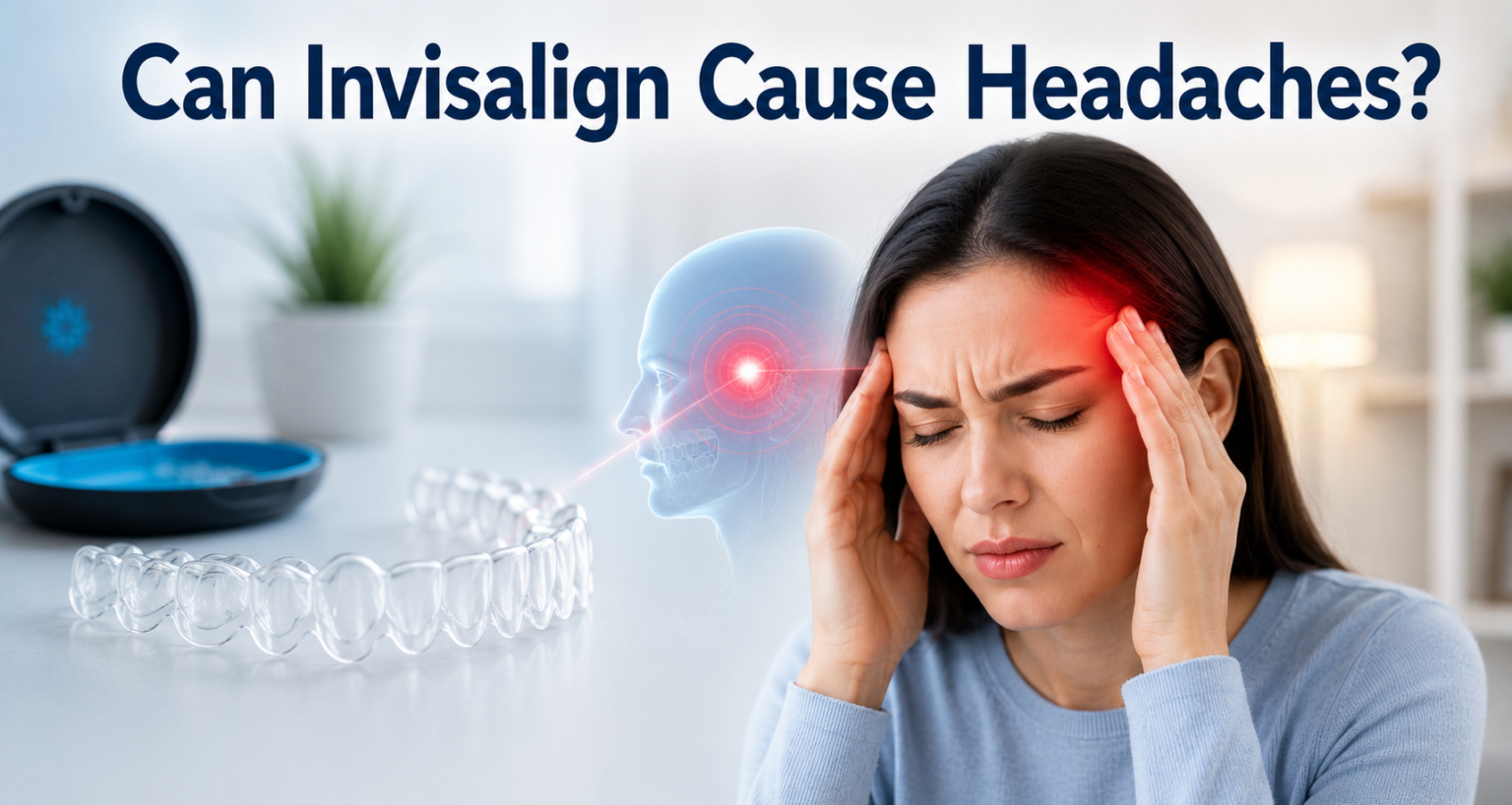
Yes, Invisalign can cause headaches for some people, and this is actually a fairly normal part of the treatment journey rather than something unusual or alarming. The discomfort mostly happens because your teeth, jaw muscles, and bite are being gently shifted into a new position, and your body needs time to adjust to this change.
Most people notice headaches during the first few days after switching to a new aligner tray, and the pain usually fades once the mouth settles in. In rare cases, the headaches can be linked to a poor aligner fit or jaw joint strain, which is worth discussing with your orthodontist.
Understanding why this happens can help you manage it calmly instead of worrying unnecessarily. This article breaks down every possible cause, home remedies, prevention tips, and clear signs that tell you when professional help is needed.
Can Invisalign Really Cause Headaches?
Yes, headaches are a recognized and fairly common side effect reported by many Invisalign users, particularly during the early stages of treatment. This does not mean something is wrong with your aligners; it usually just means your mouth is adapting to the pressure of tooth movement.
Many dental professionals confirm that mild headaches are part of the natural adjustment process rather than a red flag. They tend to appear most often within the first two to three days of wearing a brand-new tray, since that is when the aligner applies the strongest pressure to reposition teeth.
Once your teeth settle into that stage of movement, the discomfort typically fades away on its own until the next tray is introduced. If the pattern repeats itself every time you change trays, it is still considered a normal response rather than a cause for concern in most cases.
Why Does Invisalign Cause Headaches? (Main Causes)
There is no single reason behind Invisalign headaches; instead, several physical and behavioral factors work together to create this discomfort. Below are the most common causes explained in detail.
Jaw Muscle Tension
When aligners shift your teeth, the muscles surrounding your jaw have to work harder to adapt to the new positioning. This added strain can radiate upward toward your temples, causing a dull, tight headache. The tension usually eases within a day or two as your jaw muscles relax into the new alignment.



TMJ (Temporomandibular Joint) Pressure
The temporomandibular joint connects your jawbone to your skull, and any shift in your bite can place extra pressure on this joint. Since this joint sits very close to areas linked with headache pain, even slight misalignment during treatment can trigger discomfort near the temples or ears. People who already have TMJ sensitivity may notice this effect more strongly than others.
Teeth Clenching and Grinding (Bruxism)
Discomfort from new aligners often causes people to unconsciously clench or grind their teeth, especially at night. This repetitive muscle activity puts strain on the jaw and scalp muscles, which frequently results in a tension-type headache the next morning. Wearing a nightguard or practicing relaxation techniques can help reduce this habit.
Bite Misalignment During Treatment
As your teeth move step by step toward their final position, your bite temporarily shifts out of its usual pattern. This uneven bite can cause certain muscles to overwork while others remain underused, creating imbalance that often shows up as head pain. This effect is usually temporary and corrects itself as treatment progresses.
Tension or Stress Headaches from General Discomfort
Simply adjusting to a foreign object in your mouth can create stress, especially in the early days of treatment. This stress can tighten muscles in the jaw, neck, and scalp, leading to a classic tension headache. Emotional stress about treatment progress can also add to this physical tension.
Dehydration
Because Invisalign trays must be removed before eating or drinking anything except water, some users unintentionally reduce their fluid intake to avoid the hassle of removing and cleaning trays repeatedly. Mild dehydration is a well-known headache trigger, so this small lifestyle shift can quietly contribute to the problem.
Sinus Pressure (Less Common)
In some cases, changes in jaw and bite position can indirectly affect the sinus area, leading to a feeling of pressure or a dull ache around the forehead and cheeks. This cause is less frequent compared to muscular reasons, but it is still worth mentioning if other explanations do not fit your symptoms.
Types of Headaches Associated with Invisalign
Not all Invisalign-related headaches feel the same, and identifying the type can help you understand the root cause more clearly.
| Headache Type | Common Feeling | Typical Trigger |
| Tension Headache | Dull, tight pressure around forehead or temples | Muscle strain, stress, new tray adjustment |
| TMJ-Related Headache | Pain near ears, jaw, or temples | Bite pressure, joint strain |
| Migraine-Like Symptoms | Throbbing pain, sometimes with light sensitivity | Severe clenching or unresolved jaw tension |
Most people only ever experience the first two types, while migraine-like symptoms are far less common and usually linked to more intense grinding or an existing migraine history.
When Do Headaches Usually Occur?
Headaches tend to follow a predictable pattern throughout Invisalign treatment rather than appearing randomly. Recognizing this pattern can help you feel more prepared and less worried when they show up.
The most common trigger point is the first few days after inserting a brand-new tray, since this is when the pressure on your teeth is at its peak. Some people also notice mild headaches shortly after attachments are placed on their teeth, as this adds a new sensation the mouth needs to adjust to.
During the early weeks of overall treatment, headaches may appear more frequently simply because your mouth is still learning to cope with wearing aligners for long hours each day. As your treatment progresses and your mouth becomes accustomed to the routine, these headaches usually become less frequent and eventually stop appearing altogether.
Symptoms That Often Accompany Invisalign Headaches
Headaches rarely occur in isolation, and noticing accompanying symptoms can help confirm that your aligners are indeed the cause.
Common symptoms that often appear alongside these headaches include jaw soreness that feels worse after removing the tray, tightness in the neck and shoulder area from overall muscle tension, mild discomfort inside or around the ears due to TMJ involvement, and a general feeling of facial tightness that can make chewing feel slightly more effortful than usual.
If several of these symptoms appear together with your headache, it strongly suggests the aligners are the underlying cause rather than an unrelated health issue.
How to Relieve Invisalign-Related Headaches?
Fortunately, most Invisalign headaches can be managed with simple, safe strategies at home without needing to pause your treatment.
Home Remedies
Applying a warm compress to the jaw and temple area can relax tight muscles and ease pain within minutes. Gently massaging the jaw in circular motions also helps release built-up tension, especially before bed. Staying well hydrated throughout the day supports overall muscle function and reduces headache risk. Over-the-counter pain relief can be used occasionally for comfort, but it is best to follow standard label guidance and consult a pharmacist or doctor if you need it frequently.
Lifestyle Adjustments
Managing everyday stress through light exercise, deep breathing, or short breaks can noticeably reduce muscle tension linked to headaches. Sticking to a soft diet for the first day or two after a new tray reduces strain on the jaw while it adjusts. Making sure you insert and remove your aligners correctly, without forcing them, also prevents unnecessary pressure buildup.
Jaw Exercises and Stretches
Simple stretches, such as slowly opening and closing your mouth in a controlled motion or gently moving your jaw side to side, can loosen tight muscles. Doing these exercises for a few minutes daily, especially during the first days of a new tray, can meaningfully reduce headache frequency over time.
When to Consult Your Orthodontist
While mild, short-term headaches are generally nothing to worry about, certain warning signs mean it is time to reach out to your orthodontist. If headaches persist beyond three to four days without improvement, it may indicate the tray is not fitting as intended.
Severe pain that interferes with daily activities, worsening symptoms instead of gradual relief, or signs of temporomandibular joints disorder such as clicking, popping, or jaw locking should never be ignored. Your orthodontist can check the aligner fit, adjust your treatment plan if needed, and rule out any underlying issues that home care cannot fix.
Tips to Prevent Headaches During Invisalign Treatment
Prevention is often easier than treatment, and a few consistent habits can significantly lower your chances of experiencing headaches throughout your Invisalign journey. Always insert and remove your aligners gently rather than forcing them into place, since rough handling adds unnecessary pressure. Wear your aligners for the recommended twenty to twenty-two hours daily, as inconsistent wear can cause uneven pressure when you do put them back in.
Communicate any unusual discomfort to your orthodontist early instead of waiting for it to worsen, and attend your scheduled check-ins so your treatment stays on track and any fit issues get resolved quickly.
Invisalign Headaches vs. Normal Treatment Discomfort
It helps to understand the difference between expected mild discomfort and something that needs professional attention.
| Situation | Normal Discomfort | Needs Orthodontist Attention |
| Duration | Fades within 2-3 days | Lasts more than 4-5 days |
| Intensity | Mild to moderate | Severe or worsening |
| Pattern | Appears only with new trays | Constant or unpredictable |
| Extra Symptoms | Slight jaw soreness | Jaw locking, clicking, or sharp pain |
Using this comparison can help you decide quickly whether your symptoms are simply part of the adjustment process or something that requires a professional check-up.
Frequently Asked Questions
Do headaches mean Invisalign is working? Not necessarily, but mild headaches often reflect that your teeth are responding to pressure and shifting as planned during treatment.
How long do Invisalign headaches last? They usually last two to three days after starting a new tray and fade once your mouth adjusts to the new positioning.
Can new aligner trays cause headaches every time? Yes, some people experience mild headaches with each new tray, especially in the early months, though this often becomes less noticeable over time.
Should I stop wearing Invisalign if I get headaches? No, mild headaches are usually not a reason to stop treatment, but persistent or severe pain should always be discussed with your orthodontist first.
Are headaches a sign of an ill-fitting aligner? Sometimes, especially if the pain is unusually intense or does not improve after a few days, so it is worth having your orthodontist check the fit.
Conclusion
So, can Invisalign cause headaches? Yes, but in most cases, it is a temporary and manageable side effect linked to jaw tension, bite adjustment, or mild dehydration rather than a serious problem. Simple home remedies, proper aligner care, and healthy lifestyle habits can ease most of this discomfort within a few days.
However, if headaches become severe, constant, or come with jaw pain that does not improve, reaching out to your orthodontist ensures your treatment stays safe, comfortable, and on schedule.
Related Post’s
Can a Cavity Cause a Headache? Signs, Causes & Treatment
Can a Bad Tooth Cause Headaches? Causes, Signs & Relief
Is a Bypass the Same as Open Heart Surgery? Full Explanation
Are Sock Marks a Sign of Heart Disease? Cause, Warning Signs