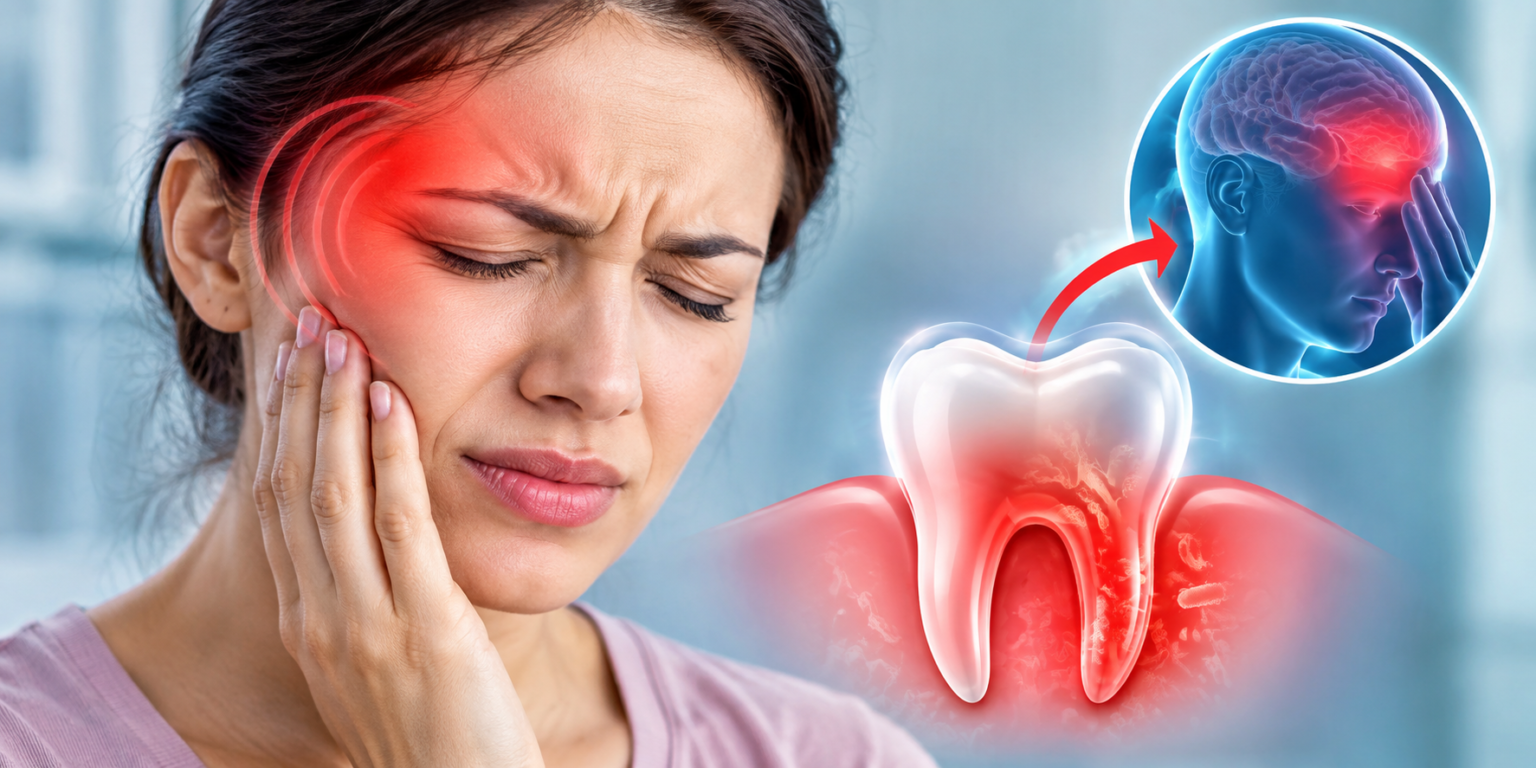
Yes, a bad tooth can cause headaches, and this connection is more common than most people realize. Dental infections, abscesses, teeth grinding, impacted wisdom teeth, and jaw joint disorders can all send pain signals well beyond the mouth.
This happens mainly because the nerve that carries sensation from the teeth also carries sensation to large areas of the head and face.
When a tooth is inflamed, infected, or under abnormal pressure, that same nerve network can register the pain as a headache instead of, or in addition to, tooth pain. Recognizing this link matters because treating the headache alone will not solve the problem if a dental issue is the real trigger.
How a Tooth Problem Turns Into a Headache
The mouth, jaw, and head share a dense web of nerve connections, so pain rarely stays confined to where it starts. Below is a closer look at the two mechanisms that explain why a dental issue is felt as head pain.
The Trigeminal Nerve Connection
The trigeminal nerve is the main sensory pathway for the face, jaw, teeth, and much of the scalp, and it branches out from a single point near the base of the skull. Because tooth pulp, gums, jaw muscles, and facial skin all report pain through branches of this same nerve, irritation in one area can be felt somewhere else entirely. Research on orofacial pain has repeatedly shown that this shared wiring is the anatomical reason dental problems so often present as facial or head pain rather than a clear, localized toothache.
Referred Pain Explained
Referred pain happens when the brain misreads which body part a pain signal is actually coming from, because multiple nerve pathways converge at the same relay point before reaching the brain. A tooth abscess in the upper jaw, for example, can send pain toward the temple, ear, or even the neck instead of staying at the tooth itself. This is exactly why some people are treated for migraines or tension headaches for months before a dentist finally identifies the true dental source.
Dental Conditions That Commonly Trigger Headaches
Several distinct dental problems are known to produce headaches, and each one works through a slightly different mechanism. The list below summarizes the most frequent culprits before each is explained individually.
- Tooth infections and abscesses
- Impacted wisdom teeth
- Bruxism, or chronic teeth grinding
- Temporomandibular joint (TMJ) disorders
- Deep cavities that expose the nerve
- Sinus pressure linked to the upper back teeth
Tooth Infections and Abscesses
An abscess forms when bacteria build up inside a tooth or at its root, creating pressure and inflammation that spreads into surrounding tissue. That pressure irritates nearby nerve branches, and the pain frequently radiates upward into the temple or across one side of the head. Left untreated, an abscess tends to worsen steadily rather than resolve on its own, and the associated headache usually worsens along with it.



Impacted Wisdom Teeth
Wisdom teeth that are trapped beneath the gum or growing at an angle push against neighboring teeth, bone, and nerve tissue. This constant pressure inflames the jaw and can trigger tension-type headaches that concentrate around the temples or the back of the head. The discomfort often intensifies with chewing, which is a useful clue that the source is dental rather than neurological.
Bruxism, or Chronic Teeth Grinding
Grinding or clenching the teeth, especially overnight, overworks the jaw muscles and puts sustained strain on the temporomandibular joint. That strain commonly produces a dull, tight headache felt around the temples or forehead upon waking. Many people are unaware they grind their teeth until a dentist notices the wear patterns on their enamel.
Temporomandibular Joint (TMJ) Disorders
The temporomandibular joint connects the jawbone to the skull, and when it becomes inflamed or misaligned, the resulting muscle tension spreads easily into the head. TMJ-related headaches are frequently accompanied by clicking or popping sounds when opening the mouth, along with jaw stiffness. Because the joint sits so close to the temples, this type of headache is often mistaken for a standard tension headache.
Deep Cavities That Expose the Nerve
When decay reaches deep enough to expose or inflame the nerve inside a tooth, the resulting pain signal can be intense and can spread beyond the tooth itself. This type of pain is often sharp and triggered by hot, cold, or sweet foods, with a lingering ache that can extend into the jaw and head. Ignoring a deep cavity typically allows the infection to progress toward an abscess.
Sinus Pressure Linked to the Upper Back Teeth
The roots of the upper molars sit very close to the sinus cavities, so sinus congestion or infection can press directly on the same nerve branches that serve those teeth. This cross-connection can cause tooth pain that is actually sinus-related, or a sinus headache that is mistaken for a dental problem. Decongestants that relieve the pressure are often a useful clue that the sinuses, not the tooth itself, are the primary cause.
Symptoms That Point to a Dental Headache
Certain patterns in how and when the pain occurs make it easier to trace a headache back to a dental cause rather than a general neurological one.
Location and Timing Patterns
Dental headaches typically stay on one side of the head, matching the side of the affected tooth or jaw, and they often intensify while chewing or lying down. Pain that flares with hot or cold food and drink, or that worsens at night from grinding, points strongly toward a dental origin. A headache with no clear trigger pattern is more likely to have a non-dental cause.
Accompanying Dental Signs
Swelling in the gums or face, visible tooth damage, sensitivity to temperature, or a bad taste in the mouth are strong indicators that a tooth is involved. Jaw stiffness, clicking sounds, or difficulty opening the mouth fully also suggest a TMJ or muscular component. When any of these signs appear alongside a headache, a dental evaluation should be the first step rather than a general headache remedy.
How to Tell It’s Not a Migraine or Tension Headache?
Migraines usually come with visual disturbances, nausea, or heightened sensitivity to light and sound, none of which are typically caused by a dental problem. Tension headaches tend to feel like a band of pressure around the whole head rather than being localized to one side near the jaw. If a headache consistently lines up with dental symptoms and does not match these broader patterns, it is worth ruling out a tooth-related cause before assuming it is migraine or tension-type.
Comparing the Main Causes of Dental Headaches
The table below offers a quick side-by-side comparison to help identify which cause best matches a given set of symptoms.
| Cause | Typical Symptoms | Usual Duration | Urgency Level | Recommended Care Path |
| Tooth abscess | Throbbing pain, swelling, fever | Worsens without treatment | High | Emergency dental visit |
| Impacted wisdom tooth | Jaw pressure, temple headache | Persistent until removed | Medium | Dental consultation, possible extraction |
| Bruxism | Morning headache, sore jaw | Recurs nightly | Medium | Dentist-fitted nightguard |
| TMJ disorder | Clicking jaw, temple pain | Comes and goes | Medium | Dental or TMJ specialist evaluation |
| Sinus-referred pain | Pressure in upper teeth and face | Tied to sinus infection | Low to medium | ENT or physician evaluation |
When to See a Dentist Versus a Doctor
Knowing which professional to call first can save time and prevent a minor issue from becoming a more serious one.
Red-Flag Symptoms Requiring Urgent Dental Care
Severe throbbing pain, visible swelling of the face or gums, fever, or a foul taste in the mouth all point toward an infection that needs prompt dental attention. Pain that spreads rapidly or is accompanied by difficulty swallowing or breathing should be treated as an emergency. Waiting on these symptoms can allow an infection to spread beyond the tooth itself.
When a Physician Should Be Consulted Instead
If a dental exam rules out any tooth or gum problem and the headache continues, a physician can evaluate for migraine, tension headache, or sinus-related causes. Symptoms like visual changes, persistent nausea, or headaches unrelated to chewing or jaw movement generally point away from a dental source. A combined approach, starting with a dentist and following up with a doctor if needed, is often the most efficient path to relief.
Treatment and Relief Options
Once the source of the headache is identified, treatment usually falls into either a dental procedure or a short-term relief measure while that treatment is arranged.
Dental Treatments
A root canal can resolve pain caused by an infected tooth nerve, while a straightforward extraction may be recommended for a severely damaged or impacted tooth. A custom nightguard is commonly prescribed for bruxism, and TMJ disorders are often managed with a combination of a bite splint, physical therapy, or targeted dental adjustments. The right treatment depends entirely on the underlying cause identified during a dental examination.
Short-Term Relief Measures
While waiting for a dental appointment, over-the-counter pain relief and a cold compress applied to the jaw can help manage discomfort temporarily. Avoiding very hot, cold, or hard foods reduces additional strain on an already irritated tooth or jaw. These measures are only a temporary bridge and are not a substitute for a proper dental evaluation and treatment.
Prevention Tips
Most dental headaches are avoidable with consistent oral care and early attention to warning signs.
Oral Hygiene and Checkup Habits
Regular brushing, flossing, and routine dental checkups catch cavities and infections long before they progress far enough to trigger headaches. Addressing minor tooth sensitivity or gum irritation early prevents it from developing into a more painful, headache-inducing problem later. Twice-yearly dental visits remain one of the most reliable ways to avoid dental headaches altogether.
Managing Bruxism and TMJ Long-Term
For those who grind their teeth, wearing a nightguard consistently protects both the teeth and the jaw joint from ongoing strain. Stress management techniques, since stress is a common trigger for clenching, can also reduce the frequency of TMJ-related headaches. Periodic dental review of jaw alignment helps catch TMJ issues before they become chronic.
FAQs
Can a cavity alone cause a headache?
Yes, a cavity deep enough to irritate the tooth’s nerve can produce pain that spreads toward the jaw and head, especially if left untreated.
Do wisdom teeth headaches go away without treatment?
They rarely resolve on their own if the tooth remains impacted, since the underlying pressure on the jaw and nerves continues until the tooth is addressed.
Can stress-related teeth grinding cause daily headaches?
Yes, nightly grinding from stress can produce a recurring morning headache, and a nightguard combined with stress management usually reduces the frequency.
Conclusion
A bad tooth can genuinely cause headaches through shared nerve pathways, referred pain, and jaw strain, making dental health a factor worth checking whenever headaches persist unexplained.
Identifying the specific dental cause, whether an infection, impacted tooth, grinding, or TMJ strain, allows for targeted treatment rather than repeated, ineffective headache remedies. Routine dental care remains the most effective way to prevent this type of headache from developing in the first place.
Related Posts
How to Stretch Tibialis Anterior Muscle: A Complete Guide
How Long After a Dentist Cleaning Can I Eat? Complete Guide
Can High Blood Pressure Cause Flashing Lights in Eyes?
Understanding Eye Pressure Pain: Causes, Symptoms, and Relief