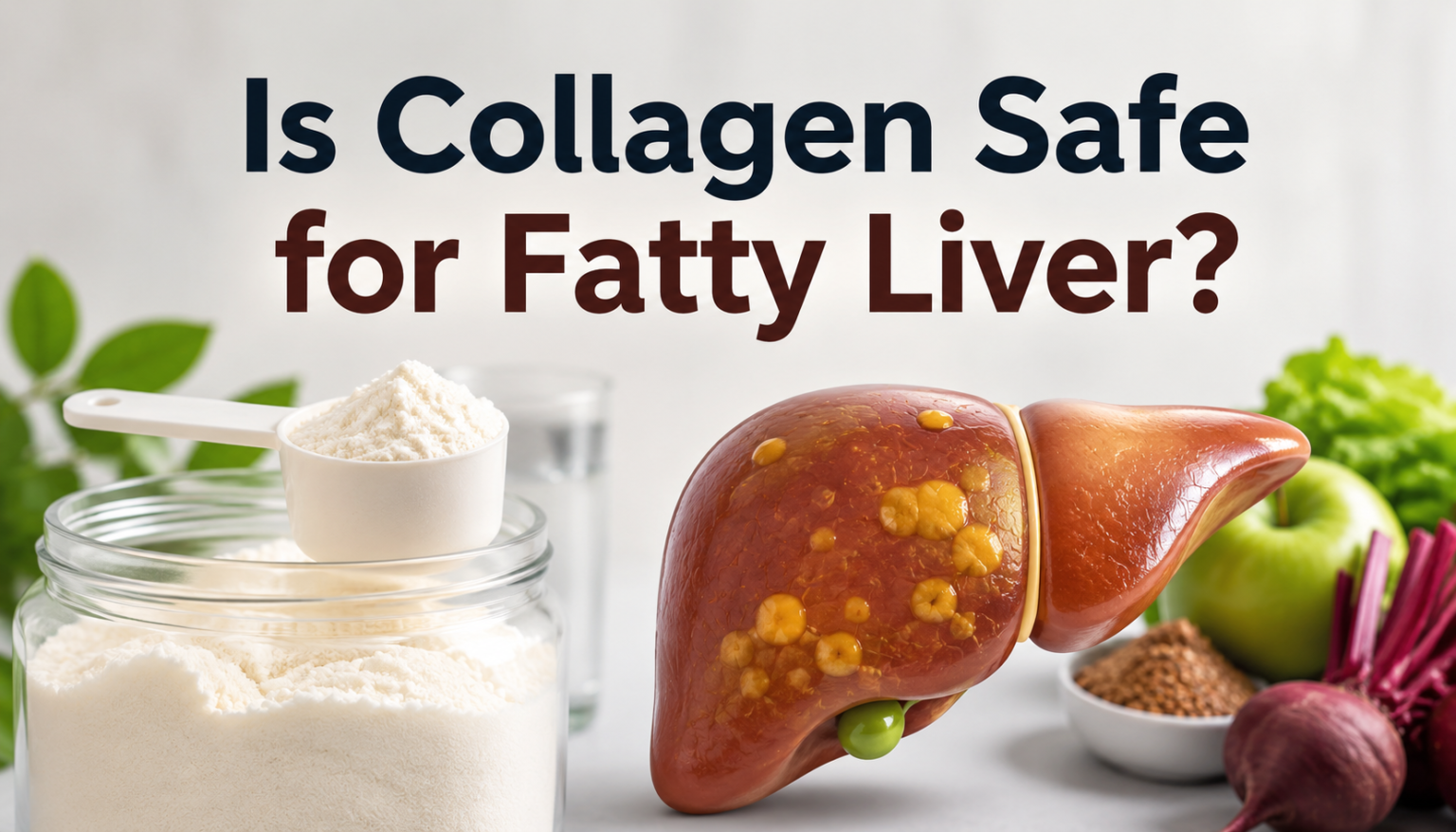
Yes, collagen is with fatty liver disease, including NAFLD and NASH. Collagen peptides are rich in glycine, an amino acid that emerging research links to better liver metabolism and reduced fat buildup.
The collagen your body produces internally during liver scarring is not the same substance as the collagen you eat or supplement with, so ingesting collagen does not add to that scar tissue. Because collagen is a pure, sugar-free protein source, it fits naturally into the high-protein, low-sugar eating pattern that many doctors recommend for managing fatty liver.
Some early studies even suggest that glycine-rich collagen supplementation may support faster improvement in fatty liver markers. Even so, anyone with a confirmed liver condition should always check with their doctor before adding a new supplement to their routine.
Understanding Fatty Liver Disease and Why Diet Matters
Fatty liver disease develops when excess fat builds up inside liver cells, and over time this can affect how well the liver filters blood and processes nutrients. Diet plays one of the biggest roles in both preventing and managing the condition, which is why so many people ask specific questions about individual foods and supplements.
What Is NAFLD and NASH?
Non-alcoholic fatty liver disease, or NAFLD, describes fat accumulation in the liver that is not caused by heavy alcohol use. When this fat buildup progresses to include inflammation and liver cell damage, it is reclassified as non-alcoholic steatohepatitis, or NASH. Left unmanaged, NASH can eventually lead to fibrosis, cirrhosis, or more serious liver complications, which is why early lifestyle intervention matters so much.
How Diet and Protein Intake Affect Liver Fat
A high-protein, lower-sugar diet is one of the most consistently recommended approaches for people managing fatty liver, since excess sugar and refined carbohydrates are directly linked to fat storage in the liver. Protein sources that do not add sugar or heavy saturated fat, such as collagen, tend to fit well within this type of eating pattern. This is part of the reason collagen keeps coming up in conversations about liver-friendly nutrition.
What Is Collagen and Why Does It Matter for the Liver?
Collagen is the most abundant protein in the human body, and collagen supplements are typically broken down into peptides that are easy to digest and absorb. Its relevance to liver health comes down to its amino acid profile, particularly one amino acid that has drawn significant research attention.
Collagen as a Protein Source
Unlike many protein powders, collagen peptides are virtually free of sugar, carbohydrates, and fat, which makes them a clean protein option for people trying to avoid ingredients that could worsen liver fat storage. This is one reason collagen is often positioned as a liver-conscious protein choice rather than something to avoid.



Glycine — The Key Amino Acid Linking Collagen to Liver Health
Glycine makes up roughly a third of collagen’s amino acid content, and it plays a meaningful role in liver detoxification pathways, including the production of glutathione, one of the body’s primary antioxidants. Research has repeatedly found that people with NAFLD tend to have lower circulating glycine levels than people without the condition, which has led scientists to investigate whether restoring glycine levels could support liver recovery.
Is Collagen Safe for Fatty Liver? Direct Answer Expanded
Answering the question “is collagen safe for fatty liver” requires separating two very different things that share the same name: the collagen found in food and supplements, and the collagen the liver produces on its own during disease.
The Short Answer
Based on current research, dietary collagen appears safe for most people with fatty liver disease, and its glycine content may offer some supportive benefit rather than posing a risk. This makes collagen different from many supplements that carry genuine caution flags for liver patients.
Ingested Collagen vs. Internal Liver Fibrosis Collagen
The confusion around collagen and liver health usually stems from liver fibrosis, a condition where the liver produces excess internal collagen as scar tissue in response to repeated injury. This internally produced collagen is a completely separate biological process from eating a collagen supplement, and consuming collagen does not contribute to or worsen fibrotic scar tissue in the liver.
What the Research Says
Several recent studies have looked specifically at glycine, collagen’s key amino acid, and its relationship to fatty liver outcomes, giving a clearer picture of how this protein may interact with liver health over time.
Glycine Deficiency in NAFLD Patients
Multiple studies have observed that people with NAFLD consistently show lower blood glycine levels compared to those without the condition, and this deficiency has also been associated with higher rates of obesity, type 2 diabetes, and cardiovascular disease. This pattern is part of why researchers began exploring glycine supplementation as a possible support strategy.
Michigan Medicine Study on Glycine and Fatty Liver
A widely cited study from Michigan Medicine’s cardiovascular research team found that glycine, whether taken alone or combined with the amino acid leucine, showed potential to help prevent and manage obesity-related fatty liver disease. The research pointed to a daily glycine intake of roughly two grams as a meaningful therapeutic range, an amount that can realistically be reached through a standard collagen peptide serving.
Weight Loss and Fatty Liver Index Findings
Separate research has also linked collagen supplementation to improved weight management outcomes, with some study participants showing meaningfully faster improvement in fatty liver index scores compared to those who did not supplement. While more large-scale clinical trials are still needed, these early findings support the idea that collagen can be a reasonable addition to a liver-friendly lifestyle rather than something to avoid.
Comparing Common Protein Options for Liver Health
Since collagen is often compared to other popular protein supplements, the table below breaks down how it stacks up on the factors that matter most for someone managing fatty liver.
| Protein Source | Glycine Content | Sugar Content | Digestibility | General Fit for Liver-Conscious Diets |
| Collagen Peptides | High | None | Very easy to digest | Well suited, supports glycine intake |
| Whey Protein | Low to moderate | Varies by brand | Easy for most people | Suitable, but check added sugars |
| Plain Glycine Supplement | Very high (isolated) | None | Easy to digest | Suitable, more targeted but less versatile |
| Soy Protein | Low | Typically none | Moderate | Suitable, lower glycine benefit |
This comparison is intended as general dietary information rather than a personal recommendation, since individual liver conditions, medications, and overall health status can all affect which protein source is most appropriate for a given person.
How to Approach Collagen Safely If You Have Fatty Liver?
Adding any new supplement when managing a liver condition deserves a thoughtful, gradual approach rather than jumping in at a high dose right away.
General Considerations
Starting with a standard serving size, typically around ten grams of hydrolyzed collagen peptides, allows most people to gauge tolerance before increasing intake, and pairing it with an overall diet lower in added sugar and refined carbohydrates tends to support better outcomes than the supplement alone.
Who Should Check With a Doctor First
Anyone with advanced liver disease, cirrhosis, or a condition that requires protein restriction should speak with their doctor or hepatologist before adding collagen or any new supplement, since individual medical circumstances can change what is considered safe.
Potential Risks and Misconceptions
While collagen itself carries a favorable safety profile for most people with fatty liver, a few misunderstandings are worth clearing up directly.
Confusing Dietary Collagen with Liver Fibrosis
As covered earlier, the internal collagen scar tissue seen in Cirrhosis is not related to the collagen found in food or supplements, and this mix-up is the single biggest source of confusion online.
Supplement Quality and Purity Concerns
Not all collagen products are created equal, and choosing a supplement free of unnecessary fillers, added sugars, or unclear sourcing matters more for liver health than the collagen itself, since overall ingredient quality affects how the body processes any supplement.
Frequently Asked Questions
Is collagen safe for fatty liver disease? Yes, current research suggests collagen is generally safe and may offer supportive benefits through its glycine content.
Does collagen cause liver scarring? No, dietary collagen does not contribute to the internal scar-tissue collagen seen in liver fibrosis.
How much collagen should someone with fatty liver take? Most research points to around ten grams daily as a reasonable starting serving, though a doctor should confirm this for individual cases.
Can collagen replace liver medication or treatment? No, collagen is a dietary supplement and should not replace any prescribed liver treatment or medical guidance.
Conclusion
Collagen appears to be a safe and potentially supportive addition for most people managing fatty liver disease, largely thanks to its glycine content and sugar-free protein profile.
That said, individual liver health varies, so checking with a doctor before starting any new supplement remains the safest approach.
Related Posts
How to Relieve Tooth Pain From Sinus Pressure: A Complete Guide
CPR Differs in an Unresponsive Choking Adult Victim
15 Health Benefits of Soursop Leaves: Nutrition, Uses, Tea Recipe, and Safety Guide
What Does a Cavity Feel Like? Stages & When to See a Dentist
ESG Regulations Food Sector: Complete Guide to Compliance, Sustainability, and Reporting