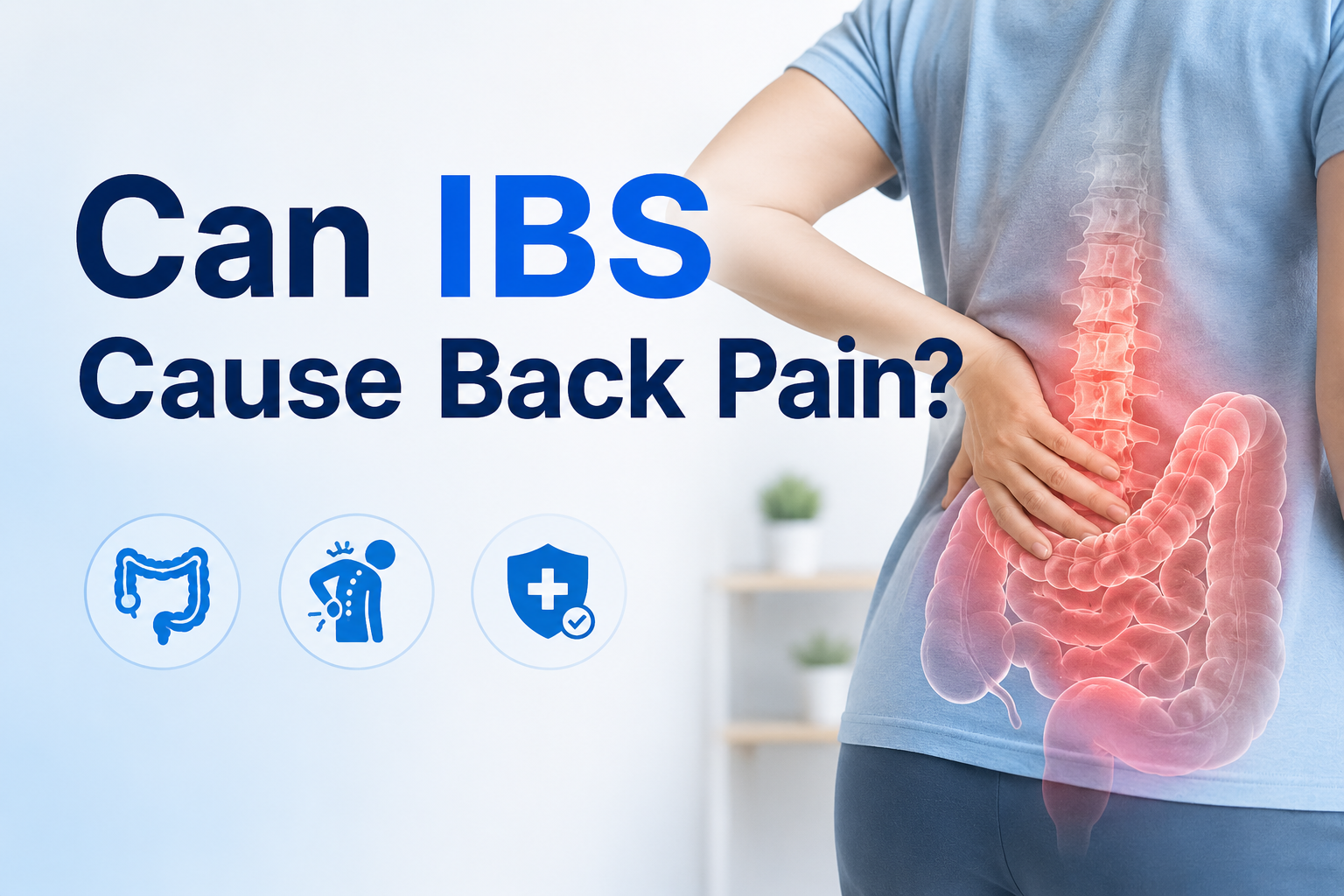
Can IBS cause back pain? This is a common question among people who experience both digestive issues and unexplained lower back discomfort. While IBS mainly affects the digestive system, symptoms such as bloating, constipation, and abdominal cramping can sometimes contribute to pain that extends into the lower back.
Understanding the connection between IBS and back pain can help you better manage your symptoms and improve your daily comfort. In this article, we will discuss Why IBS May Trigger Lower Back Pain, common symptoms to watch for, and practical Lifestyle Tips for Managing IBS-Related Back Pain.
What Is Irritable Bowel Syndrome (IBS)?
Irritable Bowel Syndrome, commonly known as IBS, is a chronic digestive disorder that affects the large intestine. It is considered a functional gastrointestinal condition, meaning the digestive tract appears normal but does not function properly.
People with IBS often experience recurring digestive symptoms that can vary in severity. Some individuals mainly struggle with constipation, while others experience diarrhea or a combination of both. The condition affects millions of people worldwide and can significantly impact daily activities.
Common symptoms of IBS include:
| Common IBS Symptoms | Description |
| Abdominal Pain | Cramping or discomfort in the stomach area |
| Bloating | Feeling of fullness or swelling in the abdomen |
| Constipation | Difficulty passing stools |
| Diarrhea | Frequent loose stools |
| Gas | Excessive flatulence and discomfort |
| Changes in Bowel Habits | Alternating constipation and diarrhea |
Although IBS primarily affects digestion, many people also experience symptoms in other areas of the body, including fatigue, headaches, and back pain.
Can IBS Cause Back Pain?
Yes, IBS can cause back pain in some individuals. While it is not considered a classic symptom of IBS, the condition can indirectly contribute to discomfort in the lower back.
Many people notice that their back pain becomes worse during IBS flare-ups. This is especially common when bloating, constipation, or abdominal cramping is severe. The digestive system and surrounding muscles share nerve pathways, which means pain originating in the abdomen may sometimes be felt in the back.



The intensity of the pain varies from person to person. Some individuals experience a mild aching sensation, while others report significant discomfort that interferes with daily activities. Understanding the reasons behind this connection is important for finding relief.
Why IBS May Trigger Lower Back Pain?
Several factors explain why IBS-related digestive issues can contribute to lower back pain. These causes often work together rather than occurring independently.
Referred Pain
Referred pain occurs when pain originating in one part of the body is felt somewhere else. Because the digestive organs and lower back share certain nerve pathways, abdominal pain caused by IBS may be perceived as back pain.
For example, severe intestinal cramping may not remain limited to the abdomen. Instead, the discomfort may radiate toward the lower back, making it seem as though the back itself is the source of the problem.
Constipation Pressure
Constipation is one of the most common IBS symptoms. When stool remains in the colon for an extended period, pressure can build within the digestive tract.
This increased pressure may affect nearby muscles, tissues, and nerves. As a result, some individuals experience pain or soreness in the lower back until normal bowel movements return.
Bloating and Abdominal Distension
Excess gas and bloating can stretch the abdominal area and create tension throughout the midsection. This tension may affect posture and place extra strain on the lower back muscles.
When bloating becomes severe, even sitting, standing, or walking comfortably may become difficult. The resulting muscle strain can contribute to back discomfort.
Stress and Muscle Tension
Stress plays a significant role in IBS symptoms. Many people notice their digestive problems worsen during stressful periods.
Stress also causes muscles to tighten, particularly in the neck, shoulders, and lower back. Chronic muscle tension combined with digestive discomfort may increase the likelihood of experiencing back pain.
Common Symptoms of IBS-Related Back Pain
IBS-related back pain can present differently from person to person. The discomfort often appears alongside digestive symptoms rather than occurring independently.
Some common symptoms include:
- Dull aching pain in the lower back
- Pain that worsens during IBS flare-ups
- Back discomfort accompanied by bloating
- Cramping sensations that extend from the abdomen to the back
- Temporary pain that improves after bowel movements
- Muscle stiffness in the lower back region
Many individuals report that their back pain improves when their digestive symptoms become more manageable. This relationship often helps doctors identify IBS as a contributing factor.
The Link Between Bloating, Constipation, and Back Discomfort
Bloating and constipation are two major reasons why people with IBS experience back pain. Both conditions create physical pressure within the abdomen, which can affect surrounding structures.
The following table highlights how these symptoms may contribute to discomfort:
| IBS Symptom | Impact on the Back |
| Bloating | Increases abdominal pressure and muscle strain |
| Constipation | Creates pressure within the colon that may radiate to the back |
| Gas Build-Up | Causes abdominal distension and discomfort |
| Cramping | May trigger referred pain in nearby areas |
| Poor Posture Due to Pain | Places additional stress on back muscles |
When bloating and constipation occur together, the likelihood of experiencing lower back pain may increase significantly.
How to Tell If Your Back Pain Is Related to IBS?
Determining whether back pain is connected to IBS requires looking at the timing and associated symptoms.
Your back pain may be related to IBS if:
- It appears during digestive flare-ups.
- It occurs alongside bloating or constipation.
- It improves after a bowel movement.
- It comes and goes rather than remaining constant.
- Medical examinations have ruled out spinal problems.
However, back pain should not automatically be blamed on IBS. Conditions such as kidney stones, muscle injuries, arthritis, herniated discs, or infections can also cause similar symptoms.
If the pain is severe, persistent, or accompanied by concerning symptoms, medical evaluation is important.
Effective Treatments for IBS and Back Pain
Treating the underlying IBS symptoms often helps reduce associated back pain. The goal is to improve digestive health while addressing muscle discomfort.
Several treatment options may be beneficial:
| Treatment | Potential Benefits |
| IBS Medications | Control diarrhea, constipation, and cramping |
| Heat Therapy | Relaxes tight muscles |
| Gentle Exercise | Improves digestion and flexibility |
| Stress Management | Reduces IBS flare-ups |
| Hydration | Supports healthy bowel movements |
| Physical Therapy | Helps relieve muscle strain |
Doctors may recommend different treatments depending on the specific type of IBS and the severity of symptoms.
Dietary Changes That May Help Reduce Symptoms
Diet plays a major role in managing IBS symptoms and reducing discomfort that may contribute to back pain.
Many healthcare professionals recommend identifying foods that trigger digestive symptoms. Keeping a food journal can help track patterns between meals and flare-ups.
Some dietary changes that may help include:
- Increasing water intake throughout the day.
- Eating smaller, more frequent meals.
- Limiting highly processed foods.
- Reducing foods that trigger bloating.
- Following a low-FODMAP diet under professional guidance.
- Including fiber gradually if constipation is present.
Every person with IBS responds differently to foods. Finding the right balance often requires patience and experimentation.
Lifestyle Tips for Managing IBS-Related Back Pain
Healthy lifestyle habits can support digestive function and reduce the risk of back discomfort.
Regular physical activity is one of the most effective strategies. Walking, stretching, yoga, and light exercise help promote healthy digestion while strengthening muscles that support the spine.
Good sleep habits are also important. Poor sleep can increase stress levels and make both digestive symptoms and pain feel worse.
Additional lifestyle recommendations include:
- Managing stress through relaxation techniques.
- Maintaining proper posture while sitting.
- Avoiding long periods of inactivity.
- Staying hydrated daily.
- Creating a consistent eating schedule.
Small lifestyle improvements can often produce meaningful results over time.
When to Seek Medical Attention?
Although IBS can contribute to back pain, some symptoms require prompt medical evaluation.You should consult a healthcare provider if you experience:
- Severe or worsening back pain
- Blood in the stool
- Unexplained weight loss
- Fever along with digestive symptoms
- Persistent vomiting
- Numbness or weakness in the legs
- Loss of bladder or bowel control
These symptoms may indicate a condition other than IBS and should not be ignored.
Frequently Asked Questions
Can IBS cause lower back pain every day?
IBS-related back pain can occur frequently if digestive symptoms are ongoing. However, daily back pain should be evaluated by a healthcare professional to rule out other causes.
Is lower back pain common with IBS?
While lower back pain is not considered a primary IBS symptom, many individuals report experiencing it during periods of bloating, constipation, or severe abdominal cramping.
Does constipation from IBS make back pain worse?
Yes, constipation can increase pressure in the colon and surrounding tissues, which may contribute to lower back discomfort.
Can bloating cause back pain in IBS patients?
Severe bloating can stretch the abdomen and affect posture, placing additional strain on lower back muscles and leading to discomfort.
How long does IBS-related back pain last?
The duration varies depending on the severity of digestive symptoms. In many cases, the pain improves once bloating, constipation, or abdominal cramping subsides.
What exercises help reduce IBS-related back pain?
Walking, gentle stretching, yoga, and low-impact exercises can help improve digestion and relieve muscle tension that contributes to back pain.
When should I worry about back pain with IBS?
You should seek medical advice if the pain is severe, persistent, worsening, or accompanied by symptoms such as fever, weight loss, or blood in the stool.
Conclusion
So, can IBS cause back pain? In many cases, yes. Although back pain is not one of the main symptoms of Irritable Bowel Syndrome, it can develop as a result of bloating, constipation, abdominal cramping, referred pain, and stress-related muscle tension. The connection between digestive health and physical discomfort is often stronger than many people realize.
Managing IBS effectively through proper diet, hydration, exercise, stress reduction, and medical treatment can often help reduce both digestive symptoms and associated back pain. If symptoms become severe or unusual, seeking professional medical advice is always the safest approach.
Related Posts
Does Facial Work for Acne? Benefits, Risks, Types, and What to Expect
Signs of a Sinus Infection: Early Symptoms, Severe Signs & When to See a Doctor
Why does my stomach hurt when I cough? Causes, warning signs & when to see a doctor
Pain in Big Toe Joint: Causes, Symptoms, and Best Treatments