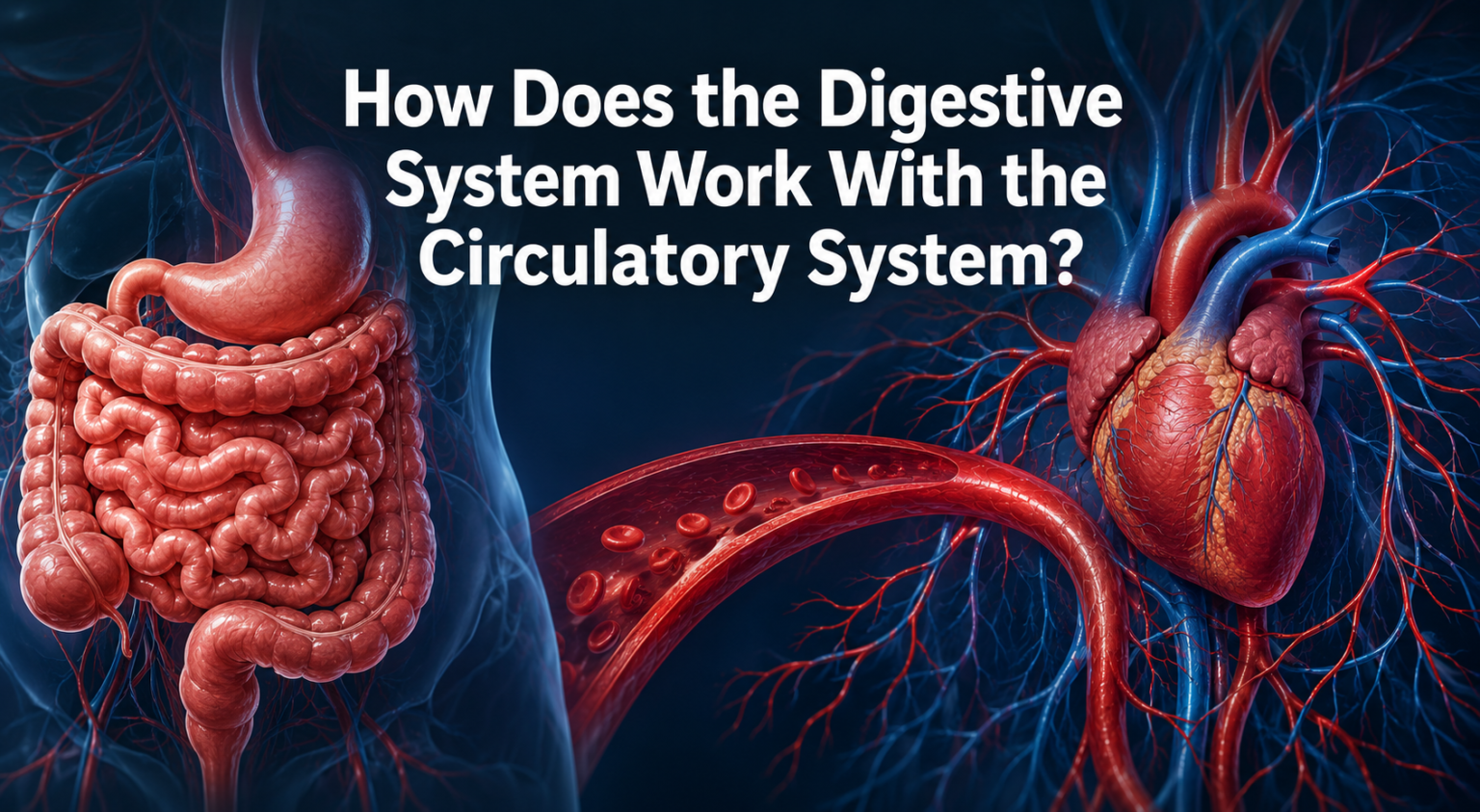
Your body runs on teamwork, and few partnerships matter more than the one between digestion and circulation. Every bite of food you eat is useless until it reaches your cells, and that journey depends entirely on your blood.
So how does the digestive system work with the circulatory system in practice? In short, digestion breaks food into tiny nutrient molecules, and circulation picks them up and delivers them to every organ that needs fuel. Without this partnership, even the healthiest meal would never actually nourish your body.
Below, we’ll walk through what each system does on its own, how they connect step by step, the special path fats take, and what happens when this connection breaks down.
What Does the Digestive System Do?
The digestive system’s main job is turning solid food into something your body can actually use. It works like a processing line, with several organs each handling a different stage of breakdown.
Key Organs Involved
Digestion starts in the mouth, where chewing and saliva begin breaking food apart. From there, food travels to the stomach, where acid and enzymes turn it into a semi-liquid mixture. The small intestine finishes the job, while the liver and pancreas add digestive juices that help absorb what’s left.
How Food Is Broken Down Into Nutrients
Enzymes split proteins into amino acids, carbohydrates into glucose, and fats into fatty acids. This chemical breakdown happens gradually as food moves through the stomach and small intestine. By the time food reaches the lower intestine, most usable nutrients have already been extracted for absorption.
What Does the Circulatory System Do?
While digestion breaks food down, the circulatory system is responsible for moving everything the body needs from one place to another. It acts as the transport network that keeps every organ supplied.
Key Components
The heart, blood vessels, and blood itself make up this transport system. The heart pumps blood continuously, arteries carry it outward, veins bring it back, and capillaries allow exchange at the tissue level. Together, these parts keep nutrients and oxygen moving nonstop.


Role of Circulation in Delivering Oxygen and Nutrients
Blood doesn’t just carry digested nutrients; it also delivers oxygen to keep organs functioning, including the digestive organs themselves. This dual role is why poor circulation can slow digestion, and poor digestion can eventually affect circulation. The two systems rely on each other to keep the body running smoothly.
How the Two Systems Connect?
This is the core of how does the digestive system work with the circulatory system question, since the actual handoff between the two happens here. It unfolds in a clear, step-by-step sequence inside the gut.
Step 1: Digestion Breaks Food Into Absorbable Molecules
Before anything can enter the bloodstream, food must be reduced to its smallest components. Large food particles are simply too big to pass through intestinal walls. Only fully broken-down nutrients like glucose, amino acids, and fatty acids can move on to the next stage.
Step 2: Absorption Through Intestinal Villi Into Capillaries
The inner lining of the small intestine is covered in finger-like projections called villi, and even smaller microvilli, which dramatically increase surface area. Nutrients pass through these structures directly into a dense network of tiny blood vessels underneath. This is the exact point where digestion physically hands off nutrients to circulation.
Step 3: Nutrient Transport via the Hepatic Portal Vein to the Liver
Once nutrients enter the bloodstream, they don’t go straight to the rest of the body. Blood leaving the intestines first travels through the hepatic portal vein directly to the liver. This routing allows the liver to inspect and process everything absorbed before it reaches other organs.
Step 4: Liver Processing and Filtering
The liver acts as a checkpoint, converting excess glucose into storage form, breaking down certain toxins, and regulating nutrient levels. It also filters out harmful substances that may have been absorbed along with nutrients. Only after this filtering does blood carry nutrients onward to general circulation.
Step 5: Distribution of Nutrients to Body Cells via the Bloodstream
From the liver, nutrient-rich blood re-enters general circulation and is pumped by the heart throughout the body. Every organ, muscle, and tissue draws glucose, amino acids, and other nutrients from this blood supply as it passes through. This final step completes the connection between what you eat and how your body actually functions.
The Special Case of Fat Absorption
Not all nutrients follow the same route through the bloodstream, and fat is the clearest exception. Its absorption path involves a completely different system before it ever touches the blood.
Why Fats Take a Different Route
Digested fats are packaged into particles called chylomicrons, which are too large to enter blood capillaries directly. Instead of the portal vein pathway used by other nutrients, fats are absorbed into the lymphatic system first. This detour exists because fat molecules need a different transport structure to move safely.
How Chylomicrons Enter the Bloodstream Near the Heart
From the lymphatic vessels, chylomicrons travel through the thoracic duct and eventually empty into a large vein near the heart. Only at this point do fats officially join the bloodstream and begin circulating throughout the body. This is a key detail that separates fat absorption from how proteins and carbohydrates are handled.
Supporting Roles Between the Two Systems
Beyond nutrient transport, digestion and circulation support each other in several less obvious but equally important ways. These supporting functions keep both systems working efficiently over time.
Oxygen Delivery to Digestive Organs
Digestive organs require a constant oxygen supply to function properly, and that oxygen arrives exclusively through the bloodstream. Without adequate blood flow, the stomach and intestines cannot digest food efficiently. This is why circulatory health directly influences digestive performance.
Waste and Carbon Dioxide Removal
As digestive organs work, they produce carbon dioxide and other metabolic waste products. Blood carries these byproducts away for elimination through the lungs and kidneys. This cleanup process keeps digestive tissue healthy and able to keep functioning normally.
Bilirubin and Liver-Blood Waste Processing
The liver breaks down old red blood cells and produces bilirubin as a byproduct, which is then released into bile. Bile travels into the digestive tract, where bilirubin is eventually eliminated through waste. This shows how circulatory waste products actually depend on the digestive system for their final removal.
What Happens When This System Breaks Down?
When the connection between digestion and circulation weakens, the effects can show up in multiple parts of the body. Understanding these issues highlights just how important this partnership really is.
Common Issues Linking Digestion and Circulation
Conditions like liver disease can disrupt how nutrients are filtered and processed before reaching the bloodstream. Portal hypertension, a buildup of pressure in the hepatic portal vein, can interfere with normal nutrient transport. Poor absorption disorders can also mean that even well-digested food never properly reaches the blood supply.
General Signs of Dysfunction
Fatigue, unexplained weight changes, and nutrient deficiencies can sometimes point to a breakdown in this system, though these signs are not exclusive to it. Persistent digestive discomfort combined with low energy may suggest the connection isn’t working efficiently. Anyone noticing ongoing symptoms like these should speak with a healthcare provider rather than self-diagnose.
Why Does This Connection Matters for Overall Health?
This partnership isn’t just a biological detail; it directly shapes how energetic, strong, and resilient your body feels every day. When digestion and circulation work smoothly together, cells receive steady access to fuel for energy production.
Tissue repair and growth depend on this same nutrient flow, especially after illness or physical activity. Even immune defenses and metabolic balance rely on the constant, reliable delivery that only healthy circulation combined with proper digestion can provide.
Digestive System vs. Circulatory System
| Feature | Digestive System | Circulatory System |
| Main Function | Breaks down food into nutrients | Transports nutrients and oxygen throughout the body |
| Key Organs | Mouth, stomach, small intestine, liver, pancreas | Heart, arteries, veins, capillaries |
| Connection Point | Small intestine (villi) | Capillaries and hepatic portal vein |
| Special Pathway | Fat digestion | Lymphatic system to bloodstream |
| End Result | Nutrient molecules ready for absorption | Nutrients delivered to body cells |
Frequently Asked Questions
How does the digestive system work with the circulatory system? The digestive system breaks food into small nutrient molecules, and the circulatory system absorbs and transports them through the blood to every cell in the body.
Which organ connects digestion to blood flow? The small intestine is the main connection point, since its villi allow nutrients to pass directly into surrounding blood capillaries.
What is the hepatic portal vein? It’s the blood vessel that carries nutrient-rich blood from the intestines straight to the liver for processing before it reaches the rest of the body.
How long does it take for nutrients to enter the bloodstream? Absorption typically begins within a few hours of eating, though exact timing varies based on food type and individual digestion speed.
Why do fats not follow the same absorption path as other nutrients? Fats form larger particles called chylomicrons that cannot pass through blood capillaries directly, so they travel through the lymphatic system first.
Can poor circulation affect digestion? Yes, since digestive organs depend on steady blood flow for oxygen, reduced circulation can slow down or impair normal digestive function.
What happens if the liver can’t process nutrients properly? Nutrient filtering and regulation can become disrupted, which may affect how efficiently the body uses glucose, proteins, and other absorbed nutrients.
Conclusion
The digestive and circulatory systems work as one continuous pathway, turning food into fuel your body can actually use.
Digestion prepares nutrients, absorption hands them to the blood, and circulation delivers them everywhere they’re needed.
Recognizing how does the digestive system work with the circulatory system makes it clear why both need to function well together for the body to stay healthy and energized.
RELATED POSTS
Do Cavities Hurt? Signs, Stages, and When to See a Dentist
Does Lack of Sleep Cause Headaches? Causes, Symptoms, and Effective Relief
How to Know If You Have a Cavity: Warning Signs and Symptoms
Will Macrobid Cause a Yeast Infection? Causes, Symptoms
Will Yeast Infection Cause Spotting? Causes, Symptoms & Treatment