Many people think of digestion and breathing as two separate processes with nothing in common. In reality, these two systems are physically connected and depend on each other to keep the body functioning properly.
Understanding how is the digestive system related to the respiratory system helps explain everyday actions like swallowing, breathing while eating, and even why choking can happen. Both systems share certain organs, work together to supply oxygen and nutrients to the body, and even help protect against outside germs.
This connection also explains why problems in one system, such as acid reflux, can sometimes affect the other, such as breathing difficulty. The sections below break down this relationship in a simple and easy to understand way.
A Quick Look at the Digestive System
The digestive system includes organs such as the mouth, esophagus, stomach, small intestine, large intestine, liver, and pancreas.
Its main job is to break down food into smaller nutrients, absorb them into the bloodstream, and remove waste products from the body. This process starts the moment food enters the mouth and continues for hours as it travels through the digestive tract.
A Quick Look at the Respiratory System
The respiratory system consists of the nose, throat, trachea, lungs, and diaphragm. Its primary role is to bring oxygen into the body and remove carbon dioxide through the process of breathing.
Air travels through the nose or mouth, down the throat, and into the lungs, where oxygen and carbon dioxide are exchanged with the blood.
The Shared Anatomical Connection Between Both Systems
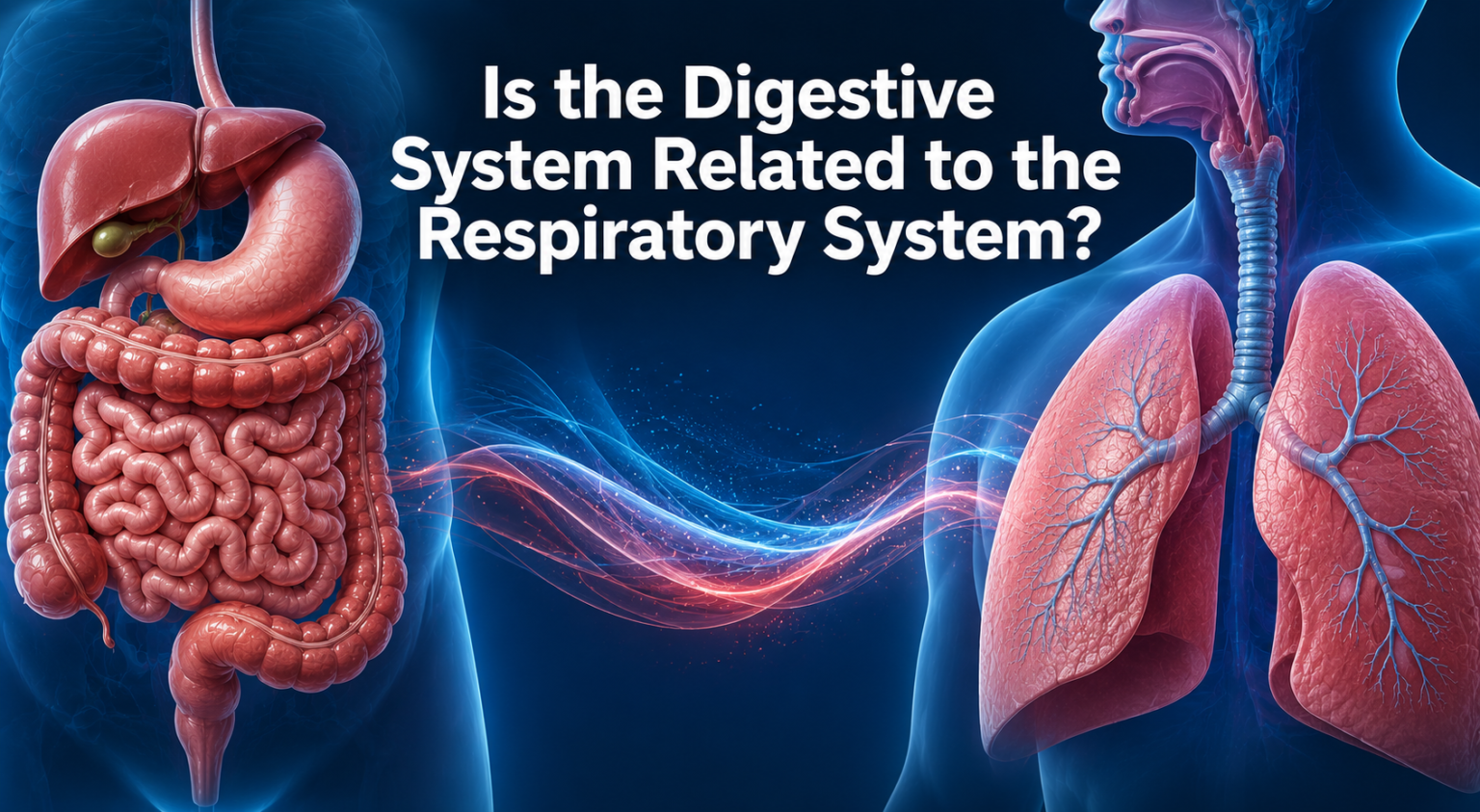
Although digestion and breathing seem like separate functions, both systems share a common passage in the upper body. This shared pathway is one of the clearest ways to understand how is the digestive system related to the respiratory system.



The Pharynx as a Shared Pathway
The pharynx, commonly known as the throat, is used by both systems as a passage. Air travels through it on its way to the lungs, and food and liquid pass through it on the way to the esophagus. This shared structure means precise coordination is required every time a person breathes or swallows.
Role of the Epiglottis in Protecting the Airway
The epiglottis is a small flap of tissue located at the base of the tongue. During swallowing, it folds down to cover the trachea, preventing food or liquid from entering the airway. This automatic action is what allows people to eat and breathe safely without choking most of the time.
How Breathing Supports the Digestive Process?
Breathing does more than supply air to the lungs; it also plays a supporting role in digestion. The respiratory system helps digestive organs function properly in a few important ways.
Oxygen Supply to Digestive Organs
Digestive organs such as the stomach, intestines, and liver need a constant supply of oxygen to carry out their functions. This oxygen is delivered through the bloodstream after being absorbed by the lungs during breathing. Without adequate oxygen, digestive muscles and glands cannot work efficiently to break down food.
The Diaphragm’s Dual Function
The diaphragm is the main muscle used for breathing, but it also sits directly above the stomach. Its movement helps support processes like swallowing and plays a role in keeping stomach acid from moving back into the esophagus. This makes the diaphragm one of the clearest physical links between the two systems.
How Digestion Supports the Respiratory Process?
Just as breathing helps digestion, the digestive system also plays a role in keeping the respiratory system working well. This support happens mainly through nutrient delivery and waste removal.
Nutrient Delivery to Lung Tissue
After food is digested, nutrients are absorbed into the bloodstream and carried throughout the body, including to the lungs. These nutrients provide the energy and building blocks that lung tissue needs to stay healthy and function properly. Without proper digestion, the respiratory system would not receive the nourishment it depends on.
Carbon Dioxide and Waste Removal
Digestion produces waste products, including carbon dioxide, as cells break down nutrients for energy. This carbon dioxide is carried through the blood to the lungs, where it is removed from the body during exhalation. This process shows how digestion and respiration work together even at a cellular level.
Shared Protective Mechanisms Between the Two Systems
Both the digestive and respiratory systems are lined with mucous membranes that act as a protective barrier.
These membranes trap dust, germs, and other harmful particles before they can cause damage. Because both systems face constant exposure to outside elements through the mouth and nose, this shared defense mechanism helps protect the entire body from infection.
What Happens When This Connection Is Disrupted?
When the coordination between digestion and breathing fails, several health issues can occur. Choking happens when food accidentally enters the airway instead of the esophagus.
Acid reflux, where stomach acid moves upward, can sometimes reach the throat and irritate the airway, leading to coughing or breathing discomfort.
In some cases, food or liquid that enters the lungs by mistake can cause a serious lung infection called aspiration pneumonia. These examples highlight just how closely connected the two systems really are.
Comparison Table: Digestive System vs Respiratory System
The table below summarizes the main organs, functions, and connecting points of both systems for a quick reference.
| Feature | Digestive System | Respiratory System |
| Main Organs | Mouth, esophagus, stomach, intestines, liver, pancreas | Nose, pharynx, trachea, lungs, diaphragm |
| Main Function | Breaks down food and absorbs nutrients | Brings in oxygen and removes carbon dioxide |
| Shared Structure | Pharynx (throat) | Pharynx (throat) |
| Main Waste Product | Solid digestive waste | Carbon dioxide |
| Common Disruption | Acid reflux, choking | Aspiration pneumonia, breathing discomfort |
Simple Tips to Support Both Systems Together
Since digestion and breathing are closely connected, a few simple daily habits can help both systems work better together.
1. Eat slowly and chew food thoroughly before swallowing.
2. Avoid talking or laughing while food is still in the mouth.
3. Sit upright while eating and for some time afterward.
4. Practice deep breathing exercises to support diaphragm function.
5. Stay hydrated to support both digestion and mucous membrane health.
When to See a Doctor
Occasional coughing while eating is normal, but certain signs need medical attention. If a person frequently chokes on food, experiences chest tightness after meals, has ongoing acid reflux along with breathing problems, or develops a persistent cough with no clear cause, it is important to consult a doctor.
These symptoms could indicate that the connection between the two systems is being affected by an underlying condition.
FAQs
Can acid reflux affect breathing?
Yes, when stomach acid reaches the throat, it can irritate the airway and trigger coughing or a feeling of breathlessness.
Why do we cough when food goes down the wrong pipe?
Coughing is the body’s natural reflex to clear food or liquid from the airway when the epiglottis does not close properly in time.
What organ connects the digestive and respiratory systems?
The pharynx, or throat, is the main organ that serves as a shared passage for both air and food.
Can breathing problems affect digestion?
Yes, low oxygen levels caused by breathing issues can reduce the efficiency of digestive organs, slowing down the digestion process.
Conclusion
The digestive and respiratory systems may serve different purposes, but they are deeply connected through shared organs, oxygen exchange, and protective mechanisms.
Understanding how is the digestive system related to the respiratory system shows why coordinated function between the two is essential for overall health. Simple habits like eating slowly and practicing good breathing support both systems and reduce the risk of complications over time.
RELATED ARTICLES
How Much Is a Neck Lift? Cost Guide & Price Factors
Does the Digestive System Work With the Circulatory System?
How to Heal a Sprained Ankle Fast in 2 Days: What Works
Does the Sauna Help With Acne? Benefits, Risks, and What You Need to Know