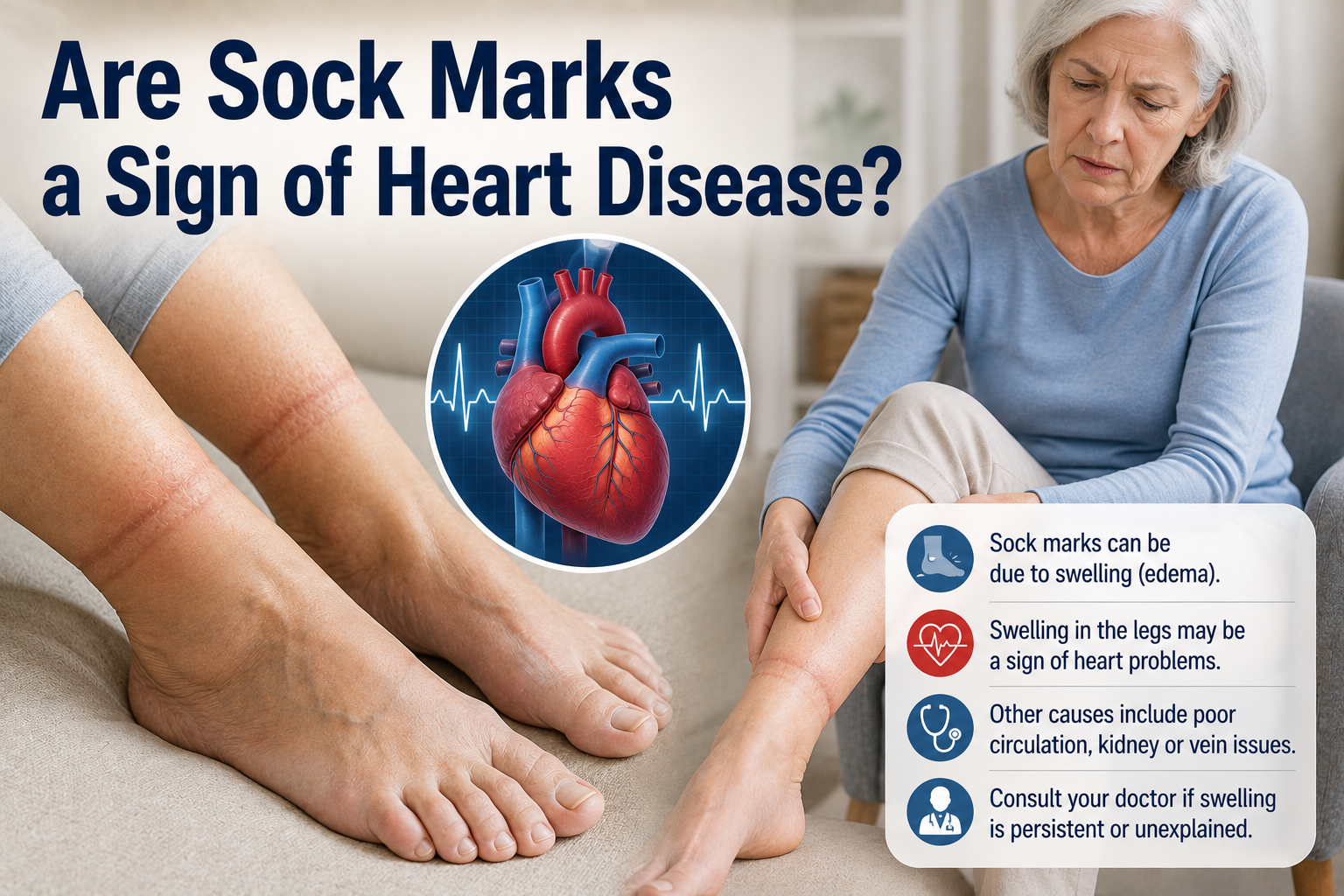
Sock marks are the indentation lines left on your skin after you remove tight-fitting socks, and in most cases they are completely harmless and fade within a few minutes. However, when these marks become deep, painful, or take hours to disappear, they can sometimes point to fluid retention in the body, which is medically known as edema.
Edema itself is not a disease but a symptom that can be linked to several underlying conditions, including heart disease, kidney problems, liver issues, or poor blood circulation in the legs. So, are sock marks a sign of heart disease?
The honest answer is that they can be one of several possible signs, but they are never enough on their own to confirm a heart condition. This article breaks down exactly when sock marks are normal, when they might be a warning sign, and what steps you should take next.
Key Takeaways
- Mild, temporary sock marks that fade quickly are usually normal and not a cause for concern.
- Deep, long-lasting, or painful sock marks may indicate fluid retention (edema) in the lower legs.
- Are sock marks a sign of heart disease in some cases? Yes, particularly when they appear alongside shortness of breath, fatigue, or rapid weight gain.
- Kidney disease, liver disease, and venous insufficiency can also cause similar sock indentation patterns.
- Persistent or worsening sock marks should always be evaluated by a licensed healthcare provider rather than self-diagnosed.
What Causes Sock Marks on Your Ankles?
Sock marks appear when the elastic band of your sock presses against the skin for an extended period, temporarily compressing the tissue underneath. In healthy individuals, this pressure mark disappears within a few minutes once circulation redistributes normally. However, the depth, duration, and frequency of these marks can vary depending on several everyday and medical factors, which are explained in the sections below.
Normal, Harmless Sock Indentations
For most people, sock marks are simply the result of wearing snug socks for several hours during the day. The skin naturally bounces back once the pressure is released, usually within five to ten minutes. This type of mark is not associated with any illness and does not require medical attention. It is considered a normal physiological response to mechanical pressure on soft tissue.
Prolonged Standing or Sitting
Standing or sitting in one position for long periods, especially during travel or desk work, can cause blood and fluid to pool in the lower legs due to gravity. This temporary pooling can make sock marks appear deeper than usual, even in otherwise healthy individuals. Taking short walking breaks and elevating the legs periodically usually resolves this issue without any lasting effects.
Tight or Non-Elastic Socks
Some socks have extra-tight elastic bands, particularly older brands with worn-out elasticity that digs into the skin unevenly. Wearing the wrong sock size can create pressure marks that look more severe than they actually are. Switching to socks with a wider, softer band often reduces this effect significantly.
The Link Between Sock Marks and Fluid Retention (Edema)
When sock marks become unusually deep, stay visible for a long time, or are accompanied by visible puffiness around the ankles, they may be a sign of edema rather than simple pressure marking. Understanding how fluid retention works helps explain why this happens and why it matters for long-term health monitoring.

What Is Edema?
Edema occurs when excess fluid builds up in the tissues, most commonly in the lower legs, ankles, and feet due to gravity. This fluid buildup makes the skin more compressible, so when a sock presses against it, the indentation lasts noticeably longer than normal. Mild edema can result from heat, prolonged sitting, or hormonal changes, while more persistent edema often signals an underlying medical issue that needs further evaluation.
Why Fluid Pools Around the Ankles?
The circulatory and lymphatic systems are responsible for moving fluid back toward the heart, but this process depends on healthy blood vessels, working valves, and adequate pumping pressure. When any part of this system is compromised, whether from weak vein valves, high blood pressure in the veins, or reduced heart pumping efficiency, fluid tends to settle in the lowest parts of the body first. This is precisely why the ankles and lower legs, where socks are worn, are often the earliest visible location for fluid-related swelling.
Can Sock Marks Indicate Heart Disease?
This is the central question many people search for, and the answer requires some nuance. Sock marks alone are not a diagnostic tool for heart disease, but when they appear as part of a broader pattern of symptoms, they can be a meaningful early clue that the heart is not pumping blood efficiently. Are sock marks a sign of heart disease in every case? No, but persistent bilateral leg swelling combined with other symptoms is a recognized indicator that doctors take seriously.
How Heart Failure Causes Leg Swelling?
When the heart’s pumping ability weakens, as seen in congestive heart failure, blood can back up in the veins, increasing pressure and pushing fluid out into surrounding tissues. This process typically affects both legs equally and tends to worsen throughout the day, particularly after standing or sitting for extended periods. Because the ankles are the lowest point of the body while socks are worn, this is often where the earliest visible signs of heart-related swelling appear.
Sock Marks vs. Clinical Edema — Key Differences
Not all sock indentations point to heart problems, so distinguishing between simple pressure marks and clinically significant edema is important. Clinical edema is typically identified by a small, defined pit remaining in the skin for several seconds after gentle finger pressure, a phenomenon known as pitting edema. Ordinary sock marks, in contrast, are shallow, symmetrical, and disappear quickly without leaving a lasting indentation when pressed.
| Feature | Normal Sock Marks | Edema-Related Marks |
| Fade Time | A few minutes | 30 minutes or longer |
| Pitting on Finger Press | No lasting pit | Visible pit remains |
| Symmetry | Usually one leg or uneven | Typically both legs equally |
| Associated Symptoms | None | Shortness of breath, fatigue, weight gain |
| Skin Appearance | Normal color and texture | Shiny, tight, or discolored skin |
Other Medical Conditions Linked to Sock Marks
While heart disease is one possible cause, several other health conditions can produce a very similar pattern of ankle swelling and prolonged sock indentation. Recognizing these alternative causes helps avoid unnecessary worry while still encouraging appropriate medical evaluation when needed.
Kidney Disease
The kidneys regulate fluid and sodium balance, and when kidney function declines, excess fluid can accumulate in the legs and around the eyes. According to the National Institutes of Health, fluid retention is a common early symptom of reduced kidney filtration capacity. This swelling often appears alongside changes in urination frequency and unexplained fatigue.
Liver Disease
Liver conditions such as cirrhosis can reduce production of albumin, a protein that normally keeps fluid inside blood vessels rather than letting it leak into tissue. When albumin drops, fluid escapes into the lower legs, deepening sock marks considerably. This type of swelling is often paired with abdominal bloating and changes in skin or eye color.
Venous Insufficiency
Chronic venous insufficiency develops when valves inside leg veins weaken, making it harder for blood to flow upward against gravity. This leads to pooling in the lower legs, causing swelling and noticeably deeper sock indentations by the end of the day. It is more common in people who stand for long hours or have a family history of vein problems.
Deep Vein Thrombosis (DVT)
Deep vein thrombosis occurs when a blood clot forms in a deep leg vein, typically causing swelling in only one leg rather than both. It can also cause warmth, redness, and pain, distinguishing it from the symmetrical swelling seen in heart or kidney-related edema. Because DVT can be serious, sudden one-sided leg swelling should be evaluated promptly.
Comparison Table: Sock-Mark Causes at a Glance
To make it easier to understand how different conditions relate to sock mark severity, the table below summarizes the most common causes, their typical triggers, and when medical attention becomes necessary. This comparison is intended as an educational reference rather than a replacement for professional diagnosis.
| Possible Cause | Likely Trigger | Common Warning Signs | When to See a Doctor |
| Normal Pressure Marks | Tight socks, long wear time | None | Not needed if marks fade quickly |
| Prolonged Sitting/Standing | Travel, desk work | Mild puffiness | If swelling doesn’t improve after rest |
| Heart-Related Edema | Reduced heart pumping efficiency | Breathlessness, fatigue, weight gain | Promptly, especially with chest discomfort |
| Kidney-Related Edema | Reduced fluid filtration | Changes in urination, facial puffiness | Within a few days of onset |
| Liver-Related Edema | Low albumin levels | Abdominal swelling, skin changes | Promptly if accompanied by jaundice |
| Venous Insufficiency | Weak vein valves | Visible veins, evening swelling | If symptoms worsen over weeks |
| Deep Vein Thrombosis | Blood clot in leg vein | One-sided swelling, warmth, redness | Immediately, same day |
Warning Signs That Mean You Should See a Doctor
Understanding which accompanying symptoms turn an ordinary sock mark into a medical concern can help you decide when to seek professional advice rather than waiting it out at home.
Symptoms Alongside Sock Marks
If deep sock marks are paired with shortness of breath during light activity, unusual tiredness, or a persistent cough, these combined symptoms may point toward a cardiovascular cause rather than simple pooling from sitting too long. Sudden, unexplained weight gain within a few days is another red flag often tied to fluid retention linked to heart function. Any combination of these symptoms alongside leg swelling warrants a conversation with a healthcare provider.
Red-Flag Combinations
Certain combinations should prompt urgent attention rather than a routine appointment, including leg swelling paired with chest pain, difficulty breathing while lying flat, or sudden swelling in only one leg. According to the Cleveland Clinic, new or worsening leg swelling combined with breathing difficulty can indicate a serious cardiovascular event and should not be delayed. Recognizing these combinations early can make a meaningful difference in outcomes.
How Doctors Diagnose the Underlying Cause?
When sock marks and leg swelling are persistent enough to warrant medical attention, doctors typically follow a structured diagnostic process to identify the root cause accurately rather than guessing based on symptoms alone.
Physical Exam
A physical exam usually begins with the doctor pressing gently on the swollen area to check for pitting edema and noting whether swelling affects one leg or both. The doctor will also listen to the heart and lungs, check blood pressure, and review recent weight changes, since sudden gain often correlates with fluid retention. This initial exam helps narrow down whether further cardiac, renal, or vascular testing is necessary.
Tests
Depending on the exam findings, doctors may order an echocardiogram to evaluate heart pumping function, blood tests to check kidney and liver performance, or a urinalysis to assess protein levels. According to Mayo Clinic guidance, blood markers such as BNP are commonly used to help determine whether swelling is related to heart function specifically. These results allow physicians to pinpoint the exact cause rather than relying on visual symptoms alone.
Prevention and Home Management Tips
While not every cause of sock marks can be prevented, a few practical adjustments can reduce fluid buildup and support overall vascular health.
Sock and Footwear Choices
Choosing socks made from breathable material with a wider, less restrictive band reduces unnecessary pressure marking without sacrificing comfort. Compression socks, when recommended by a doctor, can help manage mild venous-related swelling by supporting healthy blood flow back toward the heart. Avoiding excessively tight socks during long flights or desk work is a simple first step.
Lifestyle Adjustments
Elevating the legs above heart level for fifteen to twenty minutes in the evening helps reduce pooling caused by prolonged sitting or standing. Reducing sodium intake, staying active, and maintaining a healthy weight also support better fluid balance. For anyone already diagnosed with a heart, kidney, or liver condition, following the prescribed treatment plan remains the most effective way to manage swelling long term.
Frequently Asked Questions
Are sock marks a sign of heart disease every time they appear? No, most sock marks are simply caused by tight elastic bands or prolonged sitting and are not related to any heart condition.
How long should normal sock marks take to fade? Normal sock marks typically fade within five to ten minutes once the sock is removed and circulation redistributes.
Can dehydration cause deeper sock marks? Yes, both dehydration and excess salt intake can temporarily affect fluid balance, sometimes making sock marks appear more pronounced than usual.
Should I worry if only one leg shows a deeper sock mark? One-sided swelling deserves prompt medical attention, as it can indicate a blood clot rather than a general fluid balance issue affecting both legs.
Can losing weight help reduce sock mark severity? Maintaining a healthy weight can improve circulation and reduce fluid retention, which may lessen the depth and duration of sock marks over time.
Conclusion
Sock marks are usually a harmless, everyday occurrence caused by tight elastic bands or long hours of sitting and standing.
However, when these marks become unusually deep, slow to fade, or accompanied by symptoms like breathlessness and fatigue, they can occasionally point toward heart, kidney, or liver-related fluid retention. Paying attention to these patterns and consulting a healthcare provider when warning signs appear ensures that any underlying condition is caught and managed early.
Related Articles
Can High Blood Pressure Cause Flashing Lights in Eyes?
Why Do My Veins Hurt in My Arm? Causes, Symptoms & Relief
Can Dentists Tell If You Vape? Signs, Risks, and What Dentists Look For?
Why Does My Vision Go Black When You Stand Up? Symptoms
Can High Cholesterol Cause Dizziness? Causes & Warning Signs