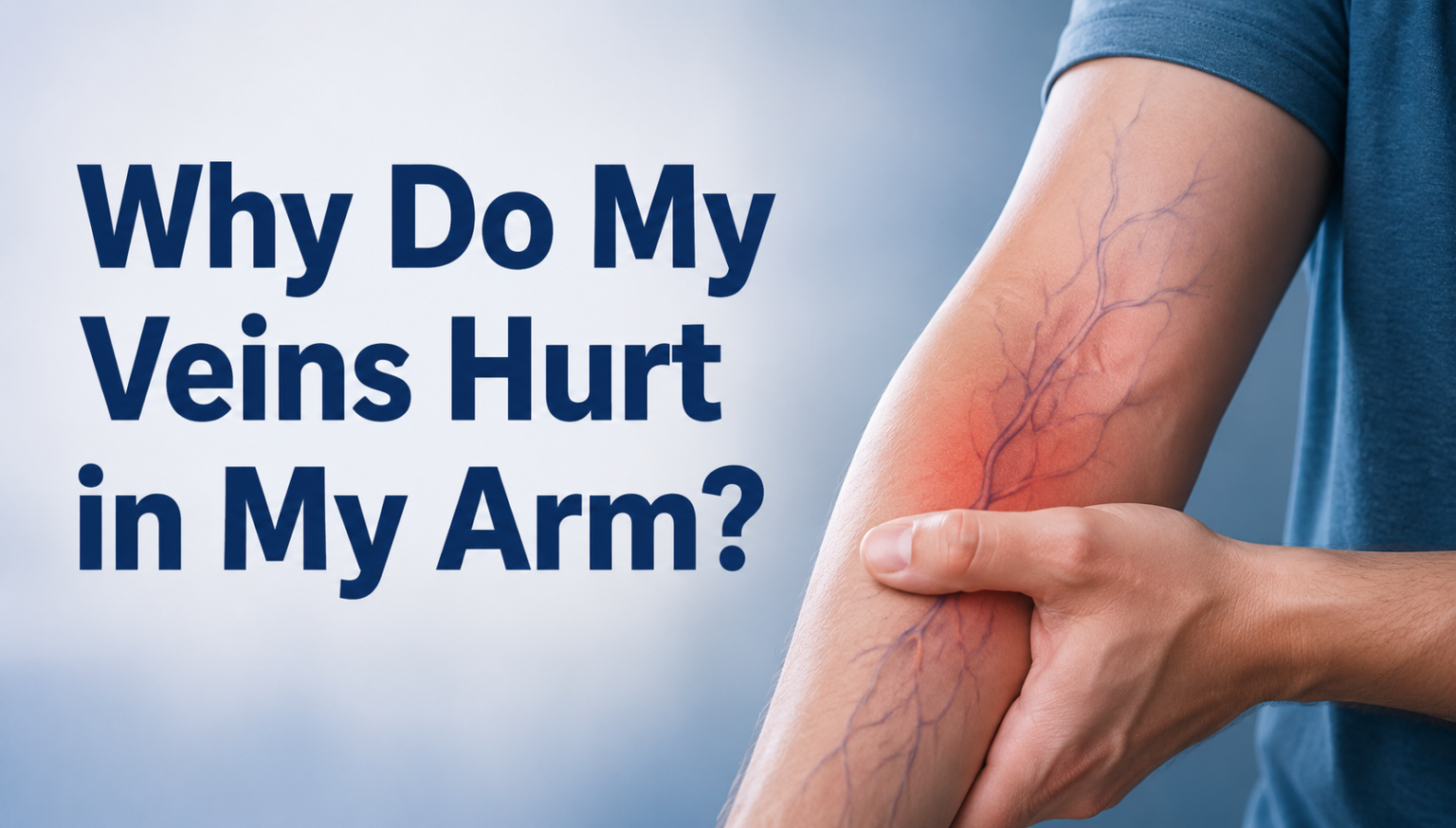
Aching or tender veins in the arm can catch you off guard, especially when there is no obvious injury behind it. Many people first notice it as a dull throb along a vein after a workout, a blood test, or simply resting awkwardly on the arm overnight.
In most cases, the discomfort comes from something mild and temporary, such as minor irritation from a needle or overworked muscles pressing near a vein. However, vein pain can occasionally point to something that needs closer medical attention, particularly if swelling, warmth, or a hard lump appears alongside it.
Understanding why do my veins hurt in my arm helps you tell apart a harmless ache from a warning sign your body is sending. This guide walks through the common and serious causes, the symptoms worth watching, and practical steps for relief and prevention.
Common Causes of Arm Vein Pain
Most arm vein pain traces back to everyday triggers rather than anything dangerous. The causes below are the ones doctors see most often, ranging from a reaction to a recent injection to simple dehydration.
Superficial Thrombophlebitis
This happens when a vein close to the skin’s surface becomes inflamed, often after a small injury, an IV line, or a minor bump to the arm. The vein may feel firm, look reddish, and stay tender to touch for several days. It usually settles on its own with rest and warm compresses, though it is worth monitoring in case it worsens.
Vein Irritation After Blood Draw or IV
A common reason for why do my veins hurt in my arm is a recent blood draw or intravenous line. The needle can irritate the vein wall, leading to soreness, slight bruising, or a tight feeling for a few days. This type of pain is generally harmless and fades as the puncture site heals.
Overuse or Muscle Strain
Repetitive lifting, gym sessions, or manual labor can strain the muscles surrounding the veins in your arm. The pressure and swelling from overworked muscles can make nearby veins feel sore or achy, even though the vein itself is not injured. Resting the arm typically brings quick relief.
Dehydration
When the body lacks enough fluids, blood becomes thicker and veins can appear more prominent and feel tender or achy. This is more noticeable in people who exercise heavily or spend long hours in hot weather without drinking enough water. Rehydrating usually eases the discomfort within a short time.



Varicose or Bulging Veins
While varicose veins are far more common in the legs, they can occasionally develop in the arms as well. These bulging, twisted veins can cause a dull ache, heaviness, or mild throbbing, particularly after long periods of arm use. They are usually not dangerous but can be monitored if they grow more prominent over time.
Serious Causes That Need Medical Attention
Not every case of arm vein pain is harmless. Some causes involve clotting or infection and require prompt evaluation to prevent complications from spreading further.
Deep Vein Thrombosis (DVT)
Though DVT is better known in the legs, it can also form in the deep veins of the arm, especially in people who have a catheter, port, or a history of clotting disorders. It typically causes swelling, warmth, and a heavy, aching pain that does not improve with rest. Because a clot can potentially travel to the lungs, this cause always needs urgent medical care.
Infection at Injection Site
If a needle or IV site becomes infected, the surrounding vein can become increasingly painful, red, and warm, sometimes accompanied by pus or fever. This condition, known as septic phlebitis, can worsen quickly without antibiotic treatment. Any spreading redness or fever after an injection should be checked by a doctor right away.
Blood Clotting Disorders
Certain inherited or acquired conditions make blood more prone to clotting, increasing the risk of painful, swollen veins in the arms. People with these disorders may notice recurring vein pain without a clear trigger like an injury or IV. A doctor can run blood tests to identify whether an underlying clotting issue is contributing to the pain.
Symptoms to Watch Alongside Vein Pain
Paying attention to accompanying symptoms can help you judge how serious the vein pain might be. The table below breaks down what each symptom could suggest, so you know what pattern you are dealing with.
| Symptom Alongside Vein Pain | What It May Suggest |
| Mild tenderness only, no swelling | Likely minor irritation or overuse |
| Swelling with warmth | Possible thrombophlebitis or clot |
| Redness spreading up the arm | Possible infection needing treatment |
| Fever combined with vein pain | Infection requiring prompt care |
| Hard, rope-like lump under skin | Inflamed or clotted vein |
| Persistent heaviness and aching | Possible DVT, especially with a catheter history |
If your symptoms match the more serious entries in this table, it is best not to wait and see whether they improve on their own.
When to See a Doctor
Most arm vein pain fades within a few days with basic home care, but certain warning signs call for prompt medical evaluation rather than waiting it out. Seek care if you notice sudden or worsening swelling, spreading redness, a fever, or pain that feels far more intense than the visible signs would suggest.
A hard, tender cord along the vein that keeps growing, or pain paired with shortness of breath and chest discomfort, should never be ignored, since these can point toward a clot. Getting checked early allows a doctor to rule out infection or clotting before it becomes harder to treat.
How Arm Vein Pain Is Diagnosed?
When vein pain does not resolve on its own or comes with worrying symptoms, doctors use a few standard methods to figure out the cause. These steps are usually quick and non-invasive.
Physical Examination
A doctor will typically start by looking at and feeling the affected area, checking for redness, warmth, swelling, and any firm or cord-like sections along the vein. This hands-on check often gives the first clue about whether the issue is superficial or something deeper.
Ultrasound Imaging
If a clot is suspected, an ultrasound is the most common next step, since it lets doctors see blood flow and detect blockages inside the vein without any invasive procedure. It is painless and usually takes only a short appointment to complete.
Blood Tests
Blood tests may be ordered to check for signs of infection or clotting disorders, particularly when vein pain keeps recurring without an obvious cause. These results help guide whether further treatment, such as antibiotics or blood thinners, is necessary.
Home Remedies and Relief Tips
For mild, non-serious cases, a handful of simple home measures can ease arm vein pain within a few days. These remedies work well for irritation from overuse, minor bruising, or dehydration-related discomfort.
Warm Compress
Applying a warm compress to the sore area for about fifteen to twenty minutes a few times a day can relax the surrounding muscles and reduce inflammation around the vein. This is especially helpful for soreness following a blood draw or minor strain.
Rest and Elevation
Giving the arm a break from repetitive movement, and keeping it slightly elevated when resting, helps reduce swelling and takes pressure off the affected vein. This simple step often speeds up recovery from overuse-related pain.
Staying Hydrated
Drinking enough water throughout the day thins the blood slightly and can ease the tension in veins that feel tender due to dehydration. Keeping a steady intake, rather than large amounts at once, tends to work best.
Over-the-Counter Pain Relief
Standard pain relievers can help manage discomfort while the vein heals, particularly for mild inflammation from minor injury or a recent injection. It is best to follow the dosing instructions on the label and check with a pharmacist if you take other medications.
How to Prevent Vein Pain in the Future?
A few consistent habits can lower the chances of dealing with sore arm veins again. Staying well hydrated throughout the day keeps blood flow smooth and reduces strain on vein walls.
Taking breaks during repetitive arm activities, whether at the gym or at work, prevents the muscle overuse that often triggers vein soreness. Rotating injection or blood draw sites, when possible, gives each vein time to heal before it is used again.
Wearing looser sleeves and avoiding tight bands around the upper arm also helps maintain healthy circulation and lowers pressure on the veins beneath the skin.
FAQs
Is vein pain in the arm usually serious?
Most cases are mild and related to overuse, dehydration, or recent needle irritation, resolving within a few days without complications.
Can dehydration cause vein pain in the arm?
Yes, insufficient fluids can thicken the blood and make veins feel more tender or noticeable, especially during exercise or hot weather.
How long does arm vein pain usually last?
Minor irritation typically improves within three to five days with rest and warm compresses, while more serious causes may take longer and need treatment.
When should I worry about vein pain in my arm?
Worsening swelling, spreading redness, fever, or a hard lump that keeps growing are signs that call for prompt medical evaluation.
Conclusion
Arm vein pain is usually nothing to panic about, often tracing back to minor irritation, overuse, or dehydration that eases with simple home care.
Still, symptoms like spreading redness, fever, or persistent swelling deserve prompt medical attention, since they can point toward infection or a clot. Paying attention to how the pain behaves over a few days is the best way to know whether it needs more than rest and time.
RELATRD POSTS
CPR Differs in an Unresponsive Choking Adult Victim
Texas Health Surgery Center: Services, Benefits, Insurance, Recovery & Patient Care Guide
Why Are My Eyes Burning? Causes, Symptoms & Relief