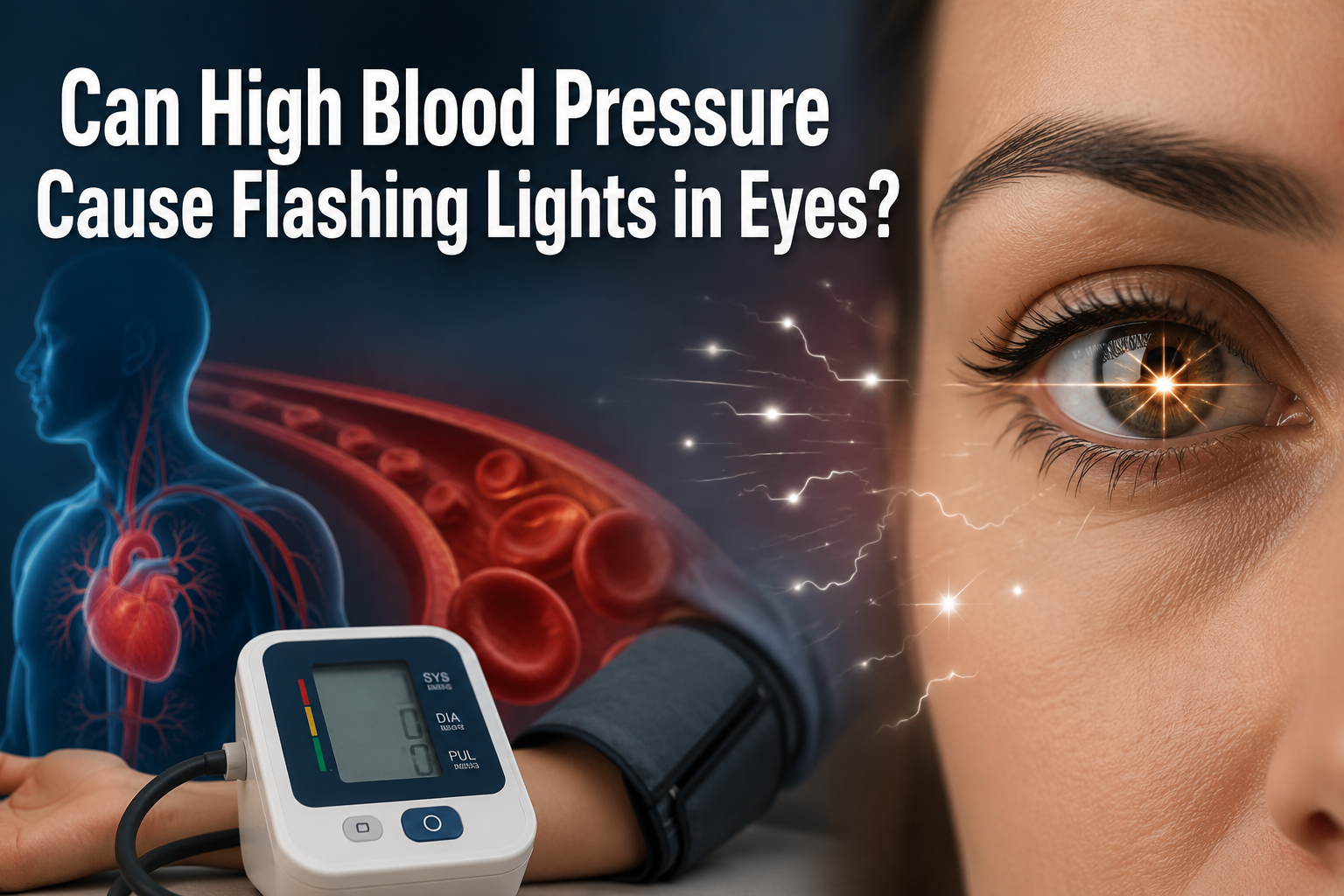
Yes, high blood pressure can cause flashing lights in the eyes, especially during a hypertensive crisis when blood pressure rises above 180/120 mmHg. This happens because extremely high pressure damages the delicate blood vessels in the retina and puts stress on the optic nerve, leading to visible flashes, floaters, or blurred vision.
These symptoms are often a warning sign that the eyes are being affected by prolonged or sudden pressure spikes. In most cases, flashing lights linked to blood pressure appear alongside other symptoms like headache, dizziness, or chest discomfort.
However, not every case of flashing lights is related to blood pressure, since migraines and retinal issues can cause similar symptoms. If flashing lights occur suddenly with other warning signs, it should be treated as a medical emergency requiring immediate attention.
How High Blood Pressure Affects Eye Health?
High blood pressure can gradually or suddenly damage the tiny blood vessels that supply the retina and optic nerve. Below, we explain the specific ways this pressure changes eye function.
Hypertensive Retinopathy Explained
Hypertensive retinopathy is a condition where consistently high blood pressure damages the blood vessels in the retina over time. The vessels may narrow, leak fluid, or bleed, which interferes with clear vision. In advanced stages, this damage can produce visual disturbances, including flashes of light, especially when pressure spikes suddenly.
Effect on Optic Nerve and Blood Vessels
Severely high blood pressure can cause swelling of the optic nerve, a condition known as papilledema. This swelling disrupts normal signal transmission between the eye and brain, which may result in flickering or flashing sensations. Blood vessel damage in this region can also reduce oxygen flow, further affecting visual clarity.
Why Sudden BP Spikes Trigger Visual Symptoms
Unlike gradual increases, sudden spikes in blood pressure do not give the eyes time to adjust to changing blood flow. This abrupt change can cause temporary disruptions in the retina’s blood supply, triggering flashing lights, blurred spots, or visual static. These spikes are often linked to stress, missed medication doses, or underlying cardiovascular conditions.
Common Eye Symptoms Linked to High Blood Pressure
Flashing lights are just one of several visual symptoms that can appear when blood pressure becomes dangerously high. Understanding each symptom helps in recognizing patterns early.



Flashing Lights and Floaters
Flashing lights often appear as quick streaks or sparks, especially in low lighting, while floaters look like small moving spots or thread-like shapes drifting across the field of vision. When linked to blood pressure, these symptoms usually occur suddenly and may worsen with physical activity or stress. They typically signal that blood vessels in the eye are under significant strain.
Blurred or Double Vision
Blurred vision happens when fluid leakage or swelling affects the retina’s ability to focus light correctly. Double vision, though less common, may occur if blood pressure affects the nerves controlling eye movement. Both symptoms often appear together with headaches during a hypertensive episode and should not be ignored.
Vision Loss in Severe Cases
In extreme and prolonged cases of uncontrolled blood pressure, vision loss can occur due to significant retinal damage or optic nerve compression. This is considered a medical emergency, as delayed treatment may lead to permanent vision impairment. Immediate care is necessary to prevent long-term consequences.
When Flashing Lights Signal a Hypertensive Emergency
Not all flashing lights require emergency care, but certain patterns combined with high blood pressure demand urgent attention. Knowing these warning signs can prevent serious complications.
Warning Signs to Watch For
Sudden flashing lights accompanied by severe headache, confusion, or difficulty speaking may indicate a hypertensive emergency affecting the brain and eyes simultaneously. Nausea, vomiting, and shortness of breath occurring alongside visual disturbances are also red flags. These symptoms together suggest the body is struggling to cope with extremely high pressure.
BP Readings That Require Immediate Care
A blood pressure reading above 180/120 mmHg combined with visual symptoms is classified as a hypertensive crisis. At this level, organ damage, including damage to the eyes, brain, and kidneys, becomes a serious risk. Anyone experiencing this reading alongside flashing lights should seek emergency care without delay.
Associated Symptoms (Headache, Chest Pain)
Chest pain, shortness of breath, and severe headache occurring with flashing lights point toward a possible hypertensive emergency rather than a minor eye issue. These combined symptoms suggest the cardiovascular system is under significant stress and needs urgent evaluation to prevent complications like stroke or heart damage.
Other Possible Causes of Flashing Lights (Non-BP Related)
While blood pressure can cause flashing lights, several unrelated conditions produce nearly identical symptoms. Recognizing these differences helps avoid unnecessary worry or missed diagnoses.
Ocular Migraines
Ocular migraines cause temporary visual disturbances, including shimmering lights, zigzag patterns, or blind spots, often without an accompanying headache. These episodes are usually harmless and resolve within twenty to thirty minutes. They are unrelated to blood pressure levels and typically triggered by stress, screen time, or hormonal changes.
Retinal Detachment
Retinal detachment occurs when the retina separates from the back of the eye, often causing sudden flashes of light followed by a curtain-like shadow across vision. This condition is unrelated to blood pressure but requires emergency treatment to prevent permanent vision loss. It is more common in older adults or those with high myopia.
Eye Strain and Fatigue
Extended screen use, poor lighting, or lack of sleep can cause temporary flashing sensations due to eye muscle fatigue. These symptoms are usually mild and improve with rest. Unlike blood pressure-related flashes, they do not appear alongside systemic symptoms like headache or chest discomfort.
Comparison Table – BP-Related vs. Non-BP Eye Symptoms
| Symptom Pattern | Likely Cause | Accompanying Signs | Urgency Level |
| Sudden flashes with headache, nausea | High blood pressure | Chest pain, confusion, dizziness | Emergency |
| Shimmering zigzag lights, no headache | Ocular migraine | Mild visual aura only | Low |
| Sudden flash + shadow/curtain vision | Retinal detachment | Sudden vision loss | Emergency |
| Occasional flicker after screen use | Eye strain | Tired eyes, dryness | Low |
Diagnosis and When to See a Doctor
Diagnosing the exact cause of flashing lights requires a combination of eye examination and blood pressure evaluation. Doctors use specific tools to determine whether the symptoms are vascular or unrelated.
Eye Exams for Hypertensive Retinopathy
An eye doctor can examine the retina using a dilated eye exam to check for narrowing vessels, bleeding, or swelling. This exam helps confirm whether flashing lights are linked to blood pressure damage or another eye condition. Early detection through regular eye exams can prevent further vision complications.
Blood Pressure Monitoring
Consistent blood pressure monitoring, especially during symptom episodes, helps identify whether spikes correlate with visual disturbances. Home monitoring devices can track patterns over time, giving doctors useful data to determine if blood pressure is the underlying cause of the flashing lights.
Red Flags for Emergency Room Visits
Sudden vision changes combined with severe headache, slurred speech, or chest pain require immediate emergency care. Waiting to see if symptoms improve on their own can increase the risk of permanent damage. When in doubt, it is safer to seek immediate medical evaluation.
Managing Blood Pressure to Protect Eye Health
Long-term eye health depends heavily on how well blood pressure is managed daily. Making consistent lifestyle and medical adjustments can significantly reduce eye-related complications.
Lifestyle Changes
Reducing salt intake, managing stress, exercising regularly, and maintaining a healthy weight can help stabilize blood pressure levels. These changes reduce the frequency of pressure spikes that may otherwise stress the eyes and cardiovascular system.
Medication Adherence
Taking prescribed blood pressure medications consistently, without skipping doses, helps maintain stable pressure levels. Skipping medication is one of the most common triggers for sudden BP spikes that can lead to visual disturbances like flashing lights.
Regular Eye and BP Checkups
Routine checkups with both a primary doctor and an eye specialist allow early detection of blood vessel damage before symptoms become severe. Regular monitoring ensures that any changes in eye health linked to blood pressure are caught and treated early.
FAQs
Can high blood pressure cause flashing lights in eyes without other symptoms?
It is uncommon, but mild flashes can occur even without major additional symptoms. Regular monitoring is still recommended.
Are flashing lights from high blood pressure permanent?
No, if treated early, symptoms typically resolve once blood pressure is stabilized.
Should I go to the ER for flashing lights and high blood pressure?
Yes, if flashing lights occur with headache, chest pain, or confusion, emergency care is necessary.
Conclusion
High blood pressure can cause flashing lights in the eyes, particularly during a hypertensive crisis, due to damage to retinal blood vessels and optic nerve swelling.
While not every case of flashing lights is linked to blood pressure, sudden visual changes combined with other warning signs should always be treated seriously.
Regular blood pressure monitoring, medication adherence, and routine eye exams remain the best way to protect long-term eye health.
Related Articles
Does CPR Break Ribs? Here’s What Really Happens
How to Get Rid of Wrinkles Under Eyes: Causes, Treatments & Prevention
Can Anxiety Cause Nausea? Causes, Symptoms & Fast Relief
Pain in Big Toe Joint: Causes, Symptoms, and Best Treatments