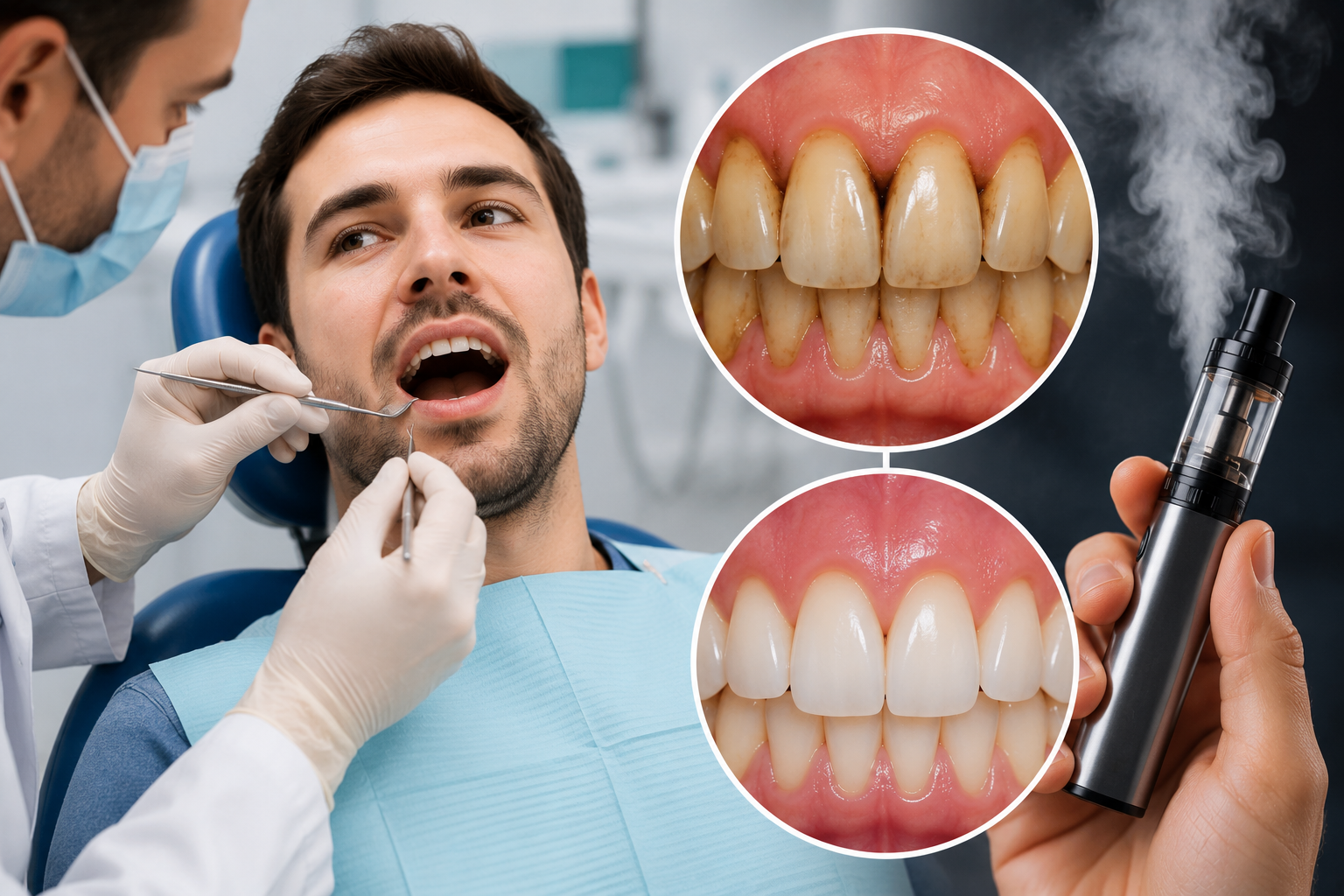
Vaping has become very common, but many people still wonder, can dentists tell if you vape during a routine checkup. While dentists cannot directly see vaping, they can often notice its effects on your teeth, gums, and overall oral health. These changes may develop slowly and become more visible over time with regular use.
In this article, we will explain how dentists identify possible signs of vaping and what changes they look for in your mouth. We will also discuss the common oral health effects of vaping and how you can protect your teeth and gums.
Can Dentists Tell If You Vape?
The question “can dentists tell if you vape” does not have a simple yes-or-no answer. Dentists usually do not see vaping directly, but they can often identify clues that suggest a patient may be vaping regularly.
Vaping creates changes in the mouth that can be difficult to hide. These changes may include dry mouth, gum irritation, increased plaque buildup, bad breath, and tooth sensitivity. When several of these signs appear together, dentists may suspect vaping or another nicotine-related habit. Research and dental observations show that vaping can leave recognizable effects on oral tissues and overall dental health.
However, a dentist cannot always know for sure based solely on appearance. Many symptoms associated with vaping can also result from dehydration, poor oral hygiene, medications, or other health conditions. This is why dentists often ask questions about lifestyle habits during examinations.
How Dentists Examine Your Oral Health?
A routine dental examination involves much more than checking for cavities. Dentists carefully evaluate several aspects of oral health to identify potential problems before they become serious.
During a checkup, a dentist may examine:
| Area Examined | What Dentists Look For |
| Teeth | Cavities, staining, enamel wear |
| Gums | Inflammation, recession, bleeding |
| Tongue | Color, texture, signs of irritation |
| Saliva | Moisture levels and dryness |
| Soft Tissues | Lesions, redness, or unusual patches |
| X-Rays | Hidden decay and bone health |
These examinations allow dentists to identify patterns that may suggest vaping. Even subtle changes can provide valuable clues about a patient’s oral health habits.



Signs Dentists Look for That May Indicate Vaping
One reason can dentists tell if vape is such a common question is because vaping often leaves visible signs inside the mouth.
Some of the most common indicators include:
- Persistent dry mouth
- Increased plaque accumulation
- Gum inflammation
- Gum recession
- Tooth discoloration
- Bad breath
- Increased cavities
- Irritated oral tissues
While none of these signs automatically confirm vaping, multiple symptoms appearing together can make dentists suspicious of nicotine use.
Dry Mouth and Reduced Saliva Production
One of the most noticeable effects of vaping is dry mouth, also known as xerostomia.
Many vape liquids contain ingredients such as propylene glycol, which can reduce moisture in the mouth. Saliva plays an essential role in maintaining oral health because it helps wash away food particles, neutralize acids, and control bacterial growth.
When saliva production decreases, several problems can occur:
- Increased cavity risk
- Bad breath
- Gum irritation
- Higher bacterial growth
- Tooth sensitivity
Dentists can often detect chronic dry mouth during an examination. A mouth that consistently lacks moisture may be one of the earliest signs that leads a dentist to ask about vaping habits.
Effects of Vaping on Teeth and Gums
Vaping can affect both hard and soft tissues in the mouth.
The teeth may become more vulnerable to decay due to increased bacterial activity. Some flavored vape liquids contain sweet ingredients that can contribute to cavity formation. At the same time, reduced saliva makes it harder for the mouth to protect itself naturally.
The gums may also suffer. Nicotine can reduce blood flow to gum tissues, making them more susceptible to disease. In some cases, gum problems may progress without obvious symptoms because nicotine can mask signs such as bleeding.
The following table summarizes common oral health effects associated with vaping:
| Oral Health Issue | Possible Impact |
| Dry Mouth | Reduced saliva production |
| Gum Inflammation | Redness and swelling |
| Gum Recession | Exposed tooth roots |
| Tooth Decay | Increased cavity risk |
| Plaque Buildup | More bacterial accumulation |
| Tooth Sensitivity | Greater discomfort from hot or cold foods |
These effects become more noticeable with long-term vaping.
Can Dentists Tell the Difference Between Smoking and Vaping?
Many people assume vaping leaves the same signs as traditional smoking, but there are some differences.
Traditional cigarette smokers often develop heavy staining, strong odors, and more pronounced tar-related damage. Vapers may show less severe staining but are more likely to experience dry mouth, plaque accumulation, and subtle gum changes.
The comparison below highlights some differences:
| Feature | Vaping | Smoking |
| Tooth Staining | Mild to moderate | Often severe |
| Dry Mouth | Very common | Common |
| Tar Residue | Minimal | Significant |
| Gum Problems | Common | Common |
| Oral Odor | Present | Usually stronger |
| Enamel Damage | Possible | Possible |
Dentists use these patterns to form educated opinions about a patient’s habits. However, they generally rely on a combination of symptoms rather than a single sign.
Can a Dentist Tell If You Only Vape Occasionally?
People who vape occasionally often wonder whether their dentist can still tell.
In most cases, occasional vaping is much harder to detect. A single vaping session or infrequent use typically does not create lasting oral changes. Most signs associated with vaping develop gradually through repeated exposure.
Temporary dryness or mild irritation may occur after vaping, but these symptoms often disappear quickly. Dentists are more likely to recognize patterns caused by regular or long-term vaping rather than occasional use.
This means that someone who has vaped once or twice is unlikely to show obvious evidence during a routine dental examination.
Why Do Dentists Ask About Vaping Habits?
Many patients feel nervous when dentists ask about vaping. However, these questions are not intended to judge or criticize.
Dentists ask about vaping because it directly affects treatment planning and oral health recommendations. Knowing about vaping habits helps them:
- Assess gum disease risk
- Evaluate healing potential
- Recommend preventive care
- Monitor oral tissue changes
- Provide personalized advice
Honest communication allows dentists to deliver better care and identify potential problems early.
Long-Term Oral Health Risks Associated With Vaping
Although vaping is often marketed as a safer alternative to smoking, it is not risk-free. Long-term vaping may contribute to several oral health concerns.
Gum Disease
Reduced blood flow and chronic inflammation can increase the risk of periodontal disease. Gum disease can eventually lead to tooth loss if left untreated.
Tooth Decay
Dry mouth creates an environment where cavity-causing bacteria thrive. Combined with sweet flavorings, this may increase decay risk.
Enamel Erosion
Some vaping ingredients may contribute to enamel weakening. Damaged enamel cannot regenerate naturally and may increase tooth sensitivity.
Bad Breath
A dry oral environment often leads to persistent bad breath because bacteria multiply more easily.
Oral Tissue Irritation
Regular exposure to heated aerosols may irritate the lining of the mouth and cause redness or discomfort.
How to Protect Your Teeth and Gums if You Vape?
If you currently vape, maintaining excellent oral hygiene becomes even more important.
Good oral care habits can reduce some of the risks associated with vaping and help preserve long-term dental health.
Helpful strategies include:
- Brush twice daily with fluoride toothpaste.
- Floss every day.
- Drink plenty of water.
- Schedule regular dental cleanings.
- Limit sugary foods and drinks.
- Use alcohol-free mouthwash.
- Monitor any unusual changes in your mouth.
Hydration is particularly important because it helps combat dry mouth and supports saliva production.
Some people also consider reducing nicotine intake or quitting vaping altogether. Doing so may improve gum health and lower the risk of future dental complications.
When to See a Dentist?
Regular dental visits are essential whether you vape or not. You should schedule an appointment if you notice symptoms such as persistent dry mouth, bleeding gums, tooth sensitivity, mouth sores, or chronic bad breath.
So, can dentists tell if you vape? In many cases, yes. Dentists are trained to recognize patterns of oral health changes linked to vaping. Dry mouth, gum inflammation, plaque buildup, tooth decay, and tissue irritation are among the most common clues they observe. While occasional vaping may not leave lasting evidence, regular vaping often creates noticeable changes that experienced dental professionals can identify.
FAQs
Can dentists detect vaping from X-rays?
No, X-rays do not directly show vaping, but they can reveal bone loss or gum damage that may be linked to long-term nicotine use.
Does vaping affect dental cleaning results?
Yes, vaping can make plaque harder to control, so cleanings may show more buildup or irritation compared to non-users.
Can vaping cause tooth sensitivity?
Yes, vaping may weaken enamel and reduce saliva, both of which can increase sensitivity to hot or cold foods and drinks.
Will gums heal after stopping vaping?
In many cases, gum health improves after quitting, especially if damage is still in early stages and oral care is maintained.
Can dentists tell if you have vape flavored e-liquids?
Not specifically, but flavored vapes can still cause dry mouth and plaque changes that dentists may notice during exams.
Is vaping worse for gums than no nicotine use?
Yes, nicotine exposure from vaping can reduce blood flow and increase the risk of gum disease compared to non-users.
Conclusion
Dentists often cannot directly see vaping, but they can usually notice its effects on your mouth. Signs like dry mouth, gum irritation, plaque buildup, and early tooth decay may suggest vaping habits, especially over time. However, these symptoms can also come from other causes, so dentists rely on overall patterns and patient history.
Being honest with your dentist is important because it helps them give better care and prevent future problems. Regular checkups and good oral hygiene can reduce many of the oral health risks linked to vaping.
Related Articles
Understanding Eye Pressure Pain: Causes, Symptoms, and Relief
Ear Piercing Pain Scale: A Complete Guide to Pain Levels for Every Piercing
Can IBS Cause Back Pain? Causes, Symptoms, Treatment, and Relief Tips
Does the Sauna Help With Acne? Benefits, Risks, and What You Need to Know
Does Facial Work for Acne? Benefits, Risks, Types, and What to Expect