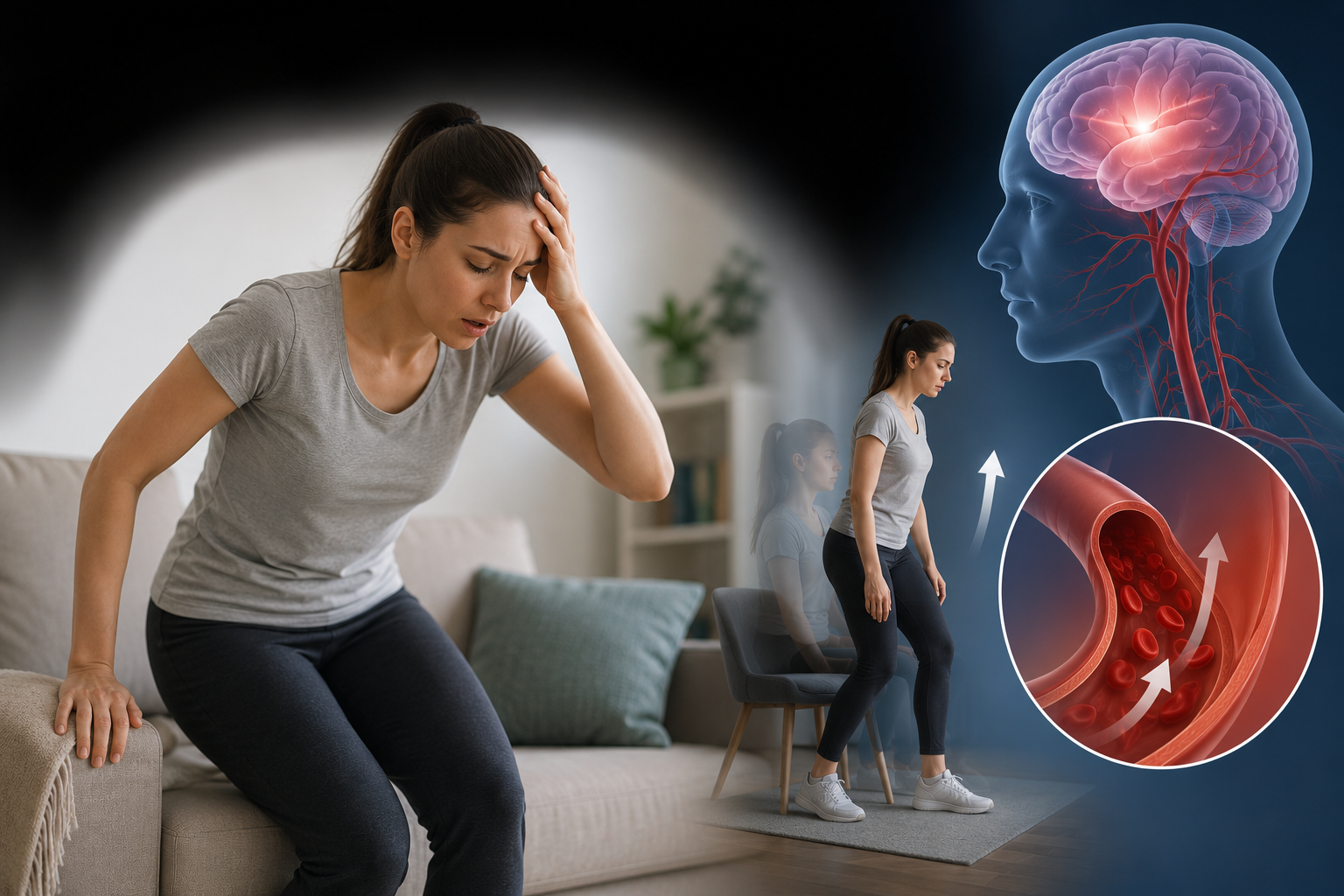
Many people feel their vision fade to black for a few seconds every time they stand up quickly. This can feel alarming the first time it happens, but in most cases it has a simple explanation. The condition is medically known as orthostatic hypotension, and it happens when blood pressure drops suddenly as you change position.
Understanding why your vision goes black when you stand up helps you judge whether the episode is harmless or a sign of something needing medical attention. This guide breaks down the causes, symptoms, risk factors, and prevention tips in simple, everyday language. By the end, you will know when a quick pause is enough and when a doctor’s visit is necessary.
What Is Orthostatic Hypotension?
Orthostatic hypotension is the medical name for the sudden blood pressure drop that happens when you stand up. It is the most common reason your vision goes black when you stand up, and understanding it starts with a simple definition below.
The Medical Term Explained in Simple Language
Orthostatic hypotension literally means low blood pressure caused by an upright posture change. When you sit or lie down for a while and then stand quickly, your blood pressure can fall for a few seconds before your body adjusts. That temporary dip is what makes your vision darken, blur, or briefly disappear.
How Blood Pressure Regulation Normally Works
Under normal conditions, your body has built-in reflexes that keep blood flowing steadily to your brain no matter your position. Sensors near your neck and heart detect position changes and quickly signal your blood vessels to tighten and your heart to beat faster. This keeps enough blood reaching your brain and eyes, so vision stays clear even when you stand up suddenly.
Why Does This Happen? The Science Behind It
Several things happen inside your body in the seconds after you stand, and each one affects how much blood reaches your brain. Here is a closer look at the three main mechanisms involved.
Blood Pooling in the Legs
When you stand, gravity pulls a noticeable amount of blood down into the veins of your legs and lower body. This means less blood is immediately available to travel back up toward your heart and brain. The temporary shortage is often enough to dim your vision for a moment.
Delayed Cardiovascular Response
Normally, your heart rate rises within seconds of standing to compensate for the blood pooling lower in your body. If this response is even slightly delayed, your brain and eyes receive less oxygen-rich blood than they need. This short delay is a major reason vision briefly blacks out or blurs when you stand up.



Role of the Nervous System
Your autonomic nervous system controls how quickly your blood vessels tighten when you change position. If this system is under stress, dehydrated, or naturally slower to react, as can happen with age, the constriction response lags behind. That lag translates directly into the blackout or dizzy sensation you feel.
Common Symptoms That Come With Vision Blackout
The vision blackout rarely happens alone; it usually comes with related symptoms. Recognizing these signs together helps confirm orthostatic hypotension as the cause.
Dizziness and Lightheadedness
Dizziness often appears at the exact moment your vision starts to fade. Many people describe it as a spinning or floating sensation that lasts only a few seconds. It generally fades once you stand still for a moment or sit back down.
Blurred or Tunnel Vision
Instead of complete blackness, some people notice their vision narrowing, as though looking through a tunnel. Colors might also appear washed out or grey for a few seconds. This is simply a milder version of the same temporary blood flow drop.
Ringing in the Ears
A brief ringing or buzzing sound in the ears sometimes accompanies the vision changes described above. This happens because the inner ear is also sensitive to sudden shifts in blood flow. It typically resolves as quickly as the vision returns to normal.
Brief Fainting (Syncope)
In more pronounced cases, the blood pressure drop can be severe enough to cause a short fainting spell. This is called syncope and usually lasts only a few seconds before you regain full awareness. If fainting happens often, it is worth discussing with a doctor.
Common Causes of Vision Going Black When Standing
Multiple everyday factors can trigger this temporary blood pressure drop, ranging from simple dehydration to certain medications. The table below breaks down the most frequent causes and their general risk level.
| Cause | Description | Risk Level |
| Dehydration | Not drinking enough fluids lowers overall blood volume, making pressure drops on standing more likely. | Low |
| Low blood sugar | Skipping meals can leave insufficient glucose for the body to maintain steady circulation. | Low |
| Standing up too quickly | Rapid position change gives the body less time to adjust blood flow upward. | Low |
| Prolonged bed rest or sitting | Long periods without movement weaken the body’s normal circulatory response. | Medium |
| Certain medications | Blood pressure drugs, diuretics, and some antidepressants can intensify the natural drop. | Medium |
| Anemia | Lower red blood cell counts reduce oxygen delivery, worsening symptoms on standing. | Medium |
| Heat exposure | Warm environments widen blood vessels and increase fluid loss, adding to the effect. | Medium |
Who Is Most at Risk?
While almost anyone can experience this occasionally, certain groups notice it happening more often. Below are the main groups worth paying closer attention.
Older Adults
As the body ages, the reflexes that regulate blood pressure naturally slow down. This makes older adults more prone to experiencing vision blackouts and dizziness when standing. It is also a more serious fall risk in this age group.
Pregnant Women
Hormonal changes during pregnancy can affect blood vessel tone and overall circulation. Combined with the added blood volume demands of pregnancy, this often makes standing up quickly trigger momentary vision changes. Staying hydrated and rising slowly usually helps manage this.
People With Diabetes
Diabetes can gradually damage the nerves that regulate blood pressure, a condition known as autonomic neuropathy. This slows the body’s normal response to position changes. As a result, people with diabetes may notice this symptom more often than others.
People on Certain Medications
Blood pressure medications, diuretics, and some antidepressants can amplify the natural dip that occurs when standing up. These medications often work by lowering blood pressure or fluid volume, which can make the drop more pronounced. Anyone starting a new medication should watch closely for this side effect.
Is It Ever Serious? Warning Signs to Watch For
Most vision blackouts on standing are harmless and pass within seconds, but a few patterns call for closer medical attention.
Frequent or Prolonged Episodes
If the blackout happens almost every time you stand, or lasts longer than a few seconds, it may point to a chronic circulation issue rather than a one-off event. Frequent episodes can also disrupt daily activities and raise fall risk. This pattern deserves a proper medical evaluation.
Accompanied by Chest Pain or Irregular Heartbeat
Vision blackout combined with chest discomfort, palpitations, or an irregular heartbeat should never be ignored. These combined symptoms can point toward a cardiac issue rather than simple orthostatic hypotension. Seeking prompt medical care is important whenever this combination occurs.
Fainting With Injury
If a standing-related blackout leads to an actual fall or injury, it is a clear sign the episode was more than mild dizziness. Repeated fainting spells, especially ones involving injury, need thorough medical investigation. This helps rule out heart rhythm problems or neurological causes.
No Clear Trigger
Occasional blackouts right after standing quickly are expected, but episodes with no position change or clear trigger are different. This pattern could point to low blood sugar, an underlying heart condition, or another issue unrelated to standing at all. A doctor can help identify the real cause through targeted testing.
How Is It Diagnosed?
Diagnosing orthostatic hypotension is usually straightforward and does not require invasive testing. Doctors typically rely on a combination of simple checks described below.
Blood Pressure Checks (Lying vs. Standing)
The most common diagnostic method involves measuring blood pressure while lying down, then again right after standing. A significant drop between the two readings confirms orthostatic hypotension. This test is quick and can be done during a standard clinic visit.
Blood Tests
Blood tests can help rule out other causes such as anemia, low blood sugar, or thyroid problems. These conditions can mimic or worsen the symptoms of standing-related vision blackouts. The results also guide whether a specialist referral is needed.
Tilt Table Test
For recurring or unclear cases, doctors may use a tilt table test, where you are secured to a table that shifts from lying to standing. This allows continuous monitoring of blood pressure and heart rate during the transition, giving more detailed insight than a standard office check.
How to Prevent Vision Blackouts When Standing?
Several simple daily habits can meaningfully reduce how often this happens. The list below covers the most practical and effective prevention strategies you can start using right away.
• Stand up slowly: Pause for a few seconds after sitting up before rising fully, giving your circulation time to adjust to the new position.
• Stay hydrated: Drinking enough water throughout the day helps maintain healthy blood volume and reduces the severity of pressure drops.
• Avoid prolonged standing: Shift your weight or move your legs periodically if you must stand still for long stretches, to keep blood circulating.
• Wear compression stockings: These gently support the veins in your legs and help prevent blood from pooling when you stand up.
• Adjust your diet: Eating smaller, more frequent meals and moderating alcohol intake can reduce sudden drops in blood pressure after standing.
When to See a Doctor
A single brief episode is rarely cause for alarm, but a doctor’s visit becomes important once the pattern changes or worsens. Watch for the following before deciding to book an appointment.
• Blackouts happening several times a week rather than occasionally.
• Fainting spells, especially any that result in a fall or injury.
• New symptoms like chest pain, shortness of breath, or an irregular heartbeat.
• Episodes that occur without standing up, suggesting a different underlying cause.
Frequently Asked Questions
Is it dangerous when my vision goes black after standing up?
In most cases it is harmless and passes within a few seconds. It becomes a concern only if it happens frequently, lasts long, or comes with fainting or chest symptoms.
Can low iron or anemia cause this?
Yes, anemia reduces the oxygen-carrying capacity of your blood, which can worsen or trigger this kind of temporary vision blackout on standing.
Does hot weather make it happen more often?
Yes, heat causes blood vessels to widen and increases fluid loss through sweat, both of which can make standing-related blackouts more likely.
Can anxiety or stress cause this symptom?
Anxiety can affect breathing and blood vessel tone, which may contribute to lightheadedness, though it is usually a secondary factor rather than the main cause.
How long should a normal blackout episode last?
A typical episode lasts only a few seconds and resolves once your body adjusts. Anything lasting much longer than that should be checked by a doctor.
Conclusion
Vision going black for a few seconds after standing up is a common experience with a simple, well-understood cause: a brief drop in blood pressure known as orthostatic hypotension. For most people, it is triggered by everyday factors like standing too fast, mild dehydration, or an empty stomach, and it resolves on its own within moments.
Paying attention to how often it happens, and whether it comes with symptoms like chest pain or fainting, helps you know when it is safe to simply rise more slowly next time. Simple habits such as staying hydrated, standing up gradually, and eating regular meals go a long way toward preventing repeat episodes. If the pattern becomes frequent, severe, or unpredictable, a medical evaluation can rule out deeper circulatory or nervous system causes.
Related Articles
Can Carpal Tunnel Cause Arm Pain? Symptoms, Causes, and Treatment Options
Is Diabetes Genetic? What Science Says About Family Risk
How Long Does a Fractured Toe Take to Heal? (And What Affects Your Recovery)