Skin tags are one of the most common benign skin growths seen in adults, with studies suggesting that nearly half of all adults will develop at least one during their lifetime. They tend to appear more frequently as people age, particularly after 40, though anyone can develop them regardless of age or skin type.
Skin tags form quietly and painlessly, often going unnoticed until they catch on clothing, jewelry, or a razor during shaving. Because they resemble other skin growths like warts and moles, many people aren’t sure what they’re looking at when one first appears.
Understanding what causes skin tags, where they typically show up, and how they differ from other skin growths can help you decide whether removal is necessary or whether simply monitoring them is enough. This guide breaks down everything you need to know in a clear and simple way, from causes and symptoms to removal methods and when a doctor’s visit becomes necessary.
What Is a Skin Tag?
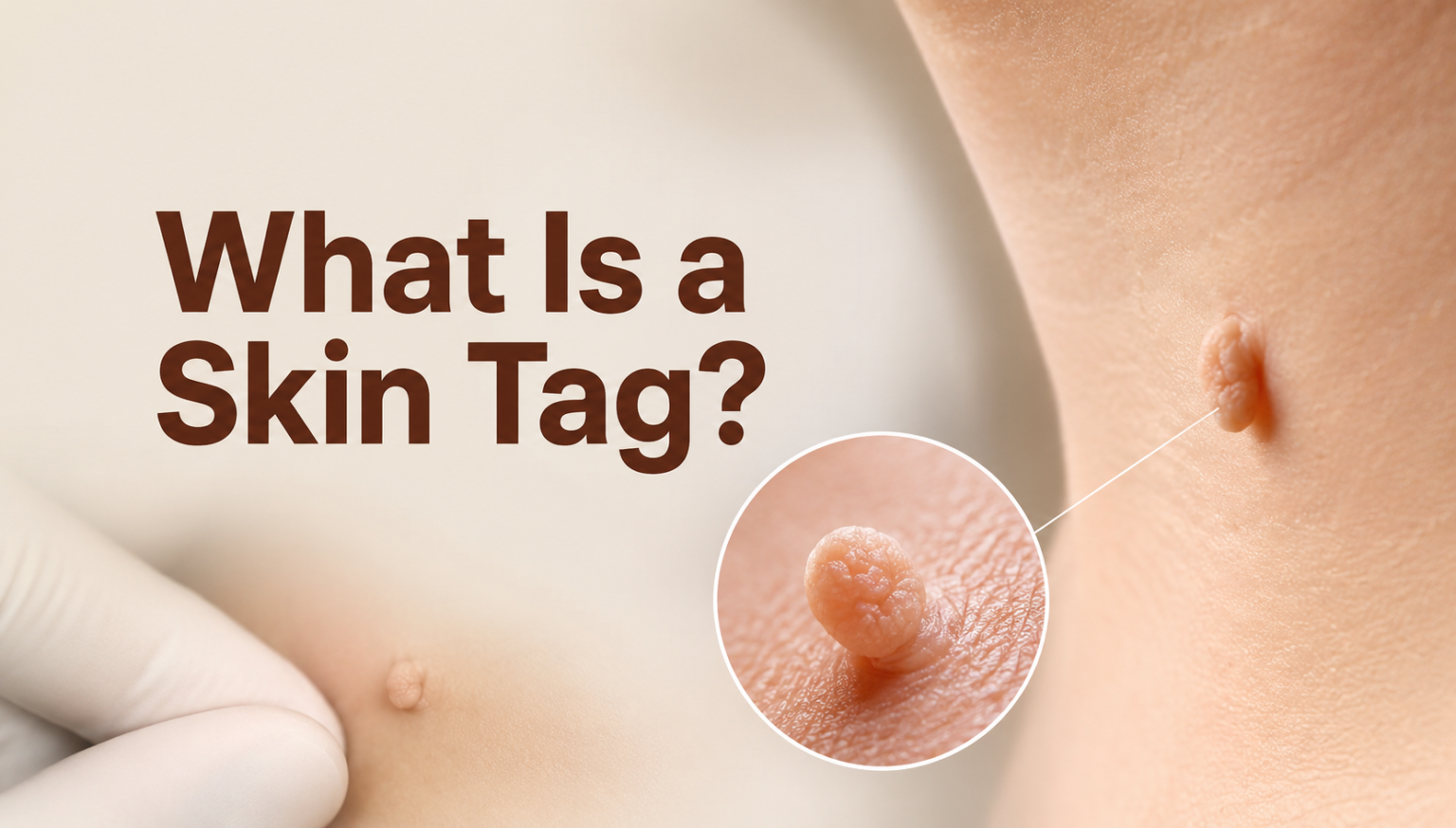
A skin tag is a small, soft, non-cancerous growth of skin that hangs off the body by a thin stalk called a peduncle. Medically known as an acrochordon, it usually appears in areas where skin rubs against skin or clothing, such as the neck, armpits, eyelids, and groin.
Skin tags are painless, flesh-colored or slightly darker, and range from a tiny 2mm bump to a larger 5cm growth in rare cases. They form when collagen fibers and blood vessels get trapped inside a thicker layer of skin, often due to constant friction.
While they are completely harmless and do not turn into cancer, many people choose to have them removed for cosmetic reasons or because they catch on jewelry or clothing.
Causes of Skin Tags
Skin tags form mainly due to repeated friction between skin folds, along with certain hormonal and genetic factors. Each contributing cause is explained below.
Friction and Skin-on-Skin Rubbing
The most common cause of skin tags is ongoing friction where skin rubs against skin or fabric. This constant rubbing irritates the skin over time, causing collagen and blood vessels to bunch together and form a small stalk-like growth. People who are overweight or wear tight clothing regularly are more prone to this irritation.



Hormonal Changes During Pregnancy and Obesity
Hormonal shifts, especially during pregnancy, can trigger the sudden appearance of multiple skin tags. Elevated growth factors and hormones like estrogen encourage skin cell growth in friction-prone areas. Obesity has a similar effect because extra skin folds create more friction points.
Genetic Predisposition
Some people are genetically inclined toward developing skin tags. If your parents or close relatives have a history of frequent skin tags, you may be more likely to develop them too, regardless of weight or lifestyle habits.
Insulin Resistance and Diabetes Link
Multiple studies have linked skin tags to insulin resistance and type 2 diabetes. High insulin levels can stimulate skin cell growth, particularly in the neck and armpit region. Sudden new skin tags may be worth checking with a blood sugar test.
Common Locations on the Body
Skin tags typically develop in areas where skin folds create ongoing friction throughout the day.
Neck and Armpits
These are the most frequent sites for skin tags due to constant rubbing from clothing, jewelry, and skin folds. Sweat and moisture soften the skin, making it more prone to irritation and tag formation.
Eyelids
Eyelid skin tags form due to thin, delicate skin combined with frequent blinking and rubbing. Though usually small, they can occasionally interfere with vision if they grow near the lash line.
Groin and Under the Breasts
These areas experience significant skin-on-skin contact, especially in people who are overweight or active. Warmth and moisture create an ideal environment for tags, often discovered during routine hygiene.
Symptoms and How to Identify a Skin Tag
Identifying a skin tag correctly matters so it isn’t mistaken for a wart, mole, or something more serious.
Appearance and Texture
A skin tag typically looks like a small, soft, wrinkled piece of skin hanging from a thin stalk. It feels smooth or slightly bumpy and moves freely when touched, unlike a mole which is flat or firmly attached.
Size and Color Variations
Most skin tags range from 2mm to about 5mm, though some grow larger over time. Color ranges from your natural skin tone to a slightly darker brown or tan, depending on how long the tag has been present.
Skin Tag vs. Wart vs. Mole
A wart has a rough, cauliflower-like surface caused by a viral infection, while a mole is typically flat, symmetrical, and made of pigmented cells. A skin tag hangs by a stalk and has a smooth, soft texture that sets it apart from both.
| Feature | Skin Tag | Wart | Mole |
| Texture | Smooth, soft | Rough, bumpy | Smooth or slightly raised |
| Attachment | Hangs by a thin stalk | Flat against skin | Flat or slightly raised |
| Cause | Friction, hormones | Viral infection (HPV) | Pigment cell cluster |
| Color | Skin-toned to brown | Grayish or flesh-toned | Brown to black |
| Contagious | No | Yes | No |
Skin Tag Removal Comparison
Removal is optional since skin tags are harmless, but many people choose it for comfort or appearance.
In-Clinic Procedures
Dermatologists commonly remove skin tags through cutting with sterile scissors, cauterization using heat, or cryotherapy using liquid nitrogen. These procedures are quick and carry low scarring risk when done professionally.
At-Home Removal Kits
Over-the-counter kits, such as freezing kits or tying-off bands, work for smaller tags. They carry a higher risk of infection, incomplete removal, or scarring if not used correctly.
| Method | Cost | Pain Level | Recovery Time | Risk of Scarring |
| Cutting (in-clinic) | Moderate to high | Minimal | 1-3 days | Low |
| Cauterization | Moderate | Mild | 3-5 days | Low to moderate |
| Cryotherapy | Moderate | Mild to moderate | 5-7 days | Low |
| At-home freezing kit | Low | Moderate | 7-10 days | Moderate |
| At-home tying method | Very low | Mild | Varies | Moderate to high |
Risk Factors
Certain groups are more likely to develop skin tags due to underlying health and lifestyle factors.
Obesity and Metabolic Syndrome
Excess body weight increases skin folds and friction points, making skin tags far more common. Metabolic syndrome, including high blood pressure and elevated blood sugar, is closely associated with more skin tags.
Age and Pregnancy
Skin tags become more common with age as skin loses elasticity. Pregnant women are also more susceptible due to hormonal fluctuations, though many pregnancy-related tags shrink after childbirth.
When to See a Doctor
While most skin tags are harmless, certain signs mean it’s time to consult a healthcare provider.
Signs of Irritation or Infection
If a skin tag becomes red, swollen, painful, or bleeds frequently, it may be irritated or infected and should be evaluated. Repeated twisting or catching on clothing can also cause this.
Distinguishing from Skin Cancer
Although skin tags aren’t cancerous, any growth that changes shape, color, or size rapidly should be examined by a dermatologist to rule out other conditions.
FAQs
Are skin tags contagious?
No, skin tags cannot spread from person to person through touch, unlike warts which are caused by a virus.
Can skin tags fall off on their own?
Yes, small tags can sometimes twist on their stalk and fall off naturally, though this can take weeks or months.
Do skin tags mean I have diabetes?
Not necessarily, but multiple tags combined with symptoms like excessive thirst or fatigue may warrant a blood sugar check.
Is removal permanent?
Yes, once properly removed, a skin tag typically doesn’t grow back in the same spot, though new tags can form elsewhere.
Are home remedies safe?
Home remedies carry higher risk of infection and scarring compared to professional treatment, so use caution with very small tags only.
Conclusion
Skin tags are common, harmless growths caused mainly by friction, hormonal changes, and genetic factors. While they don’t require treatment, understanding their causes and safe removal options helps you make an informed decision about your skin health. If a tag ever looks unusual or causes discomfort, consulting a dermatologist ensures safety and peace of mind.
RELATED POSTS
What Does Ovulation Pain Feel Like? Signs, Timing & Relief
Can Dentists Tell If You Vape? Signs, Risks, and What Dentists Look For?
Can You Get Arthritis in Your Neck? Symptoms, Causes & Treatment