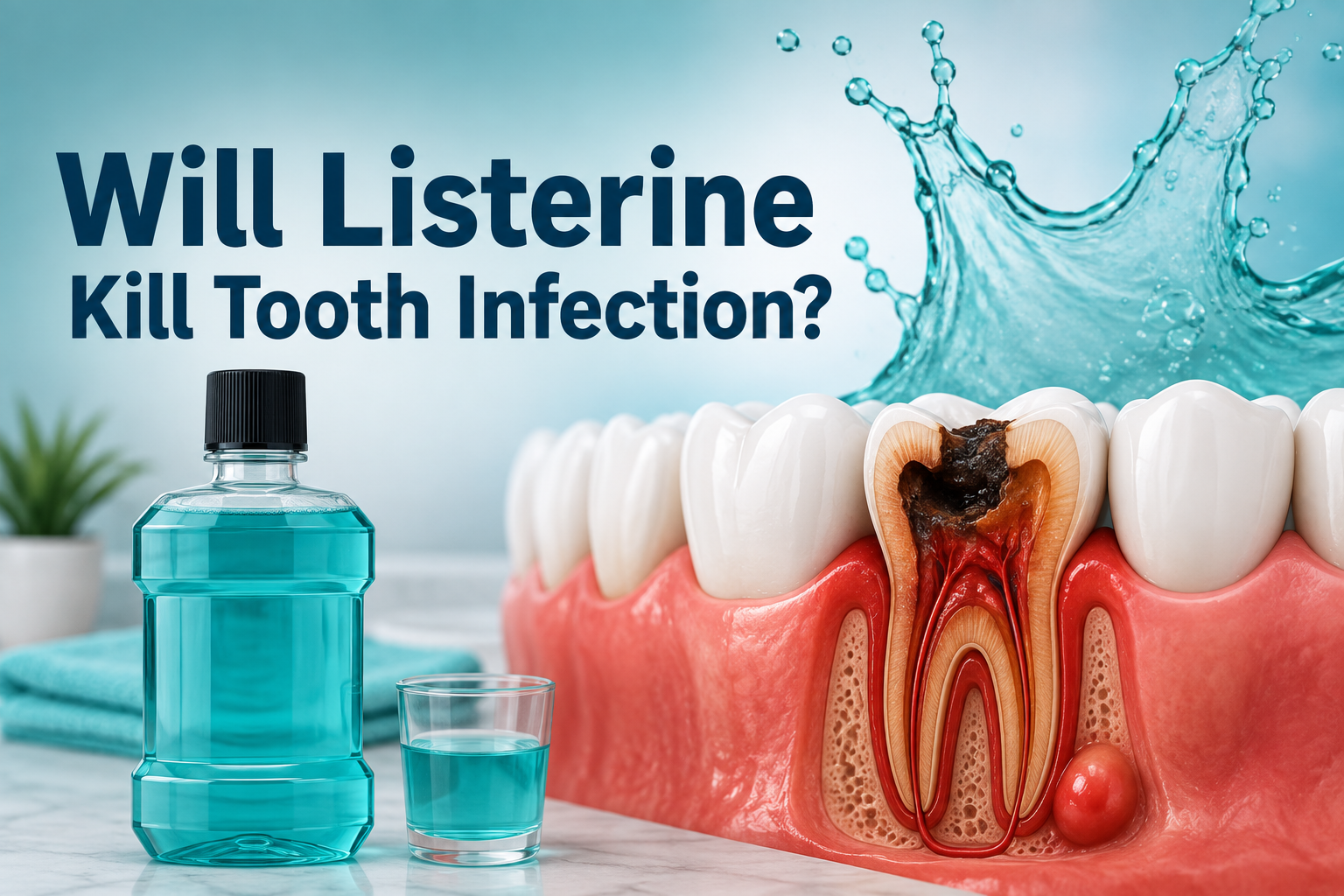
Many people search “will Listerine kill tooth infection” hoping for a quick fix, especially late at night or when a dentist visit feels inconvenient. It’s an understandable question, since mouthwash is marketed as a germ-killer and sits right in the medicine cabinet.
But a tooth infection is a different kind of problem than surface bacteria, and understanding that difference can help you avoid a painful and potentially dangerous mistake.
Below, we break down the causes, symptoms, safe temporary relief options, and the real treatment path dentists use.
What Causes a Tooth Infection?
A tooth infection usually starts small, often from a cavity that was never treated, and slowly works its way toward the sensitive inner part of the tooth. Once bacteria reach that inner layer, the infection can spread quickly and become far more serious than the original problem.
Common Causes
Tooth infections most often begin with untreated tooth decay that eats through the outer enamel and dentin layers. Cracked or chipped teeth can also let bacteria in, as can advanced gum disease that creates pockets around the tooth root. Even a failed previous dental filling or crown can leave an opening for bacteria to enter and multiply.
How Infection Spreads to the Root and Bone
Once bacteria reach the pulp, the soft tissue holding nerves and blood vessels, they multiply rapidly and cause inflammation and pus buildup. This pressure has nowhere to go except into the surrounding bone, forming what’s called a dental abscess. Left untreated, this infection can travel to the jaw, neck, or even bloodstream in severe cases.
Can Listerine Kill a Tooth Infection?
Listerine is an antiseptic mouthwash designed to reduce bacteria on the surface of your teeth, tongue, and gums. It was never designed or tested to treat infections that have already reached the tooth’s inner tissue or the bone below it.
What Listerine Actually Does
Listerine contains antiseptic ingredients like essential oils or cetylpyridinium chloride that kill bacteria on contact in the mouth. This reduces plaque buildup, freshens breath, and can slightly lower gum inflammation with regular use. However, this action is limited entirely to surfaces the liquid can physically touch and rinse across.



Why It Can’t Reach the Infection Source
A tooth infection sits inside the tooth’s pulp chamber or in a pocket of pus below the gumline, both areas of mouthwash simply cannot penetrate. Rinsing and swishing only cleans exposed surfaces, not sealed internal spaces where bacteria are actively multiplying. This is exactly why the infection continues growing even with frequent, consistent Listerine use.
Symptoms of a Tooth Infection
Recognizing a tooth infection early can prevent it from becoming a medical emergency. Symptoms typically start mild and worsen steadily as the infection spreads deeper into the tooth and surrounding tissue.
Early Warning Signs
The earliest signs usually include a persistent, throbbing toothache that worsens when biting down or chewing. Sensitivity to hot and cold that lingers long after the trigger is removed is also common. Some people notice gum swelling, redness, or a bad taste caused by draining pus near the affected tooth.
Signs You Need Emergency Care
Facial or jaw swelling, fever, and difficulty swallowing or breathing are all signs the infection has become serious. Swelling that spreads toward the eye or neck can signal the infection is entering deeper tissue spaces. These symptoms require immediate emergency care, not a wait-and-see approach at home.
What Listerine CAN Help With?
While Listerine cannot cure an infection, it does have a limited but genuine role in managing oral health around one. Understanding this narrow benefit helps set realistic expectations while you arrange proper dental care.
Temporary Symptom Relief
Rinsing with Listerine can reduce surface bacteria near the infected area, which may slightly ease irritation and bad breath. Some people find it soothing when used alongside warm salt water rinses for short-term comfort. This effect is temporary and does nothing to address the infection’s actual source.
Reducing Bacterial Load Before and After Treatment
Dentists sometimes recommend antiseptic rinses before a procedure to lower the general bacterial count in the mouth. Similarly, using it after treatment, once the infection source has been removed, can support healing and reduce reinfection risk. In both cases, Listerine is a support tool, not a treatment for active infection.
Listerine vs. Other Common Remedies
| Remedy | Kills Infection? | What It Actually Does | Best Use Case |
| Listerine mouthwash | No | Reduces surface bacteria, freshens breath | Daily oral hygiene, mild symptom comfort |
| Warm salt water rinse | No | Draws out some fluid, soothes gum irritation | Temporary comfort while awaiting treatment |
| OTC pain relievers | No | Reduces pain and inflammation | Managing discomfort before dental visit |
| Antibiotics (prescribed) | Partially | Slows bacterial spread systemically | Controlling infection before/after procedure |
| Root canal or extraction | Yes | Removes infected tissue directly | Actual cure for the infection source |
Risks of Relying on Mouthwash Alone
Treating a tooth infection with Listerine instead of visiting a dentist carries real risks that go beyond ongoing pain. The longer bacteria are left untreated, the more opportunity they have to spread into surrounding tissue and bone.
Infection Spreading Beyond the Tooth
An untreated infection can progress into cellulitis, a painful spreading infection of facial or neck tissue. In rare but serious cases, bacteria can enter the bloodstream and cause sepsis, a life-threatening condition. These complications are far more dangerous and expensive to treat than the original tooth problem.
Delayed Treatment Complications
Waiting too long often means the tooth can no longer be saved with a simple filling and instead needs a root canal or extraction. Bone loss around the infected area can also occur, complicating future dental work like implants. Delaying care essentially trades a smaller, manageable problem for a larger, more invasive one.
When to See a Dentist Immediately
Certain symptoms signal that a tooth infection has moved beyond home management and needs urgent professional attention. Recognizing these red flags quickly can prevent a hospital visit.
Red-Flag Symptoms
Facial swelling that affects your eye, jaw, or neck is a clear sign to seek care right away. Fever, chills, or a rapid heartbeat alongside tooth pain suggests the infection may be spreading systemically. Difficulty swallowing, speaking, or breathing is a medical emergency requiring immediate attention at an emergency room.
How Dentists Actually Treat Tooth Infections
Professional treatment targets the actual source of infection rather than just managing symptoms on the surface. The specific approach depends on how far the infection has progressed and whether the tooth can still be saved.
Antibiotics
Dentists may prescribe antibiotics to control the spread of infection, especially if swelling has moved beyond the tooth itself. Antibiotics alone rarely cure the infection completely since they don’t remove the actual source inside the tooth. They’re typically used alongside a procedure, not as a standalone fix.
Root Canal or Extraction
A root canal removes the infected pulp tissue from inside the tooth, then seals it to prevent future infection. If the tooth is too damaged to save, extraction removes the infected tooth entirely, eliminating the infection source. Both procedures directly address the problem in a way no rinse or medication can replicate.
Drainage Procedures
For a visible abscess, a dentist may drain the pus pocket to relieve pressure and reduce pain quickly. This is often done alongside antibiotics and followed by a root canal or extraction to fully resolve the infection. Drainage brings fast relief but is not a complete treatment on its own.
Home Care Tips While Waiting for Treatment
If you’re waiting for a dental appointment, certain safe measures can ease discomfort without masking dangerous symptoms. These steps support comfort only and should never replace scheduled professional care.
Safe Temporary Measures
A warm salt water rinse several times a day can help soothe irritated gum tissue around the infection. Over-the-counter pain relievers, taken as directed, can manage discomfort until you’re seen by a dentist. A cold compress against the outside of the cheek can also reduce swelling and provide short-term relief.
Frequently Asked Questions
Can mouthwash cure a tooth abscess?
No, mouthwash cannot cure an abscess because it can’t reach the pus pocket or infected root beneath the gum surface.
How long can you wait to treat a tooth infection?
You shouldn’t wait at all once symptoms appear, since infections can worsen within days and lead to serious complications.
What actually kills a tooth infection fast?
Only professional treatment, such as drainage, antibiotics, or a root canal performed by a dentist, effectively kills a tooth infection.
Is Listerine safe to use if you have a tooth infection?
Yes, Listerine is generally safe to use for general oral hygiene alongside proper treatment, but it should never replace seeing a dentist.
Conclusion
Listerine cannot kill a tooth infection because it only works on surface bacteria, not the deep infection inside a tooth or gum pocket.
It can offer mild, temporary comfort, but real treatment requires a dentist’s care through drainage, antibiotics, or a root canal.
If you notice swelling, fever, or worsening pain, treat it as urgent and seek professional help right away rather than relying on mouthwash alone.
Related Posts
Why Is My Stomach Bigger After Hernia Surgery? Causes, Recovery, and When to Worry
Does Lack of Sleep Cause Headaches? Causes, Symptoms, and Effective Relief
How to Stop Gum Bleeding Immediately: 9 Fast, Safe Fixes
Cloves for Tooth Pain: Does This Home Remedy Work?
Why Did My Toenail Fall Off Without Pain? Causes, Fixes, and Recovery Guide