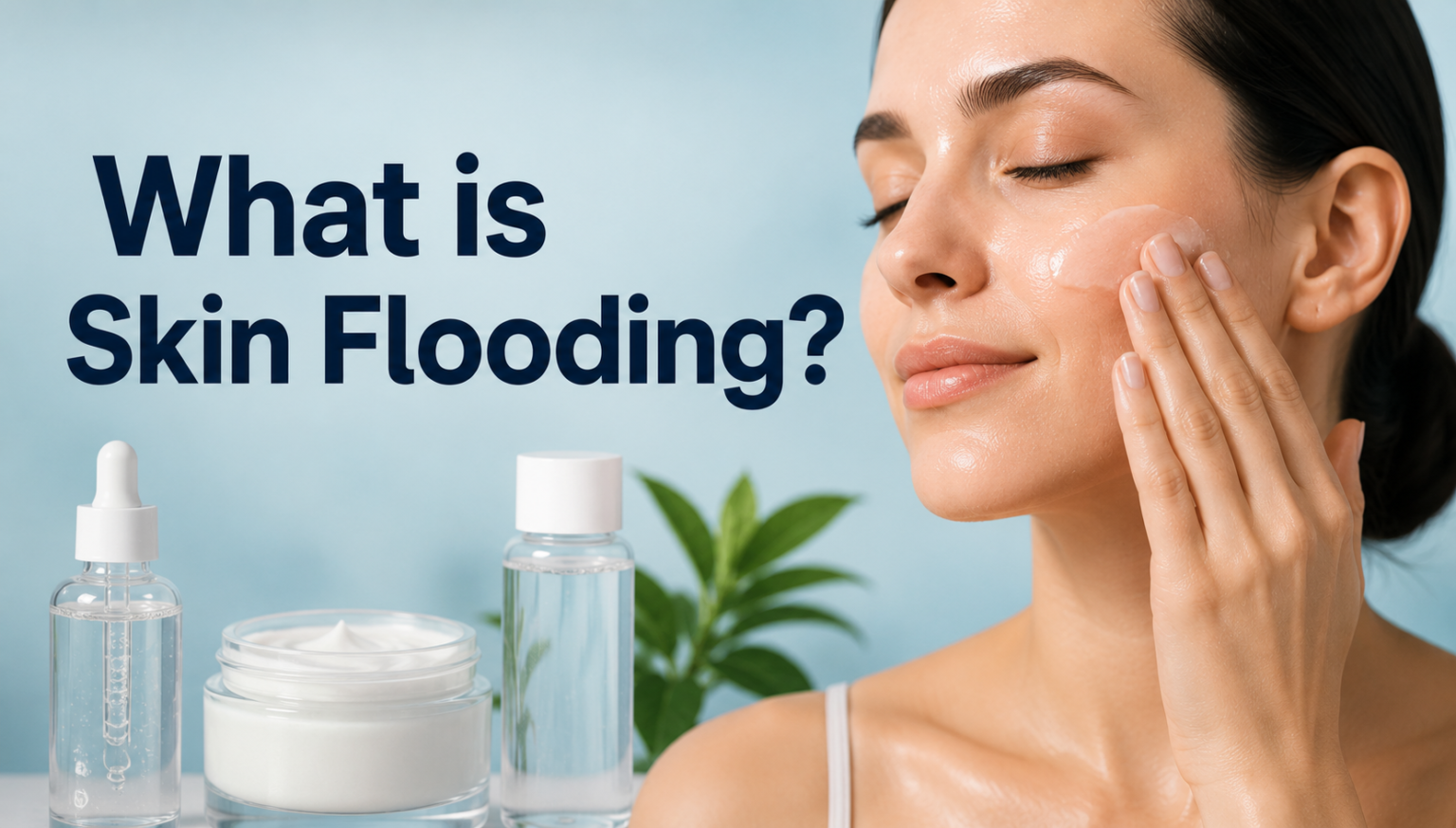
Skin flooding is a hydration technique in which several water-based and hydrating products are layered onto damp skin, one after another, to lock in as much moisture as possible before sealing everything with a heavier cream or facial oil.
The method became popular on social media because it promises plumper, dewier, and healthier-looking skin without needing expensive treatments. Unlike a normal skincare routine where you apply one product at a time, skin flooding focuses on layering multiple lightweight, hydrating formulas quickly so the skin absorbs maximum water content.
The final step, using an occlusive product, traps that hydration inside the skin barrier so it does not evaporate. This guide explains everything about skin flooding in simple words, including how it works, its benefits, and how to try it safely.
Understanding Skin Flooding
Skin flooding works on a simple idea: damp skin absorbs hydrating ingredients far better than dry skin. When you apply water-attracting ingredients on slightly wet skin, they pull in more moisture and hold onto it longer. This section explains the science and reasoning behind the trend in more depth below.
The Science Behind the Trend
The skin’s outer layer, called the stratum corneum, works better when it stays hydrated rather than dry. Ingredients like hyaluronic acid and glycerin are humectants, meaning they attract water molecules from the surrounding air and skin layers. When these products are applied on damp skin, they have more surface moisture to draw from, which increases their hydrating effect significantly.
How It Differs From Regular Skincare Routines
A regular skincare routine usually involves applying one serum, one moisturizer, and maybe sunscreen in a fixed order with drying time between each step. Skin flooding, on the other hand, involves applying multiple hydrating layers back-to-back without letting the skin fully dry. This layering approach is meant to build up hydration levels rather than treating one specific skin concern.
The Damp Skin Hydration Principle
The core rule of skin flooding is never letting your skin dry out between steps. As soon as you cleanse your face, you begin applying your hydrating products while the skin is still slightly wet. This damp base helps every following product absorb faster and work more effectively than it would on completely dry skin.
Benefits of Skin Flooding
Skin flooding offers noticeable improvements for people dealing with dryness, dullness, or a compromised skin barrier. The main advantages are explained in the list below with a short description for each.



- Deep hydration for dry or dehydrated skin: The layered approach delivers a continuous supply of moisture, which helps skin that feels tight, flaky, or rough throughout the day.
- Plumper, dewier complexion: Well-hydrated skin reflects light better, giving a naturally glowing and youthful appearance without makeup.
- Strengthens the skin barrier: Consistent hydration supports the skin’s protective barrier, making it more resistant to irritation and environmental damage.
- Reduces the look of fine lines caused by dehydration: Many fine lines are simply dehydration lines, and proper moisture levels can make them appear less visible.
- Calms sensitive or irritated skin: Gentle, hydrating layers can soothe redness and discomfort caused by dryness or harsh weather conditions.
Step-by-Step: How to Do Skin Flooding
Skin flooding follows a specific order so that lighter, water-based products go on first and heavier, sealing products go on last. Below is a simple breakdown of each step involved in the process.
Step 1: Cleansing
Start with a gentle cleanser to remove dirt, oil, and impurities without stripping natural moisture. Pat your face lightly with a towel so it remains damp rather than completely dry. This damp state is essential for the entire skin flooding method to work properly.
Step 2: Applying a Hydrating Toner or Essence
Apply a hydrating toner or essence directly onto the damp skin using your hands or a cotton pad. This step adds an extra layer of water-based hydration and prepares the skin to absorb the next products more effectively.
Step 3: Layering Hyaluronic Acid Serum
Next, apply a serum containing hyaluronic acid, which is known for holding large amounts of water within the skin. Gently press it into the skin rather than rubbing, allowing it to sink in fully before moving to the next step.
Step 4: Adding a Humectant-Rich Product
Follow up with another humectant-based product, such as a glycerin-based serum or hydrating gel. This additional layer reinforces the moisture levels built up from the previous steps and adds extra plumpness.
Step 5: Sealing With Moisturizer
Apply a moisturizer suited to your skin type to lock in all the hydrating layers applied so far. This step prevents water loss and helps distribute the hydration evenly across the face.
Step 6: Locking in With Facial Oil
Finish the routine with a facial oil or another occlusive product to create a protective seal over the skin. This final layer stops moisture from evaporating and keeps the skin soft and dewy for longer.
Best Products for Skin Flooding
Choosing the right products is important since skin flooding relies heavily on ingredient quality. The table below highlights product categories and examples of ingredients commonly used at each stage.
| Product Type | Purpose | Common Ingredients |
| Toner/Essence | Adds first hydration layer | Rice water, aloe vera, panthenol |
| Hyaluronic Acid Serum | Deep water retention | Hyaluronic acid, sodium hyaluronate |
| Humectant Serum | Extra moisture boost | Glycerin, betaine, polyglutamic acid |
| Moisturizer | Seals hydration | Ceramides, squalane, shea butter |
| Facial Oil/Occlusive | Locks in moisture | Jojoba oil, petrolatum, squalane oil |
Selecting products without fragrance or harsh alcohols is generally safer, especially for sensitive skin types attempting this routine for the first time.
Who Should Try Skin Flooding
Skin flooding is not equally suitable for every skin type, so understanding who benefits most is important before starting the routine.
Best Skin Types for Skin Flooding
People with dry, dehydrated, or normal skin generally see the best results from skin flooding. Their skin tends to lack sufficient moisture, so the layered hydration approach helps restore comfort and softness without causing excess oiliness.
Who Should Be Cautious
People with oily or acne-prone skin should approach skin flooding carefully, since applying too many heavy layers can clog pores or trigger breakouts. Choosing lightweight, non-comedogenic products in smaller amounts can help this skin type try the trend more safely.
Common Mistakes to Avoid
Even a simple routine like skin flooding can go wrong if certain steps are skipped or done incorrectly. The list below highlights frequent mistakes people make while trying this trend.
- Using too many products at once: Piling on more than five or six layers can overwhelm the skin and cause product buildup rather than better hydration.
- Wrong product order: Applying heavier creams before lighter serums blocks proper absorption of the hydrating ingredients underneath.
- Skipping the occlusive step: Without a sealing product at the end, most of the applied moisture evaporates quickly, reducing the routine’s effectiveness.
- Applying products to dry skin: Skin flooding depends on dampness, so applying products after the skin has fully dried reduces absorption significantly.
Skin Flooding vs Other Hydration Methods
Many people confuse skin flooding with other popular skincare trends, so understanding the difference is helpful. This section briefly compares it with two similar methods below.
Skin Flooding vs Skin Cycling
Skin cycling involves rotating active ingredients like retinol and exfoliants across different nights to allow the skin recovery time. Skin flooding, in contrast, focuses purely on layering hydration and does not involve active ingredient rotation at all.
Skin Flooding vs Slugging
Slugging involves applying a thick occlusive layer, like petroleum jelly, as the final step to lock in moisture overnight. Skin flooding includes multiple hydrating layers before that sealing step, making it a more complete hydration routine rather than a single occlusive step.
Expert Opinions on Skin Flooding
Many dermatologists agree that skin flooding is a reasonable approach for boosting hydration, especially for people with naturally dry skin.
However, most experts also caution that using too many products or ignoring skin type can lead to irritation or clogged pores.
The general recommendation is to keep the routine simple, patch test new products, and adjust the number of layers based on how the skin responds over time.
FAQs
How often should I do skin flooding? Skin flooding can be done once daily, ideally at night, though some people with very dry skin choose to do it both morning and night depending on their skin’s needs.
Can I do skin flooding every day? Yes, it can be done daily for dry or dehydrated skin, but oily or acne-prone skin types should limit it to a few times a week to avoid excess buildup.
Does skin flooding work for oily skin? It can work if lightweight, non-comedogenic products are used in smaller amounts, though oily skin types generally need fewer layers than dry skin types.
Should skin flooding be done in the morning or at night? Nighttime is generally preferred since the skin repairs itself while sleeping, though a lighter version can also be used in the morning under sunscreen.
Conclusion
Skin flooding is a simple yet effective hydration method that layers water-based products on damp skin and seals them with a moisturizer or oil. It works best for dry and dehydrated skin types, offering benefits like a plumper look, stronger skin barrier, and reduced dryness-related fine lines.
By choosing suitable products, following the correct order, and avoiding common mistakes, most people can safely try this trend and see noticeable improvements in their skin’s hydration levels.
RELATED POSTS
How Much is Skin Removal Surgery? Complete 2026 Cost Guide
What Is a Skin Tag? Causes, Symptoms, and Removal Options
Heel Lifts for Achilles Tendonitis: Do They Actually Work?