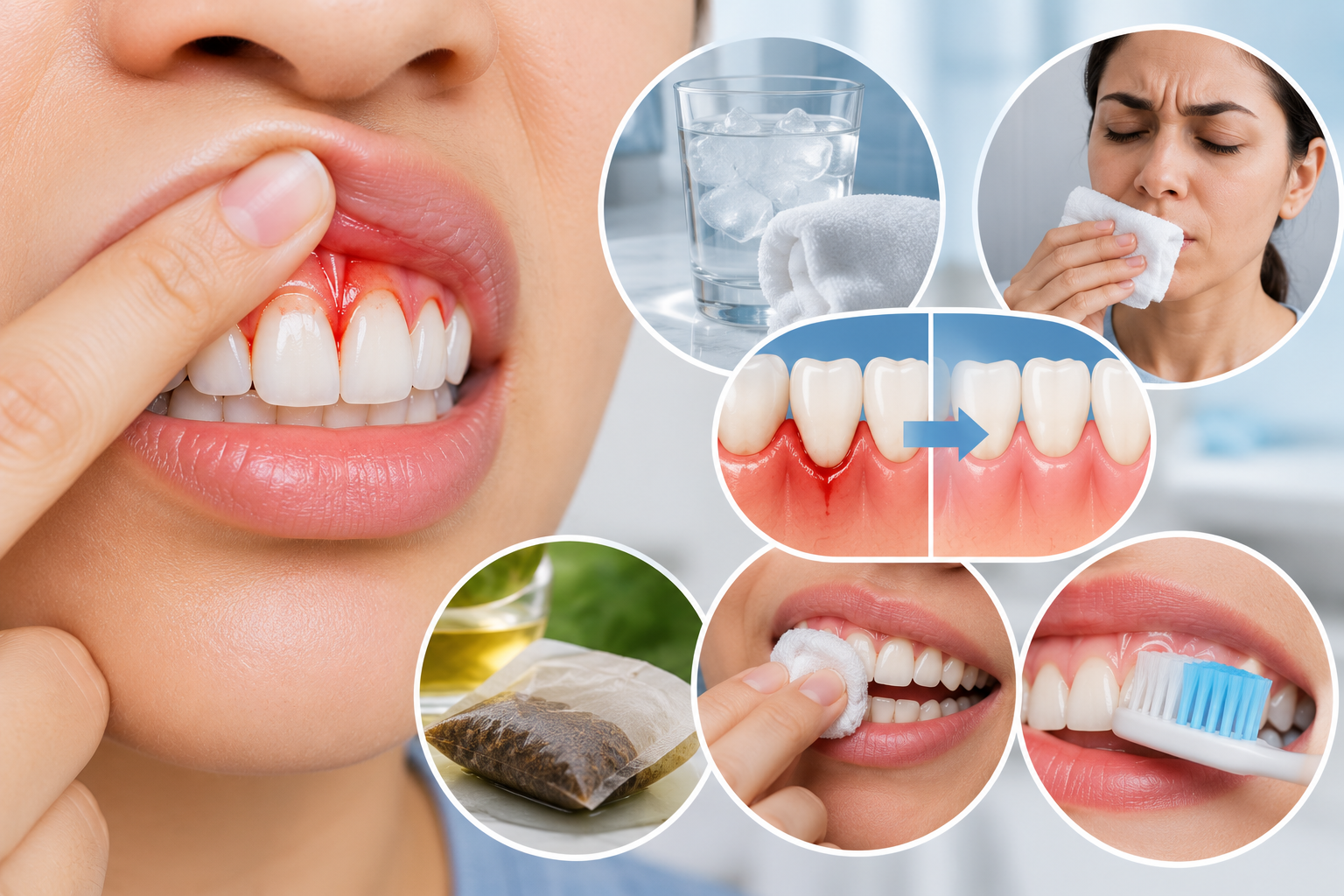
Learning how to stop gum bleeding immediately starts with calm, targeted pressure — not panic. Most people notice blood in the sink after brushing or flossing and immediately worry something is seriously wrong. In the next few minutes, you’ll learn nine fast home steps to stop the bleeding, plus the warning signs that mean it’s time to call a dentist.
Bleeding gums are common, but that doesn’t mean they should be ignored long-term. This guide covers immediate relief, why it happens in the first place, and how to keep it from coming back.
Key Takeaways
- Gentle pressure with clean gauze for 1–2 minutes stops most minor gum bleeding fast.
- Gingivitis, caused by plaque buildup, is the most common cause of bleeding gums.
- A cold compress reduces gum swelling and slows bleeding within minutes.
- Saltwater rinses help clean the area and reduce bacteria without stinging like alcohol-based mouthwash.
- Bleeding that lasts more than 10–15 minutes or recurs daily needs a dentist’s evaluation.
- Switching to a soft-bristle toothbrush prevents repeat irritation while gums heal.
Why Do Gums Bleed in the First Place?
Bleeding gums almost always signal irritation or inflammation along the gumline. The tissue there is delicate, and it reacts quickly to plaque, harsh brushing, or infection.
The American Dental Association notes that bleeding gums are often an early sign of gum disease, and daily brushing and flossing habits play a major role in prevention.
Common triggers include:
- Plaque buildup along the gumline, leading to gingivitis
- Brushing too hard or using a stiff-bristle brush
- New flossing habits — gums often bleed for the first week as they adjust
- Hormonal changes, especially during pregnancy
- Blood thinners or vitamin K/C deficiencies
Pro Tip: If bleeding started right after you began flossing again, that’s usually a good sign — it means plaque is being disturbed. Stick with it for a week before assuming something’s wrong.
How to Stop Gum Bleeding Immediately: 9 Steps
If bleeding has already started, don’t panic — it’s usually easy to control at home. These nine steps will help you stop it quickly and safely.
1. Apply Gentle, Direct Pressure
Fold a clean piece of gauze or a damp tea bag and press it against the bleeding area for 1–2 minutes. Steady pressure helps blood vessels constrict and clot faster.



2. Rinse With Warm Salt Water
Mix ½ teaspoon of salt into a cup of warm water and swish gently for 30 seconds. Saltwater reduces bacteria and mild inflammation without the sting of alcohol-based rinses.
3. Use a Cold Compress
Hold a cold compress or ice wrapped in cloth against the outside of your cheek near the bleeding gum. Cold narrows blood vessels, which slows bleeding and eases swelling.
4. Switch to a Soft-Bristle Toothbrush
A stiff brush can reopen irritated gum tissue every time you brush. Soft bristles clean just as effectively while giving inflamed gums a chance to recover.
5. Avoid Alcohol-Based Mouthwash Temporarily
Alcohol can dry out and further irritate already-inflamed gum tissue. Stick to saltwater or an alcohol-free rinse until bleeding subsides.
6. Try an Antiseptic Gel
Over-the-counter oral gels containing antiseptic ingredients can reduce bacteria at the gumline. Apply a small amount directly to the affected area with a clean fingertip or cotton swab.
7. Stay Hydrated
Dry mouth reduces natural saliva flow, which normally helps clear bacteria. Drinking water throughout the day supports healing and reduces irritation.
8. Don’t Skip Flossing — Floss Gently Instead
Skipping oral hygiene when gums bleed often makes things worse, not better. Floss gently around (not into) the sore area to keep plaque from building up further.
Warning: If bleeding is heavy, doesn’t slow after 15 minutes of direct pressure, or is accompanied by facial swelling, fever, or a bad taste/odor, seek dental or medical care right away — this can indicate infection or an abscess.
9. Check Your Vitamin Intake
Low vitamin C or K levels can make gums more prone to bleeding. Leafy greens, citrus fruits, and a balanced diet support gum tissue strength over time.
Comparison of Common Home Remedies for Bleeding Gums
| Remedy | Best For | Speed of Relief | Notes |
| Gauze/direct pressure | Active, visible bleeding | 1–2 minutes | First response for any bleeding |
| Cold compress | Swelling + bleeding together | 5–10 minutes | Apply externally, not directly in mouth |
| Saltwater rinse | Mild gingivitis, daily irritation | Same day, cumulative | Safe for daily use |
| Antiseptic gel | Localized sore spots | 10–20 minutes | Follow product label directions |
| Soft-bristle brush switch | Ongoing/recurring bleeding | Days to weeks | Prevention, not instant fix |
Hypothetical Example (for illustration purposes):
Imagine someone who restarted flossing after a long break and noticed bleeding every night for four days straight. By rinsing with warm salt water after each flossing session and switching to a soft-bristle brush, the bleeding noticeably lessened by day five and stopped entirely within about a week.
Note: This scenario is illustrative. Actual results vary by individual oral health, underlying conditions, and consistency of care.
When Bleeding Gums Signal Something More Serious
Occasional bleeding after brushing or flossing is usually harmless. But persistent or worsening bleeding can point to periodontal disease, a more advanced gum infection that affects the bone supporting your teeth.
The National Institute of Dental and Craniofacial Research explains that untreated gum disease can progress from gingivitis to periodontitis, which involves deeper infection and potential tooth loss if left unaddressed.
See a dentist if you notice:
- Bleeding that happens without brushing or flossing
- Gums that look red, puffy, or pulled away from teeth
- Persistent bad breath or a bad taste in your mouth
- Loose or shifting teeth
How to Prevent Gum Bleeding From Coming Back
Long-term prevention matters more than any single fast fix. Building a consistent, gentle oral care routine keeps gum tissue strong and reduces plaque buildup before it starts.
- Brush twice daily for two minutes with a soft-bristle brush
- Floss once daily, even if it causes mild bleeding at first
- Visit your dentist every six months for cleanings
- Avoid tobacco products, which slow gum healing significantly
- Manage conditions like diabetes, which can worsen gum health
Pro Tip: Electric toothbrushes with a pressure sensor can help you avoid brushing too hard — a common, overlooked cause of recurring gum irritation.
Frequently Asked Questions
Q: Why are my gums bleeding when I brush my teeth?
Bleeding while brushing usually means plaque has built up along the gumline, causing mild inflammation called gingivitis. It’s common and often improves with consistent, gentle brushing and flossing.
Q: How do I stop my gums from bleeding fast?
Apply gentle pressure with clean gauze for 1–2 minutes, then rinse with warm salt water. A cold compress can also help slow bleeding and reduce swelling quickly.
Q: Is bleeding gums always a sign of gum disease?
Not always — occasional bleeding from brushing too hard or restarting flossing is normal. Frequent or unprovoked bleeding is more likely to signal early gum disease.
Q: Can stress cause bleeding gums?
Yes, chronic stress can weaken immune response and increase inflammation, making gums more prone to bleeding. Stress may also lead to teeth grinding, which irritates gum tissue.
Q: Does salt water help bleeding gums?
Yes, warm saltwater rinses reduce bacteria and mild inflammation without irritating sensitive gum tissue. It’s a safe, gentle option to use daily.
Q: When should I worry about bleeding gums?
See a dentist if bleeding lasts more than 15 minutes, happens without any brushing, or comes with swelling, pain, or a bad odor. These can signal infection or advanced gum disease.
Q: Can vitamin deficiency cause gums to bleed?
Yes, low vitamin C or vitamin K levels are linked to weaker gum tissue and slower healing. A balanced diet with citrus fruits and leafy greens supports gum strength.
Final Thoughts
Bleeding gums can feel alarming, but in most cases, they respond quickly to simple home care. Gentle pressure, a saltwater rinse, and a cold compress are usually enough to stop the bleeding within minutes. Switching to a soft-bristle brush and staying consistent with flossing helps prevent it from happening again.
Still, occasional bleeding isn’t something to ignore completely. If it keeps coming back, lasts longer than 15 minutes, or comes with swelling or pain, that’s your gums signaling a deeper issue like gum disease. Catching problems early almost always means simpler, less costly treatment.
RELATED ARTICLES
Understanding Eye Pressure Pain: Causes, Symptoms, and Relief
Cloves for Tooth Pain: Does This Home Remedy Work?
Why Did My Toenail Fall Off Without Pain? Causes, Fixes, and Recovery Guide