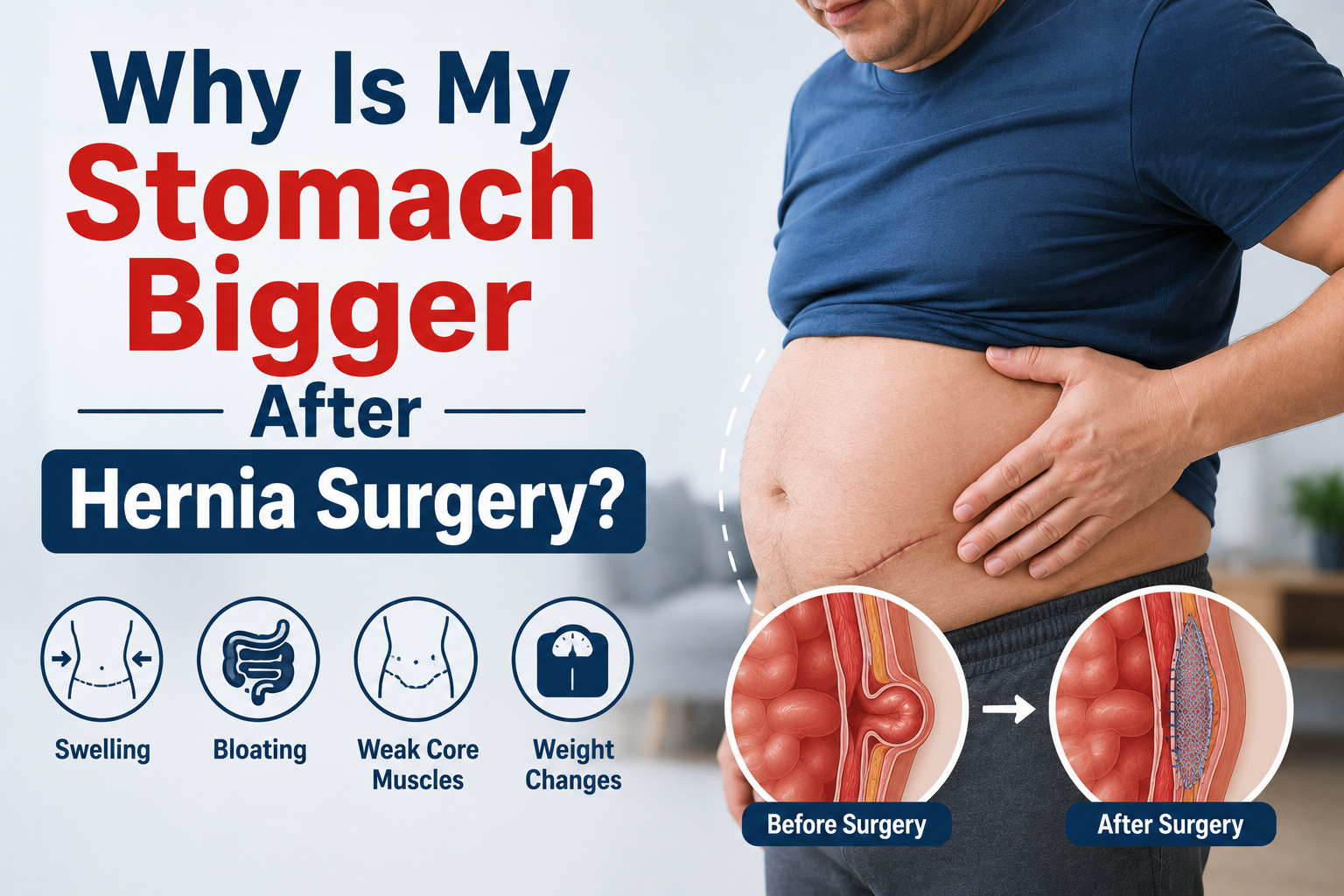
If you are asking, “why is my stomach bigger after hernia surgery,” there are several possible explanations. Post-surgical swelling, fluid buildup, constipation, and abdominal gas are among the most common reasons. Understanding these causes can help reduce anxiety and allow you to focus on recovery.
This guide explains why your stomach may appear larger after surgery, how long the swelling typically lasts, signs of normal healing, and when it may be necessary to contact your doctor.
Understanding Hernia Surgery Recovery
Recovery from hernia surgery involves much more than the healing of the skin incision. Internal tissues, muscles, and surrounding structures also need time to repair and adjust after the procedure. During this healing phase, temporary changes in the appearance of your abdomen are common.
What Is a Hernia?
A hernia occurs when an internal organ or tissue pushes through a weak area in the surrounding muscle or connective tissue. Hernias commonly develop in the abdomen or groin and may cause discomfort, pain, or a visible bulge.
Common types include:
- Inguinal hernia
- Umbilical hernia
- Femoral hernia
- Hiatal hernia
- Incisional hernia
Common Types of Hernia Surgery
Doctors use different surgical methods depending on the type and severity of the hernia.
Open surgery involves making a larger incision to repair the weakened tissue. Laparoscopic surgery uses small incisions and specialized instruments. Robotic-assisted surgery is another minimally invasive option that provides enhanced precision.
Each technique can affect recovery differently, but temporary abdominal swelling can occur with all methods.



Why Is My Stomach Bigger After Hernia Surgery?
A larger stomach after hernia surgery can result from several temporary conditions related to healing. Understanding these causes can help you recognize what is normal during recovery.
Normal Post-Surgical Swelling
Swelling is the most common reason why the stomach appears larger after hernia surgery. Every surgical procedure causes some degree of tissue trauma, even when performed using minimally invasive techniques.
As the body repairs damaged tissues, extra fluid and blood flow collect around the surgical area. This process creates swelling that can make the abdomen appear enlarged.
Temporary Fluid Buildup (Seroma)
Sometimes a pocket of clear fluid forms beneath the skin near the surgical site. This condition is known as a seroma.
A seroma may create a soft lump or cause the abdomen to look swollen. While this can be alarming, many seromas disappear naturally as the body reabsorbs the fluid.
Gas Used During Laparoscopic Surgery
Patients who undergo laparoscopic hernia repair often experience bloating after surgery. During the procedure, surgeons use carbon dioxide gas to expand the abdominal cavity and improve visibility.
Although most of the gas is removed before the surgery ends, small amounts can remain temporarily. This can cause:
- Abdominal bloating
- A feeling of fullness
- Shoulder discomfort
- Increased abdominal size
These symptoms generally improve within a few days.
Normal Causes of Abdominal Swelling After Surgery
Several normal recovery-related factors can make the stomach appear bigger after hernia surgery. Understanding these causes can help patients avoid unnecessary worry during the healing process.
Changes in Abdominal Shape
Before surgery, the hernia may have altered the shape of the abdominal wall. After repair, tissues begin adjusting to their corrected position.
As healing occurs, temporary irregularities in abdominal appearance can develop. These changes usually become less noticeable over time.
Surgical Mesh and Appearance
Many hernia repairs involve the placement of surgical mesh to strengthen weakened tissues.
Although the mesh itself does not significantly increase stomach size, surrounding tissue reactions and temporary swelling can make the area appear fuller during recovery.
Scar Tissue Formation
The body naturally forms scar tissue as part of the healing process. While scar tissue is necessary for repair, it can temporarily contribute to firmness or mild thickening around the surgical area.
How Long Does Post-Surgery Swelling Last?
The duration of swelling varies from person to person. Factors such as age, overall health, surgical technique, and activity level all influence recovery time.
Most patients notice gradual improvement as healing progresses.
Recovery During the First Week
The first week usually brings the greatest amount of swelling. Mild discomfort, bruising, and bloating are common during this period.
Patients should focus on rest, hydration, and following their surgeon’s instructions.
Recovery During the First Month
By the second and third weeks, swelling often begins to decrease significantly. Many patients feel more comfortable moving around and returning to normal activities.
Although improvement is noticeable, complete healing is still underway.
Long-Term Healing Timeline
Internal healing can continue for several months after surgery. Some patients notice minor swelling or firmness for up to six months, especially after larger hernia repairs.
Patience is important because tissue remodeling takes time.
Factors That Affect Recovery Speed
Several factors influence recovery, including:
| Factor | Effect on Recovery |
| Age | Older adults may heal more slowly |
| Overall Health | Good health often supports faster recovery |
| Smoking | May delay healing |
| Physical Activity | Moderate movement promotes recovery |
| Hernia Size | Larger repairs may require longer healing |
Is Bloating Common After Hernia Repair?
Many patients experience bloating after surgery, especially during the first few weeks. Bloating can make the stomach feel tight, full, or larger than usual.
This symptom is often related to digestive changes, surgical gas, inflammation, and reduced physical activity.
Digestive Changes After Surgery
The digestive system may temporarily slow down after surgery. Anesthesia, medications, and stress on the body can all affect normal digestive function.
As digestion returns to normal, bloating usually improves.
Reduced Physical Activity
Being less active during recovery can slow digestion and contribute to abdominal fullness. Gentle walking often helps stimulate bowel function and reduce bloating.
Signs Your Recovery Is Progressing Normally
During recovery, it is natural to wonder whether your symptoms are part of normal healing or a sign of a problem. Fortunately, there are several indicators that suggest your body is healing as expected.
Mild Swelling Around the Surgical Area
A certain amount of swelling is expected after hernia surgery. The tissues that were repaired need time to heal, and the body’s response often causes temporary enlargement around the surgical site.
Normal swelling usually feels soft or slightly firm and gradually improves over time. Most importantly, it should slowly decrease rather than continue growing.
Temporary Bloating
Many patients experience bloating during the first few weeks after surgery. This can make clothing feel tighter and create the impression that the stomach is larger than before.
As bowel function returns to normal and inflammation decreases, bloating typically becomes less noticeable.
Mild Tenderness and Discomfort
Tenderness near the incision area is common. The surgical site may feel sore when standing, sitting, coughing, or changing positions.
This discomfort should steadily improve as healing progresses. Many patients notice significant improvement within a few weeks.
Warning Signs That Need Medical Attention
Although a larger stomach after hernia surgery is often harmless, certain symptoms may indicate complications that require medical evaluation.
Severe or Increasing Pain
Some discomfort is normal after surgery, but severe pain that suddenly worsens is not typical.
Pain that becomes more intense instead of improving could signal infection, hernia recurrence, or another complication. Patients experiencing severe pain should contact their healthcare provider promptly.
Fever or Chills
A fever may indicate an infection. If swelling is accompanied by fever, chills, or feeling generally unwell, medical evaluation is important.
Infections are easier to treat when identified early.
Redness or Drainage Around the Incision
The incision area should gradually heal over time. Excessive redness, warmth, foul-smelling drainage, or pus may be signs of infection.
Any unusual changes around the surgical site should be reported to your surgeon.
Difficulty Passing Stool or Gas
An inability to pass stool or gas for an extended period can signal intestinal issues that require medical attention.
Patients should seek medical advice if constipation becomes severe or is accompanied by significant abdominal pain.
Could a Recurrent Hernia Cause a Bigger Stomach?
While most post-surgical swelling is normal, some patients worry that their hernia has returned. Hernia recurrence is possible, although modern surgical techniques have significantly reduced this risk.
Symptoms of Hernia Recurrence
A recurrent hernia may produce symptoms similar to the original condition.
Common signs include:
- A new bulge near the repair site
- Pressure or heaviness
- Pain during lifting or coughing
- Swelling that does not improve
- Visible protrusion when standing
These symptoms should be evaluated by a healthcare professional.
Differences Between Recurrence and Normal Swelling
Normal swelling usually decreases with time and is often spread across a broader area.
A recurrent hernia typically creates a more defined bulge that may become more noticeable when standing, straining, or coughing.
The following table highlights some key differences.
| Feature | Normal Swelling | Recurrent Hernia |
| Timing | Common immediately after surgery | Often develops later |
| Improvement | Gradually improves | May persist or worsen |
| Appearance | General swelling | Localized bulge |
| Pain | Usually mild | Can vary from mild to severe |
| Triggered by Strain | Usually no | Often yes |
When to Contact Your Surgeon
If you notice a new bulge, worsening symptoms, or concerns about hernia recurrence, scheduling a follow-up appointment is the safest approach.
Early evaluation can help identify problems before they become more serious.
Tips to Reduce Swelling and Bloating After Surgery
Although some swelling is unavoidable, there are several ways to support healing and improve comfort during recovery.
Recovery Tips Table
| Recovery Habit | Potential Benefit |
| Walking Daily | Improves circulation and digestion |
| Drinking Water | Helps prevent constipation |
| Eating Fiber | Supports healthy bowel movements |
| Getting Adequate Rest | Promotes tissue repair |
| Avoiding Heavy Lifting | Protects the surgical repair |
| Following Medical Advice | Supports safer recovery |
Frequently Asked Questions
Why is my stomach still swollen 2 weeks after hernia surgery?
Two weeks after surgery, swelling is still considered normal for many patients. Internal tissues continue healing long after the skin appears improved. As long as the swelling is gradually decreasing and is not accompanied by severe pain or signs of infection, it is often part of the normal recovery process.
Can a seroma make my stomach look bigger?
Yes, a seroma can make the abdomen appear larger. This fluid collection may create noticeable swelling near the surgical site. Most seromas resolve naturally over time, although larger ones may occasionally require medical treatment.
Is bloating normal after laparoscopic hernia surgery?
Bloating is very common after laparoscopic procedures because carbon dioxide gas is used during surgery. Digestive changes and reduced activity can also contribute to bloating. Most patients notice improvement within several days to a few weeks.
When should I worry about abdominal swelling?
You should contact your doctor if swelling is rapidly increasing, becomes extremely painful, is accompanied by fever, causes vomiting, or is associated with redness and drainage from the incision site.
How can I tell if my hernia has returned?
A recurrent hernia often causes a new bulge that becomes more noticeable when standing, lifting, or coughing. If you suspect recurrence, a medical evaluation can help determine the cause of your symptoms.
Does surgical mesh cause a larger stomach?
The mesh itself does not usually cause the stomach to become larger. However, temporary swelling and tissue reactions around the repair site can create the appearance of increased abdominal size during recovery.
Conclusion
If you have been wondering, “why is my stomach bigger after hernia surgery,” the answer is usually related to normal healing processes. Swelling, bloating, inflammation, temporary fluid buildup, and constipation are among the most common reasons for an enlarged abdomen following surgery.
For most patients, these symptoms improve gradually over the weeks and months after the procedure. Paying attention to recovery habits such as staying hydrated, walking regularly, eating a healthy diet, and following medical advice can help support healing and reduce discomfort.
Related Posts
Can GERD Cause Back Pain? Causes, Symptoms, and Treatment
Growing Pains Massage: Safe Techniques and Natural Ways to Relieve Leg Pain in Children
How Long After a Dentist Cleaning Can I Eat? Complete Guide
How to Cure Gum Disease Without a Dentist: Natural Ways to Heal Gums at Home
Does Facial Work for Acne? Benefits, Risks, Types, and What to Expect