
A toothache is more than just dental discomfort — it can trigger a chain of symptoms that reach far beyond your mouth, including a painful sore throat.
The close connection between your teeth, gums, and throat means that infections or inflammation in one area can easily spread or radiate to another.
In this article, we’ll explore How a Toothache Causes a Sore Throat and How to Tell If Your Sore Throat Is Dental or a Cold/Flu — so you can identify the root cause and find the right relief.
How a Toothache Causes a Sore Throat?
A toothache doesn’t always stay confined to your tooth — it can directly contribute to a sore throat through three key mechanisms: the direct spread of bacteria, the body’s natural inflammatory response, and shared nerve pathways.
- Direct Spread of Bacteria: When a tooth becomes infected — such as in the case of an abscess or severe decay — the harmful bacteria don’t simply stay in one place. They can travel through the surrounding tissue, down into the gums, and gradually make their way toward the throat, causing irritation, swelling, and infection in the process.
- The Body’s Natural Inflammatory Response: When your body detects a dental infection or injury, it triggers an inflammatory response to fight it off. This inflammation doesn’t always stay localized — it can spread to nearby areas, including the lymph nodes and throat, leading to soreness, swelling, and discomfort that mimics a classic sore throat.
- Shared Nerve Pathways: Your mouth and throat share a complex network of nerves, meaning pain signals from an infected or damaged tooth can travel along these pathways and be felt in the throat. This is known as referred pain — where the actual source of discomfort is your tooth, but the sensation registers in your throat as well.
6 Dental Conditions That Can Cause a Sore Throat

Several dental conditions go beyond mouth pain and can directly trigger a sore throat — here are the six most common ones to know.
Tooth Abscess
A tooth abscess is a pocket of bacteria-filled infection that forms at the root of a tooth or in the surrounding gum. If left untreated, the infection can spread to the throat and surrounding tissues, causing significant soreness and swelling.
Impacted Wisdom Teeth
Wisdom teeth that fail to fully erupt become trapped beneath the gum, creating a hotspot for bacteria and inflammation. The resulting pressure and infection can radiate directly to the throat, making swallowing painful and uncomfortable.
Gum Disease (Periodontitis)
Advanced gum disease allows harmful bacteria to thrive deep beneath the gumline, leading to chronic infection. As the condition progresses, this bacterial activity can irritate the throat and cause persistent soreness.


Dental Abscess After a Root Canal
In some cases, infection can return or persist even after a root canal procedure, forming a new abscess. This lingering infection can quietly spread to the throat area, triggering pain and swelling that feels unrelated to the original dental work.
Cracked or Broken Tooth
A cracked tooth exposes the inner pulp to bacteria, making it highly vulnerable to infection. Once bacteria enter, they can spread quickly through the surrounding tissue and eventually reach the throat.
Oral Thrush (Fungal Infection)
Oral thrush is a fungal overgrowth caused by Candida that develops inside the mouth, often due to weakened immunity or antibiotic use. It can extend to the throat, causing irritation, soreness, and a persistent scratchy feeling.
Toothache and Sore Throat on One Side — What It Means

When both your toothache and sore throat appear on the same side, it’s rarely a coincidence — below we’ll discuss exactly what this one-sided pattern means, what dental conditions are likely behind it, and why prompt attention matters.
- The Core Reason Behind One-Sided Pain: When a toothache and sore throat occur together on the same side, it typically means a dental infection — such as a severe cavity, abscess, or impacted wisdom tooth — is spreading bacteria or inflammation to the adjacent tissues in your neck. Because the infection originates from one specific tooth, the pain, swelling, and irritation naturally stay concentrated on that same side rather than spreading across both.
- Severe Cavity: A deeply progressed cavity breaks down the tooth’s protective layers, allowing bacteria to reach the inner pulp and surrounding tissue. Once bacteria spread from a cavity on one side, they can inflame the nearby neck tissues and trigger a sore throat that mirrors the exact side of the infected tooth.
- Dental Abscess: An abscess forms when a bacterial infection creates a painful pus-filled pocket at the root of a tooth or in the gum. As the abscess grows, it pushes bacteria and inflammation into the adjacent neck tissues on that same side, causing noticeable throat soreness, swollen lymph nodes, and difficulty swallowing.
- Impacted Wisdom Tooth: An impacted wisdom tooth trapped beneath the gum creates a direct opening for bacteria to accumulate and spread into surrounding tissue. The resulting infection travels along the adjacent neck tissues on that side, producing a sore throat, jaw stiffness, and ear pain that all point back to the same dental source.
Can a Toothache Cause a Sore Throat And Ear Pain?
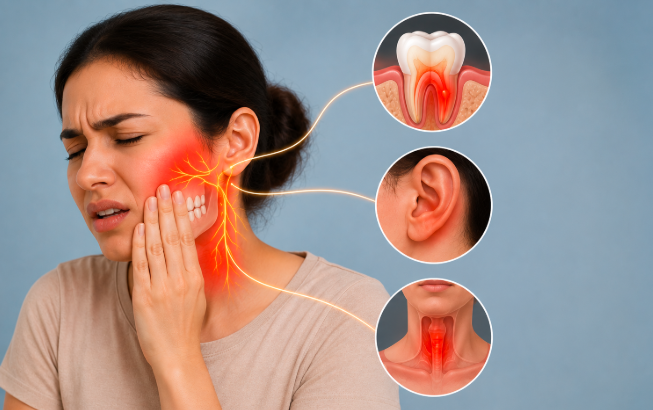
Yes — a toothache can absolutely cause both a sore throat and ear pain at the same time. This happens because your teeth, throat, and ears all share closely connected nerve pathways, meaning an infection or inflammation in one tooth can send pain signals radiating into all three areas simultaneously.
A dental abscess or impacted wisdom tooth in particular can spread bacteria to the adjacent tissues, triggering throat soreness and a deep, throbbing ear ache on the same side — all stemming from a single dental source.
How to Tell If Your Sore Throat Is Dental or a Cold?
A sore throat can feel the same whether it comes from a dental infection or a common cold — below we’ll discuss the key differences that help you identify exactly where your symptoms are coming from.
Check If the Sore Throat Is One-Sided
A cold or flu typically causes soreness that spreads evenly across the entire throat, while a dental-related sore throat tends to concentrate on one specific side. If your throat pain is noticeably worse on the same side as your toothache, a dental infection is far more likely to be the culprit than a viral illness.
Look for Accompanying Dental Symptoms
A cold or flu comes with its own set of symptoms like a runny nose, body aches, and fever — but it won’t cause tooth pain, jaw tenderness, or gum swelling. If your sore throat is accompanied by a throbbing tooth, swollen gums, or pain while chewing, your throat irritation is almost certainly dental in origin.
Notice When the Pain Started
If your sore throat developed shortly after a toothache or dental procedure, the connection is difficult to ignore. A cold or flu typically builds gradually with multiple symptoms appearing together, while a dental sore throat often follows directly after tooth pain begins or worsens.
Feel for Swollen Lymph Nodes on One Side
A dental infection causes the lymph nodes on the same side of the neck to swell as the body fights the localized bacteria. If you notice swelling or tenderness in the lymph nodes on just one side — matching the side of your toothache — this is a strong indicator of a dental cause rather than a cold or flu.
Monitor for Fever and Fatigue
A cold or flu almost always brings whole-body symptoms like fatigue, chills, and a general feeling of being unwell. A dental infection may cause a mild fever due to localized inflammation, but it typically won’t leave you feeling drained and exhausted the way a viral illness does.
Home Remedies to Relieve Toothache and Sore Throat Temporarily

While home remedies are not a permanent fix, they can offer meaningful short-term relief while you wait to see a dentist — below we’ll discuss the most effective options for easing both toothache and sore throat discomfort at the same time.
- Clove Oil: Clove oil contains eugenol, a natural anesthetic compound that has been used for centuries to numb tooth pain quickly. Applying a small amount directly to the affected tooth and surrounding gum can reduce throbbing pain and also carry mild antibacterial benefits to the surrounding tissue.
- Cold or Warm Compress: Applying a cold compress to the outside of your cheek can help reduce swelling and numb sharp tooth pain in the short term. Alternating with a warm compress encourages blood flow, helps ease muscle tension in the jaw, and can provide additional comfort to the throat area on the same side.
- Honey and Warm Water: Honey is a natural antibacterial agent that coats and soothes an irritated throat while also helping to fight minor infection. Mixing a generous spoonful into warm water and sipping it slowly can calm throat soreness and provide gentle relief without any harsh side effects.
- Over-the-Counter Pain Relievers: Medications like ibuprofen or acetaminophen can temporarily reduce both tooth pain and throat soreness by targeting inflammation and blocking pain signals. Ibuprofen in particular is especially useful as it addresses both pain and swelling, making it a practical short-term option until dental treatment is received.
- Garlic: Garlic contains allicin, a powerful natural compound known for its strong antibacterial and anti-inflammatory properties. Chewing a small piece of raw garlic near the affected tooth or adding it to warm water as a rinse can help slow bacterial spread and mildly ease both tooth and throat discomfort.
- Peppermint Tea Rinse: Peppermint contains natural numbing properties that can temporarily calm both tooth sensitivity and throat irritation when used as a warm rinse. Brewing a strong cup of peppermint tea, allowing it to cool slightly, and swishing it around the mouth and throat area can deliver fast acting soothing relief.
When To See a Dentist?

Some dental symptoms go beyond ordinary discomfort and serve as urgent warning signs that should never be ignored — below we’ll discuss the situations where waiting is simply not an option.
Swelling That Is Spreading to Your Jaw or Neck
If you notice visible swelling moving from your tooth or gum down toward your jaw, neck, or throat, this is a serious red flag that a dental infection is actively spreading. This type of swelling can progress rapidly and in severe cases restrict your airway, making it a dental emergency that requires immediate professional attention.
Difficulty Swallowing or Breathing
A toothache that has progressed to the point of making swallowing painful or breathing difficult signals that the infection has spread dangerously close to critical structures in the throat. This is no longer just a dental issue — it requires emergency care without any delay.
Fever Alongside Tooth and Throat Pain
A fever combined with a toothache and sore throat strongly suggests that a bacterial infection has moved beyond the tooth and is now affecting surrounding tissue. Your body is working hard to fight something serious, and a dentist needs to intervene before the infection spreads further.
Severe Throbbing Pain That Won’t Subside
If your tooth pain is intense, constant, and completely unresponsive to over-the-counter pain relievers, it likely means the infection has reached the inner pulp or deeper tissue. This level of pain rarely resolves on its own and will continue to worsen without professional dental treatment.
Swollen Lymph Nodes That Are Tender to Touch
Lymph nodes that are noticeably swollen and painful to touch on the same side as your toothache indicate that your immune system is actively battling a spreading dental infection. Persistent lymph node swelling alongside tooth pain is a clear signal that the infection needs professional treatment immediately.
A Visible Pimple or Bump on Your Gum
A small pimple-like bump or blister appearing on the gum near a painful tooth is a classic sign of a dental abscess that is attempting to drain. Even if the pain temporarily subsides after the bump appears, the underlying infection is still present and requires urgent dental care to prevent further spread.
Frequently Asked Questions
Can a tooth infection spread to the brain?
Yes, in very rare cases an untreated dental infection can spread toward the brain, causing a life threatening condition known as a brain abscess. Never leave a persistent dental infection untreated.
How long does a dental-related sore throat last?
Unlike a cold-related sore throat that clears in 7 to 10 days, a dental sore throat will linger and worsen until the underlying dental problem is properly treated.
Can a dental infection cause swollen tonsils?
Yes, bacteria from an infected tooth can travel to the tonsils causing inflammation and swelling that closely mimics tonsillitis, making it easy to misdiagnose without a proper evaluation.
Can antibiotics alone cure a dental infection?
No — antibiotics can slow bacterial spread but cannot eliminate the root source. A dentist still needs to physically treat the tooth through a root canal, extraction, or drainage procedure.
Is it safe to ignore a toothache if the pain comes and goes?
No — intermittent tooth pain is still a warning sign. Infections do not heal on their own and a pain-free period often means the nerve is becoming more damaged, not that the problem has been resolved.
Can stress or teeth grinding cause both a toothache and sore throat?
Yes, chronic teeth grinding known as bruxism puts excessive pressure on the teeth and jaw, leading to tooth sensitivity and throat muscle tension that can cause persistent soreness in both areas.
Can a child’s toothache cause a sore throat?
Yes, children are equally susceptible due to thinner enamel and developing immune systems. If a child complains of both symptoms together, consult a pediatric dentist promptly.
Conclusion
A toothache and sore throat appearing together is rarely a coincidence — it is your body signaling that a dental infection may be spreading beyond your mouth.
While home remedies can offer temporary relief, they are never a replacement for professional dental care.
If you are experiencing both symptoms at the same time, see a dentist promptly before a manageable problem turns into a serious one.
Related Articles
15 Health Benefits of Soursop Leaves: Nutrition, Uses, Tea Recipe, and Safety Guide
Does the Sauna Help With Acne? Benefits, Risks, and What You Need to Know
Does Facial Work for Acne? Benefits, Risks, Types, and What to Expect
Chelsea Crumpler UNC Health: Career, HR Leadership, and Professional Contributions
ESG Regulations Food Sector: Complete Guide to Compliance, Sustainability, and Reporting