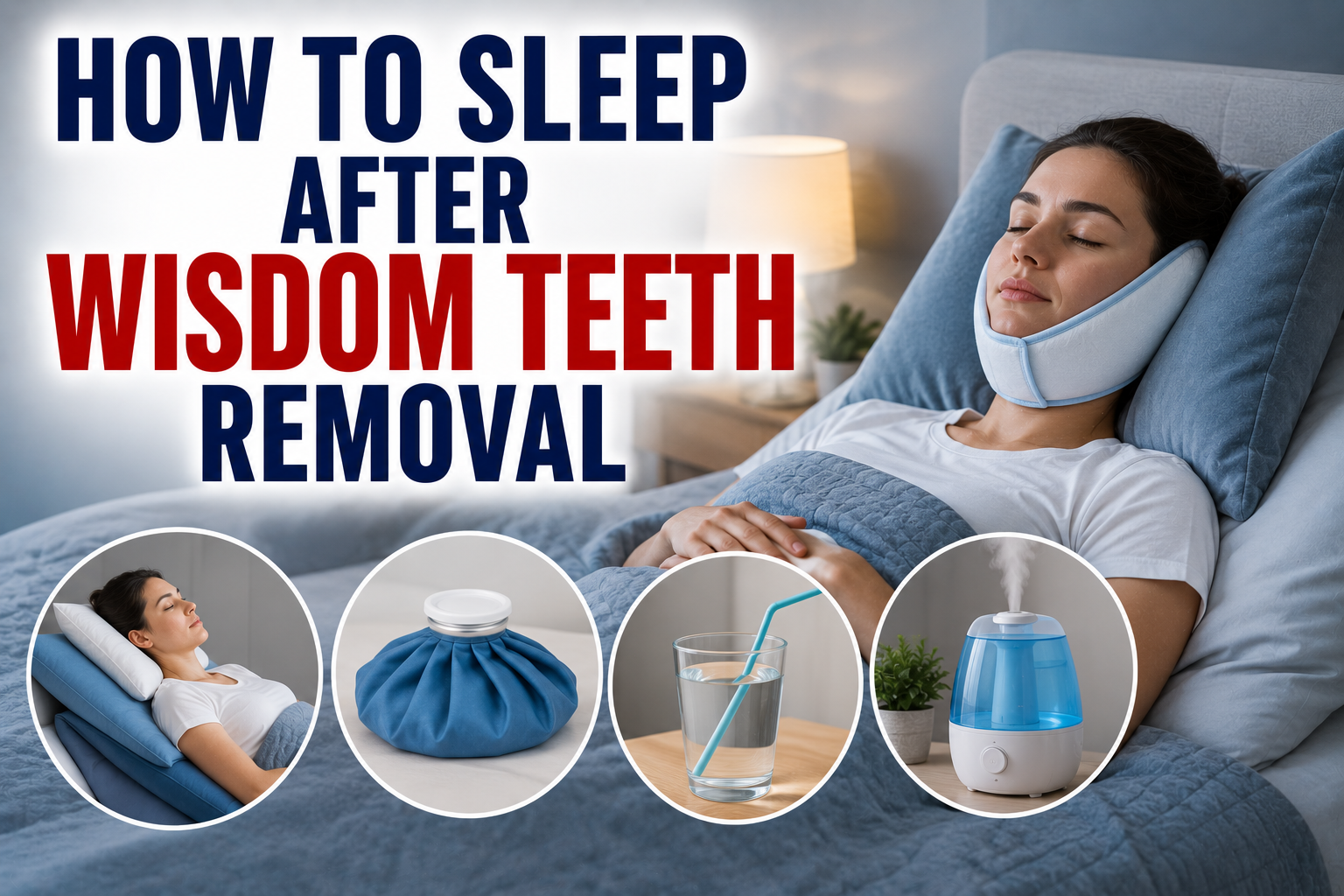
Learning how to sleep after removing wisdom teeth matters just as much as the surgery itself. Most people focus on pain medication and soft foods, then lie down flat that first night and wake up with a swollen face, a throbbing socket, or worse — a dislodged blood clot. This guide walks through the exact sleeping positions, timing, and nighttime habits oral surgeons recommend for a faster, smoother recovery.
You’ll learn how long to stay elevated, which sleep positions to avoid, and what to do if bleeding or pain disrupts your night.
Key Takeaways
- Sleep at a 30–45 degree angle for at least the first 3 nights to reduce swelling and bleeding.
- Flat sleeping increases blood pressure to the head, which can prolong bleeding and dislodge the protective clot.
- Side sleeping on the surgery side raises dry socket risk and should be avoided for the first 3–4 days.
- Most patients can return to normal sleep positions within 5–7 days, depending on healing speed.
- Gauze, ice packs, and propped pillows work together to control swelling overnight.
- Avoid straws, smoking, and vigorous mouth rinsing before bed — all three can trigger dry socket.
Why Sleep Position Matters After Wisdom Teeth Removal
The first 72 hours after extraction are critical because a blood clot forms over each socket to protect the bone and nerve underneath. Lying flat increases blood flow to the head, which raises pressure at the extraction site and can cause the clot to loosen or bleed again.
According to the American Association of Oral and Maxillofacial Surgeons (2024), keeping the head elevated above the heart for the first few days helps control swelling and supports faster clot stabilization.
Pro Tip: Set up your pillows before you go in for surgery. You’ll be groggy from anesthesia afterward, and the last thing you want is to be stacking cushions with a swollen jaw.
Best Sleeping Position After Wisdom Teeth Removal
The safest sleeping position after wisdom teeth removal is on your back with your head and upper torso elevated 30 to 45 degrees.
How to Set Up an Elevated Sleep Position
- Stack 2–3 firm pillows behind your head, neck, and upper back to create a gentle incline.
- Use a wedge pillow if you have one — it stays in place better than stacked pillows through the night.
- Avoid reclining chairs for full overnight sleep unless your surgeon specifically recommends it; they can strain your neck after a few hours.
- Keep a towel nearby in case of minor drainage onto the pillow.
This position keeps your head above your heart, which limits blood flow to the surgical site and reduces overnight throbbing.
How Long to Sleep Elevated After Wisdom Teeth Removal
Most oral surgeons recommend sleeping elevated for 3 to 5 nights, though swelling-prone patients may need up to a week.



| Recovery Day | Recommended Position | Why |
| Night 1–2 | 45-degree incline, back only | Highest bleeding and swelling risk |
| Night 3–4 | 30-degree incline, back only | Clot stabilizing, swelling peaking then easing |
| Night 5–7 | Slight incline or flat with extra pillow | Healing tissue, lower clot risk |
| Day 7+ | Normal sleep position | Socket largely closed in most patients |
Warning: If swelling, pain, or bleeding worsens instead of improving after day 3, contact your oral surgeon. This can signal infection or dry socket rather than normal healing.
Can You Sleep on Your Side After Wisdom Teeth Removal?
Side sleeping puts direct pressure on the jaw and can press against swollen tissue, slow circulation to the healing gum, and increase the chance of biting the inside of your cheek while unconscious.
If you’re a committed side sleeper, sleep on the opposite side from your extraction, and only after the first 48–72 hours once initial swelling has settled. Sleeping on the surgical side too early is one of the most common reasons patients report increased morning pain.
Hypothetical Example (for illustration purposes): A 24-year-old patient who naturally sleeps on her left side has both lower wisdom teeth removed. Her dentist advises her to sleep elevated on her back for four nights, then transition to her right side only, since the left socket needs more time before tolerating pressure. By night six, she resumes her normal sleep position without discomfort. Note: This scenario is illustrative. Actual results vary by patient, extraction complexity, and individual healing rate.
Preventing Dry Socket While You Sleep
Dry socket — when the protective blood clot dislodges before healing — is the most painful complication of wisdom teeth removal and is closely tied to nighttime habits.
According to the American Dental Association, dry socket occurs in roughly 2–5% of routine extractions, with higher rates for impacted lower wisdom teeth.
Nighttime Habits That Trigger Dry Socket
- Sleeping flat too soon increases blood pressure at the socket and can loosen the clot.
- Using a straw before bed creates suction that pulls the clot loose.
- Smoking or vaping at night introduces both suction and chemical irritation.
- Aggressive rinsing or spitting before lying down disrupts clot formation.
Stick to gentle salt-water rinses only after the first 24 hours, and let water drip out rather than spitting forcefully.
Managing Pain and Swelling Overnight
Nighttime pain often feels worse because you’re not distracted and swelling peaks around the 48–72 hour mark.
- Take prescribed pain medication 30–45 minutes before bed so it’s active while you fall asleep.
- Apply an ice pack to the jaw for 20 minutes before sleeping during the first 48 hours to limit overnight swelling.
- Place gauze with light pressure if your surgeon advises continued bleeding control, but remove it before sleeping unless instructed otherwise.
- Keep a glass of water nearby to stay hydrated without needing to get up repeatedly.
Pro Tip: Set a phone alarm for your next pain medication dose if it falls during sleeping hours during the first two nights — waking up in pain is harder to manage than staying ahead of it.
Sleeping With a CPAP Machine After Wisdom Teeth Removal
CPAP users should talk with both their oral surgeon and sleep physician before resuming normal use, since mask pressure and airflow can disturb fresh extraction sites and elevate intraoral pressure.
Many surgeons recommend waiting 2–3 days before resuming Continuous positive airway pressure, and some suggest using a nasal-only mask temporarily if swelling makes a full-face mask uncomfortable. Always confirm with your specific surgical team rather than assuming standard advice applies to your case.
When Can You Sleep Normally Again After Wisdom Teeth Removal?
Most patients return to their normal sleep position within 5 to 7 days, once swelling has gone down and the clot has stabilized into healing tissue. Healing timelines vary based on:
- Number of teeth removed — all four wisdom teeth typically means a longer adjustment than one or two.
- Impaction level — impacted teeth requiring bone removal heal slower than fully erupted teeth.
- Individual healing rate — age, smoking history, and overall oral health all play a role.
If you’re still in significant pain or swelling persists past one week, that’s a signal to follow up with your surgeon rather than push through it.
Frequently Asked Questions
What position should I sleep in after wisdom teeth removal?
Sleep on your back with your head elevated 30–45 degrees using stacked pillows or a wedge. This reduces swelling and protects the healing blood clot for the first several nights.
How many days should I sleep after wisdom teeth removal?
Most patients need 3–5 nights of elevated sleep, though heavier swelling may require up to a week. Follow your surgeon’s specific timeline for your case.
Can I sleep on my side after wisdom teeth removal?
Avoid side sleeping for the first 48–72 hours, then favor the side opposite your extraction. Sleeping directly on the surgical side too early increases pain and swelling.
What happens if I sleep flat after wisdom teeth removal?
Flat sleeping increases blood pressure at the extraction site, which can prolong bleeding and raise the risk of clot displacement, especially in the first 72 hours.
How do I stop bleeding at night after wisdom teeth removal?
Bite gently on clean gauze for 30 minutes before bed if bleeding persists, keep your head elevated, and avoid lying completely flat. Contact your surgeon if bleeding is heavy or doesn’t slow.
Can I use a CPAP machine after wisdom teeth removal?
Most surgeons recommend waiting 2–3 days before resuming CPAP use. Confirm timing with your oral surgeon, since mask pressure can affect fresh extraction sites.
When can I sleep normally after wisdom teeth removal?
Most people resume their usual sleep position within 5–7 days once swelling subsides and the clot has stabilized. Persistent pain past this point warrants a follow-up call.
Final Thoughts
Knowing how to sleep after removing wisdom teeth starts with keeping your head elevated to reduce swelling and protect the healing blood clot. Sleep on your back for the first few nights whenever possible, and follow your dentist’s instructions for pain medication before bedtime.
Avoid sleeping on the side of the extraction site, as it can increase discomfort and pressure. Creating a comfortable sleep environment and maintaining good oral care also support faster healing. With the right sleeping position and proper aftercare, most people recover comfortably within about a week.
Related Article
Growing Pains Massage: Safe Techniques and Natural Ways to Relieve Leg Pain in Children
Can Dentists Tell If You Vape? Signs, Risks, and What Dentists Look For?
Ear Piercing Pain Scale: A Complete Guide to Pain Levels for Every Piercing
Can IBS Cause Back Pain? Causes, Symptoms, Treatment, and Relief Tips
Does Hard Water Cause Acne? Understanding the Connection Between Water Quality and Skin Breakouts