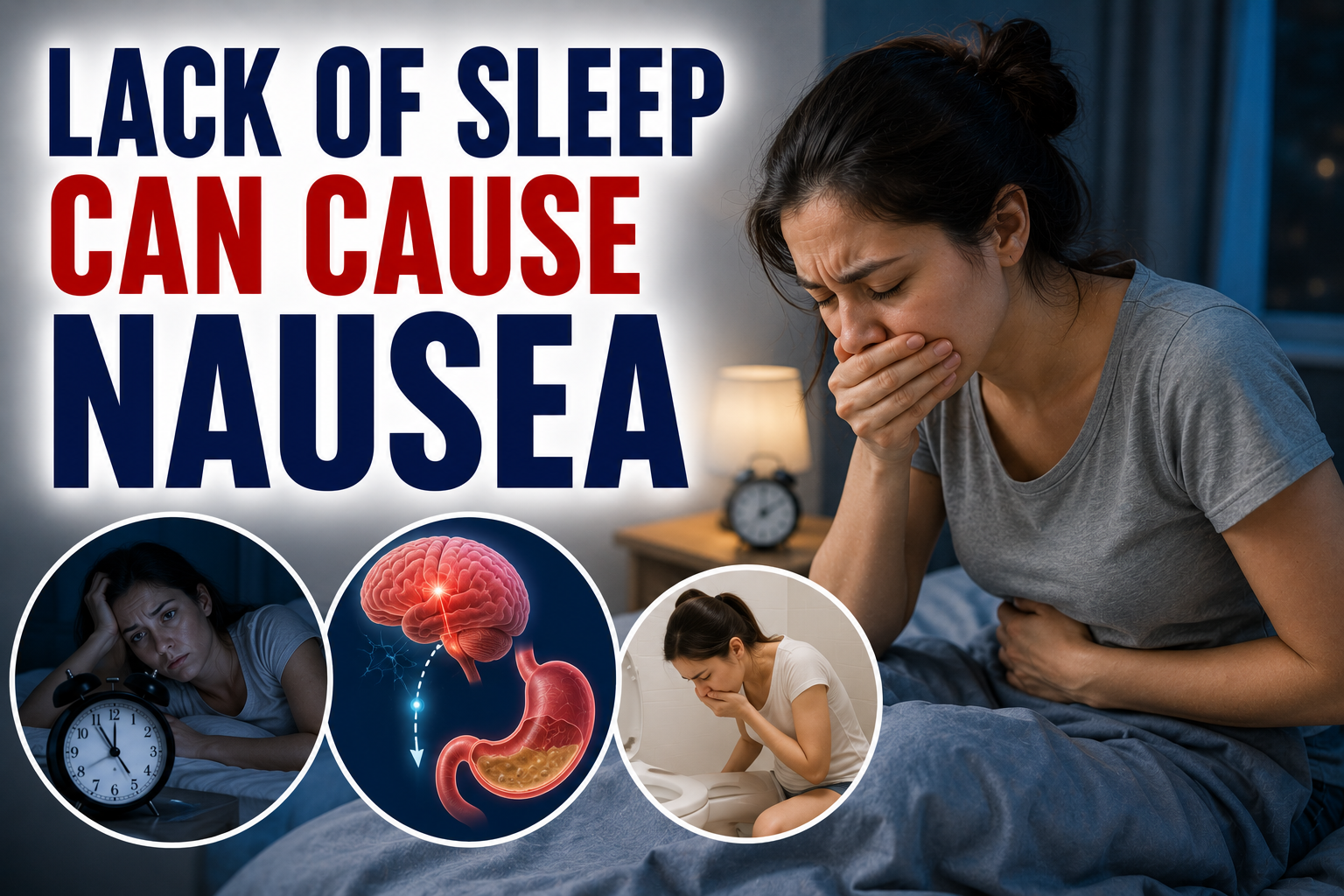
Yes, lack of sleep can cause nausea, and it’s more common than most people realize. You’ve probably woken up after a rough night feeling queasy, lightheaded, or like your stomach is in knots — without eating anything unusual. This guide explains the science behind sleep-related nausea, why it happens, and exactly what you can do to feel normal again.
By the end, you’ll understand the connection between your sleep cycle and your digestive system, know which symptoms are normal versus concerning, and have a clear action plan for relief tonight.
Key Takeaways
- Sleep deprivation disrupts the gut-brain axis, which can directly trigger nausea
- Low blood sugar from skipped sleep cycles often worsens queasy feelings
- Cortisol spikes from sleep loss can irritate the stomach lining
- Most sleep-related nausea resolves within a few hours of proper rest
- Chronic sleep loss combined with nausea may signal a deeper health issue
- Hydration and small meals can reduce symptoms within 30–60 minutes
Why Can Lack of Sleep Cause Nausea?
Sleep and digestion share more biological wiring than most people expect. Your gut contains its own nervous system, often called the “second brain,” which communicates constantly with your actual brain.
When you don’t sleep enough, this communication breaks down. The vagus nerve, which regulates both sleep cycles and stomach function, becomes overstimulated, and that imbalance can produce queasiness, bloating, or outright nausea.
Pro Tip: If nausea hits hardest in the morning after poor sleep, your blood sugar may have dropped overnight — eating a small protein-based snack before bed can help.
The Gut-Brain Connection Explained
Your digestive system relies on consistent circadian signals to know when to produce acid, move food along, and release digestive enzymes. Sleep deprivation scrambles these signals.
Researchers at the National Sleep Foundation note that disrupted circadian rhythms are linked to gastrointestinal discomfort, including nausea and irregular appetite.
How Stress Hormones Make It Worse
- Cortisol surges from sleep loss increase stomach acid production, which can cause queasiness or even mild stomach pain.
- Adrenaline spikes, common after all-nighters, redirect blood flow away from digestion, slowing it down and causing bloating.
- Reduced melatonin, which also plays a role in gut lining repair, leaves your stomach more sensitive overnight.
Sleep Deprivation and Nausea: What the Science Says
According to the Centers for Disease Control and Prevention (2024), more than one-third of American adults regularly get less sleep than recommended, a pattern strongly associated with fatigue-related physical symptoms including nausea and dizziness.



This matters because nausea from sleep loss isn’t a rare, isolated complaint — it’s a documented pattern tied to a measurable portion of the population.
Warning: If nausea persists for more than 24 hours even after a full night’s sleep, it may not be sleep-related. Rule out food poisoning, viral illness, or migraine before assuming fatigue is the cause.
Tired and Nauseous: Common Symptoms to Watch For
Sleep deprivation rarely shows up as nausea alone. It typically arrives with a cluster of related symptoms that point clearly to fatigue as the root cause.
- Lightheadedness or dizziness, especially when standing up quickly
- Headache pressure, often behind the eyes or at the temples
- Loss of appetite, paired with mild stomach discomfort
- Brain fog, making it hard to focus on simple tasks
- Irritability or mood swings, tied to disrupted hormone regulation
If three or more of these appear together after a poor night’s sleep, fatigue is very likely the trigger rather than something you ate.
Hypothetical Example (for illustration purposes):
Imagine someone who pulls an all-nighter studying for an exam, surviving on coffee instead of food or rest. By morning, they feel dizzy, queasy, and unable to focus. After eating a small meal, drinking water, and resting for two hours, the nausea fades completely.
Note: This scenario is illustrative. Actual results vary by individual health, hydration levels, and underlying conditions.
How Long Does Sleep-Deprivation Nausea Last?
For most healthy adults, nausea triggered by poor sleep fades within a few hours of catching up on rest, eating something light, and rehydrating. It’s a temporary physiological response, not a lingering illness.
However, chronic sleep restriction — getting less than six hours nightly for weeks at a time — can create a baseline of low-grade nausea that doesn’t fully disappear until sleep patterns normalize.
Short-Term vs. Long-Term Nausea Patterns
| Feature | Short-Term (One Bad Night) | Long-Term (Chronic Sleep Loss) |
| Onset | Within hours of waking | Gradual, builds over days/weeks |
| Duration | 2–6 hours typically | Persists until sleep improves |
| Best Fix | Food, water, short nap | Sleep schedule overhaul |
| Severity | Mild to moderate | Can become moderate to severe |
7 Ways to Relieve Nausea from Lack of Sleep
Most cases respond well to simple, immediate steps rather than medication.
- Drink water slowly — dehydration amplifies nausea, and sipping (not gulping) helps settle your stomach.
- Eat something bland, like crackers or toast, to stabilize blood sugar.
- Get fresh air for five to ten minutes; stuffy rooms can worsen queasiness.
- Take a short nap, even 20–30 minutes can reset hormone levels.
- Avoid screens and bright light, which can intensify nausea tied to fatigue.
- Try ginger tea, a well-documented natural remedy for stomach discomfort.
- Prioritize sleep that night, since the underlying cause needs actual rest, not just symptom relief.
Pro Tip: Combining hydration with a 20-minute nap resolves mild sleep-related nausea faster than either remedy alone.
When Sleep Deprivation and Nausea Signal Something More Serious
Occasional nausea after a bad night is normal. But persistent nausea paired with chronic sleep loss can point to underlying conditions worth checking with a doctor.
- Sleep apnea often causes morning nausea due to oxygen disruption during the night
- Anxiety disorders frequently combine insomnia with chronic stomach upset
- Migraine disorders can trigger both severe sleep disruption and nausea together
- Vestibular issues, affecting balance, often cause dizziness-driven nausea worsened by fatigue
The Mayo Clinic recommends consulting a physician if nausea continues for more than a week or is accompanied by unexplained weight loss or fever.
How to Prevent Sleep-Related Nausea Long-Term
Preventing sleep-related nausea is much more effective than relying on quick remedies every time it occurs. Developing healthy sleep habits helps reduce fatigue, supports normal digestion, and lowers the chances of waking up feeling nauseous.
Try to go to bed and wake up at the same time every day, including weekends, to keep your body’s internal clock balanced. Avoid eating heavy meals or drinking alcohol within three hours of bedtime, as both can interfere with sleep quality and upset your stomach.
It’s also a good idea to limit caffeine after the early afternoon since it can make it harder to fall asleep. Finally, create a dark, cool, and quiet sleeping environment to encourage deeper, more restful sleep. These simple lifestyle changes can improve both your sleep quality and overall well-being over time.
Frequently Asked Questions
Why do I feel nauseous when I don’t sleep enough?
Poor sleep raises cortisol and disrupts digestion timing, which together can irritate your stomach and cause queasiness, often paired with dizziness or headache.
Can sleep deprivation cause vomiting?
In severe or prolonged cases, yes — extreme fatigue can intensify nausea to the point of vomiting, though this is less common than mild queasiness alone.
How long does sleep-deprivation nausea last?
Most cases resolve within two to six hours after eating, hydrating, and resting, though chronic sleep loss may cause symptoms to persist longer.
What are the symptoms of severe sleep deprivation?
Severe sleep deprivation often includes nausea, dizziness, headaches, brain fog, irritability, and in extreme cases, hallucinations or impaired coordination.
Can lack of sleep cause dizziness and nausea together?
Yes, this combination is common because fatigue affects both blood pressure regulation and inner-ear balance, often producing dizziness alongside nausea.
When should I see a doctor for nausea from lack of sleep?
See a doctor if nausea lasts more than a week, occurs with fever or weight loss, or happens even after consistently good sleep.
Final Thoughts
Lack of sleep can definitely cause nausea by disrupting the gut-brain connection, hormones, and blood sugar levels. In many cases, the nausea improves with proper rest, hydration, and light meals.
However, if the symptoms are severe or keep coming back, it’s important to seek medical advice. Rather than only treating the nausea, focus on identifying and fixing the underlying cause of your poor sleep. Better sleep habits can improve both your overall health and digestive comfort.
Related posts
Is an Upper Respiratory Infection Contagious? What You Need to Know
How to Heal Cavities in 2 Days at Home: What Actually Works?
Can Carpal Tunnel Cause Arm Pain? Symptoms, Causes, and Treatment Options
Why Is My Stomach Bigger After Hernia Surgery? Causes, Recovery, and When to Worry
Dehydrated and Back Pain: Causes, Symptoms, Treatment, and Prevention