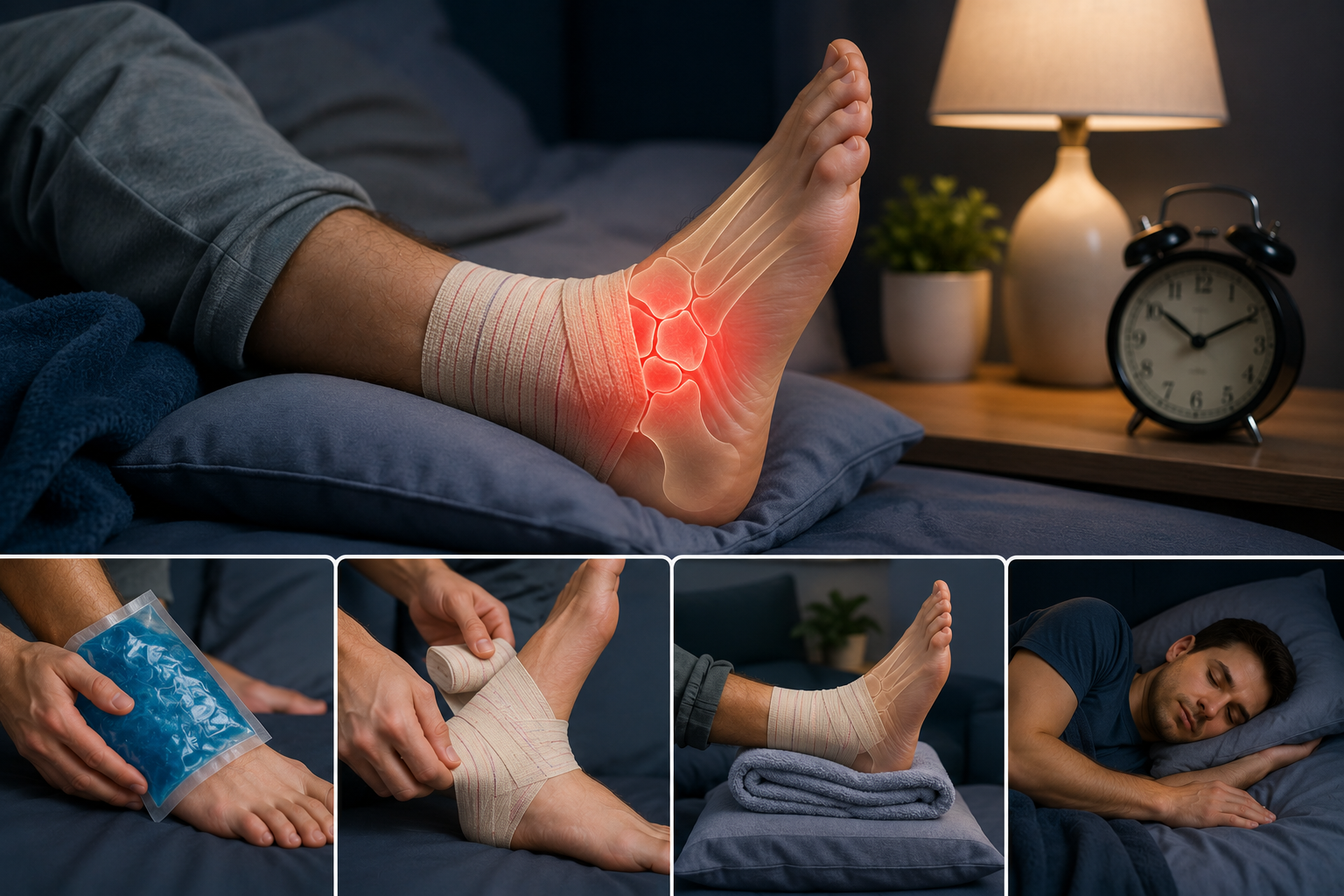
A sprained foot can turn a normal day into a painful struggle, especially when you need relief before morning. While no injury can fully heal overnight, there are proven ways to dramatically calm pain, reduce swelling, and support recovery while you sleep.
The key lies in acting quickly, applying the right first-aid steps in sequence, and avoiding habits that slow healing. This guide walks through exactly how to heal a sprained foot overnight using methods trusted by medical professionals, along with practical home care tips that make a real difference by morning.
Key Takeaways
- A sprained foot cannot completely heal in one night, but pain and swelling can be significantly reduced.
- The RICE method remains the most effective overnight treatment approach.
- Elevating the foot while sleeping helps control swelling naturally.
- Certain warning signs mean you should skip home care and see a doctor instead.
What Happens When You Sprain Your Foot?
A foot sprain occurs when the ligaments connecting your bones stretch or tear, usually from a sudden twist, misstep, or awkward landing. Depending on severity, doctors classify sprains into three grades, ranging from mild stretching to complete ligament rupture.
Understanding this helps set realistic expectations: while an overnight cure isn’t medically possible, the first few hours after injury are the most important window for limiting damage and controlling inflammation.
The RICE Method — Your First 24 Hours
RICE stands for Rest, Ice, Compression, and Elevation, and it remains the gold-standard approach recommended by orthopedic specialists for early sprain care. Applying each step correctly during the first night after injury can noticeably reduce swelling and discomfort by morning.
Rest
Avoid putting weight on the injured foot as much as possible during the first 24 to 48 hours. Continuing to walk on a sprain increases stress on already-damaged ligaments and can worsen the injury. Use crutches, a cane, or simply stay off your feet whenever you can.
Ice
Apply a cold pack wrapped in a thin cloth for fifteen to twenty minutes every two to three hours. Never place ice directly on bare skin, as this can cause frostbite or skin damage. This routine helps constrict blood vessels and limit swelling during the critical early hours.
Compression
Wrap the foot with an elastic bandage, starting from the toes and moving upward, using firm but not overly tight pressure. Proper compression limits fluid buildup around the joint. If you notice numbness, tingling, or increased pain, loosen the wrap immediately.



Elevation
Prop your foot above heart level, especially while sleeping, using pillows or a cushioned support. Gravity helps drain excess fluid away from the injury site overnight. This single step is one of the most effective ways to wake up with noticeably less swelling.
Overnight Pain and Swelling Relief Tips
Beyond the RICE method, a few additional steps can make your night more comfortable. Over-the-counter anti-inflammatory medication such as ibuprofen can help control both pain and swelling, though it should be taken according to label instructions and personal health considerations.
Keeping a cold compress within reach for reapplication, sleeping in a slightly reclined position, and avoiding tight bedding around the foot all contribute to better rest. Choosing the right cold therapy tool also matters, as shown in the comparison below.
| Cold Therapy Option | Best For | Duration of Use |
| Traditional ice pack | Quick, immediate relief | 15-20 minutes per session |
| Reusable gel wrap | Overnight or extended use | Up to 30 minutes, reapply as needed |
| Cold compression sleeve | Combined icing and support | 20 minutes, adjustable pressure |
Each option supports the same goal, controlling inflammation, but the right choice depends on comfort and how long you plan to keep it in place while resting.
What NOT to Do in the First 24 to 48 Hours
Certain common habits can unintentionally worsen a sprain during the early recovery period. Avoiding these mistakes is just as important as following the RICE method correctly.
- Applying heat, which increases blood flow and can worsen swelling
- Drinking alcohol, which promotes fluid retention and slows healing
- Massaging the injured area too soon after the sprain occurs
- Attempting to walk normally or exercise on the injured foot
Steering clear of these actions gives your foot the best possible environment to begin healing without added stress on the ligaments.
Signs Your Sprain Might Be a Fracture
Not every foot injury is a simple sprain, and it’s important to recognize when something more serious may be happening. If you experience numbness, an inability to bear any weight, visible deformity, or pain that intensifies rather than improves, these could indicate a fracture rather than a soft tissue injury. In such cases, home remedies alone will not be sufficient, and professional evaluation becomes necessary to avoid long-term complications.
Natural and Home Remedies That Support Healing
Once the initial swelling phase has passed, usually after the first 48 hours, additional home remedies can support ongoing recovery. An Epsom salt soak may help relax surrounding muscles, though it should be avoided during the acute swelling stage. Anti-inflammatory foods such as turmeric, ginger, and leafy greens can complement recovery as part of a balanced diet. Gentle ankle movements, like slow circular motions once pain subsides, help maintain flexibility without straining the healing ligament.
- Epsom salt soak after the acute swelling phase
- Anti-inflammatory foods included in daily meals
- Light ankle mobility exercises once pain decreases
These remedies work best as a complement to RICE, not a replacement for it.
Recovery Timeline — What to Expect Day by Day
Healing speed depends on sprain severity, but a general pattern applies to most cases.
| Timeframe | What to Expect |
| Day 1-2 | Swelling and pain are at their peak; RICE method is essential |
| Day 3-5 | Swelling begins to reduce; gentle movement may start |
| Week 1-2 | Mild sprains show noticeable improvement in mobility |
| Week 3-6 | Moderate to severe sprains continue strengthening and healing |
This timeline offers a general guide, though individual recovery can vary based on how the injury is managed early on.
When to See a Doctor
If pain remains severe after two to three days, if you cannot bear weight at all, or if swelling continues to worsen instead of improving, it’s time to consult a medical professional. A doctor can rule out fractures through imaging and recommend a tailored recovery plan, particularly for sprains that don’t respond to standard home care.
Frequently Asked Questions
Can a sprained foot heal overnight?
No, ligament healing takes days to weeks, but overnight care can significantly reduce pain and swelling.
Is it okay to walk on a sprained foot?
Walking should be avoided for the first 24 to 48 hours to prevent further ligament damage.
How long should I ice a sprained foot?
Fifteen to twenty minutes at a time, repeated every two to three hours during the first day.
Should I wrap my foot while sleeping?
Light compression is generally safe overnight as long as it isn’t too tight and doesn’t restrict circulation.
What’s the difference between a sprain and a fracture?
A sprain involves ligament damage, while a fracture involves a broken bone, often requiring imaging to confirm.
Can I use heat instead of ice?
Heat should be avoided in the first 48 hours, as it can increase swelling rather than reduce it.
Conclusion
While a sprained foot cannot be completely healed overnight, following the RICE method, avoiding harmful habits, and using smart home care can make a real difference by morning.
Paying attention to warning signs and knowing when professional care is needed ensures the injury heals properly without complications.
RELATED POSTS
Does Everyone Have Wisdom Teeth? Here’s What the Research Shows
How to Sleep With a Stuffy Nose: 10 Proven Fixes That Actually Work
How to Relieve Tooth Pain From Sinus Pressure: A Complete Guide
Knee Pain Walking Up Down Stairs: Causes & Real Fixes
Is an Upper Respiratory Infection Contagious? What You Need to Know