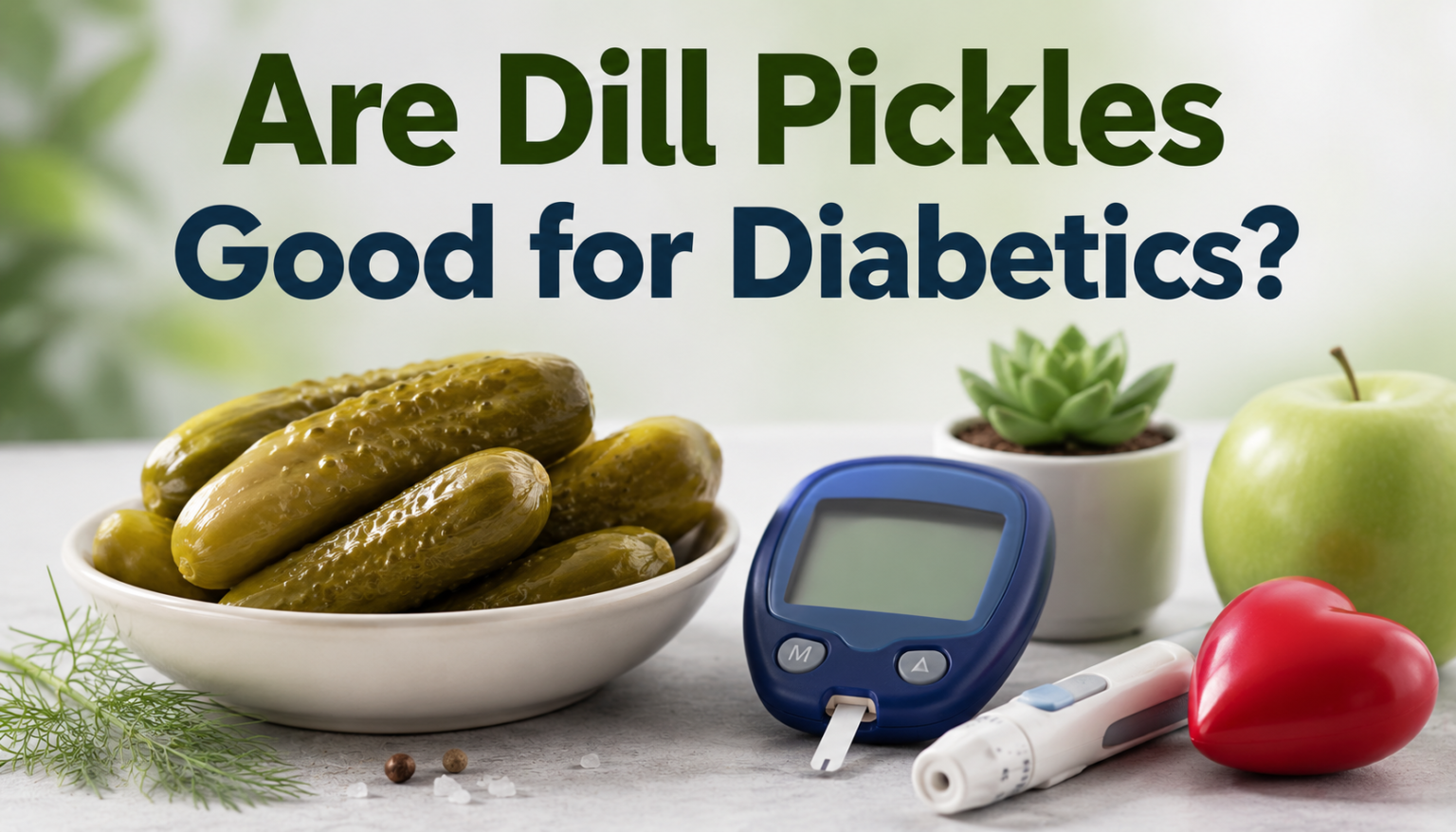
Dill pickles are a low-calorie, low-sugar snack that many people with diabetes wonder about when planning meals. The short answer is that dill pickles can be a diabetic-friendly food in moderate amounts, mainly because they contain very few carbohydrates and no added sugar in their traditional form.
Their vinegar base may even offer a mild benefit for blood sugar control after meals. However, dill pickles are also high in sodium, which means portion size and frequency matter for anyone managing diabetes alongside blood pressure or kidney concerns.
This guide explains the nutrition facts, benefits, and risks of dill pickles for diabetics in detail, along with practical tips on choosing and eating them safely. By the end, you will know exactly how dill pickles fit into a diabetes-friendly eating plan.
Nutritional Profile of Dill Pickles
Before deciding whether dill pickles suit a diabetic diet, it helps to look closely at what they actually contain. The sections below break down carbohydrates, sodium, and other nutrients found in a typical serving.
Carbohydrate and Sugar Content
A medium dill pickle spear generally contains only about one to two grams of carbohydrates and almost no natural or added sugar. This is because dill pickles are cucumbers preserved in a salty vinegar brine rather than a sugary syrup. This low-carb quality is one of the main reasons dill pickles are considered acceptable for people watching their blood glucose levels.
Sodium Content
A single dill pickle spear can contain anywhere from 300 to 500 milligrams of sodium, depending on the brand and brining process. This is a significant portion of the recommended daily sodium intake, which becomes especially important for diabetics who also need to manage blood pressure. Reading nutrition labels before buying a jar can help avoid excess sodium intake.
Calories, Fiber, and Other Nutrients
Dill pickles are very low in calories, usually around 5 to 15 calories per spear, making them a filling snack without adding much to daily calorie totals. They contain small amounts of fiber from the cucumber itself, along with trace vitamins such as vitamin K. These nutrients are modest but still contribute positively to an overall balanced diet.
| Nutrient (per 100g) | Dill Pickles | Sweet Pickles | Fresh Cucumber |
| Calories | 11-15 kcal | 120-150 kcal | 15 kcal |
| Carbohydrates | 2-3 g | 30-35 g | 3.6 g |
| Sugar | 0-1 g | 25-28 g | 1.7 g |
| Sodium | 1200-1300 mg | 600-800 mg | 2 mg |
How Dill Pickles Affect Blood Sugar
Understanding how dill pickles interact with blood glucose requires looking at both their glycemic index and the role vinegar plays in digestion. These two factors together explain why dill pickles are often viewed favorably in diabetic nutrition discussions.



Glycemic Index and Glycemic Load
Dill pickles have a very low glycemic index, generally scored under 15, since they contain almost no digestible carbohydrate that would spike blood sugar. Their glycemic load is similarly low, meaning even a moderate serving is unlikely to cause a noticeable rise in blood glucose. This makes them one of the safer snack choices compared to starchy or sugary alternatives.
Role of Vinegar in Blood Sugar Regulation
The vinegar used to brine dill pickles contains acetic acid, which some research suggests can slightly slow the digestion of carbohydrates and improve insulin sensitivity. Consuming vinegar-based foods alongside a meal may help blunt the post-meal blood sugar spike that often follows carbohydrate-heavy dishes. While the effect is modest, it adds another reason dill pickles are considered diabetes-friendly.
Benefits of Dill Pickles for Diabetics
Dill pickles offer several practical advantages for people managing diabetes, from their carbohydrate profile to their role as a satisfying snack. The points below outline the main benefits in detail.
Low-Carb Snacking Option
For diabetics who need to limit carbohydrate intake throughout the day, dill pickles provide a crunchy, flavorful snack without contributing meaningfully to carb counts. This makes them useful when a person wants something to eat between meals without affecting insulin dosing calculations. They can also satisfy salty or savory cravings that might otherwise lead to less suitable snack choices.
Potential Blood Sugar Stabilizing Effects
As mentioned earlier, the acetic acid in pickle brine may support more stable blood sugar levels when eaten with a meal. Some diabetics use a small serving of pickles alongside a higher-carb dish specifically for this reason. This effect should be viewed as a helpful addition rather than a replacement for prescribed diabetes management strategies.
Hydration and Electrolyte Content
Because pickles are mostly water, they can contribute mildly to daily fluid intake while also providing electrolytes like sodium and potassium. This can be useful in small amounts, particularly for active individuals. However, this benefit should not be used as a reason to overconsume pickles, since the sodium content works both ways.
Risks and Concerns for Diabetics
Despite their benefits, dill pickles are not risk-free for every diabetic, especially those managing related health conditions. The following points highlight what to watch for before making pickles a regular part of the diet.
High Sodium and Cardiovascular or Kidney Risk
Diabetes often coexists with high blood pressure or early kidney concerns, and excess sodium from pickles can worsen both conditions over time. Regularly eating multiple pickles a day may push sodium intake well beyond recommended limits. Diabetics with hypertension or kidney disease should be particularly cautious and consult their doctor about safe portions.
Added Sugars in Some Pickle Varieties
Not all pickles are created equal, and sweet or bread-and-butter style pickles often contain significant added sugar to balance the vinegar tartness. These varieties can raise blood sugar in ways that plain dill pickles do not. Always check the label to confirm a product is a true dill pickle rather than a sweetened version.
Impact on Blood Pressure
Even without an existing diagnosis of hypertension, consistently high sodium intake from pickles and other processed foods can gradually raise blood pressure over time. For diabetics, elevated blood pressure increases the risk of heart and vascular complications. Moderating pickle consumption helps keep this risk in check while still allowing occasional enjoyment.
Dill Pickles vs Other Pickle Types
Choosing the right pickle variety makes a meaningful difference for blood sugar and sodium management. The table below compares common pickle types across the factors that matter most for diabetics.
| Pickle Type | Carbs (per spear) | Sugar | Sodium Level |
| Dill Pickles | 1-2 g | None to minimal | High |
| Sweet Pickles | 4-5 g | High | Moderate |
| Bread-and-Butter | 5-6 g | High | Moderate |
| Fermented Pickles | 1-2 g | None to minimal | Moderate to High |
How to Choose the Best Pickles as a Diabetic
Selecting the right jar of pickles at the store involves more than just picking a familiar brand name. The tips below explain what to look for on labels and in ingredient lists.
Reading Nutrition Labels
Always check the total carbohydrate and sugar columns on the nutrition label before buying pickles, since some brands add sugar even to products labeled as dill. Comparing a few brands side by side can reveal meaningful differences in sodium and sugar content. This small habit can prevent unwanted blood sugar surprises.
Low-Sodium and No-Sugar-Added Options
Many grocery stores now stock low-sodium dill pickle varieties specifically designed for people managing blood pressure or heart conditions. These options retain the tangy flavor while cutting sodium by a significant margin compared to regular pickles. Choosing these products allows diabetics to enjoy pickles more freely.
Naturally Fermented vs Vinegar-Brined
Naturally fermented pickles are made through a lacto-fermentation process rather than a vinegar bath, and they often contain beneficial probiotics that support gut health. Vinegar-brined pickles, meanwhile, offer the acetic acid benefits discussed earlier. Both types can fit a diabetic diet, so the choice often comes down to personal preference and sodium content.
How Many Dill Pickles Can a Diabetic Eat?
Portion control is the deciding factor in whether dill pickles help or hurt a diabetes management plan. The guidelines below offer a practical starting point.
Recommended Serving Size
Most nutrition guidance suggests limiting dill pickle intake to one or two spears, or about 30 to 60 grams, in a single sitting. This amount provides flavor and the potential vinegar benefit without excessive sodium exposure. Larger servings should be balanced against sodium intake from other meals that day.
Frequency Guidelines
Eating dill pickles a few times per week, rather than daily, is a reasonable approach for most diabetics without additional sodium-sensitive conditions. Those with hypertension or kidney disease may need to limit intake further, even at small portions. Spacing out consumption helps keep overall sodium levels manageable.
Tips for Incorporating Dill Pickles into a Diabetic-Friendly Diet
Small adjustments to how and when pickles are eaten can make them a smarter addition to daily meals.
• Pair a small serving of pickles with a protein source, such as a boiled egg or grilled chicken, to create a balanced snack.
• Rinse pickles briefly under water before eating to remove some surface sodium from the brine.
• Choose homemade or reduced-sodium pickles when possible for better control over ingredients.
• Avoid pairing pickles with other high-sodium foods, such as processed meats, in the same meal.
• Track sodium intake for the day if pickles are eaten regularly, to stay within safe limits.
When to Avoid Dill Pickles?
Certain health situations call for extra caution or avoidance of dill pickles altogether. The points below explain when this applies.
Hypertension or Kidney Disease Considerations
Diabetics who also have high blood pressure or reduced kidney function are typically advised to follow stricter sodium limits than the general population. In these cases, even small servings of dill pickles may need to be reduced or avoided. A registered dietitian can help set a personalized sodium target.
Consulting a Doctor or Dietitian
Anyone unsure about how pickles fit into their specific diabetes management plan should speak with a doctor or dietitian before making them a regular habit. Individual factors like medication, kidney function, and overall diet all influence how much sodium is safe. Professional guidance ensures pickles are enjoyed without unintended health risks.
Frequently Asked Questions
Are dill pickles keto-friendly for diabetics?
Yes, dill pickles are naturally low in carbohydrates, which makes them compatible with both keto and diabetic-friendly eating patterns when eaten in moderate amounts.
Can pickle juice help lower blood sugar?
Some small studies suggest the vinegar in pickle juice may modestly reduce post-meal blood sugar spikes, but it should not replace prescribed diabetes treatment.
Are pickles good for type 2 diabetes specifically?
Dill pickles can be a suitable low-carb snack for type 2 diabetes, provided sodium intake is monitored alongside other meals throughout the day.
How much sodium is too much for a diabetic?
Most health authorities recommend diabetics keep daily sodium intake under 2,300 milligrams, with lower targets often advised for those with high blood pressure.
Conclusion
Dill pickles can be a smart, low-carb snack choice for most diabetics when eaten in sensible portions. Their minimal sugar and carbohydrate content, along with the possible blood-sugar-friendly effects of vinegar, make them a reasonable addition to a diabetes-conscious diet.
The main caution is sodium, which can add up quickly and affect blood pressure or kidney health if consumed in excess. Choosing low-sodium or naturally fermented varieties, sticking to one or two spears at a time, and pairing pickles with balanced meals all help minimize risk.
Related Articles
Are Dentists Physicians? Understanding the Difference Between Dentists and Medical Doctors
Can Being Sick Delay Your Period? Causes, Timeline and When to Worry
Can root canals cause cancer? What the science actually says