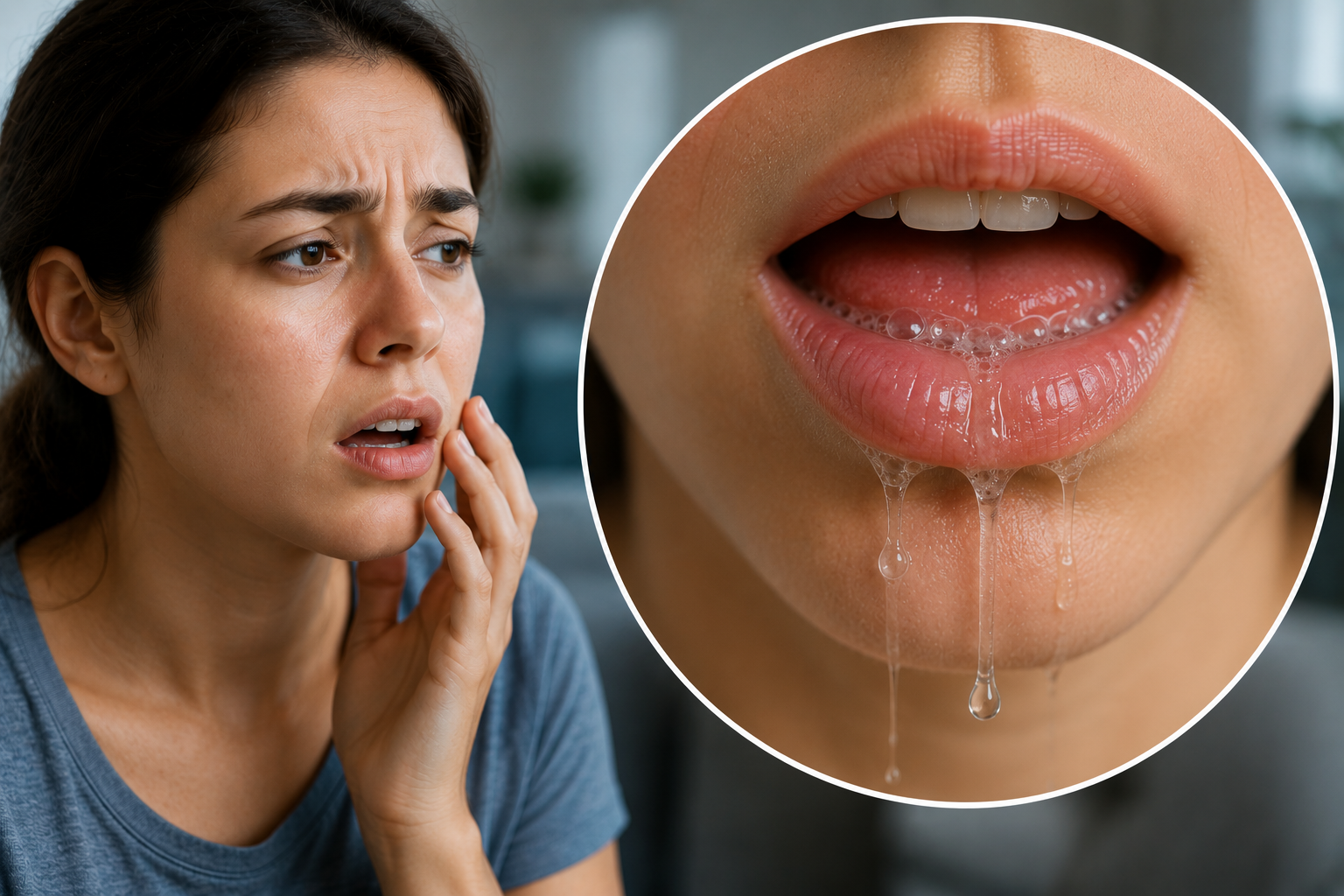
A sudden increase in saliva, medically known as sialorrhea or hypersalivation, is a common and usually harmless experience. It happens when your salivary glands produce more fluid than your mouth can comfortably manage, leading to a feeling of excess wetness or the urge to swallow often.
In most cases, it is triggered by something temporary, such as nausea, a meal, or an oral irritation, and settles on its own within a short time. Understanding why is my mouth producing so much saliva suddenly can help you tell apart a harmless, passing reaction from a sign that needs medical attention.
This guide walks through the everyday and the more serious causes, explains what accompanying symptoms to watch for, and outlines simple steps you can take at home. By the end, you will know exactly when to relax and when to book a doctor’s visit.
What Is Excessive Saliva Production (Sialorrhea)?
Sialorrhea simply means your salivary glands are working overtime compared to what your mouth needs at that moment. The sections below explain how normal output differs from true excess, and why a sudden change deserves a closer look.
Normal Saliva Production vs. Hypersalivation
On an average day, the salivary glands make roughly one to two litres of saliva to keep the mouth moist, aid digestion, and protect teeth from decay. Hypersalivation is diagnosed when this output rises noticeably above your usual baseline, often making swallowing feel constant or causing saliva to pool at the back of the mouth. The difference is usually easy to notice because it feels distinctly unlike your everyday level of wetness.
Common Causes of Sudden Increased Saliva
Most cases of sudden excess saliva trace back to a handful of everyday triggers rather than anything alarming. Each cause below has its own pattern of onset and its own set of accompanying clues.
Pregnancy (Ptyalism Gravidarum)
Many people notice a surge in saliva during early pregnancy, a condition called ptyalism gravidarum, which is thought to be linked to hormonal shifts and heightened nausea. It usually appears alongside morning sickness in the first trimester and tends to ease as pregnancy progresses. While uncomfortable, it is not considered dangerous to the pregnancy itself.
Acid Reflux/GERD
When stomach acid rises into the esophagus, the salivary glands respond by producing more saliva to help neutralise and wash the acid back down, a reflex known as water brash. This is often accompanied by a burning sensation in the chest, a sour taste, or bloating after meals. Frequent reflux-related saliva surges are a signal that the underlying acid problem needs proper management.



Nausea and Vomiting
Nausea from illness, motion sickness, food poisoning, or migraines commonly triggers a burst of saliva just before or during the queasy feeling. This is the body’s way of preparing to protect the teeth and throat in case vomiting follows. Once the nausea passes, saliva production typically returns to normal within a short window.
Oral Infections, Mouth Sores, or Dental Issues
Infections in the gums, a developing abscess, canker sores, or irritation from a new dental appliance can all prompt the glands to produce extra saliva as a protective, cleansing response. This is often paired with localised pain, swelling, or an unpleasant taste. The saliva usually settles once the underlying oral issue is treated.
Sinus Infections and Allergies
Excess mucus from sinus congestion or seasonal allergies can drain into the throat and mix with saliva, creating the sensation of producing far more fluid than usual. Sneezing, a blocked or runny nose, and postnasal drip typically accompany this pattern. Treating the underlying sinus or allergy issue generally resolves the extra saliva as well.
Comparison Table: Causes, Duration & Accompanying Symptoms
The table below lines up the most common causes side by side, making it easier to match your own pattern of symptoms to a likely explanation before deciding on next steps.
| Cause | Typical Duration | Common Accompanying Symptoms | Needs Medical Care? |
| Pregnancy (ptyalism) | First trimester, fades after | Nausea, morning sickness, heartburn | Rarely |
| Acid reflux/GERD | Recurs after meals or at night | Burning chest, sour taste, bloating | If frequent |
| Nausea/vomiting | Hours, until nausea passes | Queasiness, dizziness, sweating | If persistent |
| Oral infection/mouth sores | Days to a week | Pain, swelling, bad taste | Yes, if worsening |
| Sinus infection/allergies | Days to weeks | Congestion, postnasal drip, sneezing | If prolonged |
| Medication side effect | Ongoing while on the drug | Drowsiness, dry mouth alternating | Discuss with doctor |
| Anxiety/stress | Minutes to hours | Racing heart, sweating, tension | If frequent |
| Toxin/spoiled food exposure | Sudden onset, hours | Nausea, stomach cramps, vomiting | Yes, promptly |
Neurological & Medical Conditions Linked to Hypersalivation
When excess saliva becomes a long-term pattern rather than a one-off episode, an underlying neurological or medical condition affecting swallowing control is often responsible. The conditions below are the ones doctors typically consider.
Parkinson’s Disease
Parkinson’s disease can slow the automatic swallowing reflex, causing saliva to accumulate in the mouth even though production itself may be normal. This is sometimes referred to as drooling rather than true overproduction. It is usually accompanied by other movement-related symptoms such as tremor or stiffness.
Stroke or Bell’s Palsy
Damage to the nerves controlling facial and throat muscles, as seen after a stroke or with Bell’s palsy, can make it harder to keep saliva contained or to swallow it efficiently. Sudden facial drooping, slurred speech, or weakness on one side of the body alongside excess saliva is a medical emergency. This combination should never be dismissed as a minor issue.
GERD-Related Nocturnal Drooling
Reflux that worsens while lying down can lead to noticeably more saliva pooling overnight, sometimes resulting in drooling on the pillow. This pattern is usually most noticeable upon waking rather than throughout the day. Elevating the head during sleep often reduces this specific type of excess saliva.
Swallowing Disorders (Dysphagia)
Conditions that make swallowing physically difficult, whether from muscle weakness, structural issues, or nerve damage, can cause saliva to build up simply because it is not being cleared efficiently. This often comes with a sensation of food sticking or frequent throat clearing. A swallowing evaluation is usually needed to pinpoint the exact cause.
Is Sudden Excess Saliva Dangerous?
For most people, a sudden saliva increase is an inconvenience rather than a danger sign. The two sections below help separate the harmless pattern from the one that warrants urgent attention.
Signs It’s Harmless
If the extra saliva appeared alongside a meal, a wave of nausea, or a known trigger like pregnancy or a new medication, and it settles within a few hours to a couple of days, it is almost always harmless. There is usually no pain, no difficulty breathing, and no change in speech. These episodes typically resolve on their own without any treatment.
Red-Flag Symptoms to Watch For
Excess saliva that appears together with difficulty swallowing, facial drooping, slurred speech, sudden weakness, or trouble breathing should be treated as a medical emergency. These combinations can point toward a stroke, severe allergic reaction, or airway obstruction. Anyone noticing this pattern should seek emergency care immediately rather than waiting to see if it improves.
When to See a Doctor?
Most sudden saliva episodes resolve without intervention, but certain patterns cross the line from a temporary nuisance into something worth a professional evaluation. The sections below outline exactly when that line is crossed.
Persistent Symptoms Lasting More Than a Few Days
If excess saliva continues beyond a few days without an obvious trigger, or keeps returning in cycles, it is reasonable to schedule a check-up. A doctor can rule out ongoing reflux, an unresolved infection, or a medication issue. Persistence without explanation is generally the clearest signal that self-monitoring alone is not enough.
Symptoms Combined With Neurological Signs
Any excess saliva paired with slurred speech, facial weakness, tremor, or difficulty controlling swallowing should prompt a same-day medical visit rather than a routine appointment. These combinations suggest the nervous system, rather than a temporary irritant, is involved. Early evaluation allows for faster diagnosis and treatment planning.
Diagnostic Tests Doctors May Use
A doctor may start with a physical examination of the mouth, throat, and neck, followed by a review of current medications and recent illnesses. Depending on findings, they might order imaging, a swallowing study, or blood tests to check for infection or nerve involvement. The specific tests chosen depend heavily on which other symptoms are present alongside the excess saliva.
How to Manage and Reduce Excess Saliva at Home?
For mild, non-urgent cases, several simple home adjustments can noticeably reduce how much saliva builds up during the day. These target the most common everyday triggers described earlier.
Hydration and Dietary Adjustments
Staying well hydrated and limiting starchy or sugary foods can help keep saliva at a more manageable, balanced level. Eating smaller, more frequent meals rather than large ones also tends to ease nausea-related saliva spikes. Cutting back on foods that commonly trigger reflux, such as spicy or fatty dishes, offers additional benefit.
Reflux Management Tips
Avoiding meals within a few hours of bedtime, elevating the head while sleeping, and steering clear of known reflux triggers such as caffeine and citrus can significantly cut down on reflux-driven saliva. Over-the-counter antacids may offer short-term relief for occasional flare-ups. Consistent reflux control tends to reduce the associated saliva increase within days.
Oral Hygiene Practices
Keeping the mouth clean with regular brushing, flossing, and a mild antiseptic rinse can calm irritation from minor infections or sores that trigger extra saliva. Addressing a loose filling, ill-fitting denture, or other dental irritant promptly also helps. Good oral hygiene supports faster healing of any underlying irritation.
Anti-Nausea Remedies
Ginger tea, peppermint, and small sips of cold water are commonly used gentle remedies for nausea-related saliva increases. Resting in a well-ventilated space and avoiding strong odours can also help settle queasiness faster. If nausea is frequent or severe, discussing anti-nausea medication with a doctor is a reasonable next step.
Medical Treatments for Chronic Hypersalivation
When excess saliva becomes a persistent, long-term issue tied to an underlying condition, doctors have several targeted treatment options available. These are generally reserved for cases that do not respond to home management.
Anticholinergic Medications
Certain prescription medications work by reducing the signals that stimulate the salivary glands, cutting down overall saliva output. These are typically considered for chronic conditions like Parkinson’s disease rather than short-term triggers. Doctors weigh the benefits against potential side effects such as dry mouth or constipation before prescribing them.
Botox Injections for Severe Cases
Botulinum toxin injections directly into the salivary glands can meaningfully reduce saliva production for several months at a time. This option is generally reserved for more severe, treatment-resistant cases, often linked to neurological conditions. Effects are temporary, so repeat treatments are usually needed to maintain results.
Frequently Asked Questions
Is It Normal to Suddenly Produce More Saliva?
Yes, a temporary increase is common and usually linked to eating, nausea, or a passing irritation, and it is not typically a cause for concern on its own.
Can Anxiety Cause Excess Saliva?
In some people, stress can trigger a short burst of extra saliva alongside other physical stress responses, even though dry mouth is the more typical anxiety reaction.
Does Excess Saliva Mean Pregnancy?
It can be an early pregnancy sign for some people, particularly alongside morning sickness, but it also has many non-pregnancy-related causes.
How Long Does Hypersalivation Last?
Most trigger-related episodes resolve within a few hours to a couple of days, while chronic, condition-related cases may persist until the underlying issue is treated.
Can Excess Saliva Be a Sign of Something Serious?
Occasionally, especially when paired with facial drooping, slurred speech, or swallowing difficulty, it can signal a neurological emergency that needs immediate medical attention.
Conclusion
A sudden rise in saliva is, in the vast majority of cases, a temporary response to something ordinary like a meal, mild nausea, or early pregnancy, and it resolves on its own without treatment.
Paying attention to accompanying symptoms is the key to knowing when to simply wait it out and when to seek medical advice. If the excess saliva is paired with difficulty swallowing, facial weakness, or slurred speech, treat it as urgent and get checked immediately.
Related Articles
Abbeville Community Health Center: Services, Programs, Benefits, and Patient Care Guide
Can a Torodol Shot Help Neck Pain? Benefits, Risks, and What to Expect
Kill Tooth Pain Nerve in 3 Seconds Permanently: Is It Really Possible?
How Long Does Pre-Workout Last? Duration, Factors & Timing Guide
How to Heal a Sprained Foot Overnight: Fast Relief Tips That Work