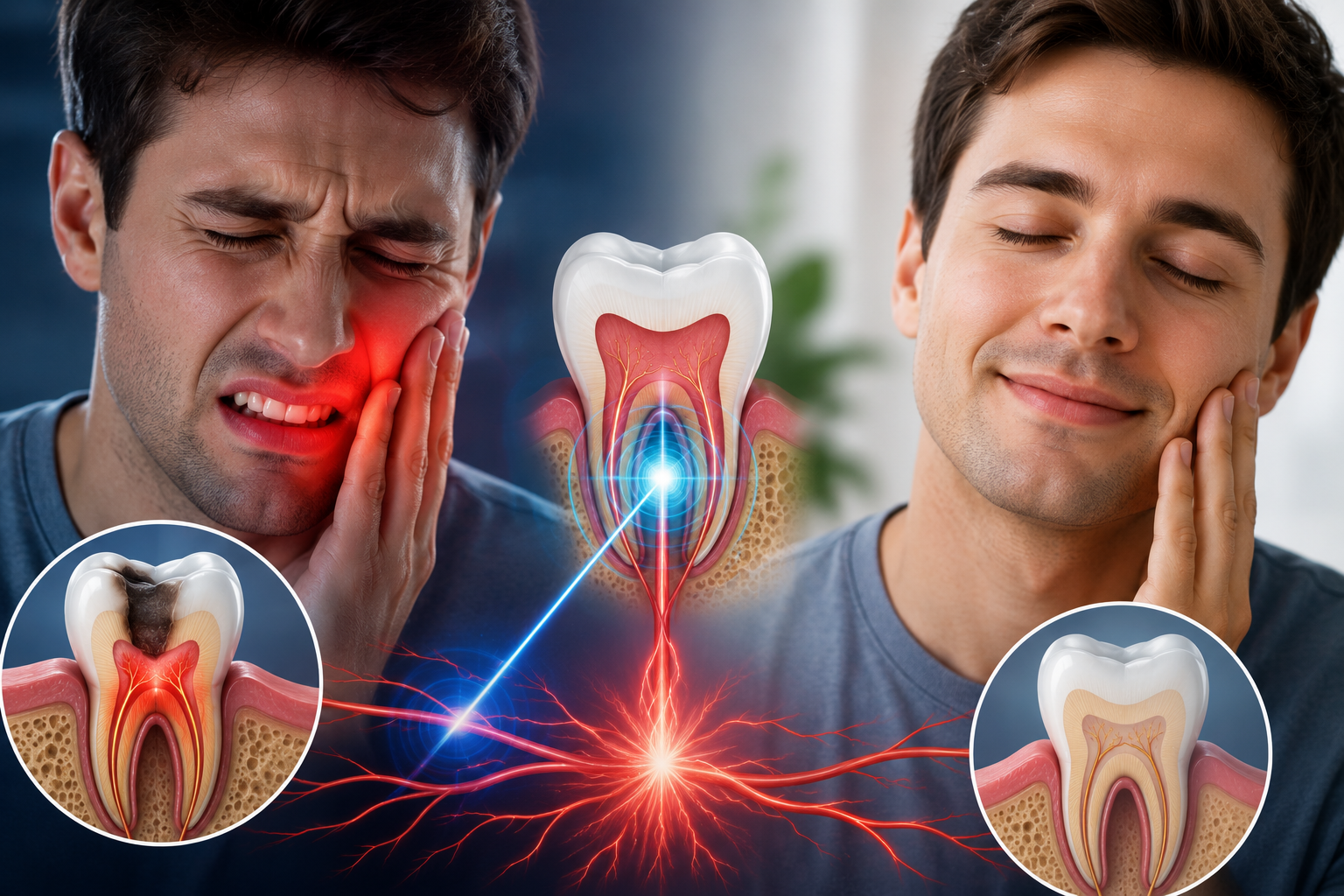
If you are searching for a way to kill tooth pain nerve in 3 seconds permanently, you are probably dealing with sharp, sudden pain and want instant relief. This phrase has become popular online because of short videos promising an overnight cure, but the truth is more complicated than a quick trick.
A tooth nerve cannot be destroyed in seconds through any home remedy, no matter how convincing the claim sounds. What actually works is temporary numbing combined with proper dental treatment. This guide breaks down the real science, safe pain relief methods, and when professional care becomes necessary.
Key Takeaways
No home remedy can kill a tooth nerve in 3 seconds permanently, since actual nerve removal only happens through a dental procedure such as a root canal or extraction. Certain natural ingredients like clove oil can numb pain temporarily, but they do not eliminate the nerve itself.
Ignoring nerve pain for too long increases the risk of infection spreading to the jaw or bloodstream. If pain comes with swelling, fever, or a foul taste, same-day dental care is strongly recommended rather than continued home treatment.
Why Has This Search Term Become So Popular?
Short-form videos on social platforms often exaggerate quick fixes because catchy claims get more views and shares than realistic explanations. Many people searching this phrase are not looking for a science lesson; they simply want their pain to stop right now, which makes them more likely to try unverified tricks shared online.
Where the Viral Claim Originated
Most versions of this claim trace back to short clips showing someone applying a substance like garlic paste, clove oil, or crushed ice directly onto a painful tooth and reporting instant relief. The dramatic before-and-after reaction is what spreads quickly, even though the underlying nerve was never actually destroyed. These videos rarely explain that the sensation fades once the temporary numbing effect wears off.
What People Actually Mean When They Search This
In most cases, what someone really wants is fast pain relief rather than literal nerve destruction. The phrase has simply become a shorthand way of asking, “How do I make this pain stop immediately.” Understanding this difference is important because it shapes which remedies are realistic versus which ones overpromise results they cannot deliver.
Is It Really Possible to Kill a Tooth Nerve in Seconds?
No topical remedy, natural ingredient, or home technique can physically destroy nerve tissue inside a tooth within seconds. Nerve removal is a clinical procedure that requires specific tools and training, not something achievable through kitchen ingredients or pressure points.



How a Tooth Nerve Is Actually Removed
During a root canal, a dentist numbs the area, creates a small opening in the tooth, and carefully removes the inflamed or infected nerve tissue from inside the root canals using fine instruments. The empty space is then cleaned, disinfected, and sealed to prevent future infection. This entire process typically takes one or two appointments, not a few seconds.
Why No Home Remedy Can Instantly Destroy Nerve Tissue
Nerve tissue is protected deep inside the tooth structure, surrounded by dentin and enamel, so surface-level substances cannot physically reach or destroy it. Ingredients like clove oil work by numbing the surrounding area temporarily, which reduces pain signals without touching the nerve itself. This is why relief feels real but is never permanent on its own.
What Can Actually Relieve Tooth Nerve Pain Fast?
While nothing kills the nerve instantly, several methods can meaningfully reduce pain within minutes while you arrange proper treatment. These options work by numbing the area, reducing inflammation, or calming the nerve temporarily rather than destroying it.
Clove Oil for Temporary Numbing
Clove oil contains eugenol, a natural compound with numbing and mild antibacterial properties. Applying a small amount to a cotton ball and placing it near the painful tooth can dull the sensation for a short period, making it one of the more effective short-term options available at home.
Cold Compress Application
Holding a cold compress against the outside of the cheek near the painful tooth helps constrict blood vessels and reduce inflammation, which lessens throbbing pain. This method works especially well when swelling accompanies the pain, though it should never be applied directly to the tooth itself.
Saltwater Rinse
A warm saltwater rinse helps reduce bacteria and gently clean the affected area, which can ease irritation if the pain is related to gum inflammation or minor infection. This remedy is simple, low-risk, and often used alongside other pain relief methods rather than as a standalone fix.
Over-the-Counter Pain Relievers
Medications such as ibuprofen or acetaminophen work systemically to reduce pain and inflammation throughout the body, including around an affected tooth. These are widely considered one of the more reliable short-term options, though they only manage symptoms and do not address the underlying cause.
Garlic and Peppermint Tea Bags
Garlic contains compounds with mild antibacterial effects, while peppermint tea bags offer a cooling, slightly numbing sensation when applied to the gums. Evidence supporting these remedies is limited compared to clove oil or medication, so they are best viewed as supplementary rather than primary solutions.
| Remedy | How It Helps | Duration of Relief | Limitations |
| Clove oil | Numbs area, mild antibacterial | 1 to 2 hours | Does not treat root cause |
| Cold compress | Reduces swelling and throbbing | 15 to 20 minutes per use | Not effective for deep infection |
| Saltwater rinse | Cleans area, reduces irritation | Short-term | Mild effect only |
| OTC pain relievers | Reduces pain and inflammation | 4 to 6 hours | Masks symptoms, not a cure |
| Garlic or peppermint | Mild antibacterial or cooling effect | Very short | Limited supporting evidence |
What Causes Tooth Nerve Pain in the First Place?
Nerve pain rarely appears without a reason, and identifying the actual cause is essential for choosing the right long-term treatment. Common triggers range from decay to physical damage inside the tooth structure.
Cavities and Decay Reaching the Nerve
When untreated decay progresses deep enough, bacteria can reach the inner pulp chamber where the nerve is located, triggering inflammation and sharp or throbbing pain. This is one of the most frequent reasons people search for instant nerve relief in the first place.
Cracked or Fractured Teeth
A crack that extends into the inner layers of a tooth can expose the nerve to temperature changes, pressure, and bacteria, leading to sudden or unpredictable pain episodes. Cracks are sometimes difficult to detect without a dental examination or imaging.
Gum Disease and Infection
Advanced gum disease can allow infection to spread toward the tooth root, irritating the nerve indirectly even if the tooth itself has no visible decay. This type of pain often comes with swelling, tenderness, or bleeding gums alongside the nerve discomfort.
Exposed Roots and Sensitivity
Receding gums or enamel wear can expose the root surface, making the nerve more sensitive to hot, cold, or sweet stimuli. While this type of pain is usually less severe than infection-related pain, it can still feel sharp and sudden.
When Home Remedies Aren’t Enough for Nerve Pain?
Temporary relief methods are helpful for managing pain short-term, but they cannot replace professional treatment once the nerve is significantly damaged or infected. Recognizing when to move beyond home care prevents complications down the line.
Root Canal Therapy
A root canal removes the damaged or infected nerve tissue, cleans the inner canals, and seals the tooth to stop pain permanently while preserving the natural tooth structure. Many patients report that the procedure itself is far more comfortable than the pain that led them to seek treatment.
Tooth Extraction
When a tooth is too damaged to save, extraction becomes the appropriate option, removing the source of pain entirely along with the affected nerve. Dentists typically discuss replacement options like implants or bridges afterward to maintain proper chewing function.
Pulp Capping for Early Cases
In situations where decay has not fully reached the nerve, a dentist may apply a protective material directly over the exposed pulp to encourage healing and avoid a full root canal. This conservative approach works best when caught early during a routine checkup.
Signs You Need Emergency Dental Care
Certain symptoms indicate that home remedies are no longer sufficient and immediate professional attention is required. Persistent throbbing that worsens at night, visible facial swelling, fever, or a foul taste in the mouth often signal a spreading infection rather than simple sensitivity. Waiting in these situations increases the risk of the infection reaching the jawbone or bloodstream, so same-day dental evaluation is strongly advised.
How to Prevent Nerve Pain Before It Starts?
Preventing nerve-related pain is far easier than treating it after it develops, and consistent habits make a meaningful difference over time.
Maintain Daily Oral Hygiene
Brushing twice daily and flossing regularly removes plaque before it can reach deeper layers of the tooth, significantly lowering the risk of decay progressing toward the nerve.
Schedule Regular Dental Checkups
Routine visits allow dentists to catch small cavities or cracks early, often before any pain develops, which avoids the need for more invasive treatment later.
Treat Cavities Early
Addressing small cavities as soon as they are detected prevents bacteria from advancing toward the pulp chamber, protecting the nerve from irritation and infection.
Frequently Asked Questions
Can clove oil kill a tooth nerve permanently?
No, clove oil only numbs the surrounding area temporarily and does not destroy or permanently affect the nerve tissue itself.
How long does tooth nerve pain last without treatment?
Pain can persist or worsen for days or weeks depending on the cause, and it rarely resolves completely without professional intervention.
Is it safe to numb tooth pain at home overnight?
Temporary numbing is generally safe for short periods, but relying on it overnight without seeking care the next day is not recommended if pain is severe.
Does a dying nerve mean the pain will stop on its own?
Pain may temporarily decrease as a nerve dies, but infection can still spread afterward, making professional evaluation necessary even if discomfort fades.
Can I avoid a root canal if I catch it early?
Yes, catching decay before it reaches the nerve sometimes allows for simpler treatments like fillings or pulp capping instead of a full root canal.
Conclusion
The idea to kill tooth pain nerve in 3 seconds permanently is a misleading claim rather than a real medical solution. Genuine relief comes from a combination of temporary remedies like clove oil or cold compresses and proper dental treatment such as a root canal or extraction.
Understanding the real cause of your pain and acting early gives you the best chance of avoiding complications while protecting your long-term oral health.
RELATED POSTS
What Is Commonly Misdiagnosed as Pink Eye? Conditions to Know
How to Get Rid of a Lip Pimple: Causes & Fast Treatment
Why Did My Toenail Fall Off Without Pain? Causes, Fixes, and Recovery Guide
Urgent Care for Kidney Stones: When It’s the Right Call
Ear Piercing Pain Scale: A Complete Guide to Pain Levels for Every Piercing