

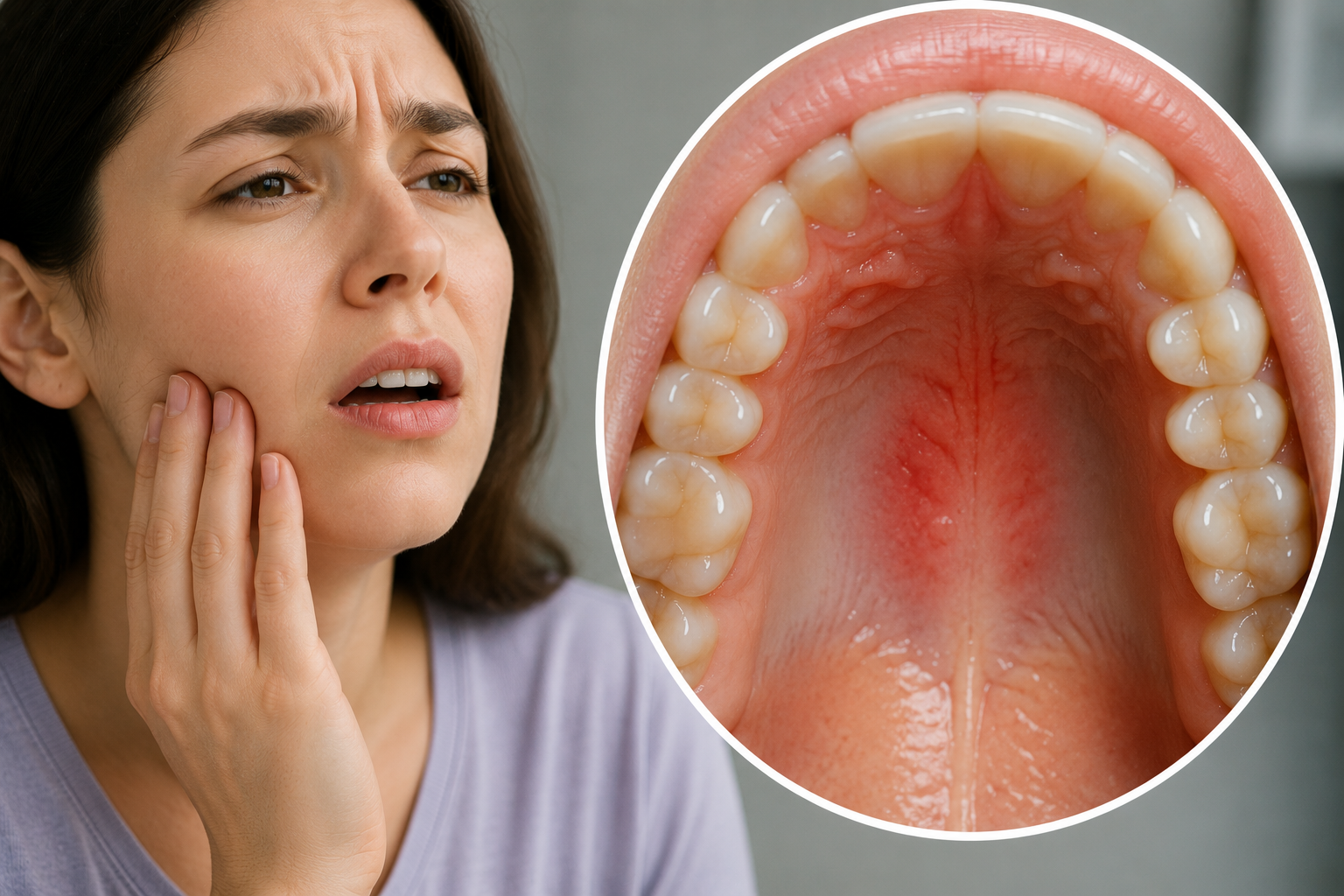
The roof of your mouth, known as the palate, can hurt due to burns from hot food, canker sores, viral infections, sinus pressure, allergic reactions, or irritation from sharp and acidic foods. In most cases, this discomfort is temporary and heals within a few days without medical treatment.
However, if the pain lasts longer than two weeks, worsens over time, or comes with swelling, fever, or difficulty swallowing, it may indicate an underlying infection or a more serious condition. Understanding the exact cause behind why does the roof of my mouth hurt helps you choose the right home remedy or know when professional care is necessary.
Key Takeaways
- Roof of mouth pain is usually caused by burns, ulcers, or irritation from food.
- Sinus infections and allergies can also cause referred pain in the palate.
- Persistent pain lasting more than two weeks should be evaluated by a dentist or doctor.
- Home remedies like saltwater rinses often provide quick relief for minor irritation.
- Rare causes, including oral cancer, require prompt medical attention if suspected.
Common Causes of Roof of Mouth Pain
Most cases of palate pain stem from everyday habits like eating hot food or accidentally biting into something sharp. These causes are usually temporary and resolve on their own within a few days as the tissue heals naturally.
Burns from Hot Food or Drinks
Consuming food or beverages that are too hot is one of the most frequent reasons behind roof of mouth pain. The heat damages the thin layer of tissue lining the palate, causing redness, peeling, or a raw sensation. This usually heals within three to five days without any special treatment.
Canker Sores and Mouth Ulcers
Canker sores are small, painful lesions that can develop on the palate due to stress, minor injury, or certain food sensitivities. They typically appear as white or yellow spots surrounded by redness. Most canker sores resolve within one to two weeks and can be managed with topical gels.
Irritation from Sharp or Acidic Foods
Foods like chips, toast, citrus fruits, or spicy dishes can scratch or irritate the sensitive palate tissue. This creates a temporary burning or stinging sensation that usually subsides once the irritant is avoided. Staying hydrated and avoiding rough foods speeds up recovery.
Viral Infections
Conditions such as cold sores, oral herpes, or hand-foot-mouth disease can cause blisters or sores on the roof of the mouth. These infections are often accompanied by fever, fatigue, or sores in other parts of the mouth. Antiviral medication or supportive care is usually recommended by a doctor.
Sinus Infections and Pressure
Because the sinuses sit close to the roof of the mouth, an infection or inflammation in this area can cause referred pain in the palate. This is often accompanied by nasal congestion, facial pressure, and headaches. Treating the underlying sinus infection typically resolves the mouth pain as well.


Less Common but Important Causes
While most palate pain is minor, some causes are less common and may require targeted treatment. Recognizing these conditions early can prevent complications and speed up recovery.
Oral Thrush
Oral thrush is a fungal infection caused by an overgrowth of yeast in the mouth, leading to white patches and soreness on the palate. It is more common in people with weakened immune systems, diabetes, or those using inhaled steroids. Antifungal medication is usually needed to clear the infection.
Torus Palatinus
This is a benign bony growth that develops on the roof of the mouth and is usually painless. However, it can become irritated or sore if it is repeatedly bitten or rubbed by dentures. Treatment is rarely necessary unless the growth interferes with oral function.
Allergic Reactions
Certain foods, medications, or environmental allergens can trigger swelling and discomfort in the palate as part of an allergic response. This may be accompanied by itching, hives, or swelling in other parts of the mouth and throat. Antihistamines often provide relief for mild allergic reactions.
Nutritional Deficiencies
A lack of essential nutrients like vitamin B12 or iron can cause soreness and inflammation in the mouth, including the palate. This is often accompanied by fatigue, pale skin, or a swollen tongue. Addressing the deficiency through diet or supplements typically resolves the discomfort.
Smoking and Tobacco Irritation
Chronic tobacco use can irritate and dry out the tissue on the roof of the mouth, leading to persistent soreness. Over time, this irritation can also increase the risk of more serious oral health issues. Reducing or quitting tobacco use significantly improves palate health.
Roof of Mouth Pain: Symptoms, Causes & Relief Comparison
| Cause | Common Symptoms | Typical Duration | Recommended Relief |
| Burns | Redness, peeling, raw feeling | 3–5 days | Cool fluids, soft food |
| Canker sores | White/yellow lesion, pain when eating | 1–2 weeks | Topical gel, saltwater rinse |
| Viral infection | Blisters, fever, fatigue | 1–2 weeks | Antiviral medication, rest |
| Sinus infection | Facial pressure, congestion | Varies | Decongestants, hydration |
| Oral thrush | White patches, soreness | Until treated | Antifungal medication |
| Allergic reaction | Swelling, itching | Hours to days | Antihistamines |
When Roof of Mouth Pain Signals Something Serious
While most cases of palate pain are harmless, certain symptoms should never be ignored. Recognizing these warning signs early can help prevent complications from more serious underlying conditions.
Warning Signs to Watch For
Persistent pain lasting more than two weeks, unexplained lumps, difficulty swallowing, or unexplained weight loss are signs that warrant medical evaluation. These symptoms can sometimes indicate an infection that hasn’t resolved or a more serious underlying issue. Prompt evaluation ensures timely diagnosis and treatment.
Oral Cancer: Rare but Possible Red Flags
Though uncommon, persistent sores, red or white patches, or unexplained bleeding on the palate can occasionally signal oral cancer. This is more likely in individuals who smoke, use tobacco products, or consume alcohol heavily. Early diagnosis significantly improves treatment outcomes.
Warning: If pain in the roof of your mouth persists beyond two weeks or is accompanied by unexplained lumps, bleeding, or difficulty swallowing, consult a dentist or doctor promptly for proper evaluation.
Home Remedies and Relief Tips
Most minor cases of roof of mouth pain can be managed effectively at home with simple, natural remedies. These methods help soothe irritation while the tissue heals on its own.
Saltwater Rinses
Rinsing with warm saltwater several times a day helps reduce inflammation and keeps the affected area clean. This is especially effective for canker sores and minor irritation. It also helps prevent secondary infection during the healing process.
Cold Compresses
Applying a cold compress or sipping cold water can numb the area and reduce swelling from burns or injuries. This provides quick, temporary relief from sharp or burning pain. It is particularly useful immediately after a burn occurs.
Avoiding Trigger Foods
Steering clear of spicy, acidic, or crunchy foods allows irritated tissue to heal without further aggravation. Soft, bland foods are easier to eat during recovery. This simple adjustment often speeds up the healing timeline significantly.
Pro Tip: Rinse your mouth with a mixture of half a teaspoon of salt in a glass of warm water three times a day to speed up healing and reduce discomfort naturally.
Hypothetical Example
Consider someone who drinks a hot cup of tea too quickly and notices a burning sensation on the roof of their mouth shortly after. Within a day, the area feels raw and slightly swollen, making it uncomfortable to eat certain foods. By switching to cool fluids and soft meals for a few days, the discomfort gradually fades without needing medical intervention.
How Dentists and Doctors Diagnose the Cause
When home remedies don’t resolve the pain, a professional evaluation helps pinpoint the exact cause. Diagnosis often involves a combination of physical examination and, in some cases, further testing.
Physical Examination
A dentist or doctor will visually inspect the palate for lesions, swelling, or discoloration and ask about recent food intake or illness. This is usually enough to identify common causes like burns or canker sores. Medical history also helps rule out allergies or infections.
When Imaging or Biopsy Is Needed
If a lump, unusual growth, or non-healing sore is present, imaging or a biopsy may be recommended to rule out serious conditions. This ensures an accurate diagnosis, especially for symptoms lasting several weeks. Early testing allows for timely and effective treatment.
Prevention Tips for a Healthy Palate
Preventing future episodes of roof of mouth pain largely comes down to consistent oral care and mindful eating habits. Small daily changes can make a significant difference over time.
Oral Hygiene Habits
Brushing twice daily, using a soft-bristled toothbrush, and avoiding harsh mouthwashes helps protect the delicate tissue of the palate. Regular dental checkups also catch potential issues early. Good hygiene reduces the risk of infections and irritation.
Dietary Adjustments
Allowing hot foods and drinks to cool before consuming and avoiding overly sharp or spicy foods reduces the risk of injury to the palate. A balanced diet rich in vitamins also supports oral tissue health. These small habits go a long way in preventing recurring pain.
Frequently Asked Questions
Why does the roof of my mouth hurt after eating?
This is often due to burns from hot food, irritation from sharp textures, or an allergic reaction to certain ingredients.
Can stress cause roof of mouth pain?
Yes, stress is a known trigger for canker sores, which commonly develop on the palate.
How long does roof of mouth pain usually last?
Most cases resolve within three days to two weeks, depending on the underlying cause.
Should I see a doctor for roof of mouth pain?
If the pain persists beyond two weeks or is accompanied by swelling, lumps, or difficulty swallowing, seek professional evaluation.
Can sinus infections really cause palate pain?
Yes, the proximity of the sinuses to the roof of the mouth means infections there can cause referred pain in the palate.
Conclusion
Roof of mouth pain is usually caused by everyday triggers like burns, canker sores, or minor irritation, and it typically resolves within a couple of weeks with simple home care.
However, persistent or unusual symptoms should never be ignored, as they may point to infections or rarer conditions requiring medical attention.
Paying attention to your symptoms and practicing good oral hygiene can help you avoid discomfort and maintain a healthy mouth long term.
Related Posts
How to Get Rid of a Lip Pimple: Causes & Fast Treatment
Sudden Heel Pain Without Injury: Causes, Symptoms and Relief
Urgent Care for Kidney Stones: When It’s the Right Call
Is an Upper Respiratory Infection Contagious? What You Need to Know
Can Thrush Cause Urinary Tract Infections? The Complete Guide