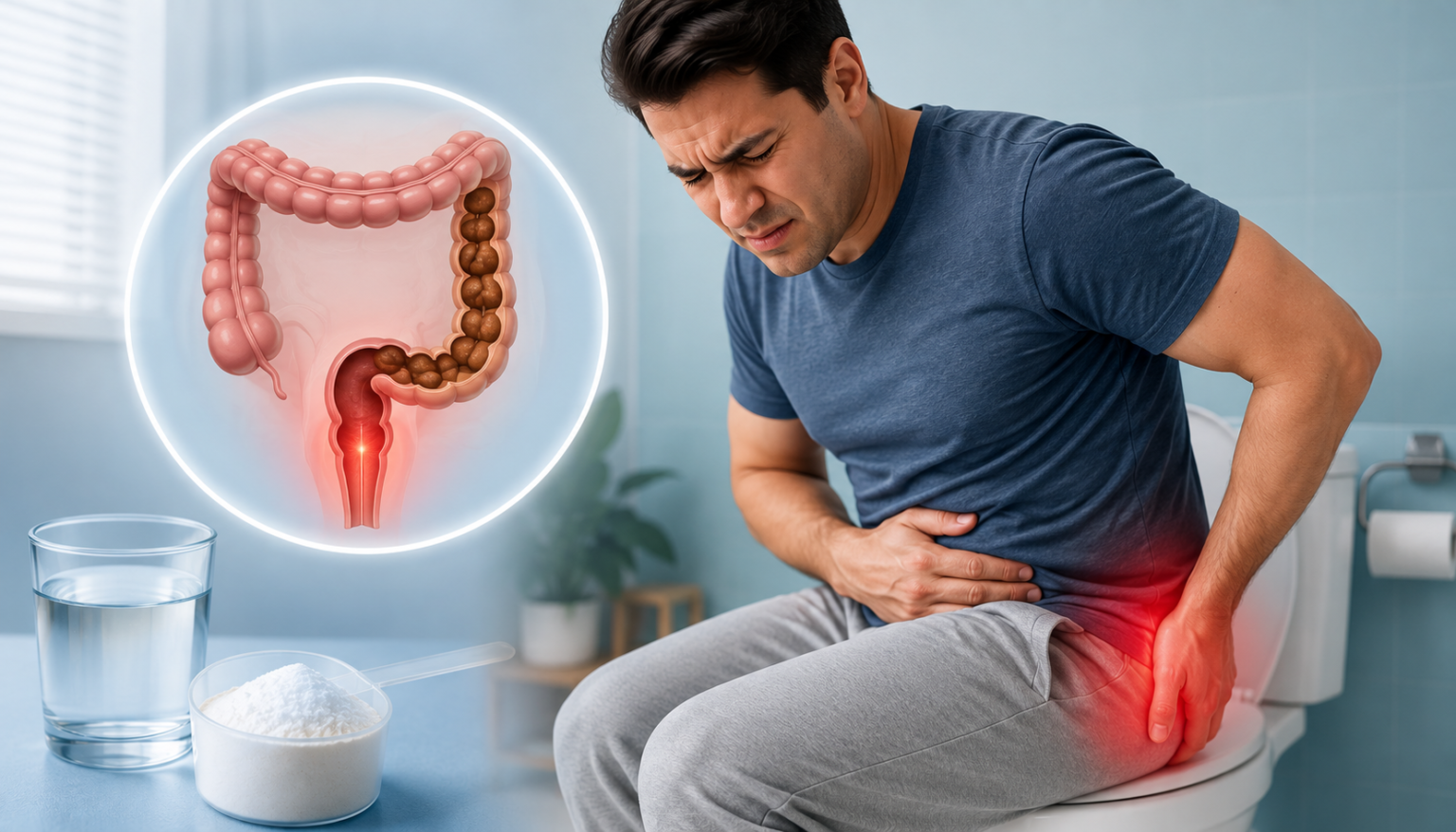
Yes, Movicol can help with anal pain caused by constipation, but it works in an indirect way rather than acting as a direct painkiller. It softens stool and makes bowel movements easier to pass, which reduces the straining that usually causes anal pain in the first place.
Many people dealing with hard stools also develop irritation, fissures, or swollen hemorrhoids, and all of these tend to hurt more when a person keeps straining during constipation.
Once Movicol starts softening the stool, the pressure on the anal area drops significantly, and the pain caused by tearing or friction begins to settle down. This guide explains everything in detail, in simple wording, so you understand exactly how Movicol fits into anal pain relief during constipation.
Understanding Anal Pain from Constipation
Anal pain during constipation usually happens because of repeated straining against hard, dry stool. This section breaks down the common causes and how to tell if constipation is really behind the pain.
Common Causes of Anal Pain
Hard stools force the anal muscles and skin to stretch beyond their normal limit, and this stretching is what usually leads to small tears known as anal fissures. Hemorrhoids can also swell up from the pressure of straining, adding another layer of discomfort. In many cases, both issues happen together, making the pain feel sharper and more constant.
Why Constipation Makes Pain Worse
Every time a person strains to pass a hard stool, existing fissures or hemorrhoids get reopened or irritated further, which restarts the healing process from scratch. This creates ongoing discomfort that doesn’t fully settle until the stool becomes softer and easier to pass. The longer constipation continues, the more this cycle repeats.
Signs the Pain Is Constipation-Related
Pain that shows up mainly during or right after a bowel movement, along with hard or infrequent stools, usually points to a constipation-related cause. If there’s also mild bleeding on the tissue paper or a visible skin tear near the anus, this strongly suggests a fissure caused by straining rather than an unrelated condition.
What Is Movicol and How Does It Work?
Movicol is an osmotic laxative that works by pulling water into the bowel to soften stool naturally. Understanding its mechanism helps explain why it can ease anal pain over time.



Active Ingredient and Mechanism
The main ingredient in Movicol is macrogol, also known as polyethylene glycol 3350. It works by holding onto water molecules as it passes through the digestive system, which keeps the stool hydrated and soft instead of letting it become hard and compacted. This process doesn’t stimulate the bowel wall directly, which is why it’s considered gentle compared to some other laxatives.
How Long It Takes to Work
Movicol typically starts producing noticeable results within one to three days of regular use, though some people notice softer stools a bit sooner depending on their hydration and diet. Consistency matters here, since skipping doses can slow down the softening process and delay relief from constipation-related pain.
Does Movicol Directly Treat Anal Pain?
Movicol does not numb, heal, or directly treat the anal area itself. Its role is limited to changing stool consistency, and the pain relief that follows is a secondary effect of that change.
Why It’s Not a Direct Painkiller
Movicol contains no numbing or anti-inflammatory agents, so it won’t reduce pain the way a topical cream or ointment would. It simply changes how the stool behaves in the bowel, which is a completely different mechanism from pain relief medications.
Breaking the Pain-Fear Cycle
A common pattern with constipation is that pain during bowel movements creates fear of the next one, which leads to holding in stool and making constipation even worse. Movicol helps break this cycle by making the next bowel movement noticeably easier, which reduces the anxiety around passing stool and encourages more regular bathroom habits.
How Softer Stools Reduce Anal Pain?
Once stool becomes softer, the physical pressure on the anal canal drops significantly during each bowel movement. This section explains the specific ways this reduction in pressure helps.
Less Pressure on Fissures and Hemorrhoids
Soft stool doesn’t require the same level of straining as hard stool, so existing fissures and hemorrhoids aren’t stretched or irritated repeatedly. This gives these areas the chance to settle instead of being reopened every day.
Faster Healing of Existing Fissures
Anal fissures generally heal on their own when they’re not being reinjured, and softer stools remove the main trigger for reinjury. With Movicol supporting consistent, easier bowel movements, the healing timeline for a fissure often shortens compared to when constipation continues untreated.
How Long Until Pain Improves?
Pain relief timelines vary from person to person, and it helps to have realistic expectations while using Movicol for constipation-related anal pain.
Typical Timeline for Relief
Most people notice some reduction in pain within three to seven days of starting Movicol, once stool consistency has improved enough to reduce straining. Full healing of a fissure, however, can take a few weeks even after the constipation itself has resolved.
Factors That Affect Speed
The severity of the original constipation, how consistently the person takes their prescribed dose, and their overall diet and hydration levels all influence how quickly pain improves. People who combine Movicol with proper fiber intake and enough water tend to see faster results than those who rely on the medication alone.
When Movicol Alone Isn’t Enough?
There are situations where Movicol helps with constipation but doesn’t fully resolve the anal pain, and recognizing these cases matters for proper care.
Persistent Pain Despite Softer Stools
If stools have clearly softened but the pain hasn’t improved after a reasonable period, this suggests the fissure or hemorrhoid may need additional treatment beyond just softer stool. Topical treatments or other interventions might be necessary at this stage.
Red Flags to Watch For
Symptoms such as heavy bleeding, fever, severe or worsening pain, or a visible lump that doesn’t go down are signs that the issue may be more than simple constipation-related irritation. These symptoms should prompt a visit to a doctor rather than waiting for Movicol to work further.
Tips to Maximize Relief
Combining Movicol with a few supportive habits can speed up both constipation relief and anal pain recovery.
The following points can help improve results while using Movicol:
- Take Movicol exactly as directed, since inconsistent dosing slows down stool softening.
- Drink enough water throughout the day, as Movicol relies on adequate fluid intake to work properly.
- Include fiber-rich foods like fruits, vegetables, and whole grains to support regular bowel movements.
- Avoid straining even when the urge to pass stool feels strong, and give the body time to pass it naturally.
- Consider a doctor-recommended topical treatment for the anal area if pain continues despite softer stools.
| Factor | Why It Matters |
| Consistent Movicol dosing | Keeps stool soft on a daily basis instead of on and off |
| Hydration | Movicol needs water in the gut to soften stool effectively |
| Fiber intake | Supports natural bowel regularity alongside the medication |
| Avoiding straining | Prevents reinjury to fissures or hemorrhoids |
| Topical care | Addresses pain directly when softening alone isn’t enough |
When to See a Doctor
Most constipation-related anal pain improves with Movicol and basic self-care, but certain situations call for professional medical attention.
Signs That Need Medical Attention
Pain that persists beyond a couple of weeks despite regular bowel movements, or pain that keeps getting worse instead of better, should be checked by a doctor. This is especially important if over-the-counter approaches like Movicol haven’t made a noticeable difference.
Bleeding or Visible Lumps
Any bleeding that continues beyond a small amount of tissue, or a lump near the anus that doesn’t shrink over time, needs a proper examination. These signs can point to conditions that require treatment beyond stool softening alone.
Conclusion
Movicol helps with anal pain from constipation indirectly by softening stool and reducing the straining that causes fissures and hemorrhoid irritation in the first place. It isn’t a direct pain reliever, but by breaking the cycle of hard stool and repeated injury, it creates the right conditions for natural healing.
Pairing Movicol with good hydration, fiber, and avoiding straining usually brings noticeable relief within about a week, though persistent pain, bleeding, or lumps should always be checked by a doctor.
FAQs
Does Movicol help with anal fissures caused by constipation? Yes, by softening stool, Movicol reduces the straining that reopens fissures, giving them a better chance to heal naturally.
How fast does Movicol reduce anal pain? Most people notice reduced pain within three to seven days, though full fissure healing can take longer.
Can I use Movicol with hemorrhoid cream? Yes, Movicol addresses stool consistency while a cream can target pain and swelling directly, and the two are often used together.
Is Movicol safe for long-term constipation and anal pain? Movicol is generally considered safe for extended use under medical guidance, especially for chronic constipation issues.
RELATD ARTICLES
How to Get Rid of Wrinkles Under Eyes: Causes, Treatments & Prevention
How Much Is a Neck Lift? Cost Guide & Price Factors
Balance Care Health Insurance: Plans, Benefits, Costs, and Enrollment Guide
Cancer Misdiagnosis: Causes, Consequences, Prevention, and Patient Rights
Texas Health Surgery Center: Services, Benefits, Insurance, Recovery & Patient Care Guide