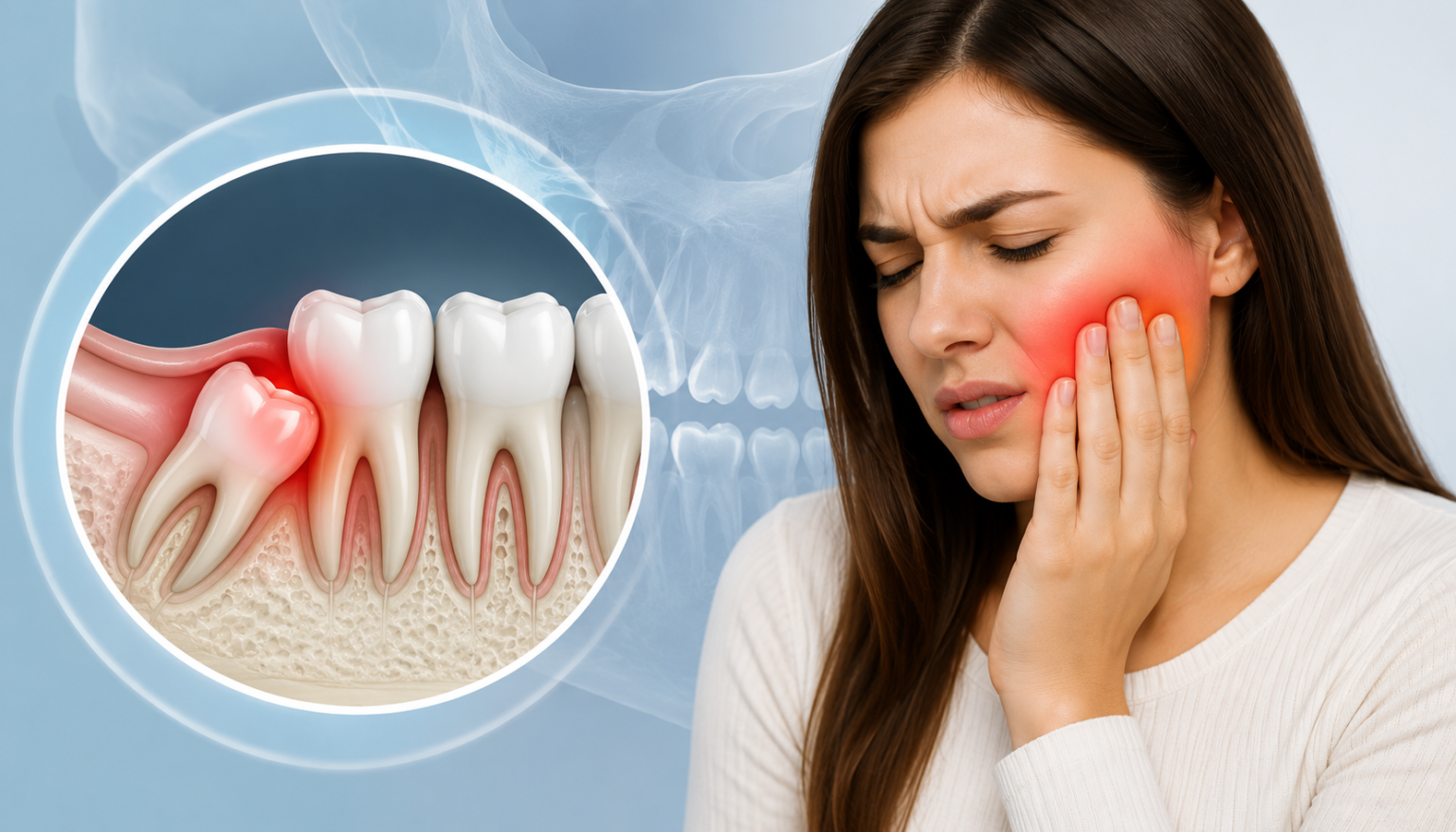
Yes, wisdom teeth can cause tooth pain in other teeth, and this is one of the most common concerns people bring to their dentist. When a wisdom tooth grows in at an angle or gets stuck under the gum, it does not always stay quiet in its own corner of the mouth.
It can press against the molar next to it, irritate the gum tissue around several teeth, or trigger nerve signals that make pain feel like it is coming from a completely different tooth. This is why many people search for answers about can wisdom teeth cause tooth pain in other teeth before they even suspect the wisdom tooth is the real problem.
Understanding how this pain travels can help you figure out what is actually going on in your mouth. The sections below explain the exact reasons this happens and what you can do about it.
Can Wisdom Teeth Really Affect Other Teeth?
Yes, a wisdom tooth that is impacted, infected, or simply growing in the wrong direction can absolutely cause discomfort in nearby or even distant teeth. This happens through physical pressure, shared nerve pathways, and infection spreading through the gum and jaw tissue, which the next sections break down in detail.
How Wisdom Teeth Cause Pain in Nearby Teeth
There are several distinct ways a wisdom tooth problem turns into pain somewhere else in the mouth, ranging from simple physical pressure to more serious infections. Each mechanism below explains a different pathway through which this pain travels.
Pressure and Crowding from Impacted Teeth
When a wisdom tooth is impacted, it often grows sideways instead of straight up. This growth pushes directly against the second molar in front of it, creating pressure that the neighboring tooth reads as pain. Over time, this pressure can shift nearby teeth slightly, adding to the discomfort felt while chewing.
Referred Pain Through Shared Nerve Pathways
The nerves in the jaw are closely connected, so pain signals do not always stay confined to the tooth that is actually affected. A problem near the wisdom tooth can travel along the trigeminal nerve and register as pain in a molar, premolar, or even the jaw joint. This is called referred pain, and it explains why a dentist sometimes finds the “painful” tooth to be perfectly healthy.
Infection Around the Wisdom Tooth
When a wisdom tooth partially breaks through the gum, food and bacteria can get trapped underneath the flap of tissue covering it, leading to an infection known as pericoronitis. This infection causes swelling and inflammation that often extends toward the neighboring tooth and the surrounding gum line. The resulting soreness can make it feel like the tooth right next to the wisdom tooth is the one that is actually infected.



Decay Spreading to the Neighboring Molar
Wisdom teeth sit far back in the mouth, making them difficult to clean properly with a regular toothbrush. Plaque and food particles tend to build up between the wisdom tooth and the molar beside it, which increases the risk of cavities forming on both teeth at the same time. Since these two teeth are in such close contact, decay on the wisdom tooth frequently damages the enamel of its neighbor as well.
Cyst or Tissue Damage Near the Tooth Root
In less common but more serious cases, an impacted wisdom tooth can develop a fluid-filled cyst around its crown. As this cyst grows, it can put pressure on the roots of nearby teeth and even affect the surrounding jawbone. This type of damage is usually painless at first but can eventually cause noticeable discomfort in the teeth close to the affected area.
Common Symptoms to Watch For
Recognizing the specific symptoms linked to wisdom tooth problems can help you tell whether the pain is truly coming from a different source. The following signs commonly appear alongside wisdom tooth related discomfort.
Pain in the Back Teeth or Jaw
A dull, throbbing ache toward the back of the mouth is often the first sign that a wisdom tooth is causing trouble. This pain frequently spreads toward the jaw joint, making it feel like the entire side of the face is affected rather than just one tooth. Many people notice this ache becomes worse at night or after chewing firm foods.
Swelling or Tenderness in the Gums
Gum tissue around an emerging or impacted wisdom tooth often becomes puffy, red, and sensitive to touch. This swelling can extend forward to cover part of the neighboring molar, making that tooth feel tender even though it is not the actual problem. Brushing or flossing near this area often becomes uncomfortable as a result.
Sensitivity When Chewing or Biting
Pressure from an impacted wisdom tooth can make the surrounding teeth unusually sensitive during chewing, especially when biting down on harder foods. This sensitivity happens because the neighboring tooth is absorbing some of the force that the wisdom tooth cannot handle properly due to its abnormal position. Some people also notice a strange bite alignment during this stage.
Ear or Jaw Discomfort Linked to Wisdom Teeth
Because the nerves near the wisdom teeth connect closely to the jaw joint and ear region, pain can radiate outward from the mouth into these nearby areas. This often shows up as a dull ache near the ear, mild headaches, or stiffness when opening the mouth wide. These symptoms are frequently mistaken for an ear infection or jaw disorder rather than a dental issue.
How to Tell If the Pain Is From Wisdom Teeth or Another Tooth
The table below compares typical symptoms of wisdom tooth related pain against pain caused directly by a cavity or another dental issue, making it easier to understand which one matches your situation.
| Symptom or Feature | Wisdom Tooth Related Pain | Cavity or Other Tooth Pain |
| Pain location | Back of the jaw, spreading toward ear or neighboring molar | Localized to one specific tooth |
| Gum condition | Swollen, red, or flap-covered tissue near the back tooth | Usually normal unless infection is present |
| Trigger | Chewing, opening mouth wide, pressure from growth | Sweet or cold foods, direct contact with the cavity |
| Onset pattern | Gradual, worsening over weeks as tooth tries to erupt | Can appear suddenly once decay reaches the nerve |
| Associated symptoms | Jaw stiffness, mild ear discomfort, difficulty opening mouth | Visible hole, dark spot, or sensitivity to temperature |
When Should You See a Dentist?
Not every ache needs an emergency visit, but certain warning signs suggest that a wisdom tooth issue needs professional attention sooner rather than later. The points below explain when it becomes important to schedule a dental appointment.
Warning Signs That Need Prompt Attention
Persistent pain that lasts more than a few days, visible swelling on the face, difficulty swallowing, or a fever alongside jaw pain are all signs that should not be ignored. These symptoms can indicate a spreading infection that requires prompt treatment rather than home care alone. Waiting too long in these situations can allow the problem to affect a wider area of the mouth.
Why Early Diagnosis Prevents Further Damage
Catching a wisdom tooth problem early makes treatment simpler and protects the neighboring teeth from lasting harm. The longer an impacted tooth is left untreated, the higher the chance it will cause decay, gum damage, or bone loss around the teeth beside it. Early diagnosis also tends to involve less invasive treatment compared to waiting until the infection becomes severe.
How Dentists Diagnose the Real Cause?
Dentists rely on a mix of visual examination and imaging to figure out whether a wisdom tooth is truly responsible for the pain in another tooth. These methods help separate wisdom tooth issues from unrelated dental problems.
Dental X-Rays and Imaging
X-rays allow a dentist to see the exact position of the wisdom tooth in relation to the roots and crowns of nearby teeth. This imaging can reveal impaction, cyst formation, or bone loss that would otherwise remain hidden from a simple visual check. In more complex cases, a 3D scan may be used to get a clearer picture of how the tooth is affecting the surrounding structures.
Physical Examination of Gums and Teeth
Along with imaging, a dentist will check the gum tissue around the wisdom tooth for swelling, tenderness, or signs of infection. They will also test the neighboring teeth individually to rule out cavities or nerve damage that could be causing the pain on their own. Combining this physical exam with X-ray findings usually gives a clear answer about where the pain is truly coming from.
Treatment Options
Once the cause is confirmed, treatment for wisdom tooth related pain can range from simple home care to surgical removal of the tooth. The right approach depends on how severe the impaction or infection has become.
Pain Relief and Home Care
For mild discomfort, over the counter pain relievers, warm salt water rinses, and gentle cleaning around the area can offer temporary relief. Applying a cold compress to the outside of the jaw can also help reduce swelling while waiting for a dental appointment. These steps manage symptoms but do not address the underlying position of the tooth itself.
Antibiotics for Infection
If pericoronitis or another infection is present, a dentist may prescribe antibiotics to control the spread of bacteria before considering further treatment. This step is especially important when swelling has started to affect the cheek or jaw area. Antibiotics alone will not fix the positioning problem, so they are usually paired with a longer term treatment plan.
Wisdom Tooth Extraction
In most cases where an impacted wisdom tooth is causing pain in another tooth, removal of the wisdom tooth is the most reliable long term solution. Extraction relieves the pressure on the neighboring molar and eliminates the source of ongoing infection or decay risk. Recovery typically takes about a week, after which the pain in the surrounding teeth usually improves significantly.
Treating the Affected Neighboring Tooth
If the neighboring tooth has already developed a cavity or nerve damage from prolonged contact with the wisdom tooth, it may need its own separate treatment such as a filling or root canal. This is usually handled either alongside the wisdom tooth extraction or shortly afterward, once the area has healed. Addressing both teeth together helps prevent the same problem from returning.
Can This Pain Be Prevented?
While not every case of wisdom tooth pain can be avoided, several habits make it far less likely to develop into a painful problem that spreads to other teeth. The following practices support long term prevention.
Regular Dental Checkups
Routine dental visits allow a dentist to track how wisdom teeth are developing long before they cause noticeable pain. Regular X-rays taken during these checkups can catch impaction or early decay while treatment options are still simple and less invasive. This makes consistent dental care one of the most effective prevention tools available.
Monitoring Wisdom Teeth Growth Early
For teenagers and young adults, dentists often monitor wisdom tooth development closely since this is when most impaction issues begin. Identifying a tooth that is growing at an unusual angle early allows for planned removal before it starts pressing against other teeth. This proactive approach avoids the emergency situations that often arise later.
Good Oral Hygiene Around Back Teeth
Since the area around wisdom teeth is harder to clean, using a smaller toothbrush head or a water flosser can help remove trapped food particles more effectively. Consistent cleaning in this region reduces the risk of decay spreading between the wisdom tooth and its neighbor. Small daily habits like this go a long way in preventing pain from developing in the first place.
Frequently Asked Questions
Can a wisdom tooth cause pain in a tooth on the other side of the mouth?
This is uncommon but possible if the pain is related to jaw muscle tension or a bite alignment issue rather than direct pressure, since these factors can affect both sides of the mouth at once.
How long does wisdom tooth pain in other teeth last?
The discomfort usually continues as long as the wisdom tooth remains impacted or infected, and it typically eases within a few days after proper dental treatment begins.
Does removing the wisdom tooth stop the pain in the other tooth?
In most cases, yes, since extraction removes the pressure and infection source, though any existing damage to the neighboring tooth may still need separate treatment.
Can wisdom teeth cause tooth pain without visible swelling?
Yes, early stage impaction or referred nerve pain can cause discomfort in nearby teeth even before any visible swelling appears in the gums.
Conclusion
So, can wisdom teeth cause tooth pain in other teeth? In most cases, the answer is yes, and the reasons range from simple pressure and crowding to infection, decay, or nerve related referred pain.
Paying attention to symptoms like jaw stiffness, gum swelling, or sensitivity in the back teeth can help you catch the problem early.
A timely visit to the dentist, supported by X-rays and a physical exam, is the most reliable way to confirm the cause and get the right treatment before it affects more of your teeth.
RELATED POSTS
How to Tell If You Have a Broken Bone in Your Hand?
Does Lack of Sleep Cause Headaches? Causes, Symptoms, and Effective Relief
How I Cured My Vestibular Migraine: What Actually Works
How to Sleep With a Stuffy Nose: 10 Proven Fixes That Actually Work