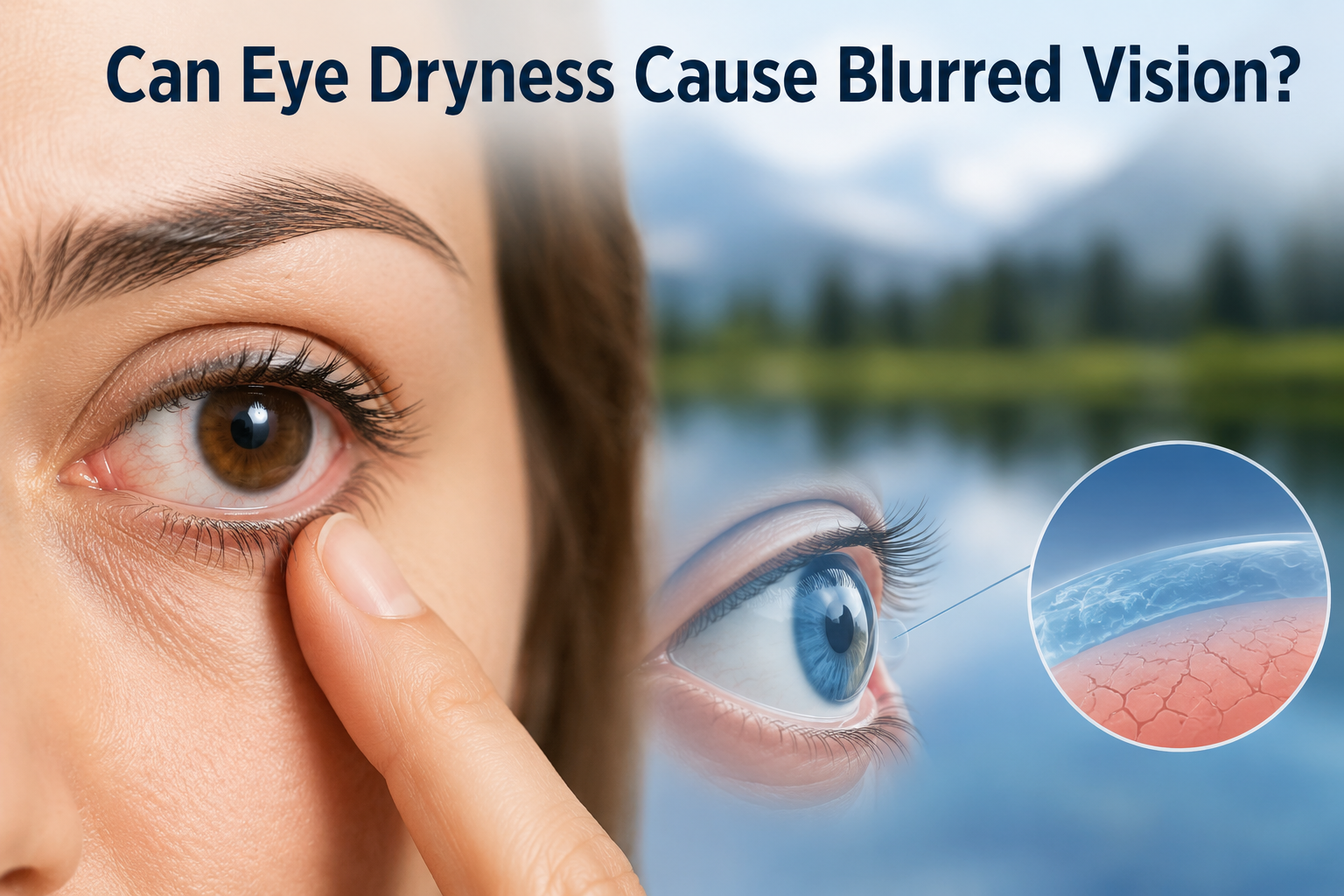
Yes, eye dryness can cause blurred vision, and this happens more often than most people realize. When your eyes don’t produce enough tears or the tears evaporate too quickly, the surface of your eye becomes uneven and unstable.
Light entering the eye then scatters instead of focusing properly, which results in blurry, hazy, or fluctuating vision. This blur is usually temporary and tends to improve after blinking or resting your eyes.
However, if dryness is chronic, the blurred vision can become more frequent and noticeable throughout the day, especially during screen use, reading, or exposure to wind and air conditioning.
How Dry Eyes Affect Your Vision
The connection between dryness and blurred vision comes down to one small but essential structure: the tear film. When this film breaks down or becomes uneven, your ability to see clearly is directly affected, sometimes within seconds of blinking.
The Role of the Tear Film in Clear Sight
Your eyes are covered by a thin layer of tears called the tear film, which is responsible for keeping the surface smooth and evenly refractive. This film bends light correctly so that it reaches the retina in a clear, focused way. When the tear film is healthy, vision stays crisp and stable throughout the day, without any noticeable fluctuation between blinks.
What Happens When Tears Are Unstable
When tears don’t spread evenly or evaporate too fast, the eye’s surface becomes irregular, almost like looking through a smudged window. This irregularity scatters incoming light rather than focusing it properly, which is exactly what produces that blurry, slightly out-of-focus feeling many people describe when their eyes are dry.
Why the Blur Comes and Goes
One key sign that dryness is behind your blurred vision is that it fluctuates rather than staying constant. You may notice clear vision right after blinking, followed by gradual blurring as your eyes stay open longer, particularly during tasks that reduce your blink rate, such as reading or screen work.
Common Symptoms That Come With Dry Eye Blur
Blurred vision from dry eyes rarely shows up alone. It’s usually paired with a handful of other telltale symptoms that point clearly toward dryness as the underlying cause.



Gritty or Burning Sensation
Many people describe dry eyes as feeling like there’s sand or grit trapped under the eyelid. This sensation often intensifies alongside blurred vision, particularly by the end of the day or after long periods of concentrated visual work.
Redness and Light Sensitivity
Dry eyes frequently appear pink or red due to irritation and mild inflammation on the eye’s surface. This same irritation can make eyes more sensitive to bright light, sunlight, or harsh indoor lighting, which can further contribute to visual discomfort and blur.
Excessive Watering (Reflex Tearing)
It may seem contradictory, but dry eyes often trigger excessive watering. This happens because the eye senses irritation and responds by producing a reflex flood of tears, which are usually low in quality and don’t properly lubricate the surface, so blurring and discomfort can persist despite the watering.
What Triggers or Worsens the Blurring
Certain daily habits and environments make dry eye symptoms, including blurred vision, considerably worse. Recognizing these triggers can help you reduce flare-ups before they start.
Prolonged Screen Time
Staring at phones, computers, or tablets significantly reduces your natural blink rate. Since blinking spreads tears evenly across the eye, fewer blinks mean the tear film breaks down faster, leading to noticeably blurrier vision the longer you stay focused on a screen.
Windy or Air-Conditioned Environments
Air movement, whether from wind outdoors or air conditioning and heating indoors, speeds up tear evaporation. This dries out the eye’s surface faster than normal, often causing sudden blurriness when you step into a breezy or climate-controlled space.
Reduced Blinking During Focused Tasks
Activities requiring intense visual focus, such as driving, reading, or detailed handiwork, naturally lower blink frequency. Over time, this reduced blinking allows the tear film to thin unevenly across the eye, contributing directly to blurred and strained vision.
Dry Eye Blur vs. Other Causes of Blurred Vision
Not all blurred vision comes from dryness, so it helps to understand how dry eye blur compares to other common causes. The table below outlines the key differences to help you identify what you might be experiencing.
| Condition | Blur Pattern | Accompanying Symptoms | When to See a Doctor |
| Dry Eye Disease | Fluctuates, improves after blinking | Grittiness, redness, watering | If blur persists despite drops |
| Refractive Errors | Constant, distance-dependent | Eye strain, headaches | If blur is stable and unchanging |
| Cataracts | Gradual, worsens over months/years | Glare, faded colors, night vision issues | If blur steadily progresses with age |
| Serious Eye Conditions | Sudden or severe | Pain, flashes, vision loss | Immediately, as an urgent concern |
Refractive Errors (Nearsightedness, Astigmatism)
Unlike dry eye blur, refractive errors tend to cause consistent blurriness that doesn’t improve with blinking. This type of blur is usually linked to the shape of the eye itself and typically requires corrective lenses rather than lubrication.
Cataracts and Age-Related Changes
Cataracts cause a slow, progressive blurring of vision that develops gradually over months or years, often accompanied by glare around lights and difficulty seeing at night. This differs from dry eye blur, which tends to appear and resolve within the same day.
Serious Warning Signs to Watch For
Sudden blurred vision accompanied by pain, flashes of light, or partial vision loss is not typical of dry eyes and should be treated as a medical concern requiring prompt evaluation, since these signs can indicate more serious underlying eye conditions.
How to Relieve Dry Eye-Related Blurred Vision?
Fortunately, dry eye-related blurred vision often responds well to simple, consistent care. The following approaches are commonly recommended to restore comfort and visual clarity.
Lubricating Eye Drops (Artificial Tears)
Over-the-counter artificial tears help restore moisture to the eye’s surface, smoothing out irregularities that cause blur. Preservative-free options are often gentler for frequent use throughout the day.
Blinking Exercises and Screen Breaks
Consciously blinking more often, especially during screen use, helps redistribute tears evenly. Following the 20-20-20 rule, taking a break every 20 minutes to look at something 20 feet away for 20 seconds, can also reduce strain and dryness.
Humidifiers and Environmental Adjustments
Adding moisture to the air with a humidifier can counteract the drying effects of heating or air conditioning. Positioning yourself away from direct airflow, such as fans or vents, also helps preserve your natural tear film.
Warm Compresses for Tear Gland Function
Applying a warm compress over closed eyelids can help stimulate the glands responsible for producing the oily layer of tears, which slows evaporation and supports longer-lasting lubrication throughout the day.
When to See an Eye Doctor
While mild dry eye blur can often be managed at home, certain situations call for professional evaluation to rule out other causes or address more persistent dryness.
Persistent or Worsening Blur
If blurred vision continues despite consistent use of lubricating drops and lifestyle adjustments, it’s worth having an eye doctor assess the underlying cause, as this may indicate more advanced dry eye disease.
Blur With Pain or Vision Loss
Blurred vision paired with eye pain, sudden vision changes, or partial vision loss is not typical of simple dryness and warrants prompt medical attention to rule out more serious conditions.
Diagnostic Tests Eye Doctors May Use
Eye care professionals may use tests such as tear film breakup time, Schirmer’s test for tear production, or ocular surface staining to accurately diagnose the severity and cause of dry eye symptoms.
FAQs
Does dry eye blur clear up on its own?
Yes, mild dry eye blur often resolves quickly after blinking or resting the eyes, though frequent recurrence suggests underlying dryness that needs ongoing management.
Can dry eyes cause permanent vision damage?
Severe, long-term untreated dry eye disease can occasionally damage the eye’s surface, but typical dry eye blur is temporary and does not cause permanent vision loss.
Is blurred vision from dry eyes worse in the morning?
Some people experience morning blur due to reduced tear production overnight, while others notice worsening blur later in the day from screen use and environmental factors.
Can allergies cause both dry eyes and blurred vision?
Yes, allergies can trigger eye irritation and dryness, which in turn can contribute to intermittent blurred vision alongside itching and redness.
Conclusion
Eye dryness is a genuine and common cause of blurred vision, occurring when the tear film becomes unstable and fails to keep the eye’s surface smooth.
This type of blur typically fluctuates, improves with blinking, and responds well to lubricating drops, environmental adjustments, and healthy blinking habits.
However, if blurred vision persists, worsens, or comes with pain or sudden vision changes, seeing an eye doctor is the safest next step to rule out other causes and get proper care.
Related Posts
Does a Yeast Infection Cause Cramps? Symptoms, Causes
Asbury Health and Rehabilitation Center: Services, Rehabilitation Programs, and Patient Care Guide
How to Heal a Sprained Foot Overnight: Fast Relief Tips That Work
Can IBS Cause Back Pain? Causes, Symptoms, Treatment, and Relief Tips
Vege Health Foods: Complete Guide to Products, Benefits, Quality, and Plant-Based Living