

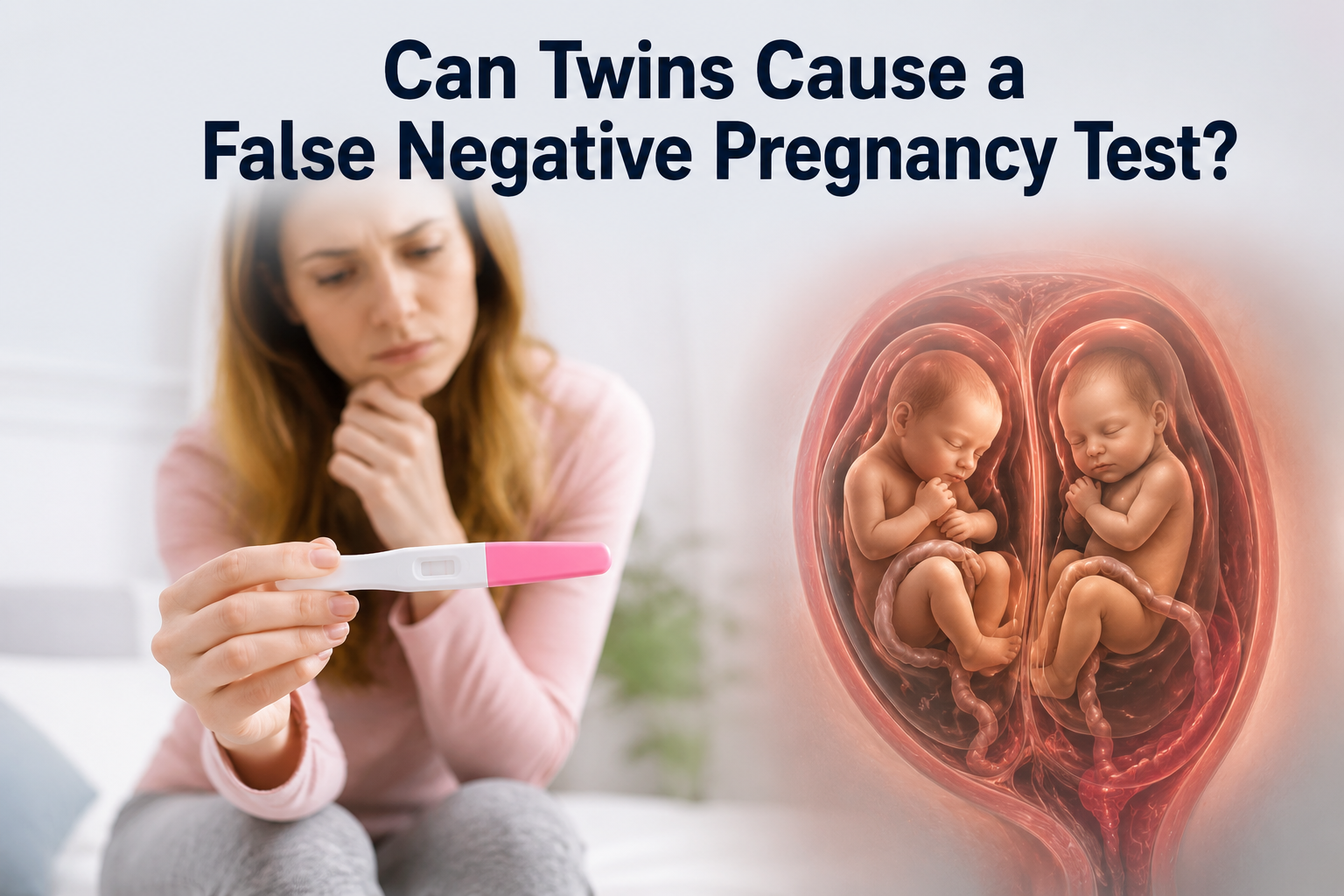
No, twins do not cause a false negative pregnancy test. In most cases, a twin pregnancy produces higher levels of human chorionic gonadotropin (hCG), the hormone that pregnancy tests are designed to detect, which means a positive result is more likely, not less.
False negatives are almost always caused by testing too early in the pregnancy, using diluted urine, misreading the test window, or using an expired or damaged test kit.
In extremely rare situations, unusually high hCG levels in a twin pregnancy can interfere with a test strip through something called the hook effect, but this is uncommon and does not represent a typical twin pregnancy experience. Understanding how hCG behaves in single versus twin pregnancies can help clear up the confusion around this topic.
Understanding Pregnancy Tests and hCG
Pregnancy tests work by detecting a specific hormone in the body, and knowing how that hormone behaves is the first step to understanding false negative results. The sections below explain what hCG is, how home tests use it, and how blood tests offer a different level of detail.
What Is hCG and Why Does It Matters?
Human chorionic gonadotropin, commonly known as hCG, is a hormone produced by the placenta shortly after a fertilized egg implants in the uterus. Its levels rise steadily during early pregnancy, roughly doubling every two to three days in the first several weeks. Because hCG is unique to pregnancy, it serves as the primary marker that both home and clinical pregnancy tests are built to identify.
How Home Pregnancy Tests Work?
Home pregnancy tests detect hCG in urine once it reaches a specific concentration threshold, usually measured in milli-international units per milliliter. If hCG levels are below that threshold at the time of testing, the result will show negative even if a pregnancy is present. This threshold-based design is the main reason timing plays such a large role in test accuracy.
How Do Blood Tests Differ from Urine Tests?
Blood tests performed at a doctor’s office are more sensitive than home urine tests and can detect hCG at much lower concentrations. They also provide a quantitative number rather than a simple positive or negative result, allowing doctors to track how hCG is rising over time. This makes blood testing a more reliable option when results need to be confirmed early or when something seems inconsistent with symptoms.
Do Twins Affect hCG Levels?
Twin pregnancies generally involve more placental tissue than single pregnancies, which directly impacts hormone production. The subsections below explain why hCG tends to be higher with twins and how that affects detection timing.



Why Twin Pregnancies Usually Produce Higher hCG?
Because twin pregnancies involve two implantation sites or a larger shared placental mass, the body typically produces more hCG than it would with a single pregnancy. This elevated hormone output is one of the reasons some early pregnancy symptoms, such as nausea, tend to feel more intense in twin pregnancies. Higher hCG production generally works in favor of getting a clear positive result rather than against it.
Does Higher hCG Mean Twins Are Easier to Detect Early?
In many cases, yes. Since hCG rises faster and reaches detectable thresholds sooner in twin pregnancies, some women receive a positive result slightly earlier than they would with a single pregnancy. This is the opposite pattern of what a false negative would suggest, reinforcing that twins are not a typical cause of missed positive results.
Comparison Table: Singleton vs Twin hCG Levels by Week
| Week of Pregnancy | Average hCG Range (Singleton) | Average hCG Range (Twins) |
| 3 weeks | 5–50 mIU/mL | 10–90 mIU/mL |
| 4 weeks | 50–500 mIU/mL | 100–900 mIU/mL |
| 5 weeks | 200–7,000 mIU/mL | 400–10,000 mIU/mL |
| 6 weeks | 1,000–56,000 mIU/mL | 2,000–80,000 mIU/mL |
These ranges are general estimates and can vary significantly between individuals, so they should not be used as a diagnostic tool on their own.
Common Reasons for a False Negative Pregnancy Test
Most false negative results have nothing to do with whether a pregnancy involves one baby or twins. The subsections below outline the actual factors that most often lead to an inaccurate negative result.
Testing Too Early
Testing before hCG has reached a detectable level is the single most common reason for a false negative. Since implantation timing varies from person to person, testing immediately after a missed period may still be too early for some women, regardless of whether twins are involved.
Diluted Urine or Excess Fluid Intake
Drinking large amounts of water before testing can dilute the concentration of hCG in urine, making it harder for the test to detect. This is why first-morning urine is usually recommended, since it tends to be more concentrated after several hours without fluids.
Testing Errors or Reading Results Too Late
Not following the instructions exactly, such as not waiting long enough for the test to process or reading the result after the recommended time window, can lead to inaccurate readings. Evaporation lines that appear after the test has dried can also be mistaken for negative or unclear results.
Expired or Faulty Test Kits
Pregnancy tests have expiration dates, and using one past that date can reduce its sensitivity or reliability. Improper storage, such as exposure to extreme heat or humidity, can also affect how well the test performs.
Rare Cases: Hook Effect in Very High hCG Pregnancies
In very rare situations, extremely high hCG levels, which can sometimes occur with twins or other conditions, may overwhelm certain types of test strips and produce a false negative through something called the hook effect. This is uncommon and typically only relevant with unusually elevated hormone levels, so it should not be assumed as the default explanation for a negative result.
When to Retest or See a Doctor
Knowing when to try again or seek medical input can prevent unnecessary worry while still catching a true pregnancy early. The subsections below cover retesting timing and signs that a blood test may be the better option.
How Long to Wait Before Retesting?
If a negative result seems inconsistent with symptoms, waiting a few days to a week before retesting allows hCG levels time to rise further. Testing again with first-morning urine can also improve accuracy.
Signs You Should Get a Blood Test Instead
Persistent pregnancy symptoms alongside repeated negative home tests, a history of irregular cycles, or concerns about early pregnancy complications are all reasons to consult a doctor for a blood test. Blood testing can detect hCG earlier and more precisely than most home urine tests.
Comparison Table: Home Test vs Blood Test Accuracy
| Feature | Home Urine Test | Clinical Blood Test |
| Sensitivity | Moderate | High |
| Result Type | Positive/Negative | Numeric hCG Value |
| Earliest Detection | Around missed period | Several days before missed period |
| Where Performed | At home | Doctor’s office or lab |
| Tracks Hormone Trend | No | Yes |
FAQs
Can twins cause a false negative pregnancy test?
No, twin pregnancies usually produce higher hCG levels, which typically supports earlier detection rather than causing a false negative.
Why did I get a negative test but still think I’m pregnant?
The most likely reasons are testing too early, diluted urine, or a testing error, rather than twins specifically.
Do twin pregnancies show positive tests earlier?
Often yes, since hCG tends to rise faster when more than one baby is developing.
When should I retest after a negative result?
Waiting about a week and using first-morning urine typically gives more accurate results.
Is a blood test more reliable than a home test?
Yes, blood tests can detect lower hCG levels and provide exact hormone measurements.
Conclusion
Twins do not cause false negative pregnancy tests; if anything, they tend to raise hCG levels and support earlier positive results.
Most false negatives come down to testing timing, urine dilution, or test handling rather than the number of babies involved. When results seem unclear or inconsistent with symptoms, retesting after a few days or confirming with a blood test offers the most reliable answer.
RELATED POSTS
Can Carpal Tunnel Cause Arm Pain? Symptoms, Causes, and Treatment Options
How Long Does a Fractured Toe Take to Heal? (And What Affects Your Recovery)
Can High Blood Pressure Cause Flashing Lights in Eyes?