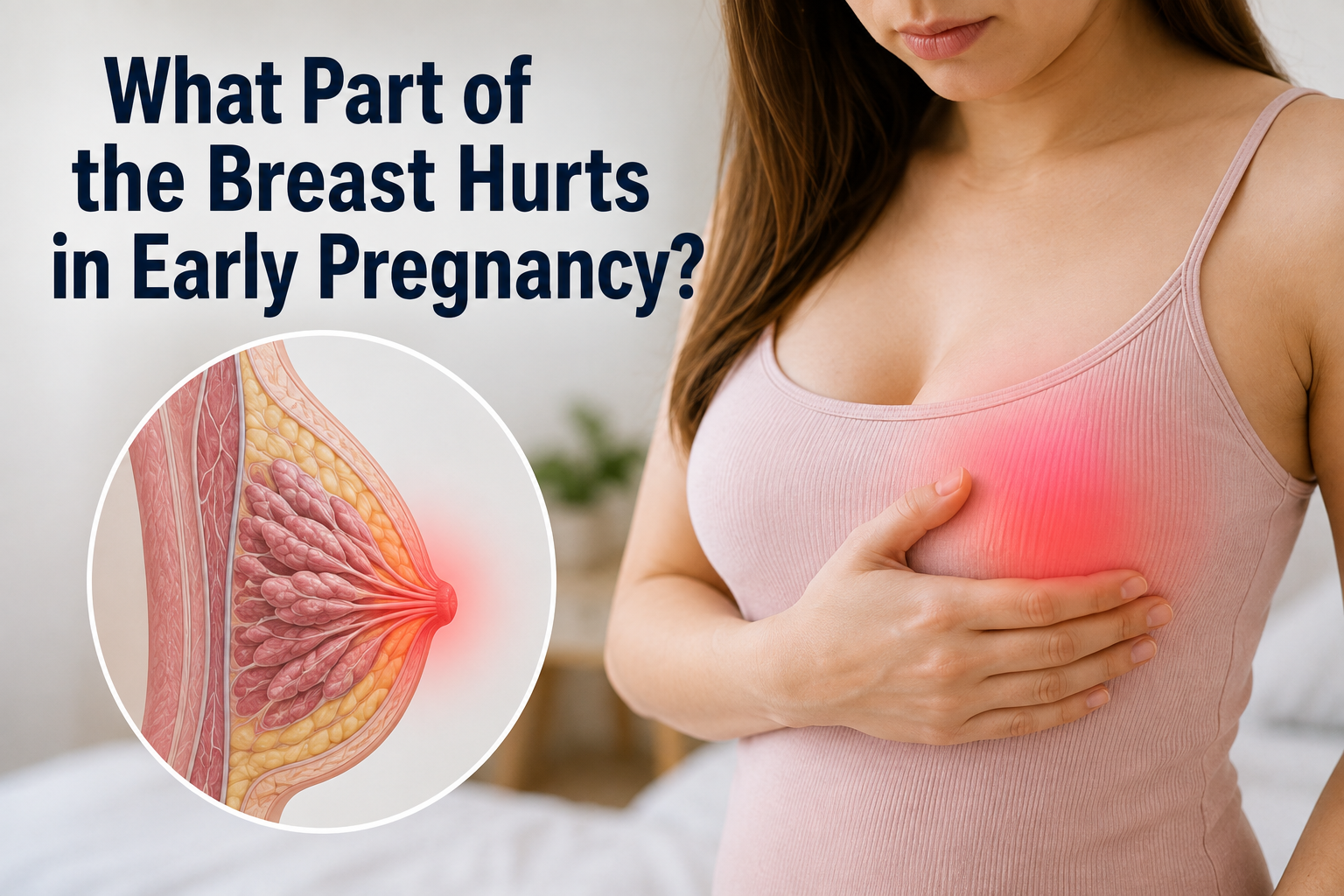
Breast discomfort is one of the earliest and most common signs that the body is adjusting to pregnancy, and many women notice it even before a missed period. The pain is not spread evenly across the chest; it tends to concentrate in specific areas that respond most strongly to rising hormone levels.
Understanding what part of the breast hurts in early pregnancy can help distinguish normal hormonal changes from something that needs medical attention. This tenderness is usually a reassuring sign that hormone levels are rising as expected to support the pregnancy.
It can range from a mild ache to a sharp, noticeable soreness depending on the woman and the pregnancy. Knowing which areas are typically affected, how long the discomfort lasts, and what can ease it makes this early stage far less confusing.
Why Breast Pain Happens in Early Pregnancy?
Breast pain in early pregnancy is driven mainly by a rapid rise in estrogen and progesterone, hormones that prepare the body for milk production long before delivery.
These hormones increase blood flow to the chest and stimulate the growth of milk ducts and glandular tissue, which stretches surrounding tissue and nerve endings.
As a result, the breasts often feel fuller, heavier, and more sensitive to touch or pressure than usual. This hormonal surge begins within days of conception, which is why breast tenderness is often one of the very first pregnancy symptoms a woman notices.
Which Parts of the Breast Hurt Most?
Not every area of the breast is affected equally in early pregnancy, and the pattern of soreness often follows a predictable path across the chest. The sections below break down the specific areas where discomfort is most commonly reported, from the nipple outward to the surrounding tissue.
Nipples and Areola
The nipples and the darker skin surrounding them, known as the areola, are usually the most sensitive area in early pregnancy. Even light contact from clothing or a shower can feel uncomfortable or tingly. This heightened sensitivity happens because blood vessels and nerve endings in this region become more active as the body prepares for eventual breastfeeding.



Outer and Side Breast Area
Many women describe a dull ache or soreness along the outer edges and sides of the breast, especially near the armpit region. This happens because glandular tissue extends toward the underarm area, known as the axillary tail, and swells along with the rest of the breast. The discomfort here can feel similar to a bruise when pressed.
Whole Breast Heaviness and Fullness
Beyond specific spots, the entire breast often feels heavier, fuller, and more swollen than usual. This generalized fullness comes from increased blood supply and fluid retention throughout the breast tissue. Wearing a well-fitted, supportive bra can noticeably reduce this heavy, weighted sensation during daily activities.
Underarm and Armpit Area
Soreness is also frequently felt just below the armpit, where breast tissue naturally extends. Lymph nodes in this region can feel slightly tender as circulation increases throughout the chest. This ache is usually mild and tends to ease once the body adjusts to the new hormone levels over the following weeks.
When Breast Pain Starts and How Long It Lasts?
Breast tenderness typically begins around one to two weeks after conception, often before a pregnancy test would show a positive result, making it one of the earliest noticeable symptoms.
The discomfort usually peaks during the first trimester, roughly between weeks six and eight, when hormone levels rise most sharply.
For most women, the intensity gradually decreases by the second trimester as the body adjusts, though some sensitivity, particularly around the nipples, can continue on and off throughout the pregnancy.
Common Symptoms Alongside Breast Pain
Breast soreness rarely occurs in isolation and is usually accompanied by a few other noticeable changes in the chest area during early pregnancy. The following symptoms often appear together and are considered part of the same normal hormonal process.
Tingling or Sensitivity
A tingling or prickling sensation, similar to pins and needles, is common alongside soreness, especially around the nipple area. This occurs as nerve endings respond to increased blood flow and swelling in the breast tissue. It typically comes and goes rather than staying constant throughout the day.
Visible Vein Changes
Many women notice that veins across the chest and breasts become more visible or prominent as pregnancy progresses. This happens because blood volume increases significantly to support the growing pregnancy, pushing more blood through surface veins. While it can look alarming, this change is a normal and expected part of early pregnancy.
Darkening of Areola
The areola often becomes darker and slightly larger during the early weeks of pregnancy, a change driven by hormonal shifts affecting skin pigmentation. Small bumps called Montgomery glands may also become more noticeable around the nipple. This darkening usually remains for the duration of pregnancy and sometimes afterward.
How to Relieve Breast Pain During Early Pregnancy?
While breast tenderness cannot be eliminated entirely, since it is tied to essential hormonal changes, several practical adjustments can make daily comfort significantly easier. The following approaches focus on support, temperature relief, and rest positioning.
Supportive Bra or Clothing
Switching to a soft, wire-free maternity or sports bra reduces pressure on sensitive tissue and limits unnecessary movement throughout the day. A properly fitted bra distributes weight evenly instead of concentrating it on the nipple and outer breast areas. Many women find relief by sizing up as fullness increases week by week.
Warm or Cold Compress
Applying a warm compress can relax tight, swollen tissue, while a cold compress can numb sharper, more localized soreness when needed. Alternating between the two, a few minutes at a time, often provides quick relief without any medication. This method is simple, low-cost, and safe to repeat throughout the day.
Sleeping Position Adjustments
Side-sleeping with a supportive pillow tucked against the chest can reduce pressure on tender breast tissue overnight. Stomach sleeping tends to worsen soreness during this stage and is best avoided as fullness increases. A small pillow between the arm and chest can also prevent accidental pressure while shifting positions during sleep.
When to See a Doctor
Most breast pain in early pregnancy is a normal hormonal response and does not require treatment, but certain signs deserve medical attention.
A firm lump that does not move, unusual nipple discharge, unexplained fever, or pain concentrated on only one side while the other feels normal should be evaluated promptly.
Redness, warmth, or skin dimpling on the breast are also signs that should not be ignored, as they can occasionally point to an infection rather than typical pregnancy-related swelling.
Breast Pain: Early Pregnancy vs PMS vs Later Pregnancy
The table below compares how breast discomfort typically differs across these three stages, since the overlap in symptoms often causes confusion for women trying to identify early pregnancy.
| Feature | Early Pregnancy | PMS (Before Period) | Later Pregnancy |
| Main affected area | Nipples, areola, outer breast | Whole breast, mild swelling | Whole breast, increased weight |
| Duration | Persists beyond expected period | Resolves once period starts | Continues, gradually intensifies |
| Areola color | Often darkens | Usually unchanged | Remains darker, may enlarge further |
| Associated signs | Vein visibility, tingling | Mild bloating, mood changes | Colostrum leakage possible |
| Typical onset | 1-2 weeks after conception | A few days before period | Increases through 2nd/3rd trimester |
FAQs
Does breast pain mean the pregnancy is healthy?
Breast tenderness is a common sign that hormone levels are rising as expected, but its presence or absence alone does not confirm how a pregnancy is progressing.
Is it normal for only one breast to hurt more than the other?
Mild differences in soreness between breasts are common due to uneven blood flow and tissue growth, though severe one-sided pain should be checked by a doctor.
When does breast pain usually stop during pregnancy?
For most women, intense soreness eases by the second trimester, though occasional sensitivity around the nipples can continue on and off throughout pregnancy.
Can breast pain come and go in early pregnancy?
Yes, it is common for tenderness to fluctuate throughout the day and across different weeks as hormone levels continue adjusting.
Conclusion
Breast pain in early pregnancy most commonly centers around the nipples, areola, and outer breast area, driven by rising estrogen and progesterone levels. This tenderness usually peaks in the first trimester and gradually eases as the body adjusts.
Supportive clothing, temperature therapy, and mindful sleeping positions can ease daily discomfort. Persistent lumps, one-sided severe pain, or unusual discharge should always be discussed with a doctor.
RELATED ARTICLES
Is Diabetes Genetic? What Science Says About Family Risk
What Causes Hemiplegic Migraine? Symptoms and Treatment
How Do You Stop Foot Odor? Guide to Fresh, Odor-Free Feet
Can Being Sick Delay Your Period? Causes, Timeline and When to Worry