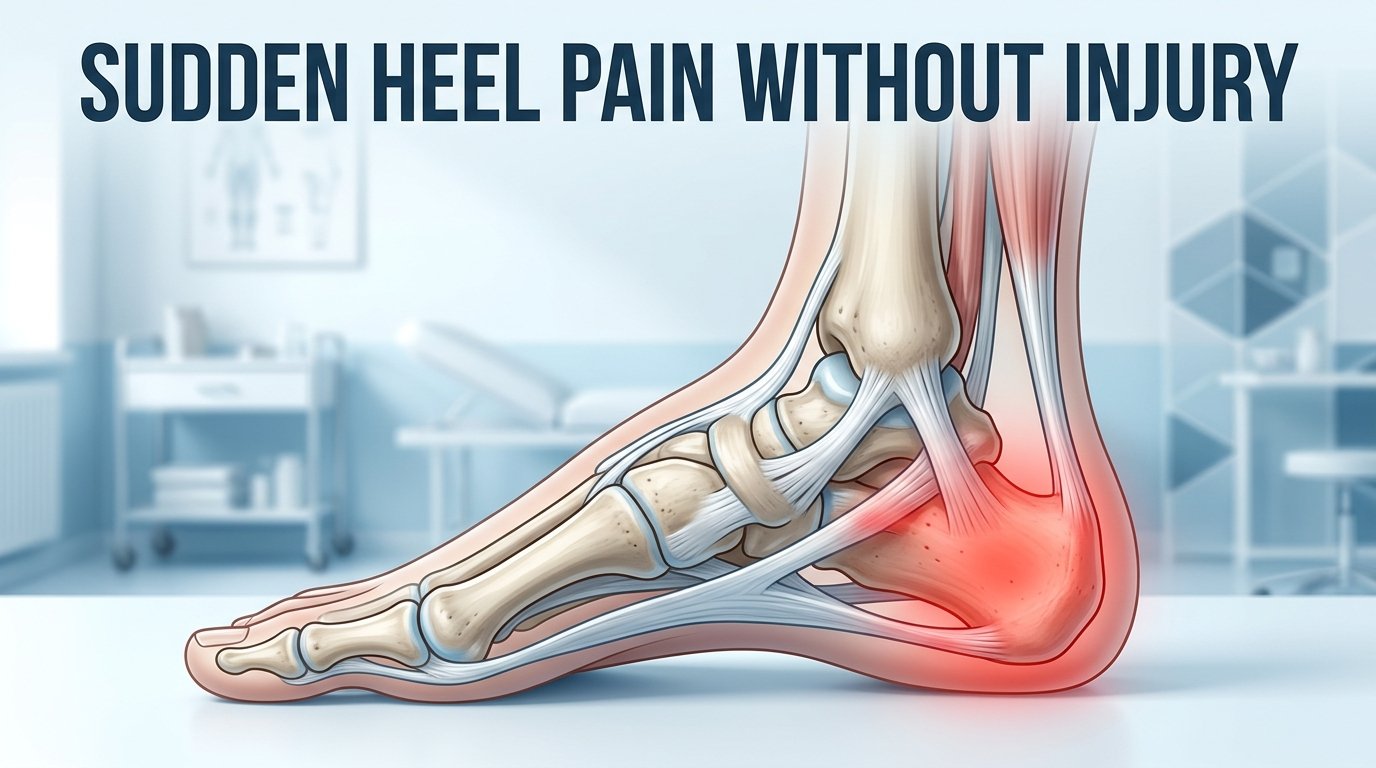
Heel pain that appears out of nowhere can be confusing, especially when there was no fall, twist, or accident to explain it. Many people assume pain must follow an injury, so sudden heel pain without injury often leads to worry and uncertainty.
In most cases, the discomfort develops from repetitive strain, inflammation, or an underlying condition rather than a single traumatic event. Recognizing the pattern of pain, its location, and any accompanying symptoms can help identify the likely cause.
This guide walks through the common reasons behind sudden heel pain without injury, how it differs from injury-related pain, and the steps to find relief. Understanding these details early can prevent the discomfort from becoming a long-term problem.
What Does “Heel Pain Without Injury” Mean?
Heel pain without injury refers to discomfort that builds up gradually or appears suddenly without any direct blow, fall, or twist to the foot. It usually points to an internal issue such as inflammation, nerve irritation, or a structural change inside the heel rather than external trauma.
Unlike a sprained ankle or a stubbed toe, this type of pain often develops slowly through everyday activities like standing, walking, or wearing unsupportive shoes. Because there is no obvious injury to point to, people sometimes delay seeking help, which can allow the underlying condition to worsen over time.
Common Causes of Sudden Heel Pain
Several medical conditions can trigger sudden heel pain without injury, ranging from overuse issues to nerve or joint problems. The sections below explain each cause and what makes it different from the others.
Plantar Fasciitis
Plantar fasciitis is the most frequent cause of sudden heel pain without injury, caused by inflammation of the thick band of tissue connecting the heel to the toes. Pain typically feels sharp during the first few steps in the morning or after long periods of sitting. Standing for extended hours, tight calf muscles, or wearing flat shoes without arch support often makes the condition worse.
Heel Spurs
A heel spur is a small calcium deposit that forms on the underside of the heel bone, frequently developing alongside plantar fasciitis. Many people carry a heel spur without ever feeling pain, but when it presses against nearby tissue, discomfort can appear suddenly. The pain is often described as a dull ache that becomes sharper with pressure or activity.



Achilles Tendinitis
Achilles tendinitis involves inflammation of the tendon connecting the calf muscles to the back of the heel bone. It usually results from repetitive strain during running, jumping, or sudden increases in physical activity. Stiffness and tenderness at the back of the heel, especially in the morning, are common early signs.
Stress Fractures
A stress fracture is a tiny crack in the heel bone caused by repeated impact rather than one specific accident, which is why it can feel like the pain appeared without injury. Athletes, runners, and people who suddenly increase their activity level are more prone to this condition. Swelling and pain that worsens with weight-bearing activity are typical warning signs.
Heel Bursitis
Bursitis develops when the small fluid-filled sac that cushions the heel becomes inflamed, often from friction or pressure. This can happen due to tight shoes, prolonged standing, or repetitive motion rather than a specific injury. The pain is usually felt at the back or bottom of the heel and may worsen when pressing on the area.
Tarsal Tunnel Syndrome
Tarsal tunnel syndrome occurs when the nerve running along the inside of the ankle becomes compressed, leading to pain that can radiate into the heel. Unlike typical heel pain, this condition often comes with tingling, burning, or numbness. Poor foot posture, swelling, or nearby structural changes can contribute to the nerve compression.
Fat Pad Atrophy
The heel naturally has a cushioned fat pad that absorbs shock while walking, and this pad can thin out with age or repetitive stress. When it weakens, the heel bone experiences more direct pressure, resulting in sudden discomfort during standing or walking. This cause is more common in older adults and people who spend long hours on hard surfaces.
Sever’s Disease
Sever’s disease affects growing children and teenagers, occurring when the growth plate in the heel becomes irritated from repetitive activity. It is especially common in young athletes involved in running or jumping sports. Pain often appears suddenly during or after physical activity and may cause a noticeable limp.
Gout
Gout is caused by a buildup of uric acid crystals in the joints, and while it commonly affects the big toe, it can also strike the heel. The pain often appears suddenly and intensely, accompanied by redness, warmth, and swelling. Dietary triggers, dehydration, or certain medications can bring on a gout flare-up without warning.
Autoimmune and Inflammatory Conditions
Conditions such as reactive arthritis or ankylosing spondylitis can cause inflammation at the point where tendons attach to the heel bone. These disorders often affect more than one joint and may come with stiffness that improves with movement. Because the pain is linked to the immune system rather than physical strain, it can appear without any clear triggering activity.
Risk Factors That Increase Likelihood
Certain lifestyle and health factors make sudden heel pain without injury more likely to occur. Being aware of these risk factors can help with early prevention and management.
• Being overweight or experiencing rapid weight gain, which adds pressure to the heel
• Standing or walking for long hours on hard surfaces, common in certain occupations
• Wearing unsupportive or worn-out footwear without proper cushioning
• Having flat feet or unusually high arches that affect weight distribution
• Increasing exercise intensity or frequency too quickly without gradual conditioning
• Aging, which naturally reduces the heel’s fat pad and tissue elasticity
Symptoms Table: How to Tell Causes Apart
Because several conditions can cause similar pain, comparing symptoms side by side makes it easier to recognize the likely cause. The table below highlights key differences in pain location, timing, and additional signs.
| Condition | Pain Location | Typical Timing | Additional Signs |
| Plantar Fasciitis | Bottom of heel | Worse with first steps in morning | Improves slightly with movement |
| Heel Spur | Underside of heel | Worsens with pressure or activity | Dull ache, sometimes no symptoms |
| Achilles Tendinitis | Back of heel | Morning stiffness, worsens with activity | Tenderness, mild swelling |
| Stress Fracture | Deep heel pain | Worsens with weight-bearing | Swelling, possible bruising |
| Heel Bursitis | Back or bottom of heel | Worsens with pressure or tight shoes | Localized swelling |
| Tarsal Tunnel Syndrome | Inner ankle radiating to heel | Varies, often constant | Tingling, numbness, burning |
| Fat Pad Atrophy | Center of heel | Worsens with standing or walking | Feels like walking on bone |
| Sever’s Disease | Back of heel (children) | During or after activity | Limping, tenderness |
| Gout | Heel or nearby joint | Sudden, intense onset | Redness, warmth, swelling |
| Autoimmune Conditions | Heel and other joints | Improves with movement | Stiffness, multi-joint involvement |
When Sudden Heel Pain Is a Medical Emergency
While most causes of heel pain are manageable at home, certain symptoms indicate a need for prompt medical attention. Ignoring these warning signs can lead to complications or delayed healing.
• Inability to bear any weight on the affected foot
• Visible deformity or significant swelling around the heel
• Fever accompanying heel pain, which may signal infection
• Numbness, tingling, or loss of sensation in the foot
• Pain that suddenly worsens without any clear reason
How Heel Pain Is Diagnosed?
Doctors typically begin diagnosing sudden heel pain without injury with a physical examination, checking for tenderness, swelling, and range of motion in the foot and ankle. They may also ask about daily activities, footwear habits, and any recent changes in exercise routine.
If the cause remains unclear, imaging tests such as X-rays, ultrasound, or MRI scans can help identify stress fractures, bone spurs, or soft tissue damage. Blood tests may be ordered when an autoimmune condition or gout is suspected, since these conditions leave measurable markers in the bloodstream.
Home Remedies and Self-Care for Relief
Many cases of sudden heel pain without injury improve with simple home care before requiring medical treatment. The following steps can ease discomfort and support healing.
• Resting the foot and avoiding activities that worsen the pain
• Applying ice to the heel for fifteen to twenty minutes at a time
• Stretching the calf muscles and plantar fascia gently each day
• Switching to supportive, cushioned footwear during recovery
• Using over-the-counter pain relievers to manage inflammation and discomfort
• Elevating the foot when resting to reduce swelling
Medical Treatments Available
When home care is not enough, doctors may recommend physical therapy to strengthen the foot and improve flexibility. Custom orthotics or heel cushions can help redistribute pressure and support proper alignment while walking. In cases involving significant inflammation, corticosteroid injections may provide short-term relief. Surgery is rarely needed and is generally reserved for severe or long-lasting cases that do not respond to other treatments.
Prevention Tips
Preventing sudden heel pain without injury largely comes down to protecting the foot from repetitive stress and supporting its natural structure. The following habits can lower the risk of future flare-ups.
• Choosing shoes with proper arch support and cushioning
• Gradually increasing exercise intensity instead of sudden jumps in activity
• Maintaining a healthy body weight to reduce pressure on the heels
• Stretching regularly, especially before and after physical activity
• Replacing worn-out shoes before they lose their support
FAQs
Can sudden heel pain go away on its own?
Mild cases caused by overuse often improve with rest and self-care within a few weeks. However, persistent or worsening pain usually needs proper diagnosis and treatment to prevent it from becoming chronic.
Is walking bad for heel pain without injury?
Walking is not harmful in moderation, but pushing through sharp pain can worsen inflammation. Short, low-impact movement with supportive shoes is generally better than complete inactivity or overexertion.
When should I see a doctor for heel pain?
A doctor should be consulted if the pain lasts more than two weeks, worsens over time, or is accompanied by swelling, redness, or difficulty walking.
Can heel pain be a sign of a serious condition?
In some cases, yes. Conditions like gout, stress fractures, or autoimmune disorders require proper diagnosis, so pain that is severe or unusual should not be ignored.
Conclusion
Sudden heel pain without injury can stem from a wide range of causes, from plantar fasciitis and heel spurs to nerve compression and inflammatory conditions.
Paying attention to when the pain occurs, its exact location, and any accompanying symptoms makes it easier to identify the underlying issue.
Most cases respond well to rest, supportive footwear, and simple home care, but persistent or severe symptoms deserve medical evaluation. Early attention to heel pain not only speeds up recovery but also helps prevent long-term complications.
Related Articles
Kill Tooth Pain Nerve in 3 Seconds Permanently: Is It Really Possible?
How to Get Rid of Crackling Sound in Ear: 9 Proven Fixes
Can Allergies Cause Swollen Lymph Nodes?
Does Sleep Apnea Go Away? What Really Happens
Can Thrush Cause Urinary Tract Infections? The Complete Guide