


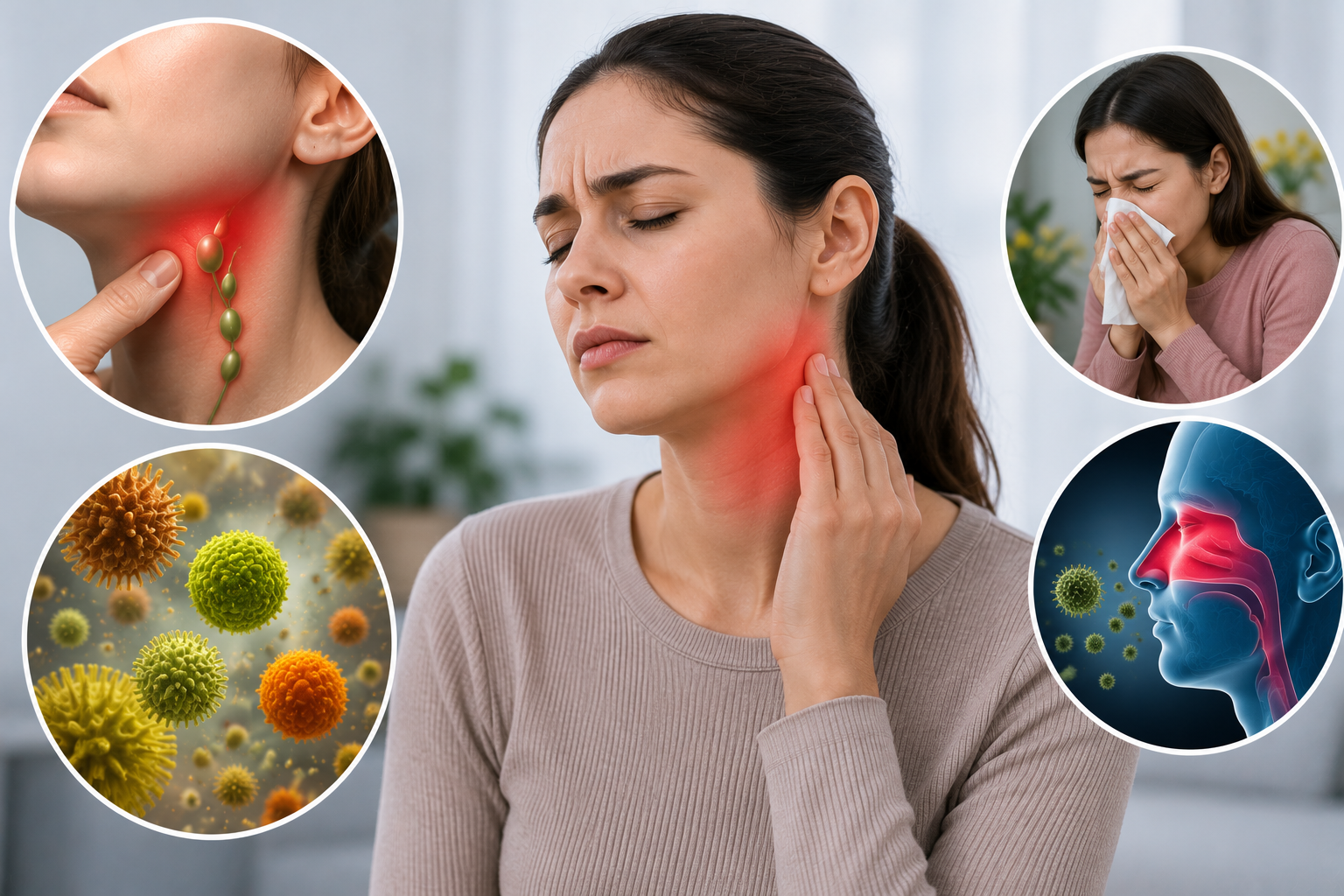
Can allergies cause swollen lymph nodes, or is something else going on? If you’ve noticed a tender bump in your neck during allergy season, you’ve probably asked yourself the same question while also dealing with sneezing, congestion, and itchy eyes. The good news is that this article gives you a clear, medically grounded answer, explains exactly why swelling happens, and shows you when it’s safe to wait it out versus when to call a doctor.
Most allergy symptoms stay confined to your nose, eyes, and throat. Swollen lymph nodes tell a slightly different story, and understanding that story helps you respond correctly instead of guessing.
| Key Takeaways• Allergies rarely cause swollen lymph nodes directly — infections are the far more common trigger.• Persistent allergies can weaken sinus defenses, leading to secondary infections that do cause swelling.• When allergies are involved, swelling usually shows up in the neck, under the jaw, or behind the ears.• Allergy-related swelling is typically mild, soft, and movable — not hard or fixed.• Swelling lasting more than two weeks, or paired with fever or weight loss, needs medical evaluation. |
What Are Lymph Nodes and Why Do They Swell?
Lymph nodes are small, bean-shaped structures spread throughout your neck, armpits, and groin. They act as filtering stations, trapping bacteria, viruses, and other threats before those threats spread further through the body.
When your immune system detects something worth fighting, nearby lymph nodes fill with extra immune cells and swell as a result. This process, called lymphadenopathy, is your body’s way of mounting a targeted defense rather than a sign of illness by itself.
• Lymph nodes filter fluid, bacteria, and cellular debris from nearby tissue.
• Swelling means the immune system has ramped up activity in that area.
• Nodes commonly swell in the neck, under the jaw, behind the ears, armpits, and groin.
• Healthy lymph nodes are usually too small to notice unless they’re actively responding to something.

Can Allergies Cause Swollen Lymph Nodes? The Direct Answer
The short answer: allergies rarely cause swollen lymph nodes directly, and when they do, the swelling tends to be mild. infections are the most common cause of swollen lymph nodes, while seasonal allergies on their own typically do not produce this symptom.
That said, allergic reactions do trigger the release of histamine and other inflammatory chemicals. In people with more severe or persistent allergic responses, this inflammation can occasionally extend to nearby lymph nodes, particularly in the neck and jaw area.
| Pro TipIf your swollen lymph node feels soft, moves easily under the skin, and appears alongside typical allergy symptoms like sneezing and itchy eyes, it’s more likely tied to inflammation than infection. Hard, fixed, or rapidly growing nodes deserve a medical check. |
How Allergic Rhinitis Indirectly Leads to Swollen Glands
The stronger connection between allergies and swollen lymph nodes is indirect. Persistent allergic rhinitis inflames the sinus lining, and that ongoing irritation makes it easier for bacteria to take hold.
Once a secondary sinus infection develops, your lymph nodes respond the way they would to any infection — by swelling as they fight it off. This is why many people notice glandular swelling during a bad allergy season and mistakenly attribute it to the allergies themselves.
• Chronic nasal inflammation reduces the sinuses’ ability to drain and self-clean.
• Trapped mucus creates an environment where bacteria multiply more easily.
• The resulting sinus infection, not the allergy itself, is what typically triggers noticeable swelling.
• Treating the underlying allergy lowers the risk of this secondary infection occurring.
Swollen Lymph Nodes: Allergies vs. Infection
Because allergy symptoms and infection symptoms overlap early on, a side-by-side comparison makes the distinction easier to spot at home.
| Feature | Allergy-Related | Infection-Related |
| Fever | Rare or absent | Common |
| Node texture | Soft, movable | Can be firm or tender |
| Onset | Matches allergen exposure | Often follows illness exposure |
| Accompanying symptoms | Sneezing, itchy eyes, congestion | Sore throat, fatigue, body aches |
| Typical duration | Improves as allergy is treated | May worsen without treatment |
Where Allergy-Related Lymph Node Swelling Usually Shows Up
The notes that the head, neck, underarms, and groin are the areas most likely to show noticeable swelling, since these regions contain the highest concentration of lymph nodes near the body’s surface.
When allergies are the trigger, swelling concentrates close to the sinuses and throat rather than spreading to distant areas of the body.
Common Locations for Allergy-Linked Swelling
• Under the jaw, from sinus and nasal drainage irritation.
• Front or side of the neck, near the throat and tonsils.
• Behind the ears, less commonly, during severe reactions.
Managing Allergy-Related Swelling: A Real-World Scenario
| Hypothetical Example (for illustration purposes):Sara, 34, deals with seasonal pollen allergies every spring. This year she noticed mild, soft swelling under her jaw along with her usual sneezing and congestion. She had no fever and felt otherwise well. After starting a daily antihistamine and using saline nasal rinses, her allergy symptoms improved within a week, and the swelling went down along with them. Because nothing worsened and no fever developed, she did not need antibiotics or further testing.Note: This scenario is illustrative. Actual results vary by individual, allergy severity, and treatment approach. |
Sara’s case reflects a common, low-risk pattern: mild swelling that tracks with allergy symptoms and resolves as those symptoms are treated. Not every case follows this path, which is why watching for warning signs still matters.
Warning Signs: When Swollen Lymph Nodes Need a Doctor
| WarningSeek medical care if a swollen lymph node lasts longer than two weeks, keeps growing, feels hard or fixed in place, or appears alongside fever, night sweats, or unexplained weight loss. |
Per swollen lymph nodes that are hard, painless, and progressively enlarging should always be evaluated promptly, since these features are less typical of ordinary allergic or viral causes.
• Swelling that hasn’t improved after two to three weeks of allergy treatment.
• A node that feels hard, irregular, or doesn’t move when touched.
• High fever, drenching night sweats, or unexplained weight loss.
• Difficulty breathing or swallowing alongside neck swelling.
How Doctors Diagnose the Cause of Swollen Lymph Nodes?
A physical exam is usually the starting point. Your doctor will check the size, texture, and location of the swollen node while asking about your allergy history and recent symptoms.
If the cause isn’t obvious from the exam alone, further testing helps rule out infection or other conditions before allergies are confirmed as the source.
• Blood tests to check for signs of infection or inflammation.
• Throat swab if strep throat or another bacterial cause is suspected.
• Allergy skin-prick or blood testing to confirm specific triggers.
• Imaging or biopsy, reserved for nodes that remain unexplained or concerning after initial testing.
Frequently Asked Questions
Can allergies cause swollen lymph nodes in the neck?
Yes, though it’s uncommon. When it happens, swelling usually appears under the jaw or along the front of the neck, closest to the sinuses and throat that allergies irritate most.
How long do swollen lymph nodes from allergies last?
Mild, allergy-related swelling typically fades within one to two weeks as allergy symptoms are treated. Swelling that persists beyond two weeks warrants a medical check.
What does an allergy-related swollen lymph node feel like?
It usually feels soft, small, and movable under the skin, with mild tenderness at most. Hard, fixed, or rapidly growing nodes are less typical of allergies.
Can seasonal allergies cause swollen glands?
Seasonal allergies can occasionally cause mild swelling directly, but more often they raise the risk of a sinus infection, which is the more likely direct cause of swollen glands.
Should I worry about swollen lymph nodes with allergies?
Mild swelling that improves alongside allergy treatment usually isn’t a concern. Worsening, painless, or long-lasting swelling should be evaluated by a doctor.
What’s the difference between swollen lymph nodes from allergies and infection?
Infection-related swelling often comes with fever and firmer nodes, while allergy-related swelling tends to be soft and paired with sneezing, itching, and congestion instead.
Can sinus allergies cause neck lymph node swelling?
Yes, indirectly. Chronic sinus inflammation from allergies can lead to a secondary sinus infection, which commonly causes noticeable neck lymph node swelling.
Final Thoughts
So, can allergies cause swollen lymph nodes? Rarely on their own — but they raise your risk of the sinus infections that usually do.
Watching for fever, hard or fixed nodes, and swelling that lasts beyond two weeks tells you when home care is enough and when it’s time to call a doctor.
Getting your allergy symptoms under control early is the simplest way to avoid that secondary infection altogether.
RELATED ARTICLES
Does Hard Water Cause Acne? Understanding the Connection Between Water Quality and Skin Breakouts
Does Facial Work for Acne? Benefits, Risks, Types, and What to Expect
Abbeville Community Health Center: Services, Programs, Benefits, and Patient Care Guide
Balance Care Health Insurance: Plans, Benefits, Costs, and Enrollment Guide
Mental Health Retreat Covered by Insurance: Complete Guide to Coverage, Costs, and Approval