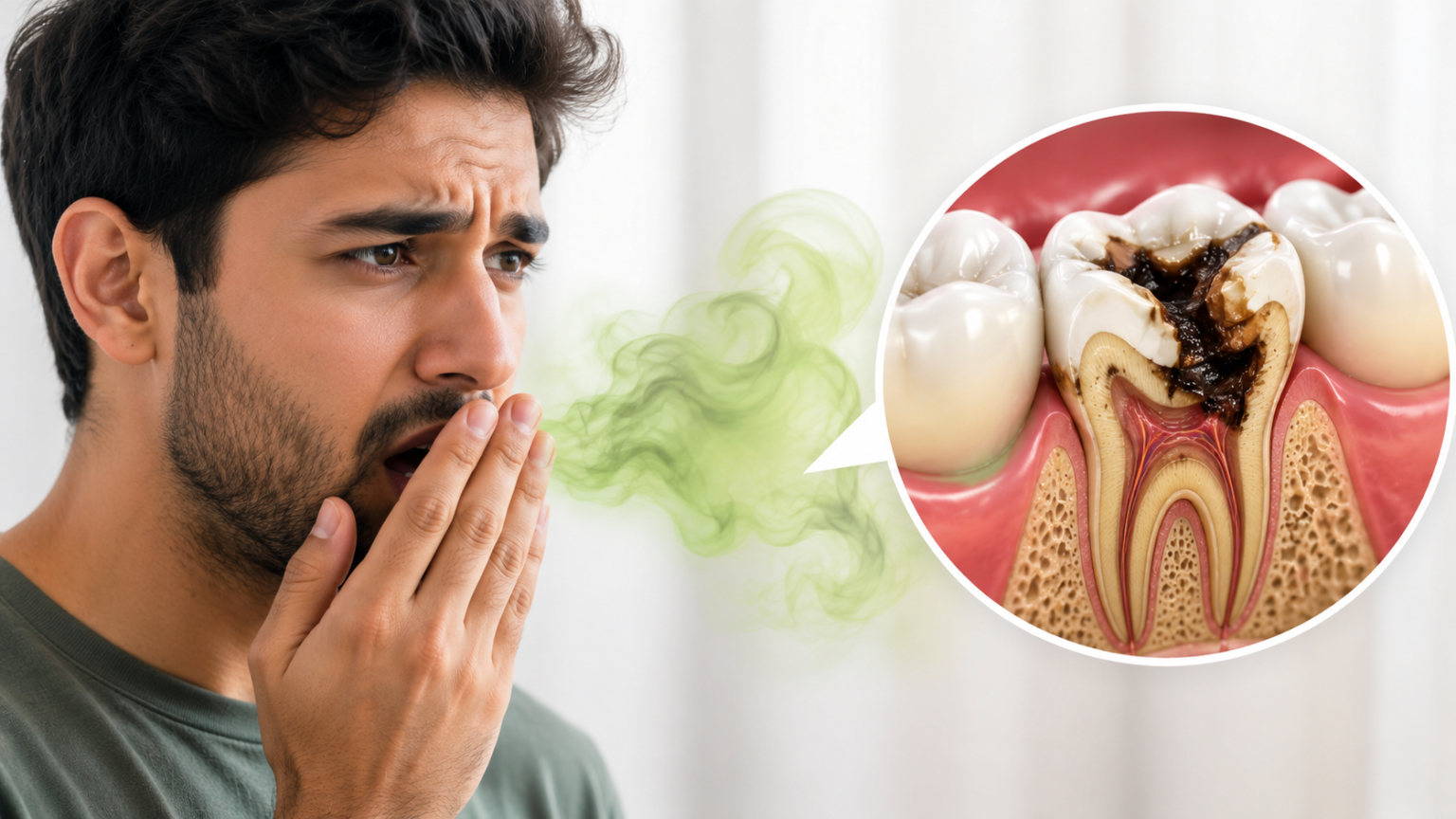
Yes, cavities can cause bad breath, and this happens more often than most people realize. When a tooth decays, bacteria break down the tooth structure and release foul-smelling gases as a byproduct.
Food particles also get trapped inside the cavity hole, where they rot over time and add to the odor. The deeper the decay goes, the stronger and more persistent the smell becomes.
If the decay reaches the inner pulp of the tooth, infection can set in, making the breath problem even worse. This guide explains exactly why this happens and what you can do about it.
Understanding Bad Breath (Halitosis)
Bad breath, known medically as halitosis, is usually a sign that something in the mouth or body needs attention rather than just a minor inconvenience. It can be temporary, caused by food or dryness, or it can be a chronic condition tied to an underlying oral health issue.
What Is Halitosis, Medically Speaking
Halitosis refers to any unpleasant odor coming from the mouth that is noticeable to others or to the person themselves. It is not a disease on its own but rather a symptom that points to bacterial activity, dryness, or decay happening somewhere in the mouth or digestive system. Dentists often use it as a diagnostic clue to check for deeper oral problems.
Common Causes of Bad Breath
Bad breath can come from many sources including leftover food particles, dry mouth, smoking, gum disease, and poor brushing habits. Certain foods like garlic and onions temporarily affect breath through the bloodstream and lungs. However, when the smell is constant and doesn’t fade after basic hygiene, it usually points to something more persistent like decay or infection.
What Exactly Is a Cavity?
A cavity is a small hole or damaged area in the hard surface of a tooth caused by decay. It develops slowly and can go unnoticed until it becomes deep enough to cause pain, sensitivity, or noticeable odor.
Definition of Dental Caries
Dental caries is the scientific term for tooth decay that eventually forms a cavity. It occurs when acids produced by mouth bacteria wear away the protective enamel layer, creating a weak spot that eventually turns into an actual hole in the tooth.



How Cavities Form
Cavities form when plaque, a sticky film of bacteria, builds up on teeth and feeds on sugars from food. This bacterial activity produces acid that slowly dissolves the enamel. Over time, this process eats through the tooth’s outer layer and moves deeper, creating the visible pit or hole known as a cavity.
Stages of Tooth Decay
Tooth decay progresses through several stages, starting with early enamel demineralization that looks like a white or brown spot, moving to enamel breakdown, then dentin decay, and finally reaching the pulp where nerves and blood vessels are located. Each stage increases the risk of pain, infection, and bad breath as bacteria dig deeper into the tooth.
The Direct Link Between Cavities and Bad Breath
The connection between decay and odor comes down to bacteria feeding on tooth material and trapped food inside the cavity. As decay progresses, the smell typically becomes stronger and harder to mask.
Bacterial Breakdown Produces Sulfur Compounds
The bacteria responsible for tooth decay release volatile sulfur compounds as they break down organic material inside the cavity. These compounds are the same type responsible for the rotten-egg smell associated with severe bad breath, which is why deep cavities often smell distinctly unpleasant.
Food and Debris Trapped in the Cavity
Once a hole forms in a tooth, food particles easily get stuck inside where brushing and flossing struggle to reach. This trapped food decomposes over hours, feeding more bacteria and steadily worsening the smell coming from that specific tooth.
Decay Reaching the Pulp
When decay advances past the enamel and dentin into the pulp, it can cause infection inside the tooth. This infected tissue produces a much stronger and more persistent odor, often accompanied by pain, swelling, or sensitivity to hot and cold.
Dental Abscess and Its Odor
A dental abscess is a pocket of pus that forms when infection spreads beyond the tooth into the surrounding gum or bone. Abscesses produce a particularly foul, distinct smell and often come with visible swelling, throbbing pain, and sometimes a bad taste that lingers even after rinsing.
Signs Your Bad Breath Is Cavity-Related
Certain clues can help you figure out whether a cavity is behind your breath problem rather than something more general. Paying attention to these signs early can prevent the decay from getting worse.
Persistent Smell Despite Hygiene
If bad breath continues even after brushing, flossing, and using mouthwash, this is one of the clearest indicators that a cavity or another dental issue is the underlying cause rather than diet or temporary dryness.
Visible Holes or Dark Spots
Cavities often appear as small dark spots, pits, or visible holes on the surface of a tooth. Checking your teeth in a mirror under good lighting can sometimes reveal the exact spot causing the odor.
Tooth Sensitivity or Pain
Sensitivity to hot, cold, or sweet foods near a specific tooth often accompanies a cavity that has progressed past the outer enamel layer. This pain is usually a sign that the decay has reached deeper tissue.
Bad Taste in the Mouth
A persistent sour, metallic, or bitter taste can accompany cavity-related bad breath, especially when infection or pus is present. This taste is often more noticeable in the morning or after eating.
Swelling or Bleeding Near a Tooth
Gum swelling, redness, or bleeding around a specific tooth can indicate that decay has spread into the surrounding tissue, which often intensifies both discomfort and the associated odor.
Other Dental Conditions That Mimic This Problem
Not all bad breath comes from cavities alone, so it helps to know the other common culprits that produce similar symptoms.
Gum Disease
Gingivitis and periodontitis both involve bacterial buildup along the gumline, producing an odor similar to cavity-related breath. Left untreated, gum disease can also lead to tooth loss over time.
Impacted Wisdom Teeth
Partially erupted wisdom teeth create pockets where food and bacteria accumulate, often causing localized bad breath and swelling similar to what a cavity produces.
Old Fillings or Crowns With Decay
Decay can develop underneath older fillings or crowns without being visible on the surface, leading to hidden bad breath that’s easy to miss during a casual glance in the mirror.
Dry Socket After Extraction
Following a tooth extraction, a dry socket can develop and cause a distinct foul smell along with pain, requiring prompt attention from a dentist to resolve.
Why Does Cavities Smell?
Understanding the chemistry behind the odor helps explain why treating the cavity, not just masking the smell, is the only real long-term solution.
Role of Anaerobic Bacteria
Anaerobic bacteria thrive in low-oxygen environments like the inside of a cavity, and their metabolic activity is what generates the sulfur-based compounds responsible for the smell.
Volatile Sulfur Compounds Explained
Volatile sulfur compounds, or VSCs, are gases released during bacterial breakdown of proteins and food debris. These are the primary chemical culprits behind the rotten smell tied to both cavities and general oral bacteria overgrowth.
Why Deeper Cavities Smell Worse
The deeper a cavity extends into the tooth, the more bacteria and decaying tissue accumulate inside it, which is why advanced decay or an abscess produces a noticeably stronger and more unpleasant odor than a small surface cavity.
Diagnosis: How Dentists Confirm the Cause
A dentist uses a combination of visual inspection and imaging to determine whether a cavity is truly the source of persistent bad breath.
Visual and Physical Exam
Dentists examine each tooth closely, checking for visible decay, discoloration, or soft spots, and often use a small probe to detect areas that feel different from healthy enamel.
Dental X-Rays
X-rays reveal decay hidden beneath the surface or under old fillings that cannot be seen during a regular visual exam, making them essential for confirming the exact location and depth of a cavity.
Ruling Out Other Causes
Dentists also check for other potential sources of bad breath, such as sinus infections, tonsil stones, or digestive issues, to make sure the treatment plan targets the actual root cause.
Treatment Options for Cavity-Related Bad Breath
| Treatment | Best For | What It Involves |
| Filling | Early to moderate cavities | Removing decay and sealing the hole with composite or amalgam material |
| Root Canal | Decay reaching the pulp | Removing infected tissue from inside the tooth and sealing it |
| Crown | Structural damage | Covering and protecting a weakened tooth after treatment |
| Extraction | Severely damaged teeth | Removing the tooth when it cannot be saved |
| Abscess Treatment | Active infection | Draining pus and prescribing antibiotics as needed |
Fillings for Early Decay
A filling is the most common treatment for cavities that haven’t reached the pulp yet. The dentist removes the decayed portion and fills the space with a durable material, which stops bacteria from continuing to break down the tooth and eliminates the odor source.
Root Canal for Deep Decay
When decay reaches the pulp, a root canal removes the infected tissue from inside the tooth and seals it to prevent further infection. This procedure typically resolves the associated bad breath since the source of bacterial activity is removed.
Crowns for Structural Repair
Crowns are used after significant decay or a root canal to protect and strengthen a weakened tooth. They also help seal off any remaining gaps where bacteria could re-enter and cause odor again.
Extraction for Severe Cases
When a tooth is too damaged to repair, extraction becomes necessary. Removing the tooth entirely eliminates the decayed material and resolves the bad breath tied to that specific area.
Treating an Abscess
Abscess treatment usually involves draining the infected pocket and prescribing antibiotics to clear the infection. This step is often followed by a root canal or extraction depending on how much damage the tooth has sustained.
Prevention Tips to Avoid Cavity-Related Bad Breath
Preventing cavities from forming in the first place is the most effective way to avoid this type of bad breath altogether.
Proper Brushing and Flossing
Brushing twice daily and flossing once a day removes plaque before it has a chance to produce acid and damage enamel, significantly lowering the risk of future cavities.
Regular Dental Checkups
Visiting a dentist every six months allows small cavities to be caught and treated early, before they grow deep enough to cause pain or noticeable odor.
Fluoride Use
Fluoride strengthens enamel and helps reverse early decay before it turns into a full cavity, making fluoride toothpaste and treatments a valuable preventive tool.
Diet Changes
Reducing sugary and acidic foods limits the fuel that decay-causing bacteria rely on, which directly lowers the chances of developing new cavities over time.
Addressing Dry Mouth
Saliva naturally washes away bacteria and food particles, so staying hydrated and treating chronic dry mouth helps maintain a healthier bacterial balance in the mouth.
Home Care While Waiting for Treatment
If you’re waiting for a dental appointment, a few simple habits can help manage the odor and discomfort in the meantime.
Rinsing With Salt Water
A warm salt water rinse can reduce bacteria and soothe irritation around a cavity, offering temporary relief from both pain and smell until treatment is available.
Maintaining Oral Hygiene
Continuing to brush and floss gently around the affected tooth helps prevent additional food buildup, even though it won’t fully resolve the smell on its own.
Sugar-Free Gum
Chewing sugar-free gum stimulates saliva production, which helps wash away bacteria and food particles that contribute to the odor around a cavity.
What Not to Do
Avoid poking at the cavity with sharp objects or ignoring worsening pain, since this can push bacteria deeper or cause additional damage before you can see a dentist.
When to See a Dentist Urgently
Some symptoms indicate that a cavity has progressed into a more serious infection that needs immediate professional care.
Warning Signs of Infection
Facial swelling, fever, severe throbbing pain, or a foul taste that won’t go away are signs of a spreading infection that require urgent dental attention rather than home care alone.
Why Delaying Makes It Worse
Putting off treatment allows decay and infection to spread further, increasing both the health risk and the intensity of the bad breath, so early action almost always leads to a simpler and less costly fix.
Frequently Asked Questions
Can a small cavity cause bad breath? Yes, even a small cavity can trap bacteria and food, producing a noticeable odor, though the smell is usually less intense than with deeper decay.
Does bad breath go away after a filling? In most cases, yes, since the filling removes the decayed material and seals the tooth, eliminating the bacterial source causing the smell.
Can mouthwash hide cavity-related bad breath? Mouthwash may mask the smell temporarily, but it cannot treat the underlying decay, so the odor typically returns once the effect wears off.
Is cavity-related bad breath dangerous? It isn’t dangerous by itself, but it often signals decay or infection that can worsen and spread if left untreated for too long.
Can children get bad breath from cavities? Yes, children can develop cavity-related bad breath just like adults, especially in baby teeth affected by untreated decay.
Conclusion
So, can cavities cause bad breath? Absolutely, and the odor usually gets worse the longer the decay goes untreated. Bacteria breaking down tooth material, trapped food debris, and potential infection all combine to create a smell that no amount of mouthwash can fully cover up.
The good news is that this problem is completely treatable with a simple filling in most cases, and it’s entirely preventable with consistent brushing, flossing, and regular dental visits. If persistent bad breath has been bothering you, checking for a hidden cavity is a smart first step toward fresher breath and better oral health.
Related Articles
Sudden Heel Pain Without Injury: Causes, Symptoms and Relief
Can You Get an MRI With Braces? Safety Facts Explained
Why Is My Mouth Producing So Much Saliva Suddenly? Causes