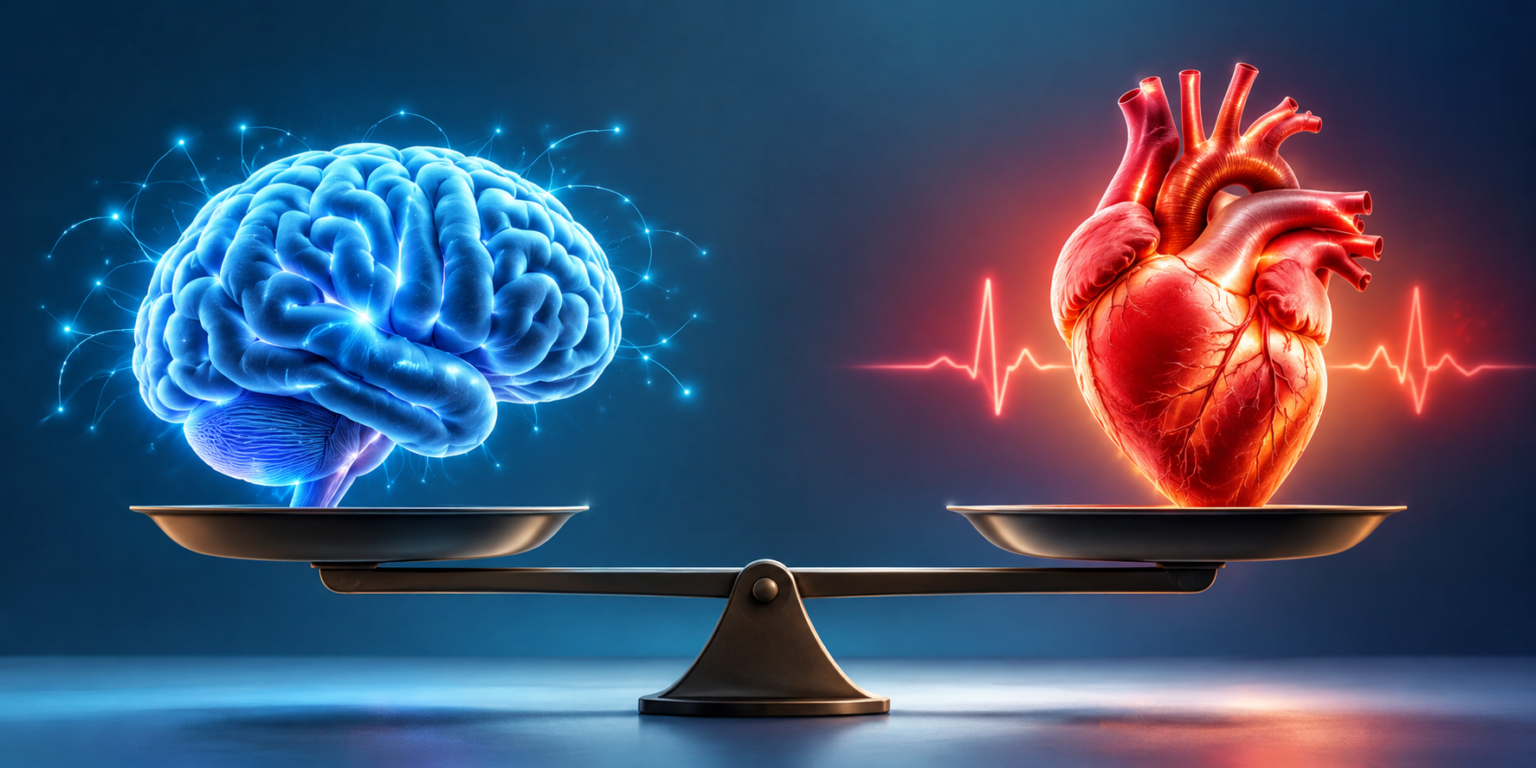
The brain is more important than the heart in terms of controlling thought, memory, and body functions, but the heart is equally vital because it keeps blood, oxygen, and nutrients moving to every organ, including the brain. Neither organ can work alone, and both are needed for life to continue normally.
The brain acts like a control center that sends signals to the heart, while the heart acts like an engine that keeps the whole body running. So instead of picking one winner, it is better to understand how each organ supports the other in its own unique way, which is exactly what this article explains in detail below.
Understanding The Brain
The brain is the most complex organ in the human body, responsible for thinking, memory, emotions, and controlling almost every voluntary and involuntary action a person performs daily. It works like a command center that receives signals from the body and sends instructions back within milliseconds.
What The Brain Actually Does?
The brain manages functions like problem-solving, learning, emotional responses, and movement coordination through billions of connected nerve cells. It processes information from the eyes, ears, skin, and other senses at the same time. Without the brain working properly, none of these daily activities would be possible in a normal way.
The Brain As The Body’s Control Center
Every organ in the body, including the heart, lungs, and muscles, receives instructions from the brain through the nervous system. This control happens automatically, meaning a person does not need to consciously think about breathing or digestion for it to occur. The brain constantly monitors internal conditions and adjusts bodily functions to maintain balance.
How The Brain Controls The Heartbeat?
A small part of the brain called the medulla oblongata directly regulates heart rate and breathing patterns based on the body’s needs. When a person exercises, this part of the brain signals the heart to beat faster to supply more oxygen. This connection shows how closely the brain and heart are linked rather than working separately.
What Happens When The Brain Is Damaged?
Severe brain damage can lead to conditions like coma or brain death, where a person may lose awareness, memory, and the ability to control their own body. In legal and medical terms, brain death is often considered the point of no return, even if the heart is still beating with machine support. This is one strong reason many experts lean toward the brain being more important than the heart.
Interesting Facts About The Brain
The human brain contains around 86 billion neurons that constantly exchange electrical signals to keep the body functioning properly. It uses about 20 percent of the body’s total energy despite making up only a small percentage of total body weight. The brain also has the ability to adapt and rewire itself, a process known as neuroplasticity.



Understanding The Heart
The heart is a muscular organ that works nonstop to pump blood throughout the body, delivering oxygen and nutrients to every single cell, including brain cells. Without this constant supply, no organ, including the brain, could survive for more than a few minutes.
What The Heart Actually Does?
The heart pumps oxygen-rich blood to organs and tissues while also collecting waste products like carbon dioxide to send back to the lungs. This process happens continuously, roughly 100,000 times a day, without the person needing to think about it. Every organ depends on this steady blood flow to stay alive and function correctly.
The Heart’s Own Electrical System
Unlike most organs, the heart has its own natural pacemaker cells that allow it to generate electrical signals and beat independently for a short period, even without input from the brain. This is why a heart can sometimes keep beating briefly after brain activity has stopped. However, this independence is limited and cannot sustain life on its own for long.
What Happens When The Heart Fails?
When the heart stops working properly, blood flow to the brain and other organs is cut off almost immediately, leading to rapid organ damage. Cardiac arrest can cause brain damage within just a few minutes if blood flow is not restored quickly. This shows how fast heart failure can turn into a life-threatening emergency for the entire body.
The Heart’s Symbolic Meaning In Culture
In everyday language, the heart is often described as the center of emotions, love, and courage, even though scientifically these feelings are processed in the brain. Phrases like “follow your heart” or “heartfelt” show how deeply this symbolism is rooted in human culture. This emotional connection makes the heart feel important beyond just its physical function.
Interesting Facts About The Heart
An average adult heart beats around 100,000 times per day and pumps roughly 2,000 gallons of blood through the body. Medical science has advanced to the point where artificial hearts and heart transplants can now keep patients alive. These achievements highlight how replaceable the heart can be compared to the brain, which remains far more difficult to replicate.
Brain Vs Heart Key Comparisons
Comparing the brain and heart side by side makes it easier to understand their different roles and why the debate around brain versus heart rarely has a single clear winner. The table below breaks down their core differences in a simple format.
| Aspect | Brain | Heart |
| Main Function | Controls thoughts, memory, and body signals | Pumps blood and oxygen throughout the body |
| Can Work Independently | Cannot function without oxygen from blood | Has its own electrical system for short periods |
| Effect Of Failure | Leads to coma or brain death | Leads to cardiac arrest and organ failure |
| Medical Replacement | Extremely difficult to replace | Can be replaced with artificial hearts or transplants |
| Legal Definition Of Death | Brain death is the modern legal standard | Heart-death was the older medical standard |
This comparison shows that when people ask if the brain is more important than the heart, medical evidence often leans toward the brain because of its role in controlling consciousness and vital functions, while the heart remains essential as the body’s life-support engine.
The Philosophical And Cultural Angle
Beyond biology, the debate between brain and heart also touches on culture, philosophy, and how societies have historically defined life and identity. Different civilizations have viewed these two organs in very different ways throughout history.
Heart As The Seat Of Emotion
For centuries, many cultures believed the heart was the source of emotions, courage, and personal identity rather than the brain. This belief is still reflected in modern language, art, and even religious texts across different traditions. Even though science has shifted this understanding, the emotional weight given to the heart has not disappeared.
Brain As The Seat Of Intellect
Modern science has firmly established the brain as the organ responsible for intelligence, decision-making, and personality. This shift changed how doctors and philosophers define what truly makes a person “alive” or “themselves.” As neuroscience advanced, the brain gradually replaced the heart as the symbol of human identity in medical and scientific circles.
The Shift From Heart-Death To Brain-Death
In earlier medical history, a person was declared dead when their heart stopped beating, since that was the easiest sign to detect. Today, brain death is the internationally recognized standard, even if a person’s heart is still beating with the help of machines. This shift strongly supports the argument that the brain holds more medical and legal importance than the heart.
The Interdependence Argument
While comparisons are useful, it is equally important to understand that the brain and heart cannot truly function without each other in a living human body. Their relationship is built on constant cooperation rather than competition.
Why Neither Organ Works Alone?
The brain needs a continuous supply of oxygen-rich blood from the heart to stay alive, while the heart needs signals from the brain to regulate its rhythm and rate. If either system fails completely, the other will also stop functioning within minutes. This mutual dependence is the strongest argument against choosing one organ as more important than the other.
Real-Life Examples Of This Connection
Cardiac arrest is a clear example where heart failure quickly leads to brain damage due to lack of oxygen, showing how closely linked these organs are in real medical emergencies. Similarly, certain brain injuries can disrupt heart rhythm because the brain’s control over heartbeat is compromised. These cases prove that both organs must work together for the body to survive.
Expert And Medical Perspectives
Doctors and researchers from different medical fields often have varying opinions on this debate, depending on their area of specialization and daily experience with patients.
What Neurologists Say
Neurologists, who specialize in brain and nervous system disorders, often emphasize that the brain governs consciousness, memory, and identity, making it central to what it means to be alive. They point to brain death as clear evidence of the brain’s ultimate authority over the body. Many neurologists argue that without brain activity, a person is no longer considered truly present.
What Cardiologists Say
Cardiologists, who focus on heart health, highlight that without proper blood circulation, no organ, including the brain, can survive for more than a few minutes. They stress that heart disease remains one of the leading causes of death worldwide, showing the heart’s critical daily importance. From their perspective, the heart’s constant reliability makes it just as essential as the brain.
Conclusion
So, is the brain more important than the heart? The honest answer is that both organs play irreplaceable roles, and life as we know it cannot exist without either one working properly.
The brain controls thought, memory, and vital signals, while the heart ensures that blood and oxygen keep reaching every part of the body, including the brain itself.
Rather than ranking one above the other, it makes more sense to appreciate how perfectly they work together to keep a person alive and functioning every single day.
FAQs
Can a person live without a brain? No, a person cannot survive without a functioning brain, since it controls essential involuntary functions like breathing and heartbeat regulation.
Can a person live without a heart? No, survival without a heart is not possible naturally, though temporary mechanical devices can support circulation for short periods during medical procedures.
Which organ is affected first without oxygen? The brain is affected first without oxygen, often showing signs of damage within just a few minutes of blood flow being cut off.
Are emotions controlled by the heart or brain scientifically? Emotions are scientifically processed in the brain, even though the heart is culturally and traditionally associated with feelings like love and courage.
Related Posts
Is PDRN Skincare Safe for Acne-Prone Skin? Complete Guide
Asbury Health and Rehabilitation Center: Services, Rehabilitation Programs, and Patient Care Guide
Can Dentists Tell If You Vape? Signs, Risks, and What Dentists Look For?