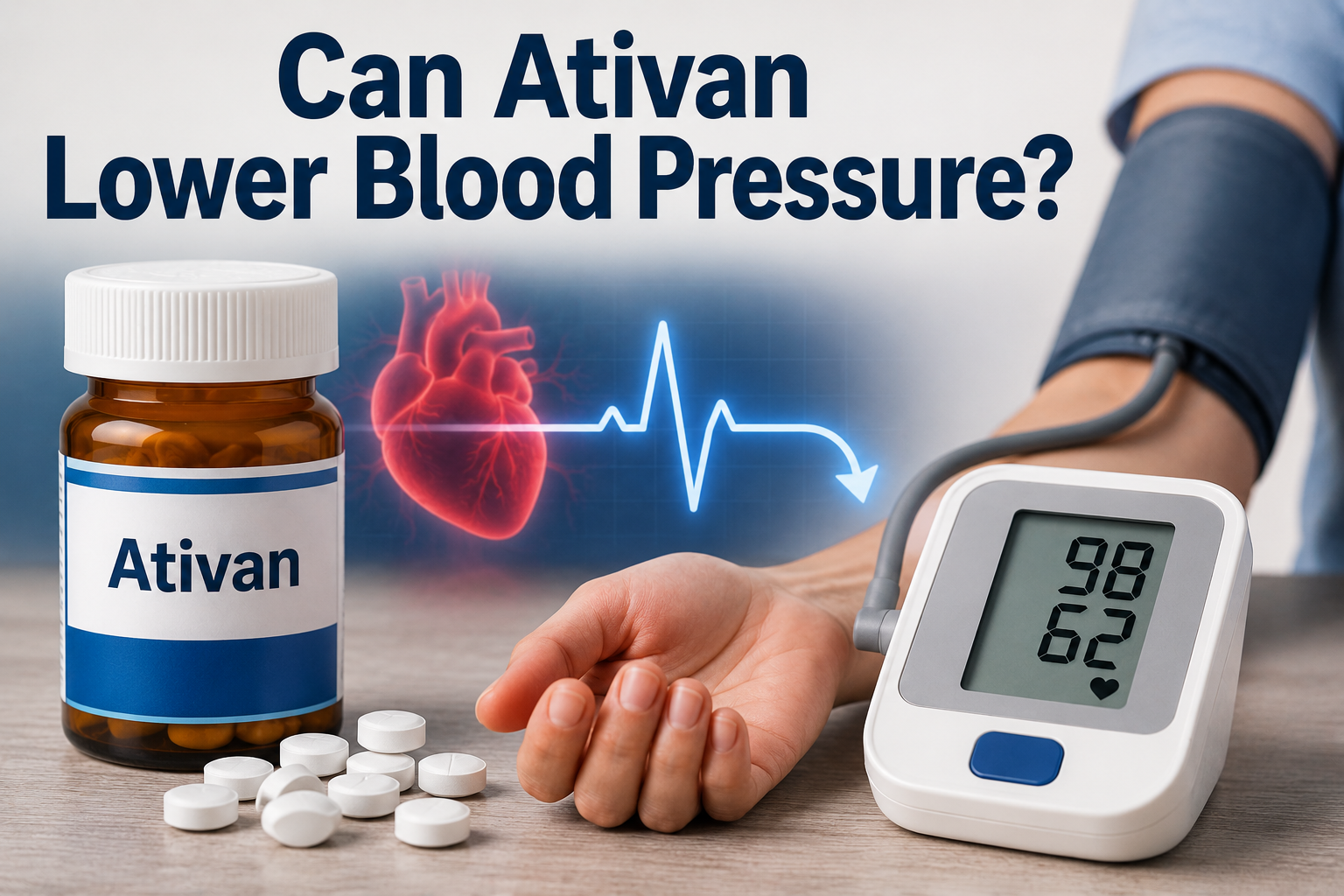
Many people taking lorazepam, sold under the brand name Ativan, want to know can Ativan lower blood pressure and whether this effect is something to worry about.
The short answer is yes, Ativan can lower blood pressure, though this happens as a secondary effect rather than the medicine’s main purpose.
Ativan belongs to a class of drugs called benzodiazepines, primarily prescribed for anxiety, seizures, and short-term sedation.
This guide explains exactly how Ativan influences blood pressure, who faces higher risk, and when a drop in numbers should prompt a call to the doctor.
What Is Ativan (Lorazepam)?
Ativan is the brand name for lorazepam, a fast-acting benzodiazepine that slows down activity in the brain and nervous system. It is not designed to treat blood pressure problems, but its calming action can still influence circulation.
Drug Classification
Ativan falls under the benzodiazepine family of medications, which work by boosting the activity of a calming brain chemical called GABA. This chemical reduces excessive nerve signaling, which is why the drug is effective for anxiety and seizure control. Because GABA also affects the nervous system that controls blood vessels, this classification explains why blood pressure changes can occur.
Primary Approved Uses
Doctors most commonly prescribe Ativan for generalized anxiety disorder, panic attacks, and short-term relief of severe anxiety symptoms. It is also used in hospitals to control active seizures and to sedate patients before certain medical procedures. Some patients receive it briefly for insomnia caused by anxiety, although it is not intended for long-term sleep use.
Does Ativan Lower Blood Pressure?
Yes, Ativan can lower blood pressure, but this is considered a side effect rather than a treatment goal. The following sections explain why this happens and why doctors don’t use it as a blood pressure medicine.


The Direct Answer
Clinical experience and pharmacology confirm that Ativan can cause a mild to moderate reduction in blood pressure in many patients. This happens because the drug calms overactive nerve signals that normally keep blood vessels tightened and the heart working harder. In most people taking standard oral doses, this dip is minor and not something they even notice.
Why It Isn’t Classified as a Blood Pressure Drug
Despite this effect, Ativan is never prescribed specifically to manage hypertension because its impact on blood pressure is inconsistent and unpredictable. Actual blood pressure medications work through targeted pathways that reliably control blood vessel tone or heart rate, something Ativan does not do. Using a sedative to manage blood pressure would also carry unnecessary risks like drowsiness and dependence.
How Ativan Affects Blood Pressure?
Several connected mechanisms explain the blood pressure changes seen with Ativan use. Each one relates to how the drug calms the nervous system and relaxes the body.
CNS Depression and Reduced Sympathetic Activity
Ativan slows activity in the central nervous system, which lowers the output of the sympathetic nervous system responsible for the body’s fight-or-flight response. When sympathetic signals decrease, blood vessels don’t stay as tightly constricted, and the heart doesn’t need to pump as forcefully. This combination naturally brings blood pressure down a notch.
Muscle Relaxation and Lower Cardiovascular Stress
Because Ativan relaxes skeletal muscles and eases anxiety-driven tension, the body’s overall stress load decreases. Chronic stress and muscle tension are known to keep blood pressure elevated, so relieving them can allow numbers to settle lower. This is part of why anxious patients sometimes see their blood pressure normalize after taking the medication.
Vasodilation at Higher or IV Doses
When Ativan is given intravenously, especially in hospital settings, its effect on blood vessels tends to be stronger and faster. Higher doses can cause noticeable vasodilation, meaning blood vessels widen more significantly than they would with a standard oral tablet. This is one reason medical staff monitor blood pressure closely after IV lorazepam administration.
Oral vs IV Ativan: How Blood Pressure Effects Compare
The route of administration has a major impact on how much Ativan lowers blood pressure. The table below breaks down the key differences.
| Administration Route | Onset of Effect | Blood Pressure Impact | Typical Setting |
| Oral tablet | 30-60 minutes | Mild, often unnoticeable | Outpatient anxiety or sleep treatment |
| Sublingual | 15-30 minutes | Mild to moderate | Faster anxiety relief |
| Intramuscular (IM) | 15-30 minutes | Moderate | Emergency or hospital sedation |
| Intravenous (IV) | 1-5 minutes | Moderate to significant | Seizure control, pre-procedure sedation |
Who Is Most at Risk for a Blood Pressure Drop on Ativan?
Certain groups are more sensitive to Ativan’s effect on blood pressure than others. Recognizing these risk factors helps prevent complications.
Elderly Patients
Older adults often have less resilient blood vessels and slower metabolism, making them more sensitive to any medication that affects circulation. Even standard doses of Ativan can cause a more pronounced drop in blood pressure in this age group. This is why doctors typically start elderly patients on lower doses and monitor them closely.
Patients Already Taking Blood Pressure Medication
Combining Ativan with drugs like beta-blockers, ACE inhibitors, or diuretics can amplify the blood pressure-lowering effect beyond what either medication would cause alone. This layered effect raises the risk of dizziness or fainting, especially when standing up quickly. Anyone on antihypertensive therapy should tell their doctor before starting Ativan.
Dehydrated or Hypovolemic Patients
When the body doesn’t have enough fluid volume, blood pressure is already running on a thinner margin, making sedative-related drops more dangerous. Ativan’s calming effect on blood vessels can push blood pressure even lower in someone who is dehydrated. Staying properly hydrated is a simple way to reduce this risk.
Combined Use With Alcohol or Other Sedatives
Mixing Ativan with alcohol, opioids, or other sedating medications multiplies its impact on both the nervous system and blood pressure. This combination significantly raises the chance of severe hypotension, slowed breathing, and dangerous drowsiness. Medical guidance strongly discourages combining Ativan with any other central nervous system depressant.
Typical Blood Pressure Changes: What’s Normal vs. Concerning?
Most people experience only a small, harmless dip in blood pressure while taking Ativan. However, some changes are signs that medical attention is needed.
Mild and Expected Changes
A drop of a few points in systolic or diastolic pressure is common and usually not dangerous for otherwise healthy individuals. Patients might feel slightly more relaxed or notice mild lightheadedness when standing up too fast. These changes typically resolve on their own as the dose wears off.
Warning Signs of Significant Hypotension
A sudden, sharp drop in blood pressure accompanied by confusion, fainting, or a very weak pulse is not a normal reaction and needs urgent evaluation. Cold, clammy skin combined with rapid heartbeat can also signal that blood pressure has fallen too low. These symptoms are more likely with IV administration or when Ativan is combined with other sedatives.
Ativan and Heart Rate: A Related Effect
Alongside its effect on blood pressure, Ativan can also cause a mild slowing of heart rate in some patients, a condition known as bradycardia. This happens because reduced sympathetic nervous system activity affects both blood vessel tone and the heart’s pacing signals together.
Most people won’t notice a meaningful change, but individuals with existing heart conditions should mention this history before starting the medication. Combining a slower heart rate with lower blood pressure can occasionally intensify feelings of dizziness or fatigue.
Symptoms of Low Blood Pressure to Watch For
Recognizing the signs of low blood pressure early can prevent falls or more serious complications. Watch for the following symptoms while taking Ativan.
• Dizziness or lightheadedness, especially when standing up
• Blurred or fading vision
• Unusual fatigue or weakness
• Nausea
• Fainting or near-fainting episodes
• Cold, pale, or clammy skin
When to Contact a Doctor
Not every dip in blood pressure requires a phone call, but certain situations do. The difference comes down to severity and how quickly symptoms appear.
Emergency Warning Signs
Seek immediate medical care if fainting, chest pain, difficulty breathing, or extreme confusion occurs after taking Ativan. These symptoms could indicate a dangerous drop in blood pressure that needs prompt treatment. Emergency care is especially important for anyone who took Ativan alongside alcohol or other sedatives.
Routine Monitoring Advice
For milder symptoms like occasional lightheadedness, it’s reasonable to mention them at your next scheduled appointment rather than seeking urgent care. Doctors may recommend checking blood pressure at home periodically to track any patterns. Adjusting the dose or timing of Ativan can often resolve mild, ongoing issues.
Frequently Asked Questions
Does Ativan cause low blood pressure or high blood pressure?
Ativan is more likely to cause low blood pressure rather than high, since its calming effect relaxes blood vessels and reduces stress-related tension. High blood pressure from Ativan use is uncommon and usually linked to withdrawal rather than the drug itself.
Can Ativan be used to treat hypertension?
No, Ativan is not approved or recommended for treating high blood pressure. Its effects are inconsistent and it lacks the targeted action of real antihypertensive medications.
How long do the blood pressure effects last after a dose?
Oral Ativan’s effects on blood pressure typically last a few hours, matching its overall duration of action. IV doses act faster and may cause a shorter but more intense dip.
Is it safe to take Ativan with blood pressure medication?
It can be safe under medical supervision, but the combination increases the risk of extra blood pressure drops and dizziness. Always inform your doctor about all medications before combining them.
Conclusion
So, can Ativan lower blood pressure? Yes, it can, though the effect is usually mild and considered a side effect rather than a therapeutic benefit.
Factors like age, dosage, administration route, and other medications all influence how noticeable this change will be.
Most people tolerate it well, but those in higher-risk groups should stay alert to symptoms like dizziness or fainting.
Speaking with a doctor before starting or adjusting Ativan ensures it is used safely alongside any existing blood pressure concerns.
Related Articles
Growing Pains Massage: Safe Techniques and Natural Ways to Relieve Leg Pain in Children
Asbury Health and Rehabilitation Center: Services, Rehabilitation Programs, and Patient Care Guide
How to Heal Cavities in 2 Days at Home: What Actually Works?
Can High Blood Pressure Cause Flashing Lights in Eyes?
Is Walking Good for Sciatica? A Complete Guide to Safe Movement and Pain Relief