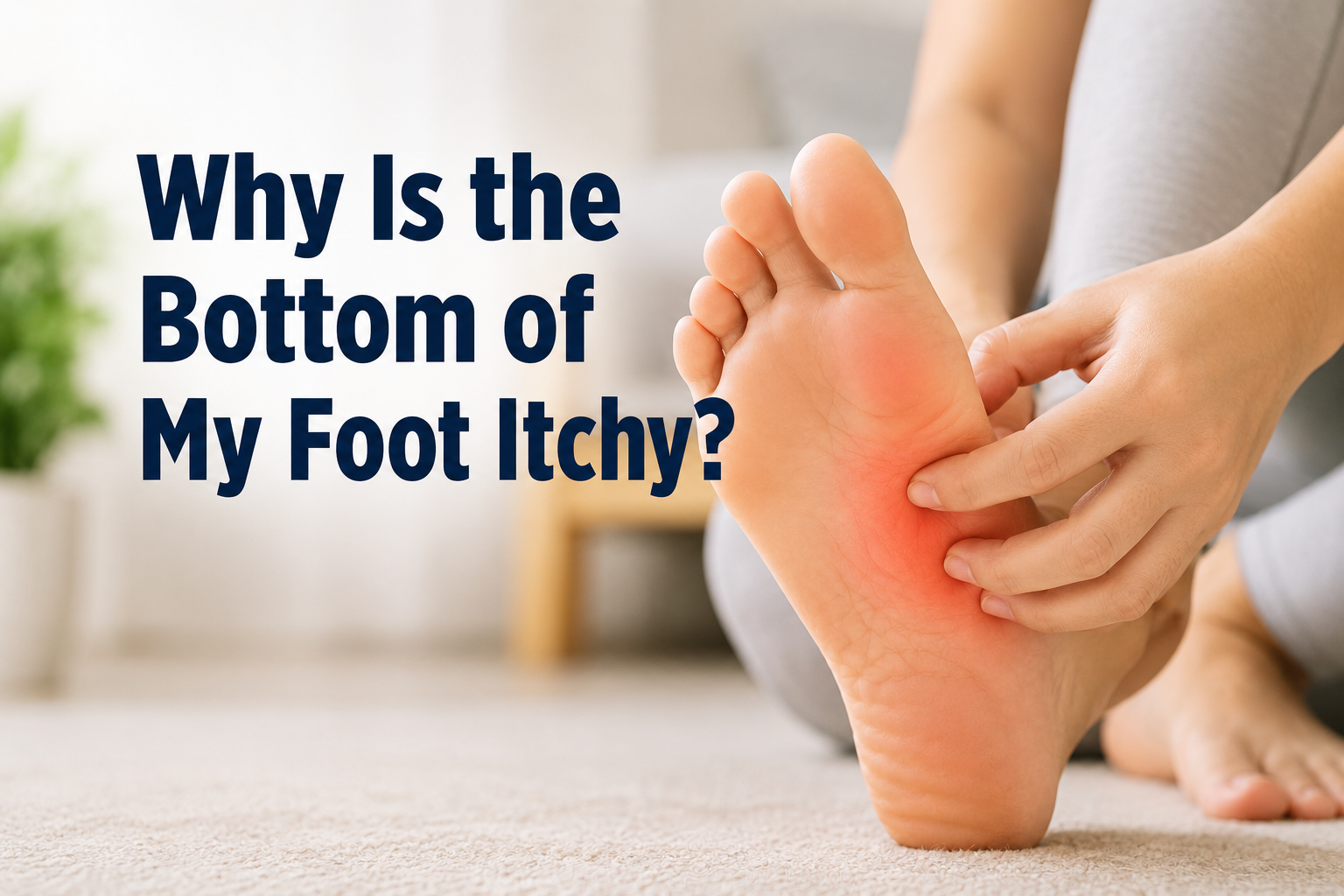
If you have found yourself wondering why is the bottom of my foot itchy, you are far from alone, and the answer is usually simpler than it feels at the moment. Most cases come down to a straightforward cause like skin dryness, trapped sweat, or a mild fungal infection, all of which respond well to small changes at home.
However, an itchy sole can occasionally point to something more persistent, such as eczema, psoriasis, or a nerve-related condition that needs a doctor’s evaluation. Understanding the pattern of the itch, how long it lasts, and whether it comes with redness, peeling, or swelling is the first step toward figuring out what is actually going on with your feet.
This guide walks through the most common and the more serious causes of an itchy sole, explains simple home remedies that genuinely help, and outlines the warning signs that mean it is time to book a doctor’s appointment rather than wait it out.
Key Takeaways
- An itchy sole is most often caused by dry skin, sweating, or a fungal infection like athlete’s foot.
- Contact dermatitis from socks, detergents, or shoe materials is another frequent trigger.
- Chronic skin conditions such as eczema and psoriasis can affect the soles and cause ongoing itch.
- Diabetes and nerve-related issues can also cause itching, especially if it is paired with tingling or numbness.
- Most cases respond well to moisturizing, antifungal treatment, or simple hygiene changes.
- Persistent, spreading, or painful itching should be checked by a doctor or dermatologist.
What Causes an Itchy Sole?
The bottom of the foot has thicker skin than most other parts of the body, but it is still exposed to sweat, friction, and irritants throughout the day, all of which can trigger itching. The most common causes range from simple dryness to fungal infections, and figuring out which one applies to you usually comes down to noticing the accompanying symptoms.
Dry Skin (Xerosis)
Dry skin is one of the leading reasons people ask why is the bottom of my foot itchy, especially during colder months or after long showers with hot water. When the skin on the sole loses its natural moisture, it becomes tight, flaky, and prone to itching, particularly around the heel where the skin is already thicker. Simple daily moisturizing with a thick, fragrance-free cream usually resolves this within a week or two.
Athlete’s Foot (Tinea Pedis)
Athlete’s foot is a fungal infection that thrives in warm, damp environments like sweaty shoes or shared locker room floors. It typically causes an itchy, burning sensation between the toes and along the sole, sometimes with peeling skin or small blisters. Over-the-counter antifungal creams are usually effective, but the infection can return if shoes and socks are not kept dry.
Contact Dermatitis
Contact dermatitis happens when the skin reacts to something it touched, such as a new detergent, synthetic sock material, or a chemical in shoe insoles. The itch often appears suddenly and may be accompanied by redness or a mild rash in the exact shape of the irritant’s contact area. Identifying and removing the trigger is the most reliable way to stop the reaction.
Excessive Sweating (Hyperhidrosis)
Feet that sweat heavily create a moist environment that irritates the skin and encourages fungal or bacterial growth. This constant dampness can leave the soles itchy, especially after a long day in closed shoes. Breathable footwear, moisture-wicking socks, and foot powder can significantly reduce this type of irritation.



Eczema or Psoriasis
Both eczema and psoriasis are chronic inflammatory skin conditions that can flare up on the soles, causing thickened, scaly, and intensely itchy patches. Unlike a simple case of dry skin, these conditions tend to recur and may require prescription treatment to manage effectively. A dermatologist can confirm the diagnosis through a physical exam and recommend an appropriate treatment plan.
Insect Bites or Allergic Reactions
Bites from mosquitoes, fleas, or other insects can cause localized itching on the sole, often with a small raised bump at the bite site. Allergic reactions to certain fabrics, dyes, or laundry products can produce a similar itch without an obvious bite mark. In both cases, the itching is usually temporary and fades within a few days.
Scabies
Scabies is caused by tiny mites that burrow into the skin and trigger an intense itch that often worsens at night. It commonly affects the webbing between fingers and toes but can also involve the soles of the feet. Because scabies is contagious and requires prescription treatment, a doctor’s diagnosis is necessary rather than relying on home remedies alone.
Nerve-Related Causes (Peripheral Neuropathy)
In some cases, an itchy sole is linked to nerve damage rather than a skin problem, particularly in people with diabetes or poor circulation. This type of itch may come with tingling, burning, or numbness and tends not to improve with moisturizers or antifungal treatments. If the itch is paired with these sensations, it is worth discussing with a physician to rule out an underlying nerve condition.
Comparison Table: Common Causes at a Glance
| Cause | Key Symptoms | Contagious? | Typical Treatment |
| Dry Skin | Flaking, tightness, mild itch | No | Daily moisturizer |
| Athlete’s Foot | Burning itch, peeling, blisters | Yes | OTC antifungal cream |
| Contact Dermatitis | Redness, rash matching contact area | No | Remove irritant, soothing cream |
| Hyperhidrosis | Dampness, odor, irritation | No | Foot powder, breathable shoes |
| Eczema/Psoriasis | Thick, scaly, recurring patches | No | Prescription treatment |
| Insect Bites/Allergy | Localized bump or rash | No | Antihistamine, time |
| Scabies | Intense itch, worse at night | Yes | Prescription medication |
| Peripheral Neuropathy | Tingling, numbness, burning | No | Medical evaluation |
When Is Foot Itching a Sign of Something Serious?
While most itchy soles are harmless, certain patterns suggest an underlying health condition rather than a simple skin issue. Diabetes-related nerve damage can cause chronic itching along with numbness or a pins-and-needles feeling, and it tends to worsen gradually rather than clearing up on its own.
Liver or kidney conditions can also cause widespread itching that includes the feet, often without any visible rash, because the itch originates from a buildup of substances in the bloodstream rather than a skin-surface problem.
It is worth seeking urgent care if the itching is accompanied by a rapidly spreading rash, fever, open sores that will not heal, or significant swelling, since these signs can indicate an infection that needs prompt treatment.
Home Remedies for Itchy Feet
Most causes of an itchy sole respond well to consistent, simple care at home, and the right approach depends on what is triggering the itch in the first place.
Moisturizing Correctly
Applying a thick, fragrance-free moisturizer right after bathing helps lock in hydration while the skin is still slightly damp. Look for ingredients like urea or ceramides, which are specifically effective for the thicker skin on the soles. Doing this daily, especially before bed, can noticeably reduce dryness-related itching within days.
Over-the-Counter Antifungal Treatments
For itching linked to athlete’s foot, antifungal creams containing clotrimazole or terbinafine are widely available and generally effective within one to two weeks of consistent use. It is important to continue the treatment for the full recommended duration even after the itch improves, since stopping early can allow the infection to return. Keeping feet dry throughout treatment also speeds up recovery.
Cool Compresses and Oatmeal Soaks
A cool, damp cloth applied to the itchy area can calm irritation quickly, especially for itching caused by insect bites or mild allergic reactions. Oatmeal soaks are another gentle option, as colloidal oatmeal has natural anti-inflammatory properties that soothe irritated skin. Both methods are inexpensive and safe to use alongside other treatments.
Hygiene and Sock and Shoe Changes
Switching to moisture-wicking socks and rotating shoes to allow them to fully dry between wears can prevent many of the conditions that cause itchy soles in the first place. Washing feet daily with a mild soap and drying thoroughly between the toes removes sweat and bacteria before they cause irritation. These small habit changes often make the biggest long-term difference in preventing recurring itch.
How to Prevent Itchy Soles?
Preventing an itchy sole largely comes down to keeping feet clean, dry, and protected from irritants on a daily basis.
Choosing breathable footwear made from natural materials allows air to circulate and reduces the sweat buildup that leads to fungal growth and irritation. Sticking to a simple foot hygiene routine, including regular washing, thorough drying, and daily moisturizing, keeps the skin barrier strong enough to resist most common triggers.
It also helps to avoid walking barefoot in public showers or locker rooms, and to patch-test new socks, detergents, or lotions before using them regularly, since this can prevent contact dermatitis before it starts.
When to See a Doctor
A doctor’s visit is warranted when the itching lasts longer than two weeks despite home treatment, spreads to other parts of the body, or is accompanied by pain, swelling, or open sores. Itching combined with tingling, numbness, or burning sensations should also be evaluated promptly, since these can signal a nerve-related or circulatory issue rather than a surface-level skin problem.
A dermatologist can perform a simple skin exam, and in some cases a scraping test, to accurately diagnose conditions like eczema, psoriasis, or fungal infections that may not respond to over-the-counter treatment alone.
Frequently Asked Questions
Is itchy feet a sign of diabetes? Itchy feet can be linked to diabetes, particularly when nerve damage from high blood sugar affects sensation in the feet. This type of itch is often accompanied by tingling or numbness and tends to persist despite moisturizing.
Why are my feet itchy at night? Nighttime itching is often worse because body temperature rises slightly and there are fewer distractions to take attention away from the sensation. Conditions like scabies and eczema are also known to flare more noticeably at night.
Can stress cause itchy feet? Stress can trigger or worsen itching by affecting the skin’s inflammatory response, even without a separate skin condition present. Managing stress through relaxation techniques can sometimes reduce the frequency of flare-ups.
Is itchy feet a sign of liver problems? In rare cases, persistent full-body itching that includes the feet can be related to liver conditions, since impaired liver function allows certain substances to build up in the bloodstream. This type of itch usually occurs without a visible rash and warrants medical evaluation.
How long does athlete’s foot itch last? With consistent antifungal treatment, athlete’s foot itching typically improves within one to two weeks, though full clearance of the infection can take slightly longer. Stopping treatment too early is a common reason the itch and infection return.
Conclusion
An itchy sole is usually caused by something manageable, such as dry skin, sweat, or a mild fungal infection, and most cases improve with simple home care.
Paying attention to accompanying symptoms like rash, swelling, or numbness helps determine whether the issue can be treated at home or needs a doctor’s input.
When in doubt, a quick evaluation from a dermatologist can rule out more serious causes and get the right treatment started sooner.
RELATED ARTICLES
Infected Wisdom Tooth Symptoms: Causes, Signs & Treatment
Knee Pain Walking Up Down Stairs: Causes & Real Fixes
Why Do My Legs Ache at Night? Causes, Relief, When to Worry